A Book Challenge I’ll Pass On

At Rural Revolution, Patrice Lewis is going to participate in a 52 book challenge this year:

This is a list of 52 books (50 categories, but one of the categories is a trilogy) to be read over the next 52 weeks. Older Daughter got it in her head to accept this challenge and managed to talk the rest of us (Younger Daughter, our friend GG, and myself) into participating as well.

She includes the list of categories as well as books she has selected for each category.

I’d play along, but I’m more fluid in my reading choices. I don’t tend to plan ahead, and I don’t generally know what I’m going to read next.

I’m also not sold on the categories, such as a woman author, an author under 30, a book published this year…. I’m not against any of them, but I can’t promise I’ll read anything like that in 2015.

(Also note the Lewises have a library of 5000+ books. You know what we call a library of 5000 books at Nogglestead? “If my beautiful wife had her way and decluttered.” As a reminder, you can see the library at Nogglestead ca 2010 here. In 2015, we don’t have any additional shelving, but we do have more books piled atop the additional shelving.)

Buy My Books!
Buy John Donnelly's Gold Buy The Courtship of Barbara Holt Buy Coffee House Memories

Book Report: Up in the Air by Walter Kirn (2001)

Book coverThis book is the source for the George Clooney film of the same name, but a quick perusal of the film’s plot indicates they differ widely.

In this book, a business consultant whose job it is to counsel laid off employees across the country is nearing a million frequent flier miles on an airline. His employer has given him pretty free rein to travel the country to meet with clients, and the consultant also travels for some pleasure and for some of his side projects. He’s left a resignation letter on his vacationing boss’s desk, so in a week he’ll be out of a job. But he should make the million mile club before then, before they cut off his company credit cards.

He’s been travelling like this for many years, and he’s got no home but the series of airports and hotels he calls Airland. He’s got his own set of rules and expectations from other business travelers, and he’s working on a book with it. He also thinks a secretive consulting company might be trying to recruit him through a series of tests and contacts with his clients and friends.

It starts out a lot like a Stanley Bing novel (see Lloyd What Happened and You Look Nice Today). A bit wry, with an obviously unreliable narrator. However, over the course of the book, it becomes clearer just how unreliable the narrator is: he’s having a breakdown of some sort, or perhaps an entire psychotic episode where none of it really happens.

Which is unfortunate: I would have preferred a better payoff for what was a pretty engaging narrative and voice.

As I finished it, I didn’t think it would be the sort of character George Clooney would play, so I’m sort of interested in seeing the film now to see how little they overlap. And it’s definitely possible I’ll like the film better than the book.

Books mentioned in this review:

Buy My Books!
Buy John Donnelly's Gold Buy The Courtship of Barbara Holt Buy Coffee House Memories

Somehow, I Missed The Party

A month ago, Jamie Malanowski offered A Centenary Salute to Patrick O’Brian:

Let us pause in the day’s labors to raise a glass, preferably containing Madeira or a rich, full-bodied port, to the centenary of the greatest historical novelist ever, and one of the best novelists of our era.

Patrick O’Brian was born Dec. 12, 1914—or, rather, Richard Patrick Russ was born on that date in Chalfont St. Peter, England, and grew up to become a novelist of middling success. O’Brian was technically born in 1946, when Russ adopted that pen name and went on to develop a new persona as an elusive Irish writer ensconced in the south of France.

Although O’Brian would produce much estimable fiction and nonfiction under his nom de plume, his signal achievement was the series of 20 novels set during the Napoleonic Wars and informed by O’Brian’s encyclopedic knowledge of nautical matters from that era. The heart of the novels is the friendship between the charismatic Captain Jack Aubrey of the British navy and the Irish-Catalan Dr. Stephen Maturin.

I have a pile of the Aubrey/Maturin novels, but I’ve only read Master and Commander so far. And given how I’ve been reading historical fiction from an earlier era recently, it might be a while until I get back around to them.

I’d better start eating better because I’ve got a lot of books and series I’ve got to get back around to.

Buy My Books!
Buy John Donnelly's Gold Buy The Courtship of Barbara Holt Buy Coffee House Memories

Book Report: Bad Cat by Jim Edgar (2004)

Book coverI have an embarrassing and stunning admission to make: I have read this book twice even though I didn’t like it. Not exactly. Let me explain.

This book is based on a desktop calendar that features pictures of cats, sometimes doing things that make them look a little guilty, accompanied by qouted captions where the cat is saying something. And they include the cat’s name, age, and hobby. Here, have a taste:

Bad Cat example

Obviously, this one would have come from December in the calendar.

Most of the captions have a sexual or drug use angle, and all of them are not funny. As a matter of fact, some of them are so not funny that they’re enjoyable for the spectacular badness. Although it’s been seven years since I had the calendar, I remembered some of them.

But this collection is really the sweepings on the floor of cat caption industry. Your Facebook wall or Twitter feed have better examples of the genre.

This book was a Christmas gift, as was the desk calendar. But at least with the book, I was able to flip through it in a couple hours instead of over the course of a year, one dreadful cat sex caption at a time.

Books mentioned in this review:

Buy My Books!
Buy John Donnelly's Gold Buy The Courtship of Barbara Holt Buy Coffee House Memories

When You Find A Contradiction In A Book, You Cannot Trust It

You know how it goes: You’re reading a book, and it says something, and a couple of pages later it says the exact opposite, so you can’t trust anything it says at all.

For example, today I was reading Simms Taback’s Great Big Book of Spacey, Snakey, Buggy Riddles.

And one riddle is:

And a couple pages later, another riddle is:

Both of these things cannot be true.

Wake up, sheeple! This is how they break down the minds of your children: By presenting riddles that compel your child to hold two contrary ideas in mind at once and/or to not recognize or object when two opposing assertions appear and are presented as TRUE!

Or maybe I take things too seriously. Or lack a sense of humor.

Buy My Books!
Buy John Donnelly's Gold Buy The Courtship of Barbara Holt Buy Coffee House Memories

2013: The Year In Reading

So the day after dinging a professor for not reading enough good stuff, allow me to present the list of books I finished in 2014:

  • Modge Podge Rocks by Amy Anderson
  • Conan the Cimmerian by Robert E. Howard
  • You Must Remember This 1978 edited by Betsy Dexter
  • Poetry for Cats by Henry Beard
  • Captive of Gor by John Norman
  • Rebel Moon by Bruce Bethke and Vox Day
  • Spectrum II edited by Kingsley Amis and Robert Conquest
  • The French Powder Mystery by Ellery Queen
  • God, Man, and Archie Bunker by Spencer Marsh
  • The Day After Tomorrow by Allan Folsom
  • Wonderland by Ace Atkins
  • Damned If You Do by Michael Brandman
  • Skin Tight by Gary Henderson
  • Black Like Me by John Howard Griffin
  • The Maid’s Version by Daniel Woodrell
  • Real Women Don’t Pump Gas by Joyce Jillson
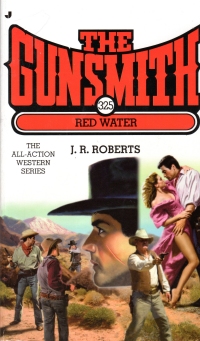
  • A Daughter’s Revenge by J.R. Roberts
  • Rogue Warrior II: Red Cell by Richard Marcinko and John Weisman
  • Churchill: In Memoriam by The Editors of the New York Times
  • Forbidden City by Alex Archer
  • The Bloody Crown of Conan by Robert E. Howard
  • Devil’s Pool by Charlie Farmer
  • The Curmudgeon’s Guide to Getting Ahead by Charles Murray
  • The Battle Off Midway Island by Theodore Taylor
  • The Martian by Andy Weir
  • Sink the Bismarck by C. S. Forester
  • The Conquering Sword of Conan by Robert E. Howard
  • Blood Silver: The Story of the Yocum Dollar by Woody P. Snow
  • Books are Better In Bed Than Men Because by Deenie Vin
  • Women Who Love Cats Too Much by Allia Zobel
  • 101 Reasons Why A Cat Is Better Than A Man by Allia Zobel
  • Bomun Temple in Seoul Korea
  • The Private Hell of Hemingway by Milt Machlin
  • The Lost Ones by Ace Atkins
  • Cheap Shot by Ace Atkins
  • Mary Rose by J.M. Barrie
  • Beautiful Korea
  • What Makes a Picasso a Picasso?
  • Designation Gold by Richard Marcinko and John Weisman
  • The Barrabas Hit by Jack Hild
  • Poems of Creatures Large and Small by edited by Gail Harvey
  • Dirty South by Ace Atkins
  • The Fall by Albert Camus
  • Longarm and the Border Showdown by Tabor Evans
  • As Autumn Approaches by Ronald E. Piggee
  • No Exit and Three Other Plays by Jean-Paul Sartre
  • Leif and Thorkel by Genevra Snedden
  • Limericks
  • Murder for Halloween edited by Michele Slung and Roland Hartman
  • New Pearl of the Orient Korea by the Korea National Tourist Corporation
  • Last Seen in Massilia by Steven Saylor
  • Norman Rockwell: A Sixty Year Retrospective
  • The Time-Hoppers by Robert Silverberg
  • Tiger at the Gates by Jean Giraudoux / Chistopher Fry
  • Magic by William Goldman
  • Chains of the Sea edited by Robert Silverberg
  • The Programmer’s Book of Rules by George Ledin, Jr. and Victor Ledin
  • The Three Legions by Gregory Solon
  • Washington IOU by Don Pendleton
  • Conan the Cimmerian by Roy Thomas
  • Christmas Jars by Jason F. Wright
  • Bad Cat by Jim Edgar

That’s only 62, and it’s a bunch less than I read a few short years ago.

There’s a couple books of lightweight poetry in there, a couple of plays, and only a couple of things one would consider Literature (the Existentialist works). Of all the things I’ve read, I’m proudest of reading the Robert E. Howard’s complete Conan stories. I probably read too much Ace Atkins considering how little satisfaction I get out of reading them.

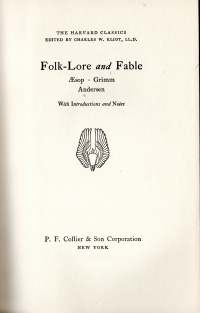
Still, I did make progress on two thousand+ pages books that I’ve been working on for several years now, and I’m actually almost done with an actual Harvard Classics book (Folklore: Aesop, Brothers Grimm, and Hans Christian Anderson) that I’ve been reading aloud to my child(ren) off and on for a couple of years.

In 2015, I hope to finish more books, and as always, I hope to read a better quality of literature, but I’ll sneak in the short bits while watching sports and while digesting Literature. But I promise that to myself every year anyway.

Also, if you’re thinking 62 books is a lot to read in a given year, check out the numbers over here. That fellow reads as many books in a year as I buy.

Buy My Books!
Buy John Donnelly's Gold Buy The Courtship of Barbara Holt Buy Coffee House Memories

The Harvard Classics Collection is a Gateway Drug

Actually, the cheaper Walter J. Black Classics club edition are a less expensive gateway, but the Harvard Classics are a better-bound alternative, also available unfortunately inexpensively because nobody values the old canon packaged for the middle brow like they used to.

Except for this newcomer:

For years, I’ve had a set of the Harvard Classics in my study: 50 volumes of “great works” bound in faded green cloth—the “Five-Foot Shelf,” as the collection was called when it was first published in 1910. Our set was left to us by my husband’s aunt. She acquired it secondhand during the Great Depression and willed it to us because we had a literary bent. It is unclear whether she ever looked at it. Despite our literary bent, we let it gather dust.

. . . .

Some of the selections were hard to follow or lacked context. Even so, they generally yielded something of value. I did not understand Faraday ’s treatise on magnetism, but I could discern a method to his argument. I did not know what was transpiring in Act III of “The School for Scandal,” but I could tell that Sheridan had wit.

The editors of the “Reading Guide” were working on the cusp of two worlds: the Victorian and the modern. They returned again and again to predictable classic texts. But they also excerpted repeatedly from Darwin’s work on evolution, and included selections from folk and fairy tales that reflected respect for populist culture.

I was most taken with the great essayists: Cicero and Marcus Aurelius, the Enlightenment philosophes, and the proto-bloggers of the 19th century such as Thomas Carlyle and J.S. Mill. These works, well suited to brief reading bytes, were models of critical reasoning, insight, cleverness and taste. Jonathan Swift ’s “Hints Toward an Essay on Conversation” clarified for me why I like to talk to some people and not to others.

Ah, a gateway.

Or so I thought until I got to the bio at the end of the piece:

Ms. Cohen is a professor of English and dean of Pennoni Honors College at Drexel University.

One would hope that a professor of English and a dean of a college might have touched upon some of these authors before. I graduated in 1994 from the university, and although I was steeped in the Western canon, I had the benefit of studying English and philosophy. Also, I had so many English credits that I was almost ineligible for an English degree. Think on that for a moment: I had to creatively explain why I should graduate even though I had too many English classes along with my second major. So I had a pile of reading in those days in the canon even as I had a pile of reading in the stuff that the young professors was trying to make into the new canon, which would never actually be a canon because younger English professors would have other canon-toppling reading to displace the ephemera from a couple years ago.

Where was I before the rant?

Oh, yes.

It’s a good article about the discovery of the canon, but it’s sad that a professional educator in the field is just now discovering so much of it. It’s possible to get that far in the industry without it, but, zang.

I hope some people read her article and pick up this set or one of so many similar programs and discover that a lot of the Western canon is approachable and, yes, relevant and universal.

Buy My Books!
Buy John Donnelly's Gold Buy The Courtship of Barbara Holt Buy Coffee House Memories

Disturbing News

From Randy Johnson (not the pitcher):

With the recent announcement that the Gold Eagle imprint would cease in 2015, it would seem that Mack Bolan, at least the ghost written versions will be consigned to history.

More here, including some juicy inside stories.

I’m saddened by the news; I thought Mack Bolan would be eternal, and that the number of Executioner and related titles that I’d never get around to reading would continue to expand at an exponential rate. But now that the titles are limited, I might be fool enough to try to read them all.

Just kidding. I’m reading well under a hundred books annually these days, so I might not make it through all the ones I currently own without getting the other thousand plus.

Also, somewhere, sometime, will resurrect the series as eBooks or something.

Buy My Books!
Buy John Donnelly's Gold Buy The Courtship of Barbara Holt Buy Coffee House Memories

Book Report: Conan: Exclusive Excerpted Edition by Roy Thomas (2006)

Book coverI got This book at a garage sale in June, and it looked like a good short read that sums up the career of Conan.

It is indeed a chronological history of Conan taken from some comic book series or several, which means in addition to the canonical material there are some references to other stories not written by Robert E. Howard. The text is presented in a legendary history sort of fashion, with the non-Howard stories blended as more legend and the Howard stuff as more history.

This book is a smaller book of a larger work, and that leads to some unfortunate consequences, namely that the text was sometimes very hard to read. The book is by the publisher DK, who does a lot of comic book stuff, so the pages are full bleed graphics with text atop them. Sometimes, the contrast was not very good. To make matters worse, the font size doesn’t appear like it was designed for the size this book is. Instead, it looks as though they took the plates from a larger, more coffee table sized book and just shrunk everything down, including the text. Look:

The Conan interior

For Pete’s sake, I almost had to go out and buy a pair of cheaters for this book. Or an electron microscope.

At any rate, it’s an interesting and brief book on the history of Conan and features some interesting art work from the comic books, but the book’s format itself hinders it quite a bit. Go for the full-sized Conan: The Ultimate Guide to the World’s Most Savage Barbarian instead.

Books mentioned in this review:

Buy My Books!
Buy John Donnelly's Gold Buy The Courtship of Barbara Holt Buy Coffee House Memories

Book Report: The Three Legions by Gregory Solon (1956)

Book coverShortly after reading Last Seen in Massilia, I rediscovered this book on my to read shelves. So I thought I’d take on a thicker tome.

Well, if you’re classically educated and over forty, you might well know how the book turns out from its title. For those of you too young or too public school to know, the three legions were Roman legions defeated by an alliance of German tribes in the Battle of Teutoburg Forest in 9 AD. The Romans never recovered the German territory lost.

At any rate, this book covers a couple of weeks leading up to the battle. The Proconsul is vain and overconfident. The commander of the Eagle legion is smitten with a woman captured in the raid of a small German outpost who craves to be taken care of in a Roman way. Another lesser leader craves the first commander’s position. A brutal but effective legionaire flouts the rules and rules by fear. The legions’ historian is eager to write a scholarly treatise about the downfall of the legions even though he does not believe it to be true. Then the proconsul demands the German woman and an Achilles/Agamemnon storyline breaks out as the commander is stripped of his position and his self-definition. The lesser leader takes command and leads his men into disaster, and then the army decamps into a disastrous ambush in Teutoburg Forest.

The book is deep and well-written with a lot of characterization and a lot of detail about life in the Roman legion. It was not as expository as Last Seen In Massilia, either, and the book delved into the politics of not only the Romans but also the Germans who were unsure about uniting under a leader to attack the Romans when the Romans were not actively at war with the tribes.

I liked the book a lot, and I was sad to discover that the author appears to only have written this two novels. The second is a contemporary (to its time, which is 1958) book entitled Let Us Find Heroes; I will keep an eye out for it.

Books mentioned in this review:

Buy My Books!
Buy John Donnelly's Gold Buy The Courtship of Barbara Holt Buy Coffee House Memories

Book Report: Washington I.O.U. by Don Pendleton (1972)

Book coverI previously read this book in May, 2011. I didn’t have much to say about it then other than it was a stock men’s adventure novel with shooting and explosions.

In it, Bolan goes to Washington and uncovers a Mafia-run blackmail ring designed to lure in important officials, elected and unelected, into a videotaped tryst and then controlling those men to the mob’s gain. Bolan rescues an attractive widow who had second thoughts about her role in the scheme and was targeted for a hit because her change-of-heart came with a plan to bust up the operation. A Bolan imposter shows to kill the blackmailees and set Bolan up for a frenzied law enforcement manhunt, but Bolan eludes capture and tracks the operation to its lair and rescues the girl, implicates a congressman, and discovers that the hidden figure behind the scheme was the “widow’s” husband.

So it’s one of the Pendleton books of the series, which puts it a cut above a lot of men’s adventure books. Additionally, as I think about it, the men’s adventure series (and comic books) paved the way for the arc of modern television storytelling. These are episodic, but with continuing plot lines that build and crest over the course of a number of books.

So while I ding modern hardback fiction for being informed by television, I have to do the opposite for men’s adventure books. They set the pace, and they’re cheap little paperback designed for quick consumption and discard. Is that a double standard on my part? I don’t think so, but I’ll have to think it over further.

So this book is worth a read if you’re into this sort of thing. You can definitely do worse with the genre.

Books mentioned in this review:

Buy My Books!
Buy John Donnelly's Gold Buy The Courtship of Barbara Holt Buy Coffee House Memories

Book Report: Christmas Jars by Jason F. Wright (2005)

Book coverAs you might remember, gentle reader, I like to pick up a Christmas book now and then around the holidays to see if I can get a touch of the old Christmas feeling instead of the modern, I’m-the-adult-providing-the-old-Christmas-feeling-for-my-kids feeling. So I bought this book at some book fair in the recent past, and as it neared Christmas, I picked it up.

It’s a short little book (as Christmas novels are), and it’s blurbed by Glenn Beck. Jeez, getting your books because Glenn Beck liked them might be as risky as getting a book Rush Limbaugh mentioned it.

The story revolves around a girl who was found in a diner on New Year’s Eve. The woman who found the baby adopts her and then dies of cancer. The woman who had been the baby is now a reporter for the local paper. Her apartment gets burglarized not long after her adopted mother’s death, and a jar of coins appears on her doorstep. She investigates the jar and discovers others have received similar jars in past years. When the next recipient receives one, the intrepid reporter contacts the recipient and is given a clue to who might be behind it. She talks to a family that runs a furniture restoration business out of its garage and becomes close to them, enjoying their family occasions and traditions even as she frets about getting to know them under false pretenses–she pretended to be a college student doing a piece on small business instead of an investigative reporter. She learns the family is behind the jars and does an expose on them, and then avoids them. The father of the family dies, and she reconnects with the family just as a parade of other people who have begun filling the Christmas jars leave them with the family. Including, of course, a woman who proves to be the mother of the adopted girl.

It’s an interesting plot, good enough for a Christmas novel, but unfortunately the execution is a bit….underdone, overt, melodramatic. Something. The characters are not very deep, and the events move at a pretty quick and sudden pace. It’s not the best of Christmas novels ever, but on the other hand, Glenn Beck blurbed it and it undoubtedly sold more copies than my only published novel. So.

(The other Christmas novels I’ve reviewed over the years include A Christmas Carol, Home for Christmas, and The Christmas Shoppe.)

Books mentioned in this review:

Buy My Books!
Buy John Donnelly's Gold Buy The Courtship of Barbara Holt Buy Coffee House Memories

Good Book Hunting, December 27, 2014: ABC Books

I received an ABC Books gift card for Christmas, and it took me all of two days to get across town to spend it. Because I’m into delayed gratification.

Gift cards are strange creatures; when I have a gift card for anything, it takes me a bit of time to spend it because I’m worrying about whether to get this rather than that. So I wandered the aisles a bit at the outset of my journey, wondering how I would spend the whole amount–$100, so not a small amount.

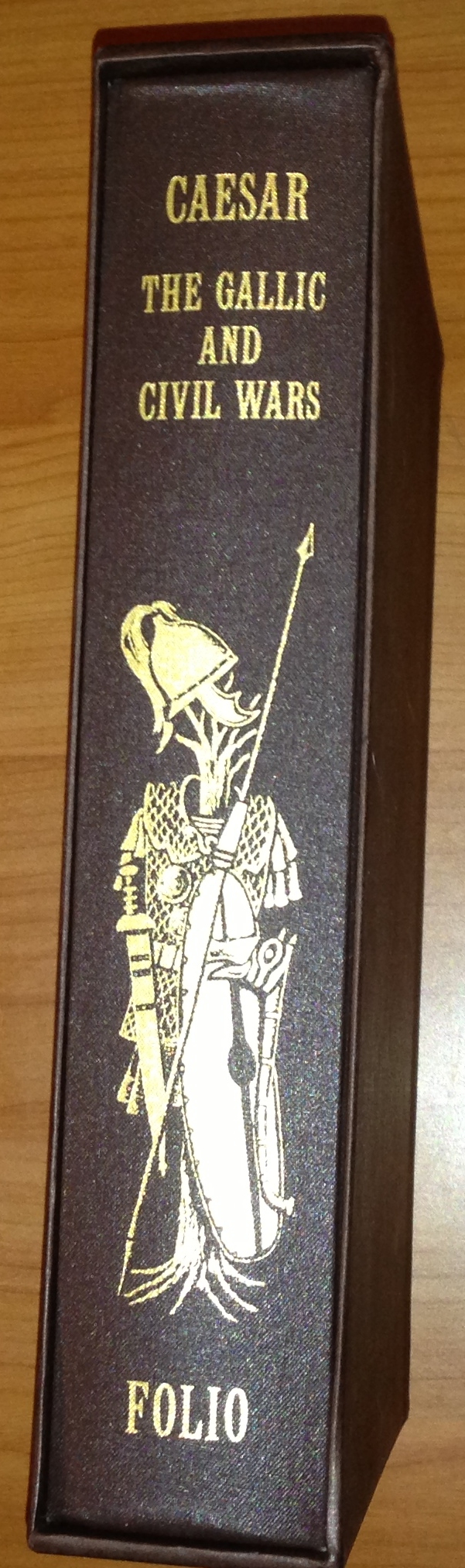
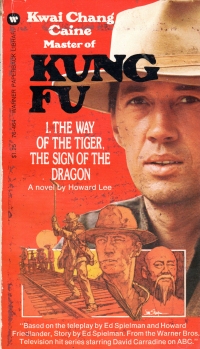
So I picked up four paperbacks tied to the old television show Kung Fu, which totaled like fifteen dollars, and wandered around through the fiction, drama, and poetry sections, but nothing caught my eye. I went looking for the philosophy section, and before I got there, I found a shelf of Easton Press/Folio Society books at 25% off. Well, that’s a way to spend some money. I picked up Julius Caesar’s The Gaulic and Civil Wars, which I meant to add to my Christmas list after reading Last Seen in Massilia, and William James’s The Varieties of Religious Experience. I put back a couple that I might try to acquire sometime in the future.

The six books in hand ate up the gift card, so of course I picked up a couple more, including Zane Grey’s Wilderness Trek and, having finally found the philosophy section, Existentialism and Thomism.

Here they are in blurry glory:

ABC Books Christmas gift

I also picked up a couple comics and learned they were $1 each; the titles include things based on old serials (Conan, Doc Savage, Tarzan, Flash Gordon), an X-Men 2099 title, and the first issue of an undoubtedly short series tied into the television cartoon MASK.

It was a good trip; as so many of these are wont, they make me want to read a bunch. So if you excuse me, I shall.

Buy My Books!
Buy John Donnelly's Gold Buy The Courtship of Barbara Holt Buy Coffee House Memories

Book Report: Chains of the Sea edited by Robert Silverberg (1973)

Book coverThis book almost makes me regret saying:

It’s an interesting bit, an enjoyable little read from the era–the middle 1960s through, what, the 1980s? where the future is dystopian and overcrowded and the plots are novel and clever.

The book collects three stories, only the third of which I would call novel or clever. The other two are run-of-the-mill apocalyptic bits that put Man in his place.

They include:

  • “And Us, Too, I Guess” by Geo. Alec Effinger, which presents a scientist and a working man who wants to breed fish in parallel story lines in the near, dystopian future, when the “scientists” (who work in their own labs on simple experiments that only recreate past discoveries) discover that a single species is dying every day (and might have been for a long time). Hey, here’s the shocking ending: MANKIND DIES. Because of nature or maybe what mankind did to it.
     
  • “Chains of the Sea” by Gardner R. Dozois, in which aliens invade, but nobody can see them. A child, however, who has maintained his imagination even beyond his very early years in the dystopian near future can see the “Others” which are intelligent species that adults cannot perceive. Through them, he learns that the aliens have come to renegotiate compacts with the other species and with the new species, the artificial intelligence in human networks. In a moment of poignant coming-of-age drama for the lad, MANKIND DIES. Also, I’m not sure what the title means or how it applies to the story.
     
  • “The Shrine of Sebastian” by Gordon Eklund tells the story of a reluctant “pope” of a decadant church is tasked by the previous, newly deceased “pope” with burying her remains at the shrine of Sebastian, a future profit who convinces mankind that it should leave the wasteland of the Earth behind. Most men do, but some remained with the robots in a decaying society. Then, MANKIND DIED. Sorry, I was going on habit there. In this case, the things that thought they were human discovered they were Androids, like Sebastian. Mankind might have survived, somewhere out beyond the sky, but here on Earth, ROBOT AND ANDROIDKIND WILL DIE.

In an essay in the Atlantic, Noah Berlatsky ponders
When Science Fiction Stopped Caring About the Future

Most people think of science-fiction as being about the future; it’s a genre that explores possibilities, from Dr. Frankenstein’s invention of artificial life to Ursula K. Le Guin’s world populated by humans who have all evolved into single-gendered hermaphrodites. What might happen if? What could happen when? Sci-fi thinks about new technologies, new societies, and new ways of being, good or bad.

And then science-fiction fans turn to the new Star Wars trailer, and find, not the future, but a reshuffling of 30-year-old detritus.

Read enough of the C-List science fiction from the past, and you’ll learn that the best of science fiction sticks with you but most of it, especially the pedestrian stuff, falls away from you mostly unremembered. A lot of the old stuff retreads common tropes just as much as new stuff does; we just forget it if we even bother to read or to have read it.

So I won’t remember these stories much, but innovative and imaginative stuff from the era will still captivate me. And in time, I’ll recycle my line about how all the science fiction from the past is better than all the science fiction now. Because I’ll mostly remember the good and won’t remember this particular volume much at all.

Books mentioned in this review:

Buy My Books!
Buy John Donnelly's Gold Buy The Courtship of Barbara Holt Buy Coffee House Memories

Just in Time for Next Christmas

A new Ayn Rand novel, something she never published, is coming out next year:

Ayn Rand fans, here’s something to whet your appetites: New American Library has released the cover image for “Ideal,” the first Ayn Rand novel to be published in more than 50 years.

Ayn Rand, author of “Atlas Shrugged” and “The Fountainhead,” invented the philosophy of Objectivism. More than 25 million copies of her novels have been sold around the world.

“Ideal” tells the story of a screen actress who is accused of murder and visits six of her most devoted fans to ask for help.

I’ll get it, of course. And that reminds me: It’s been almost ten years since I read The Fountainhead.

(Link via Ace of Spades HQ.)

Buy My Books!
Buy John Donnelly's Gold Buy The Courtship of Barbara Holt Buy Coffee House Memories

Book Report: Magic by William Goldman (1976)

Book coverYou might be familiar with William Goldman for a little book he wrote and adapted for the silver screen called The Princess Bride. This book ain’t that.

Instead, this is a mid-1970s crime thriller about a magician/ventriloquist on the verge of television success who flees from New York City to his hometown upstate because he’s afraid he might be cracking up. Then he cracks up. With a body count.

I’m afraid I’ve given much of the story away, but in the book, Goldman presents it as a little bit of a mystery. He has some diary entries that are labeled as part of a police investigation; then we have some interplay between the main character and his partner; then we have a flashback to the main character’s youth and early career and how that has led him to the precipice of success and this crack-up. So there’s some suspense in what sort of crime will occur, and it’s unfortunate what does transpire.

I thought the book was okay, but it does have a 1970s feel to it in the same way that 1970s science fiction does. Or is it just me?

Books mentioned in this review:

Buy My Books!
Buy John Donnelly's Gold Buy The Courtship of Barbara Holt Buy Coffee House Memories

Brian J. Noggle Is No Poseur

At least not according to Jonah Goldberg:

I realize that talking about Nietzsche and the popular culture — or really Nietzsche and anything — is like reading Proust during the time-outs at a Packers game; it assaults the nostrils with the scent of the poseur.

As you know, gentle reader, I read poetry, tourism, and art books during Packer games.

I don’t even know how to pronounce poseur.

Buy My Books!
Buy John Donnelly's Gold Buy The Courtship of Barbara Holt Buy Coffee House Memories

Book Report: Last Seen in Massilia by Steven Saylor (2000)

Book coverAs I mentioned in my book report on Murder for Halloween, I have a number of Steven Saylor paperbacks I picked up en masse somewhere. The short story in Murder for Halloween provided me an excuse to pick up this book.

Strangely enough, although I thought I put the books in series order on the shelf when I first put them on the shelf, when I grabbed the first book on the left, I got this volume, which is number 8 in the series, but not the first one of the series I own. Now, it becomes very clear that the books have the series number and the year in which they take place written in marker atop the pages, but I did not know this when I grabbed the book, so I got one in the middle of the pack I own.

This book finds Gordianus, the Finder, sneaking into Massilia, which is under seige by Caesar’s forces in the Roman civil war. Gordianus’s adopted son, a spy for Caesar, has disappeared in the city, so Gordianus and his son-in-law pose as soldiers entering Massilia by a tunnel. When the tunnel assault is washed out, only The Finder and his son-in-law survive and make their way into the city where they become acquainted with the Scapegoat, an outcast chosen to take on the sins of the city and who sacrifice themselves. The group witnesses a murder or suicide from atop the sacred Sacrifice Rock and are approached by a leading Massilian to search for his missing daughter.

It’s intrigue and a bit of mystery wrapped in a bit of historical research that runs pretty smoothly, but does on a couple of occasions–sentences really–come out and have the characters speaks a bit of exposition. So it’s not without a touch of that, but it does get one into the setting and the time period rather well.

It is a bit intriguey for my tastes, but not so bad that I won’t read the rest that I have, starting with the newly rearranged first I own.

Books mentioned in this review:

Buy My Books!
Buy John Donnelly's Gold Buy The Courtship of Barbara Holt Buy Coffee House Memories

Book Report: Norman Rockwell: A Sixty Year Perspective text by Thomas S. Buechner (1972)

Book coverAs you would expect, this book is a collection of Rockwell paintings and drawings throughout his career, including some advertising work, Saturday Evening Post covers, and work for Look magazine.

The text with the images details his career and his biography and turns attention to the evolution of his style and subject matter in a fashion I’ve not seen in other retrospectives or in the monthly feature in the Saturday Evening Post back when I subscribed (before I completely grew weary with the Government Is The Solution articles interspersed among the Rockwell retrospectives and health advice for older people).

You know, I could read books about Rockwell and look through collections of his work that just put the images in a different order every couple of months because the work hits me in a sweet spot: It’s comprehensible and figurative (literally) and it hearkens back to situations, eras, and a general zeitgeist that might never have existed exactly as depicted, but I miss it just the same even though my youth was nothing close to it.

So I enjoyed it, and I’ll pick up more of the same (and quite possible exactly the same given my book buying habits) at book sales in the future.

Books mentioned in this review:

Buy My Books!
Buy John Donnelly's Gold Buy The Courtship of Barbara Holt Buy Coffee House Memories