Book Report: The Time-Hoppers by Robert Silverberg (1967)

Book coverThis book is a short science fiction book by Robert Silverberg, whose Three Survived I have previously reviewed.

Within this book, a future cop in a distant, overpopulated future has an illicit second home in the only uncrowded part of the world and fears discovery when he’s given a tough assignment: investigate the “time hoppers,” people who find an illegal operation that sends them from the crowded present into a free past. As he investigates and worries about the political expectations. his own brother-in-law considers the trip.

The book jumps between different characters in different situations in this world, from the cop to his sister in a lower caste than he to one of the two leaders of the omnipresent government to the brother-in-law to the cop’s underling who is blackmailing his superior for his distant getaway. One would expect there might be some in-book time travel involved, but it takes place mostly in the future.

It’s an interesting bit, an enjoyable little read from the era–the middle 1960s through, what, the 1980s? where the future is dystopian and overcrowded and the plots are novel and clever. Perhaps I’m siloed a bit in reading the blogs of writers of science fiction subgenres these days, where the stories are a bit more predictable and follow the plots of something that would make a good video game. I confess I read a number of novels written from video games and movies, so my perspective is probably skewed. But I get a definite sense of a book that’s been written in the middle of the 20th century that I don’t get from novels from the 1980s on. Perhaps it’s just the length that cues me in–this one clocks in at 182 pages, half or less of a modern book. Also, the author has read other books. Allusions from classical literature and history flow throughout. They’re not necessary for the reading and enjoyment of the book, but they do serve to pat the well-read reader on the head for all his or her previous reading. I need that.

But I really enjoy this short books from the middle of the last century more than thicker later pieces. Maybe I’m just impatient.

At any rate, I liked the book and I like Silverberg.

Books mentioned in this review:
Buy My Books!
Buy John Donnelly's Gold Buy The Courtship of Barbara Holt Buy Coffee House Memories

Book Report: Tiger at the Gates by Jean Giraurdoux / translated by Christopher Fry (1935, 1955)

Book coverWhen I opened this book and saw the name plate in the front cover, I knew where I’d gotten it: an estate sale in 2007 in Old Trees. Mr. Paul, I remember your name for your excellent taste in literature and music.

At any rate, this book is set immediately before the Trojan War. Hector has returned from another war, a successful one, with his troops. His brother Paris has taken Helen and has her, and the Greek fleet has just arrived to take her back. Some elements of the Trojan populace, including the leader of the Senate and a poet, love the thought of war even though they do not fight it and want to start a new war with Greece. Others, like Hector and the women who have missed or lost their men, want peace and are willing to act without “honor” to get it.

This book was translated and performed in New York in 1955, so it’s easy to think it was a Cold War parable. However, the original French play was written in 1935, between World War I and World War II, so if you’re eager to limit its impact to its historical context, it’s about the rise of Germany perhaps. Within, though, Giraudoux explores the differences between men and women, between warmongering and peace-at-any-cost viewpoints, and between the different sensations and aesthetics of love and/or human relationships.

However, the play itself is a little wordy and not very clever; whether this is the case in the original French I don’t know, but there’s no pull real tension or drive between the scenes amid the philosophical speaking. This probably wouldn’t play so well to modern audiences.

Within the play are a couple of black and white photographs of people who appeared in the New York version on stage. In a desparate bid to tart up my book reports and to generate Rule 5 fodder, I’ve included photos of some of the women who appeared in the play below the fold. Continue reading “Book Report: Tiger at the Gates by Jean Giraurdoux / translated by Christopher Fry (1935, 1955)”

Buy My Books!
Buy John Donnelly's Gold Buy The Courtship of Barbara Holt Buy Coffee House Memories

Book Report: New Pearl of the Orient Korea by Korea National Tourism Corporation (~1980)

Book coverThis book is one of the Korea-centric books I bought this spring in Clever. Like the first two I read, it’s a tourist-focused book. As a matter of fact, the Korean government’s tourist arm put it out. So it describes places to go and to see in South Korea and highlights some of the customs, traditions, and other cultural facts about the country that might interest a viewer, so it’s got an added dimension that the purely artifact- and location-based tourist tracts don’t.

On the one hand, the material I’ve read has covered a lot of the same ground and has been location- and artifact-based books I’ve read. But in reading similar material over and over again, I’m starting to pick up a sense of Korean history vicariously. I know when the Silla dynasty came to power, and I’ve got a sense of when the Yi (or Chosun) dynasty came to power. Although I lack detailed knowledge of the ins and outs of the history and the invasions, I’m getting a very high level sense of them. I’ve got a couple more books on Korean art to go through, and I think some of it will stick just from the repetition. Good for me.

At any rate, this book is an interesting artifact of its own in that it brags about different locations with all paved roads or mostly paved roads by 1980. I can laugh, because I live in Greene County, Missouri, one of the few counties in the state whose (public) roads are completely paved (although I’m not too far from some unpaved Christian County roads). Also, the book talks about driving four hours from Seoul to visit a location. I’m not much of a traveller, but it doesn’t appeal to me to fly some dozen hours to a destination and then drive eight hours round trip to another location. Perhaps that’s geared more toward the people who travel to Korea for a month or something.

I’m glad I’ve picked these books up and have looked through them. And I’m absolutely ready if one of the local trivia nights has a category called Korea. Well, that’s overstating it: a lot of this washes over me. But I’m more prepared than many people.

Books mentioned in this review:
Buy My Books!
Buy John Donnelly's Gold Buy The Courtship of Barbara Holt Buy Coffee House Memories

Book Report: Murder for Halloween edited by Michele Slung and Roland Hartman (1994)

Book coverI started this book on Halloween, appropriately enough. Which means it has taken me over two weeks to read this one book, which hardly justifies my profligate book buying habits. However, in my defense, the short story form leads to earlier reading stoppage in the evening, as instead of maybe just reading one more chapter of a novel, I have to think, “Do I want to read a whole new story with whole new characters and a whole new narrative style and situation tonight?” Often, the answer was no.

That’s not to knock the quality of the short stories in the volume; they’re all crime stories, not all of which include murder, centered on Halloween. Most have been published before, which explains why I’d read one of them before, an Edward D. Hoch Nick Velvet story I probably caught in its first appearance in a Ellery Queen.

At any rate, the book includes:

  • “Monsters” by Ed McBain
  • “The Lemures” by Steven Saylor
  • “The Adventure of the Dead Cat” by Ellery Queen
  • “The Odstock Curse” by Peter Wimsey
  • “The Theft of the Halloween Pumpkin” by Edward D. Hoch
  • “Hallowe’en for Mr. Faulkner” by August Derleth
  • “Deceptions” by Marcia Muller
  • “The Black Cat” by Edgar Allan Poe
  • “OMJAGOD” by James Grady
  • “The Cloak” by Robert Bloch
  • “What a Woman Wants” by Michael Z. Lewin
  • “Yesterday’s Witch” by Gahan Wilson
  • “Walpurgis Night” by Bram Stoker
  • “Trick or Treat” by Judith Garner
  • “One Night at a Time” by Dorothy Cannell
  • “Night of the Goblin” by Talmage Powell
  • “Trick-or-Treat” by Anthony Boucher
  • “Pork Pie Hat” by Peter Straub

Some of them are straight crime fiction, but some slide into horror and fantasy. “One Night At A Time”, for example, deals with a vampire detective. A couple of the stories are told from the perspective of children, such as “Yesterday’s Witch” and “OMJAGOD”. Some are of the quality of detective magazine filler, such as “What A Woman Wants” which is about a police squad looking for a smash-and-grab thief that uses Oldsmobile Cutlasses in his crimes, and the antagonist has a ride along magazine writer and agonizes about how to approach a fellow cop for a date fishing.

So it was a timely read when I started it, but a time consuming read once I started it. The biggest takeaway I got was in reading the Steven Saylor story set in Ancient Rome. I have a number of his paperbacks that I picked up some time ago, and his short story here has given me the excuse to pick one of them up.

Books mentioned in this review:
Buy My Books!
Buy John Donnelly's Gold Buy The Courtship of Barbara Holt Buy Coffee House Memories

Book Report: Limericks by Edward Lear &c (1980)

Book coverThis book is just what it says: A collection of limericks, the five line poem type.

The book contains 212 limericks by Edward Lear, the English writer who popularized the form. His limericks are a bit of nonsence, and the fifth line pretty much just restates the first line without the clever twist that later limericks employed. So we get things like this:

There was a Young Person in Pink,
Who called out for something to drink;
But they said, “O my daughter,
There’s nothing but water!”
Which vexed that Young Person in Pink.

and:

There was an Old Person of Fife,
Who was greatly disgusted with life;
They sang him a ballad,
And fed him on salad,
Which cured that old Person of Fife.

After the main course of Lear, we get 28 limericks from Punch magazine and then 20 other limericks. These last 48 are in the contemporary form with a little more punchline to the last line, but none of them stuck with me or inspired me to memorize them and tell them to others.

I’m not really consumed with the urge to try out the form, either.

So skip this book unless you’re a real scholar on poetry forms or want something to browse through during football games and don’t mind re-reading the same limerick a couple of times because you’d forgotten you’d read it before third down.

Books mentioned in this review:

Buy My Books!
Buy John Donnelly's Gold Buy The Courtship of Barbara Holt Buy Coffee House Memories

Book Report: Leif and Thorkel: Two Norse Boys of Long Ago by Genevra Snedden (1924)

Book coverThis book is a ninety year old children’s book, written when children’s books were not 300+ page fantasies part of a series for adults to read. As such, it’s a couple pages over one hundred and is, the title page informs us, designed to make children interested in history. As opposed to fantasy, magic, dystopia, and intrigue, which is what we’re teaching them now, I guess.

At any rate, this follows two young Norseboys, Leif Ericson and Thorkel. Leif has come to live with Thorkel and his family, including father Lodin and wife Astrid. The chapters of the book recapture some of the slices of life in Norway around 1000 AD: Lodin comes home from raiding England; they drive the cattle down from the mountains for the winter; they prepare for and endure winter; they prepare the cattle to go to the mountains in the spring; they attend a Thing, which is a court proceeding adjudicating a dispute among neighbors and then a duel when one party does not concede. Then, the boys go their separate ways: Leif to Greenland where his father lives and then onto the Americas briefly and Thorken as part of a war between his half-brother, who becomes king of Norway, and an alliance of other nations against him.

The book has no larger plot other than these guys growing up and becoming men. It illustrates the way the Vikings lived from the perspective of young men whom the target audience could relate to. And it leaves the reader a little smarter than when he started, even if it’s only to remind an adult of things he’d learned about the Vikings in school but didn’t have at the tip of his brain.

This 1924 book was published by the World Book Company. Later, that company would be better known for its encyclopedias.

It’s a handsome looking hardback, too. Which is a shame, though, because I’ll probably start collecting other volumes in the series in my nonchalant collecting fashion, and it’s hard for me to keep track of all things I’m nonchalantly collecting.

Books mentioned in this review:
Buy My Books!
Buy John Donnelly's Gold Buy The Courtship of Barbara Holt Buy Coffee House Memories

Wherein Brian J. Is Made To Look Like A Piker

Randy Johnson (not the baseball pitcher) rounds up his October reading: Thirty books.

I’m not my top pace of a couple years back, and even then I was not reading thirty books a month.

Here’s what I completed in October, if you’re interested:

Poems of Creatures Large and Small edited by Gail Harvey
Dirty South Ace Atkins
The Fall Albert Camus
Longarm and the Border Showdown Tabor Evans
As Autumn Approaches Ronald E. Piggee
No Exit and Three Other Plays Jean-Paul Sartre
Leif and Thorkel Genevra Snedden

Which are books 41-47 of the year.

My peak in recent years is 106 in 2011.

Buy My Books!
Buy John Donnelly's Gold Buy The Courtship of Barbara Holt Buy Coffee House Memories

Book Report: As Autumn Approaches by Ronald E. Piggee (1993)

Book coverThis book is a chapbook written by a Vietnam veteran, a black father in Nebraska in 1993. The poetry within ranges through a bunch of different styles, including free verse and at least one villanelle. It’s better than a lot of chapbooks I’ve read.

The book led me to some personal musings, though. In 1993, my father was two years away from dying from cancer; he was a Vietnam-era veteran who served in Okinawa instead of Vietnam (and I think he felt a little guilty about it). It’s hard for me to imagine him writing poetry, but that was not his way. He was a hands guy: his creative hobby of the time period was building elaborate ship models that required him to tie nautical knots in thread using a magnifying glass and tweezers.

Crazy that a book of poems about growing older would make me think about my father, how he didn’t grow older, and how I will not long be older than he ever was. Or maybe not so crazy, since that’s what poetry does. So consider that an endorsement of this book: It was definitely evocative.

Buy My Books!
Buy John Donnelly's Gold Buy The Courtship of Barbara Holt Buy Coffee House Memories

Book Report: No Exit and Three Other Plays by Jean-Paul Sartre (~1950)

Book coverSince I’m apparently on an Existentialism kick (see my recent report on Camus’s The Fall. I picked up this book. I’ve read No Exit before, whether in my collegiate Existentialist reading period or my collegiate Existentialism class. I had not read the three others, though.

For those of you who don’t know, The Fall is about three people in Hell. Each of them is condemned for sins related to love, and their torment is to spend eternity with people who irritate them. It’s the source for the quote “Hell is–other people.” that American collegiate Existentialists banter amongst themselves.

The Flies is a retelling of the story of Orestes and Electra’s revenge upon their mother Clytemnestra for the killing of their father Agamemnon. In this retelling, the Orestes returns to Argos just before they ‘celebrate’ a holiday when the dead come back to remind the living of their crimes and slights against the departed. Orestes meets a disguised Zeus and then his sister, who has long hoped for her brother’s bloody return. When they meet, she does not think he’ll be the one to wreak vengeance, but he does and she has second thoughts. He kills his mother and stepfather, and the siblings hide out from the vengeance-seeking populace and Furies in Apollo’s temple, where Zeus appears to deal with them and to get them to return to his fold and to rule the people by casting off their freedom and doing his plan.

In Dirty Hands, a comrade imprisoned for killing the leader of a rival faction returns to his revolutionary compatriots to their chagrin, as he has proven to be unreliable. An old flame or crush of his secures his temporary safety while she tries to understand what went on with the assassination attempt and whether the fellow killed the charismatic and pragmatic leader for proper party reasons or in jealousy.

The Respectful Prostitute tells a short tale about a prostitute fresh in town who was the witness of the killing of a black man on a train by an respected citizen of the town and the member of a powerful family. The official story is supposed to involve the attempted rape of the young lady by two black men and her defense by the racist fellow, but she does not initially want to hew to that line and tries to resist various forms of persuasion to keep her story true.

They’re all pretty quick reads; the translations aren’t dated. Sartre’s work really draws out some of the Existentialist thoughts on freedom and what it means to be a person, and Sartre really subtlely leaves some questions for us to wonder about–particularly whether the wife of the main character in Dirty Hands got herself into a compromising position with the political figure to trigger her husband’s jealousy and compel him to complete his mission. Pretty good stuff, and reading it makes me feel deep.

Books mentioned in this review:
Buy My Books!
Buy John Donnelly's Gold Buy The Courtship of Barbara Holt Buy Coffee House Memories

Book Report: Historical Tweets by Alan Beard and Alec McNayr (2010)

Book coverThis book looks enough like something that Henry Beard would write that I thought maybe they were the same guy (until I looked at a Henry Beard book and saw his name was Henry and not Alan). I thought maybe they were related. It appears not. They’re only in the same vein of humor.

This book presents a series of Twitter messages–tweets– that historical figures might have sent. It’s akin to a number of lists you’ve already read on the Internet.

So it’s quick and it’s clever in places, but there’s nothing especially revelatory about history, nor does the humor last with you after you turn the page.

But it counts as a book I read this year, so there.

Worth a buck at a book fair, but please don’t give me the 2015 desk calendar for Christmas.

Books mentioned in this review:
Buy My Books!
Buy John Donnelly's Gold Buy The Courtship of Barbara Holt Buy Coffee House Memories

Book Report: Longarm and the Border Showdown by Tabor Evans (1993)

Book coverI picked up this book, and I was all like, “Shazam, how different are these titles in the same series?” For lo, although the book started out with a bit of gratuitous hey, sailor contact for grandfathers everywhere, the paragraphs were longer, deeper, and richer than I could have expected. But then I realized I’d confused this, a volume in the Longarm series, with the entry in the Gunsmith series that I’d read earlier. And they’re night and day.

In this book, Longarm is a Federal marshal sent from his normal Colorado range to Laredo, Texas, to investigate a fellow Federal marshal who might have gone bad and might be helping crooked local authorities in smuggling operations. So Longarm picks up an unlucky gambler traveling partner and heads down to pose as a merchant who can happen to come across a large number of Federal weapons to sell.

As I mentioned, the book is deeper and richer in prose and its set pieces take a little work. It’s got some, er, amorous scenes, but it’s also got its limits in that area; there are apparently some women the main character won’t touch. Additionally, the book reads like a Western with its painting of frontier towns and–who would think it?– concerns about horses and transporting horses.

So I liked it as a lighter read, and its linear story telling allowed me to put it down and not have to go back to see if I’d forgotten a three page jump cut scene with important information that I’d read and forgotten the night before.

So as I get older, I’m finding myself looking forward to good genre fiction and classic literature for pleasure reading than modern thrillers and detective novels. Fortunately for me, there is plenty of both on my to-read shelves. Also, should I want to get into this series, it’s apparently still in production 20 years after the release of this book, the 174th in the series. It’s up to 436 novels done or in planning, 30 Giant novels, and 4 Double novels (according to Fantastic Fiction). So I’ll keep my eyes open for these titles at the book sales in Ozark and in Clever. And someday I’ll gut out others I own in the Gunsmith series. When I need penance for something.

Books mentioned in this review:
Buy My Books!
Buy John Donnelly's Gold Buy The Courtship of Barbara Holt Buy Coffee House Memories

Good Book Hunting: Friends of the Springfield-Greene County Library Round 2, October 25, 2014

Yesterday, I shamed myself before fellow volunteers at the Friends of the Springfield-Greene County Library book sale. Because I regaled them with tales of how many books I bought at book sales and because I told them I was restraining myself this time. I did neither; I came back for books, and I only bought a couple.

I got:

  • Three books in the Reader’s Digest classics series, Around the World in 80 Days, Lost Horizon, and The Sea Wolf. I’m pretty sure I’ve read two of them before, but now I have them in the editions I collect. Well, one of the editions.
  • Two other classics, Gulliver’s Travels and Maugham’s The Moon and Sixpence.
  • An Ozark Lawyer’s Story by John Hulston; I read the first part of his autobiography last year.
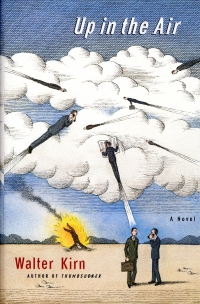
  • Up in the Air, the novel that was the source of the Clooney film.
  • A book of critical essays on Rudyard Kipling.
  • A collection of love poems and a collection of limericks.
  • A book about Lord Tennyson’s poetry and philosophy. Six lectures from 1906.
  • F15E Strike Eagle by Microprose software. It’s a book about the plane, not the game.
  • Two fantasy bits, R.A. Salvatore’s Mortalis and the novelization of the film Dragonslayer. I think I have a mass market paperback graphic novel of the latter, too.
  • A couple of localish, self-publishedesque collections of poems and short stories, Dunking Doughnuts and Never Get Mad At Your Sweetgrass.
  • Mark Twain Speaks for Himself.
  • Leif and Thorkel: Two Norse Boys of Long Ago, which looks to be a 1924 children’s novel.
  • Historical Tweets, a humorous browsing book capturing how historical figures might have tweeted.

An interesting smörgåsbord, as Leif and Thorkel might say if they were Swedish boys of long ago instead of ancestors of a-ha fans.

I feel a little justified at only buying 20 books for myself (one of those depicted is a gift) as I’ve read more than 20 books this year. Of course, I’ve bought more books than I’ve read this year, but I’ll never go without having a variety of choices when selecting a new book to read. If only I could capture the interest and excitement I get when buying the book when I go to select the books; sometimes, that excitement and interest fades after time, so I’m not going to be as eager to delve into a tale of old Norway in March 2015 as I am today, but I’ve already got other things to read. Alas. Ay, me.

Buy My Books!
Buy John Donnelly's Gold Buy The Courtship of Barbara Holt Buy Coffee House Memories

Good Book Hunting: Friends of the Springfield-Greene County Library, October 23, 2014

It’s been a bad season for the local book fairs and Brian J. I missed the one in Clever because I didn’t know when it was (although since I’m a Friend of the Clever Library, I probably got a notification that I discarded). I missed the Christian County Library book sale due to car problems. But I managed to sneak off to the Friends of the Springfield-Greene County Library book sale yesterday.

Strangely, this one is at the upper limit of my size preference. There’s a lot to look at, and it would take hours to browse all the tables. So I headed to the LPs and went around the Classics and local books sections of the $1 books.

Here’s what I got:

I got 23 LPs, including:

  • Portrait by Lynda Carter because… Lynda Carter.
  • Playing to an Audience of One by David Soul to counter the notion that I buy albums based solely on attractive women on the cover. Also, if I was going to have Wonder Woman, I was going to have Hutch.
  • Look Around by Sergio Mendes and Brasil ’66.
  • A Christmas album by Eydie Gorme and Steve Lawrence.
  • Big Bad John by Jimmy Dean because my mother had this song on a record (and I probably still do somewhere) and I wanted to play it for my children. The older one loves it already.
  • Two jazz clarinet albums by Pete Fountains, French Quarter and Pete’s Place.
  • My first Pat Boone album, Moonglow.
  • Alley Cat by Guy Lombardo. Not because it has a cat on the cover, I swear. Although I did not buy any albums with dogs on the cover to balance it out.
  • Inseperable by Natalie Cole.
  • Music for Lovers by Sammy Davis, Jr.
  • Music of Erin by Mary O’Hara.

And I got a boxed set of Bach’s Mass in D Minor.

I don’t mind throwing a dollar for an album by someone I don’t know; many of these, I’ll only listen to once and then only sporadically. However, I might find something I like and will not only listen to over and over again, but I’ll keep an eye out for other records (and other music formats) in the future. It explains why I have a pile of Eydie Gorme and Herb Alpert CDs and records.

At any rate, I didn’t let you down: I did buy some books, including:

  • The Epic of Gilgamesh because I didn’t want that uncomfortable silence if one of my children were to ask me if we had it.
  • A Red Cell novel, Vengeance, from this century that someone helpfully incorrectly classified as a classic.
  • Collections of poetry by Rod McKuen and Gunter Grass.
  • A couple of bundles of what I thought were chapbooks; however, these bundles look to be instructor’s guides to different authors and a writing workshop card set. I’m a little disappointed.
  • A book about the writing of Ross McDonald, the creator of the Lew Archer series of books.

I don’t know if I’ll make it back tomorrow (Saturday, half price day). It’s not like I need more books, and this particular sale is more important to me for the LPs these days anyway.

Buy My Books!
Buy John Donnelly's Gold Buy The Courtship of Barbara Holt Buy Coffee House Memories

Book Report: The Fall by Albert Camus (1956)

Book coverI picked up this book because it was sure to be more weighty than the other things I’ve been reading recently, and so it was.

The book is a short novel told in flashback by a reliable narrator. The first person narrator is a former Parisian lawyer who now haunts a bar called Mexico City in the red light district of Amsterdam. The narrator talks to a new visitor to the bar and, over the course of a number of nights and trips around Amsterdam, tells his story: He was a successful, had many mistresses, was respected, and demonstrated philanthropy until a single event called him to question himself, at which time he no longer felt the success he wanted to be and tried to show he was. He eventually ends up in this bar, telling his stories to try to knock other successful people off of their game as well.

Of course, the story told in flashback by an unreliable narrator makes it easy to dismiss his stories, but the book does illustrate a certain tension between a Dale Carnegie outlook and that of the Existentialist. That is, a Dale Carnegie self builds itself into greatness and might find happiness by striving to be better and experiencing setbacks, whereas the Existentialist might be going along all right until something triggers the Existentialism, the sense that the creation of the self is hypocrisy. I’m being a bit twee here, but I’m identifying two types of self-conscious personality types, people who think about who they want to be and either try to be it or do not. Of course, another personality type that is not so self-conscious exists and just does what it does, whether it’s Randian Triumph or Moochery or just people who go through their lives doing their things. Maybe I’m philosophizing a little glibly here and broadly talking about types of people who do not exist.

At any rate, it does show the defeatist Existential response to resistance in self-definition. Given the nature of the narrator, it’s not a ringing endorsement of this point of view, but it’s not an indictment of it, either. More of a description.

One can’t help compare this book to Jean-Paul Sartre’s Nausea; in that book, a historian eventually has his Existentialist trigger moment, but it’s just thought-based, whereas in The Fall, it is the narrator’s reaction to an event (or events) that triggers his pessimism. Ergo, it’s a much more approachable and true-to-life book. Of course, it’s been twenty years since I read Nausea, so I might be describing my experienced flavor of it instead of the book itself, so your mileage may vary.

At any rate, it’s a short little novel, as the Existentialists were wont, and it does give one some things to think about regarding consciousness, our self-images, and their relationships to the world. Which is never a bad thing, unless one goes the full Existentialist and starts feeling the need to compliment Sartre.

Books mentioned in this review:
Buy My Books!
Buy John Donnelly's Gold Buy The Courtship of Barbara Holt Buy Coffee House Memories

Book Report: Dirty South by Ace Atkins (2004)

Book coverWith this book, I decide I don’t like Ace Atkins’ books very much.

This is one in his Nick Travers line of books. Travers is a former New Orleans Saints linebacker who becomes a college professor, one who teaches only a class or two and spends most of his time researching blues music and interviewing old blues musicians. And doing favors for friends, favors of an investigative nature. Also, he becomes a bar owner during the course of the book and begins rehabbing/resuscitating his favorite blues bar. Also, he’s seeing a woman in Mississippi, but he spends a lot of time in New Orleans away from her, especially while on this case.

A fellow former football player, now a rap record mogul, turns to Nick when the new fifteen-year-old sensation is ripped off and when the rap mogul needs to come up with a large amount of cash to satisfy a loan from another rap mogul. So Travers looks into it amidst the other series business.

This book include the flaws I didn’t care for in The Lost Ones and Cheap Shot. Chief amongst them is how much of the book is spent on the series business and not on the efforts of Travers to solve the problem at hand. He gets a dog. He meets with his girlfriend, but she does not serve as a philosophical foil a la Spenser’s Susan Silverman. He kind of tries to mentor the fifteen-year-old by taking him to a friend’s farm, where he’s expected to do manual work to find himself (compare to Robert B. Parker’s Early Autumn). He gets ownership of a bar and works on it with friends; its opening serves as the triumphant end book. Most of these things do not apply to the actual plot of the book.

A good book, and a good series book, works the plot first and then a little bit of series growth and movement as the plot unfolds. In this book and others in Atkins ones I have read recently, the overarching movement of the series occurs at the same time and independently of the actual individual book’s plot. I’m not sure you even saw that in the late Parker as starkly as you see it here. Perhaps it’s the 21st century way–I don’t read that many modern series, as you know.

Also, this book offers three points of view: The first person of Nick Travers; a third person limited omniscient focus on one of the bad guys in scenes to show us how bad he is; and the first person of the fifteen-year-old. The perspective of the fifteen-year-old and all the scenes there only give us the flavor of his perspective and don’t advance the plot. The third person of the bad guy only serves to show us how bad he is. Well, okay, they show a little of relationships that prove important to the plot, but the scenes aren’t really necessary to show the relationships. They don’t even really humanize the bad guy or add depth to him; they just illustrate he’s a bad guy. And he’s just a level boss, not the big bad guy..

I’m not sure whether these extra scenes and extra points-of-view merely padd the book up to hardback size or if they’re intended as what my fiction professor told our workshop were nice little moments. But they slow the book down quite a bit.

Additionally, the book is built out of short chapters jumping around amongst the points of view and into and out of the plot. This doesn’t suit my current reading style, which is just a brief twenty or thirty minute session at night before bed. I found myself having to re-read preceding chapters to ensure that I hadn’t forgotten something out of left field that I’d read the night before. With a more linear book, I can recap by simply finding my place in the book.

At any rate, I only picked this book up because I dropped by the library when I was going to have an hour available for reading and nothing to read on hand. Unfortunately, I didn’t find a short history summary book and ended up with this book. Next time, I will try harder. Or make sure I’ve got a paperback in reach at all times.

Books mentioned in this review:

Buy My Books!
Buy John Donnelly's Gold Buy The Courtship of Barbara Holt Buy Coffee House Memories

Book Report: Poems of Creatures Large and Small edited by Gail Harvey (1991)

Book coverThis book is not the first in this series of grouped short poetry anthologies I’ve read; in 2007, I read Poems of Flowers and Poems of Friendship shortly after finding them at an Old Trees estate sale. I picked up the current volume at a thrift store about a week ago. I like these slim little anthologies that I read them quickly.

As with the other volumes, this slim (65) page volume collects mostly public domain poems on a theme. This time, it’s animals, so all of the poems are about animals (Tiger, tiger, burning bright? It’s in there.). As always, the poems vary in style and, honestly, quality, but it does offer a bit of a buffet approach to a number of styles and poets from Whitman to Wordsworth to a lot of Bret Harte.

I know, I know, Don’t you have an English degree? Shouldn’t you be reading Real Volumes of Poetry? Oh, but no. I’m currently into my third decade of trying to read the complete works of Emily Dickinson, friends, and I’m here to tell you that poetry is supposed to delight and entertain. It’s supposed to be deep pop music. Pleasing to the ear and conveying deep meaning. Like so much art, it got corrupted by critics and poetasters so that too much of it is either too ponderous to be appreciated by normal people or just twee without any deeper resonance. Give me a K-Tel collection of poems like this any day over the complete works of Wallace Stevens.

I liked this collection so much that I’m considering looking into how many Gail Harvey edited in this series and seeking out the others. Fortunately, the intersection of my laziness and otherwise busy day will intercede and prevent me from adding any more to my sagging shelves other than the upcoming autumn book sales and occasional trip to the thrift store.

Books mentioned in this review:
Buy My Books!
Buy John Donnelly's Gold Buy The Courtship of Barbara Holt Buy Coffee House Memories

Book Report: Bomun Temple in Seoul Korea (?) and Wonderful Korea

Book cover Book cover

I picked up these books in Clever this spring for something to flip through during football games. And so I did.

The first, Bomun Temple in Seoul Korea, is an inexpensive tourist trinket for visitors of a Buddhist temple in Seoul, South Korea. It’s a set of photos with captions bound with string, and it includes errata such as the same page appearing twice. It focuses on the artifacts and architecture of a single temple, so it’s pretty in-depth.

The second, Wonderful Korea, is broader. It’s broken into sections by province or geographic region and has a couple photos of different temples, pagodas, parks, and museums. As such, it focuses on things you can see all over Korea. It’s broken down into districts within Korea and highlights some of the things to visit in those areas. The area around Seoul is heavily represented, and the locations are given a couple of images and sometimes a couple of artifact images, but it is by design not very detailed about any one location. The book also includes a number of maps to help you get around Korea and the districts in each chapter, and amid all of the eastern architecture and art, there are dots on the map for the local YWCA. Which would now be historic, but were then contemporary.

Takeaways from flipping through:

  • Historical books from continents other than North and South America really drive home how recent our historical sites are. Whereas your local historical societies run back about a hundred or a hundred and fifty years before getting very swirling-fog-of-prehistory, these books feature temples built while the Roman Empire was a thing that were burned when Charlemagne was important and then rebuilt when Christopher Columbus was considered crazy instead of evil.
     
  • Eastern art and architecture aren’t my thing. I’m more into the highly realized works of the European Renaissances and beyond, and Asian art looks a little primitive and playful to me. That’s a taste judgment, ungentle reader, not a moral one. Your kilometerage may vary.

Still, I’m glad to have looked through them. I have a couple more from that score this spring and I’ll keep you apprised as I go through them, but I imagine my reaction will be similar.

Books mentioned in this review:
Buy My Books!
Buy John Donnelly's Gold Buy The Courtship of Barbara Holt Buy Coffee House Memories

Book Report: The Barrabas Hit by Jack Hild (1989)

Book coverSo close after reading Designation Gold, I picked up this book to really juxtapose and contrast the Marcinko books with more common men’s adventure fiction.

This book finds Barrabas set up and kidnapped in Athens by a former associate who blames Barrabas and the SOBs for a botched operation that left him disfigured. Once he has Barrabas locked in a basement on a Greek island, the man now going by Joshua leaves a trail for the SOBs to follow to lead them to his island–and an ambush.

The book starts out with the operation that went bad and then seemingly tries to play up the mystery of who this “Joshua” is. Perhaps the scene at the beginning was added later. It’s a quick read, of course, and interesting and consumable in that men’s adventure novel way.

Where I dinked the Marcinko and Weisman book about the non-first person narrator characters for seeming like NPCs, this book uses third person, so many of the characters come across that way, too. The good guys and the named bad guys are interchangeable but for a characteristic. O’Toole is the Irish one, Billy Two is the Indian one, Lee is the woman one, and so on. The plot is thinner and more straight forward than the more modern thriller (although there are only eight years that separate these two books, one is patterned on the thriller and one on the adventure novel).

At any rate, they’re different books and they suit different audiences or moods. But I experienced the flavor of each and, as I said, got the contrast acutely.

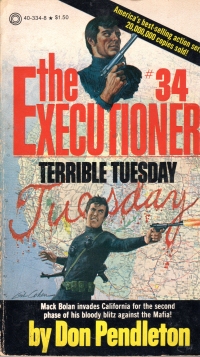
I’ve got a couple more SOBs books (and keep accumulating men’s adventure novels), and I’ll get to them as the mood strikes. The SOB books aren’t as good as the old Pendleton Executioner books, but they’re not dumpster diving like some of the paperback series are.

Books mentioned in this review:
Buy My Books!
Buy John Donnelly's Gold Buy The Courtship of Barbara Holt Buy Coffee House Memories

Good Book Hunting: Pumpkin Daze 2014

I swear, I did not mean to acquire a couple stacks of books today. We went to Republic’s Pumpkin Daze, a fall harvest festival with crafts, large vegetables, and funnel cakes, for a little while yesterday afternoon.

One of the booths featured retired educational professionals raising money for local scholarships. They did this by selling books. As we were late in the day, they offered everything you could fit into a bag for a buck.

So I did.

Pumpkin Daze books

The booth featured a lot of vintage science fiction paperbacks, so I helped myself. Here’s a partial list of what I got:

  • Starman Jones by Robert Heinlein
     
  • Solar Lottery by Philip K. Dick
     
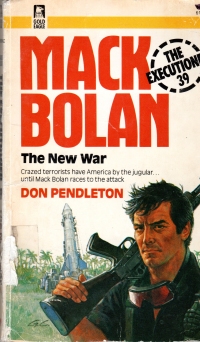
  • The Guns of Terra 10 by Don Pendleton, the author of the Executioner series.
     
  • Two from a series called Agent of T.E.R.R.A.
     
  • Two hardbacks from an anthology series called Flashing Swords!
  • A couple of series paperbacks, Starhawk # 1 and something from the War, Inc., line
     
  • Tanar of Pellugidar by Edgar Rice Burroughs
     
  • Wine of the Dreamers, science fiction by John D. MacDonald of Travis McGee fame and MfBJN love
     
  • Ox by Piers Anthony
     
  • The Complete Book of Shooting
     
  • Sarah Palin’s America By Heart to go alongside the currently unread Going Rogue
     
  • A Pocket Billiards rule book
     
  • An Andy Rooney book, Common Nonsense, that I did not recognize

&c.

Wow, what a collection. I’m looking forward to getting started on them.

And the total for my two stacks, my beautiful wife’s stack, and the sole book picked out by my oldest son, was $4 because I double-bagged our two sacks.

Buy My Books!
Buy John Donnelly's Gold Buy The Courtship of Barbara Holt Buy Coffee House Memories