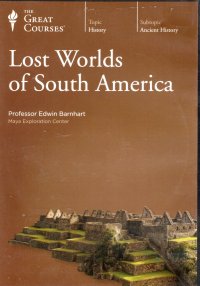
 After watching the Indiana Jones movies last month, I opted to watch the remainder of this video series.
I started listening to this course last June on our way to vacation in Fairfield Bay, Arkansas, but when we passed Harrison, the lanes on the state highways narrowed, and I needed all my concentration to navigate the roads, so I didn’t end up listening to it. And once we returned, well, I spend, what, an hour to an hour and a half in the car each week nowadays? It’s hard to maintain the thread of a lecture over a week. So the discs remained in the car until last month, when I pulled them out and brought them downstairs to watch.
And, gentle reader, as I discovered when listening to Unqualified is that listening to audiobooks is a bit of a pain for me these days since I’m not in the car and I’m not often doing mindless things where I can kind of listen and follow something while doing something else. In this case, watching a Great Courses lecture series means dedicating hours across many evenings. This lecture series is 24 lectures, which would be the upwards of 20 evenings given that I would sometimes watch two episodes. It seems like a big commitment–I haven’t completed seasons of television shows, for example, because of the commitment. So time will tell how often I complete these series until such time as maybe I commute again.
But I started watching the lectures in the middle, trying to remember where I had been when I last stopped listening in the car last year. I think I overlapped with a lecture or two, but the first couple of lectures–the first couple of nations/civilizations/worlds were very similar, although in different places.
The lectures include:
- South America’s Cradle of Civilization
- Discovering Peru’s Earliest Cities
- South America’s First People
- Ceramics, Textiles, and Organized States
- Chavín and the Rise of Religious Authority
- Cupisnique to Salinar–Elite Rulers and War
- Paracas–Mummies, Shamans, and Severed Heads
- The Nazca Lines and Underground Channels
- The Moche–Pyramids, Gold, and Warriors
- The Moche–Richest Tombs in the New World
- The Moche–Drugs, Sex, Music, and Puppies
- Enigmatic Tiwanaku by Lake Titicaca
- The Amazon–Civilization Lost in the Jungle
- The Wari–Foundations of the Inca Empire?
- The Chimu–Empire of the Northern Coast
- The Sican–Goldsmiths of the Northern Coast
- The Inca Origins–Mythology v. Archeology
- Cuzco and the Tawantinsuyu Empire
- The Inca–From Raiders to Empire
- The Inca–Gifts of the Empire
- The Khipu–Language Hidden in Knots
- Machu Picchu and the Sacred Valley
- Spanish Contact–Pizarro Conquers the Inca
- Remnants of the Past–Andean Culture Today
I say that the lectures were a bit repetitive, and some of that might be because I was listening and not watching the earlier lectures. The professor spoke of the earlier civilizations having similar architecture, but in different locations, and he focused a lot on the common elements–the similar architectural styles/city layouts, the prevalence of the Fanged Deity/Decapitator Deity, and so on–although he did mention the differences–seafood diets versus agriculture based on location and the importance in El Niño cycle in ending some of these civilizations.
But watching the lectures added some depth. One could see the art he was describing, view the maps showing relative locations, and observe the ruins as they are today (Brian J. stopped the series because he was running out of synonyms for see). It proved a little distracting in part, though, as one notices that the shifts from one camera to another were not cut, so when he changes between the two, he pauses, his head turns to pick up the teleprompter or cue cards, he turns his body, and then he starts walking again and speaking. One wonders, is he on a set or is it a green screen behind him? He picks up a stirrup vessel from a table, but was that table always there or was it set before a green screen? Has he always had the remote or controller in his right hand? How many lectures does he wear the same clothes? And so on. Maybe it’s not so much a distraction but just something else to observe and think about while learning the material. So it’s more like the actual college experience.
At any rate, the lectures focus on Andean civilizations mainly because the Amazon has not been explored properly even now–the professor mentions that archeologists don’t generally want to dig in really remote areas–they want to spend years in urban areas where they can drive out to a dig not far away. Which led me to look up the number of uncontacted tribes in the Amazon, and it’s dozens of tribes (I saw a table on one Web site, but cannot find it now). Fascinating. So although Raiders of the Lost Ark was set in the 1930s, one could throw in a couple of drones and set something very similar today.
And although I am briefly able to talk about some of the greater pre-Inca civilizations like the Chavín, the Moche, the Wari, The Chimo, and the Sican–I made a gag at a trivia night a couple weeks ago that if we had such a category, I would be dialed in. But as time passes between now and the future, the details will start to fade, and I’ll only remember a couple of things. Like that the people of the Incan civilization had endured a Civil War prior to Spanish contact, and smallpox had already done maybe the opposite of decimate (whatever the latinate for kill 9 of 10 is) the population. But the civilization was not a utopia, and it expanded by military force (a conscript army of 100,000 showed up and asked if you would like to join the empire). So the lecture series plays it pretty straight in laying out that everything was not rosy, even if the professor argues that the civilizations might not have been as bloody-thirsty and head-hunting as thought. It gives you room to think for yourself and to research further if you can.
So I enjoyed the course, and I am briefly interested in reading some of the primary source material I have here–I have some stories of the Aztec conquest written near the actual events, and I was kind of tempted to seek out some of the primary texts that Barnhart mentions, especially chronicles written by the Spanish. But this will likely pass. And I have recently been researching raising alpacas as the Inca did, and I’m already planning to plant some potatoes this spring. So the course might have influenced me more than most (especially if I end up with alpacas and a couple llamas). At the very least, it triggered passing enthusiasm.


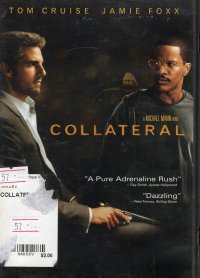 This film came out back when we still went to films in the theater–we were still in Casinoport. I had just started working as a consultant for the digital agency, starting my own consulting company and working from home for the first time. Basically, I’ve worked from home ever since except for a year or so when the agency hired me and had an office downtown. Perhaps that was not a film-filled summer–I was not only working full time for the agency, but I’d picked up short contracts with previous employers for in-office night work and white paper writing. So I had knowledge of the film when it came out and since–Foxx was something then, ainna? His Oscar winning turn as Ray Charles would come out a couple months later–and Cruise was in the mid-career doldrums, although his doldrums tended to move better than actual doldrums.
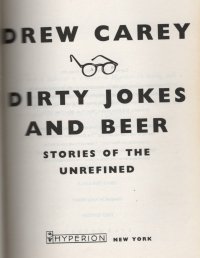 Wow, this book is almost thirty years old. I bought it at some point since then–the historical records (the blog here) are incomplete as to when, but the copy I have is a hardback without the dustjacket and has only the price marked in pencil on the frontspiece. The book, he acknowledges a with a smirk, is a bit of a money grab based on the popularity of his television show The Drew Carey Show during the Clinton administration.

 I got this book

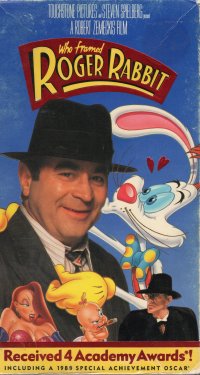 After completing the 2024 Winter Reading Challenge, I took the opportunity to pop in some films. I was in the mood for this one for some reason, one that I thought maybe I could watch with my boys when they were old enough, but they’ve gotten too old now. Jeez, when did I pick this film up? Before I was enumerating film acquisitions on this blog, gentle reader, so a long time ago that was not so long ago.
 Well, since I just read the novelization of this film, of course I was going to rewatch the series. Well, the real Indiana Jones movies. I picked up a VHS box set from the turn of the century (it looks like the commentary is copyright 1999). Which is why the videocassettes call these Chapter 24, Chapter 23, and Chapter 25 respectively; the Young Indiana Jones Chronicles, a two season series plus four television movies, comprise the first 22 chapters of the story. And as far as the 21st century entries into the film canon go, well, we will not speak of them again.

 This film, the events of which take place before Raiders of the Lost Ark, has a cold open where Jones has recovered the remains of a Chinese emperor for a gangster who does not want to pay and double-crosses Jones. Jones escapes with his life and the singer at the gangster’s nightclub, and although they (and Short Round, the annoying young sidekick) think they’ve gotten away, they’re passengers on a plane owned by the gangster–and the pilots bail out while Jones and crew are sleeping. Their narrow escape as the plane crashes in the Himalayas brings them to a village in India where the home stone has been stolen, and Jones decides to help return it. Which leads them to a fortress and a renegade rajah and a cult, including the cult leader who rips out still-beating hearts during rituals. Which is the gross-out moment in this film (akin to the face-melting in Raiders of the Lost Ark).
 I saw this film in the theater, gentle reader, I think. It seems to me that my brother and I came into a windfall that summer when the owner of my father’s favorite tavern at the time hired us to load a roll-on dumpster with junk stored in the three- or four-bay garage attached to the saloon. We worked two days and got sixty dollars each, and, gentle reader, we could do anything we wanted. So we went to see this film instead of UHF because this film had been out for a while and would likely be ending its run, and UHF had just opened. Well, as it happens, UHF also closed before this film. But we saw it at the first run theater on Mill Road, not the second run theater which was across the street. We had a wealth of options in the world; I guess we have a wealth of options now in our homes, but it really isn’t the same.