‘Heartbreaking’: Visitor accidentally shatters Jeff Koons ‘balloon dog’ sculpture at Art Wynwood
“Accident” my patootie. All the balloons and balloon-like objects must be destroyed.
To be able to say "Noggle," you first must be able to say "Nah."
‘Heartbreaking’: Visitor accidentally shatters Jeff Koons ‘balloon dog’ sculpture at Art Wynwood
“Accident” my patootie. All the balloons and balloon-like objects must be destroyed.
Buy My Books!
I run the risk of divulging biosecurity information that is undoubtedly already on the Dark Web, but today is a special day for me.
Not an extra special round number on the end–that was last year–but my beautiful wife asked me yesterday if I had any especial memories from my birthdays.
My birthdays are generally low-key affairs mostly now because there aren’t many who think beyond posting “Happy Birthday” when Facebook reminds them of the day. I could actually only come up with, on the spur of the moment, a few:
As it stands, on my birthday, we sometimes go out to dinner (a steak house last year), sometimes we eat in. Sometimes there’s a cake. Sometimes not. I get a little gift, the boys wish me a happy birthday, and that’s it. My aunt who died in 2019 was the only one to send me a card outside of my insurance agent and my dojo. I’ll get Facebook greetings and an automated mention on my employer’s Slack. But I won’t see anyone today aside from immediate family who will wish me a happy birthday.
Which means this will not be a birthday I will remember except when clicking through old posts and coming across this one.
Buy My Books!
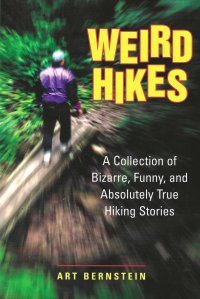 The 2023 Winter Reading Challenge has a category “Nature/Outdoors,” so I picked this book out of the Nogglestead stacks (which I’ve started to use instead of “to-read” shelves because hyphens are getting expensive these days). I got this book from my first order from ABC Books during the Great Springfield Timeout of 2020.
So: This book is by a naturalist/conservation agent? who has written a number of hiking guides for hikes, presumably in California and Oregon mostly, as that’s where he has lived for a long time. This book, though, captures 14 of his hikes where he has found something spooky to think about, or at least he let the imagination get the best of him. So we get things like his meeting someone who has been dead for a long time and spending time with her at her cabin which has been burned down for a while, or maybe hiking while Bigfoot is watching him, or encountering his first bear on a hike after thinking about encountering a bear while on a hike….
So the weird is kind of not really that weird, honestly, and some of the distances seem a bit short–he talks about hiking a couple of miles as though it’s a bunch, and maybe the trails out west are more rough than we have here, but I know I have hiked the Long Trail at the Nature Center with my boys since they were toddlers, and it’s not all paved. And my friend Chris, who was shot down in his back yard in St. Louis a couple of years ago, did an extreme hike as a fundraiser for the Cystic Fibrosis Foundation, and that was like 30 miles or more in a given day. So I wasn’t terribly impressed by the number of miles, but he did carry some camping gear sometimes and camped overnight, and maybe the country is that much rougher on the back side of the Rockies.
What really struck me about the book, though, was his life taking place outside the hikes. The first takes place when he’s in school; another, a couple later, talks about a dream he had about hiking with a woman whose face he doesn’t see, but he later hikes with a woman on a date, and he ends up marrying his dream woman and helping to raise her child. They have a pair of daughters, hike sometimes with the family, and then at some point he mentioned marital problems, and then they divorce.
That meta text made me rather sad, ultimately. And the book did not inspire me to want to go for hikes, although we’ve been known to hit a lightweight trail or two in our travels. I mean, it’s no Nature Noir, but then again, Nature Noir was no nature noir, so I guess it’s par for the course.
I did get to check the box on the Winter Reading Challenge though.
Buy My Books!
Headline: Editorial: Former free-market defenders, state GOP turns to overregulation as the answer.
First paragraph:
The Missouri House insists on being dragged kicking and screaming into the 21st century. Local governments that want to impose rules requiring installation of electric-vehicle charging stations in new construction projects could be prohibited from doing so because the Republican-controlled Legislature thinks such rules are too burdensome on business. The House has advanced a bill to limit local government powers to require charging stations in new construction of apartment buildings and workplaces.
So the overregulation at the state level is banning regulation at the local level that compels charging stations in new construction. So that the market would decide when building whether to include the expensive and troublesome tchotchkes.
Truly, the St. Louis Post-Dispatch and its writers have a dizzying intellect.
Buy My Books!
Please click each image containing a violin:

But what if one is a viola, which looks almost exactly the same as a violin but it’s bigger? Without perspective and side-by-side comparison, you can’t be sure.
But, c’mon, captchas are just guessing games these days, ainna?
Buy My Books!
So I posted on the Professionalbook:
The Problems of Having Senior in Your Job Title, Part XLIV:
On a popcorn-style Scrum with default layout of 9 tiles, when you finish your update and say, “Dan to block,” and you look at the other tiles and realize none of your co-workers has ever seen Hollywood Squares.
I included an image I found on the Internet:
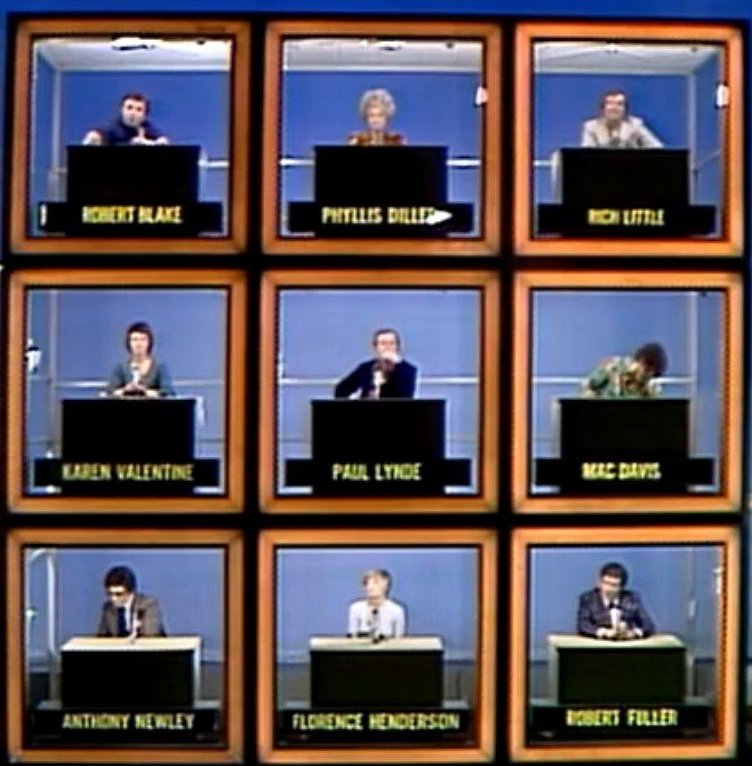
My beautiful professional wife said she only knew three of the names, one from Wesson Oil commercials and two from The New Scooby-Doo Movies cartoons.
Alors! I knew most of the celebrities in the squares above:
So I knew seven of nine.
But they’re too old and too trivial for modern trivia nights, which include no history questions and where pop culture began in the 1980s or later.
It’s weird, though: My pop culture trivia knowledge extends a bunch to the decades before I was born–by the time they were on Hollywood Squares, these stars were in the coasting tail end of their careers, but I knew them. Perhaps because they were in reruns when I was young, but also perhaps because I wanted to make a good showing in Trivial Pursuit, that new fashionable game in the 1980s, where the questions aimed at the thirtysomething crowd would have included these actors and performers from their childhoods and youth. The adults didn’t generally let me play, though.
But I can still try to impress you, gentle reader.
Buy My Books!
This is a bit of a Recycler post, but it’s pretty fresh, gentle reader.
I posted this yesterday on social media:
All I got for Valentine’s Day was the blues.
But that’s what I asked for.
Which is true: When my beautiful wife asked what I wanted for Valentine’s Day, I mentioned that I’d added a number of Keb’ Mo’ CDs to my Amazon Wishlist.
WSIE plays “Soon As I Get Paid” a lot:
However, “Tell Everybody I Know” is more Valentine-themed:
I haven’t been buying many CDs these days–the last would have been a couple of Christmas CDs, although I did recently get a digital album with Amazon credits, and the musical balance is a little off kilter from my normal jazz songbirds and metal. Of the four most recent acquisitions, three are blues and one is funk. Maybe I am mellowing.
Buy My Books!
I’ve posted about how Facebook ads have shown up for things I’ve only talked about here and here recently (and probably incessantly in the more distant past).
Now Facebook is just trolling me by showing this suggested for you:
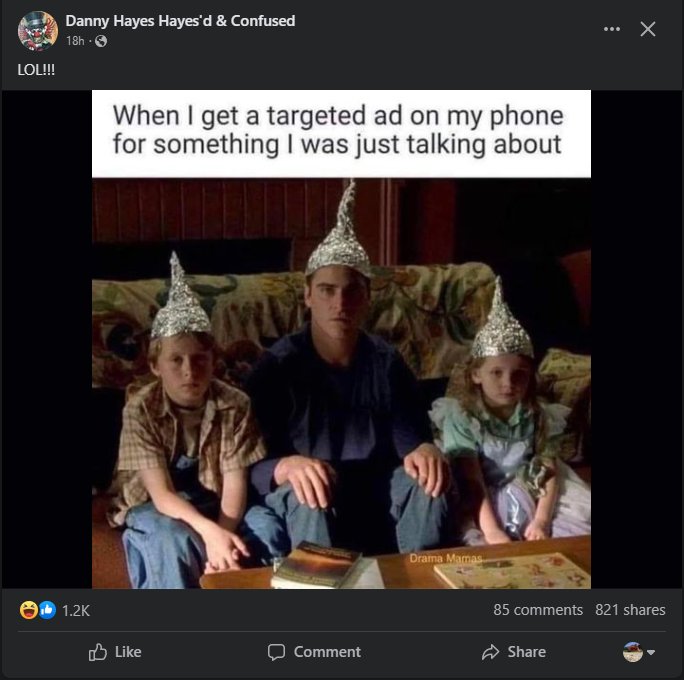
I would be happy to learn that at least Facebook algorithms were reading this blog, but most likely they just heard me talking about these advertisements in person.
Buy My Books!
U.S. Military Shoots Down Fourth “High-Altitude Object,” This One Over Lake Huron
Who benefits from the United States using $400,000 missiles to shoot down balloons?
China.
How fast are we building replacement Sidewinders?
Objects shot down over US could be ‘alien or extraterrestrials’, Pentagon says.
Who benefits from blaming aliens? China.
(Link via Sarah Hoyt at Instapundit.)
More unhinged speculation here.
Man, I’m sounding a lot like Bill Gertz soundbites these days, but, hey, he’s had a pretty good run for 20 years sounding like Bill Gertz.
Also, I would like to state for the tribunal that although these thoughts occur to me, I only halfway believe them. But it’s getting halfier all the time.
Buy My Books!
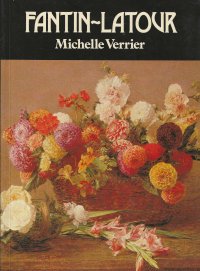 This book sat on my sofa-side table, an old Sauder printer stand actually–past the half century mark, and I still have two Sauder printer stands from the middle 1990s as household furniture–for over a year. Although in past years, I have browsed poetry or art monographs during football games, I did not do so this year. I’m not sure whether it’s that my attention span has withered or that I cannot switch between football plays and text as easily as I could when I was a younger man or if my current selection of monographs and poetry chapbooks does not compel me to read them. Maybe both.
So as the 2023 Winter Reading Challenge has a Pictorial category, so I grabbed this book. The artist comes of age, so to speak, at the same time as the Impressionists–and he exhibited at times with them in their anti-Salon shows, but he’s not really an Impressionist. His art has two veins, really (well, three): He was a successful painter of still lifes and flowers who did brisk trade in them amongst the aristocracy or at least the monied class in England, but that was not his passion. He liked to do more fantastic works based on things like Wagner’s Ring Cycle and dabbled in etching.
So the book presents about 16 pages of text and biography, which is a pretty good balance between the that and the actual art. Unfortunately, most of the images of the art are in black and white which really doesn’t do justice to the art itself, and one cannot really get a sense of the realism in the still lifes when they’re mostly gray. Although I note that one of the works is courtesy of the St. Louis Art Museum, so it’s entirely possible I have seen one of the works in this book in the flesh as I did go up there a couple of times over my decades in the St. Louis area.
At any rate, a nice collection of art. Even the dreamier fantasies are better than most modern art.
Fun fact: Henri Fantin-Latour signed his art Fantin to differentiate himself from his father who was also an artist.
Probably not that LaTour, though.
Buy My Books!
ABC Books had a book signing yesterday, so after a triathlon, my boys and I headed to that part of town. They came along because we planned to demolish the nearby Sushi buffet, which we did prior to the late-starting 12:00 book signing.
The author in residence wrote a book about a local attorney who was convicted of fraud of some sort, and apparently relations of the man had beaten me to ABC Books, which led to an awkward reunion. But nothing broke out while I was there.
I got a few books.
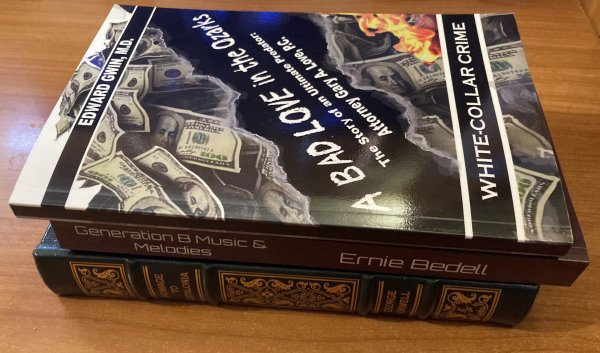
I got:
So the total out-of-pocket was $17 and change today even with the nice edition and the local books.
Although I’m a little sad that I tipped my hand to Mrs. E. that we’re not giving out a bunch of gift cards as gifts these days. We tend to give $10 gift cards to the boys’ teachers as there are so many of them now and they live and work (perhaps) in the next town and not almost halfway between us and ABC Books. I’m sad on many accounts, here, but I’m happy to have the nice Orwell. Now, how will I pay for the other fine editions and sets of Riley’s poetry in north Springfield?
Buy My Books!
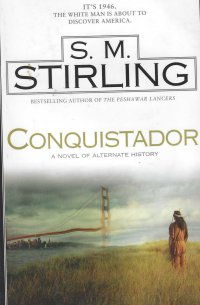 The 2023 Winter Reading Challenge has a Speculative Fiction category in addition to the Set in Space category, so I selected this book. The tagline above the author’s name is It’s 1946. The white man is about to discover America. So it looked alt-historyish, but it has a bit more of a science fiction vibe to it.
In 1946, a disabled (well, walks with a limp) World War II veteran is messing with a radio set in his San Francisco apartment when he accidentally opens a rift to another place, an undeveloped Bay area. We learn eventually that Alexander the Great did not die at 30, which ended up stunting Western civilization. America is still sparsely populated by natives who have not changed in centuries. He brings some of his army buddies and their families over to colonize the new found land, and over the course of the decades, they build a small, slightly feudalistic society, but they do keep the gate open so that they can travel between the places, albeit secretly.
In the modern day, a couple of department of conservation detectives come across animals that should not exist–long extinct, or greatly endangered, including a California condor with no traces of lead in his blood, and it leads them to investigate a privately held company centered on an industrial part of Oakland–the home of the gate, of course–and they are abducted to the far side where they help uncover a plot by one of the old families and some new emigres to take over the far side.
So it has a bit of flashback to unveil the backstory (although not all of it) as well as excursions the two sides of the gate and interludes where the semi-omniscient narrator follows different characters, mostly the main antagonist and the woman from the far side who has lied to him and then kidnapped him–and whom he might love.
As the main character is a conservation agent, we get a lot of enumeration of species of both flora and fauna along with great details about the topography and how it is unchanged by man; it reminded me a lot of 20,000 Leagues Under the Sea in that regard. We also get a little commentary about how the society is structured on the far side of the gate with more conservative values, including a bit of aristocracy, but sold as overall good–I mean, I was not entirely swayed, but it did lack some of the deleterious features of our world.
The book runs over 400 pages and includes a couple of appendices, but it could have been trimmed by about a quarter or a third to improve the pacing. And with the thick descriptions running up over the 300 page mark with the main problem only then coming into focus–the raising and training of a bunch of native mercenaries to seize the gate–I thought perhaps it was going to lead to a cliffhanger and another book, but no. Suddenly, we have a fast, Executioner-style raid on the training camp followed by a clash at the gate which disrupts it, and the book ends with them working with two physicists on the far side trying to recreate it. So a very abrupt ending with room for a follow-up that has not yet come.
So not bad, and it ticked off a box on the Winter Reading Challenge. And it gives me the opportunity to post this song by Canadian trumpeter Maynard Ferguson which I heard at least once and perhaps more whilst reading the book and procrastinating writing the book report.
Once for sure on WSIE; also, perhaps, on my copy of the record of the same name.
Buy My Books!
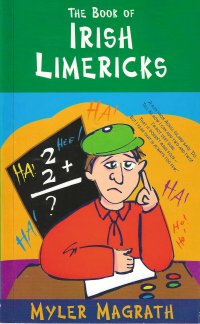 The 2023 Winter Reading Challenge has a category Under 200 Pages, and 40 pages is definitely under that limit. As I mentioned when I bought the book last month, it was between this and the collection of the Sara Teasdale poetry as to which I would use to fill the slot on the paper. Well, you probably could have guessed that the man who read Lecherous Limericks by Isaac Asimov would go for this book. So I have.
Well, I will say this for the book: Originally published in 1985, it was reprinted several times–this book comes about ten years later, about the time I turned 20-something. The limericks are often off-color–which means they’re proper limericks–but clearly it’s the product of an earlier era, where a little naughty was amusing. Thirty (almost) years later, and who’s telling limericks now? Old men. Ay, in the Lecherous Limericks review, I told the story of how I knew a lot of dirty jokes in middle school and how that made me popular amongst some kids in middle school. In 2023, this stuff is tame to the point of being twee. But we’re not here to talk about it as a cultural artifact except that we are.
Not as good as the earlier Asimov–probably, but I don’t remember that well the actual content of that book which I read four and a half years ago. I mean, it’s not like poetry I’ve memorized or poems whose catchphrases (poems have catch phrases?–damn right they do!) I repeat to myself at times. Most of the initial lines do end in a place name, and to be honest, as I don’t know my Irish geography or, more importantly, Gaelic pronunciation, that well, I’m a bit at a loss for grading the rhymes. At least once, a limerick is repeated with a different place name in it, and assume they both rhyme if you’re Irish.
Amusing, and brief enough to have been amused rather than annoyed. But it did take me three nights to read it amongst longer works, so not something to tackle all at once, or you’ll be bored. But briefly.
Buy My Books!
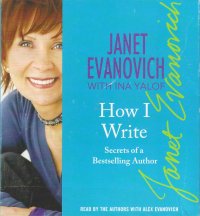 The The 2023 Winter Reading Challenge has a category (at the top, no less) Listen to a Book. As the Philosophy: Who Needs It? audiocassette was not actually a book, I had to go searching for something else. Fortunately, the Nogglestead to-listen shelf is not as deep as the to-read stacks–basically, it’s the top of the hutch on my desk, where the audiocourses I’ve bought at library book sales remain, casting shadows and eclipsing the little lamps I have up there, for years, and more years to come since I’m in the car far less these days. And, like another audio book I’ve listened to this year (Pure Drivel by Steve Martin), I actually (I think) have a printed copy of the book in the far deeper to-read stacks, so I will (possibly, as the to-read stacks are deep, and I am not as young as I was when I started this paragraph) read this book as well as listen to it. But the Winter Reading Challenge demanded I listen to it, so I did.
This is a fifteen-year-old (!) book that talks about how best-selling author and industry Janet Evanvovich of the enumerated Stepahine Plum series of books writes. I say “industry” because she makes clear that her family works in the family business–her husband is her manager, and her daughter is her Web master (and perhaps fifteen years later her social media manager). And this book is a bit of a FAQ from her Web site–basically, she’s answering questions readers have posed on it about writing.
So her daughter asks the questions in the read version, and Janet answers. Ina Yalof is mainly a nonfiction writer who has collaborated with Janet Evanovich before, so she comes in with some no-nonsense answers about the business from time-to-time. And they inject numerous bits from the Stephanie Plum novels to illustrate Janet Evanovich’s answers in early parts of the book.
The book is broken into sections about writing and then about the business of submitting and publishing. The bits about writing, inspiration, and mostly just, you know, writing, are the best. When she starts talking about getting an agent and the business of publishing, she tut-tuts self-publishing, but that seems to have come to the fore more than it would have back then. Perhaps it’s just the circles I blogtravel in where this is true. But trying to get an agent and then get sold to a big publishing house? That seems so last century.
So the audiobook version runs about four hours, and it does include listening to Ina Yalof read references at the end. So not too long of a time investment, and probably worth it. Although to be honest, it has not compelled me to open a word processor and write. I am not sure what would these days.
Buy My Books!
Yeah, sometimes I get a little less than bloggy.
Just one of those periods where my blogging is more intermittent than most.
Back soon lest you fear I’m not keeping up with the 2023 Winter Reading Challenge.
Buy My Books!
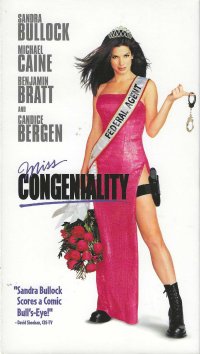 Wow, this film is twenty years old, which makes it an old movie by now. Which means it’s about time for me to watch it. I mean, it’s not like a black and white film, which it might well have been if it had been a movie twenty years old when I was born. But its humor is that of another time, when you could make fun of stereotypes and whatnot.
At any rate, Sandra Bullock plays a tomboy FBI agent whose compassion during a raid leads to an FBI agent getting shot and puts her in the doghouse with her boss played by Ernie Hudson. When the team gets a tip that a serial bomber might target the Miss United States pageant, they decide to send someone undercover–and Agent Gracie Hart is the only one of the team who might look good in a swimsuit. So she goes undercover, getting a crash course in behaving like a lady from a pageant tutor played by Michael Caine, and she learns that the pretty women whom she’d mocked for performing in pageants have heart and intelligence and they’re all similar.
You know, the kind of lesson we used to get from movies and whatnot.
At any rate, a product of a different time, and a pleasant viewing experience. My beautiful wife, who had already seen the film, watched it with me, and that’s kind of rare these days as our taste in movies has diverged a bit as, strangely, she prefers more modern blockbuster sorts of films.
Also, it starred Sandra Bullock.
Buy My Books!
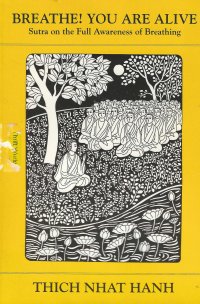 It’s been a year since Thich Nhat Hanh died; in researching how to say his name, I found a documentary made on the anniversary of his death where everyone was calling him by either his nickname or his birth name, so I’ve had to rely on the Wikipedia entry for pronunciation. Not that I’ll ever actually say his name aloud; mostly I just type it here in book reports (see also Thundering Silence and Peace of Mind: Becoming Fully Present).
This book slots into the 2023 Winter Reading Challenge‘s “Religious or Spiritual” category. Originally, I picked up the Joel Osteen book I bought five years ago(?!), but it was more of a self-help book akin to Eat the Cookie, Buy the Shoes or The Power of Positive Thinking–although they include Bible versus, they’re not religious in theme–they don’t talk about the nature of the divine or the doctrines of a church.
This book, like Thundering Silence, is commentary and history of a particular Buddhist sutra. This one is a lesson on breathing by Buddha, sixteen practices or things that you can think while breathing in and out to calm your body, calm your feelings, calm your mind, and lead you to enlightment or closer thereto. It’s basically thirty-two lines of teaching wrapped in the story of where and when Buddha taught it (the sutra itself) followed again by historical analysis of how the Sutra (or sutta) was passed down, history of the sutra’s setting, and then commentary and expansion on the practices.
Basically, again, it’s breathing, but with each exhalation and inhalation, repeating to yourself to calm your mind, calm your feelings, understand the object of your mind, and then progressing at the last quartet into understanding the non-dual nature of everything and whatnot. So one can take it through the first three quarters of it and get a good course on mindfulness, but the last quarter goes into the unified nature of self and non-self that underlies Buddhism.
That, and the mention of the cycle of rebirth, are really the only Buddhist cosmology in the book, and none of the later evolved cosmic Buddhas (like Amida Buddha and whatnot). So very core, very original to the tradition. But the text itself was passed down for generations, popping up in Vietnam based on an earlier Chinese translation (or perhaps I got this backwards). So an interesting read and an educational read, but it has not convinced me to be a Buddhist.
To breathe a little deeper and talk to myself as I do so, sure.
Buy My Books!
This thought occurred to me the other morning when I was trying to not wake up at 4:00 in the morning.
Borepatch, amongst others asks:
For the life of me, I can’t see what compelling interest the USA has in war with Russia. I can see what the US Military Industrial Complex has with a war like that. And as they say, “War is the health of the State”.
But I don’t see what’s in it for us.
You mean, what is in it for the United State in burning off war materiel by shipping it to Europe? By leaving, what, $7,000,000,000 worth of stuff abandoned in Afghanistan?
I’ve seen people speculate it’s the military industry looking for profits. Meh, I don’t think the military industrial complex has been hurting for money. But you know cui bono from diminished stocks in the United States?
General is right that US, China headed to war over Taiwan by 2025: congressman
Paranoid thoughts in the middle of the night? Or history in the making? Time will tell.
Also, as a disclaimer, I don’t think war is inevitable, nor do I think it is impossible. History is full of currents, trends, and proclivities that are only manifest in events, and then we can argue about why they occurred. So it’s never clear what is to come, and it’s only marginally clearer what just happened.
Buy My Books!
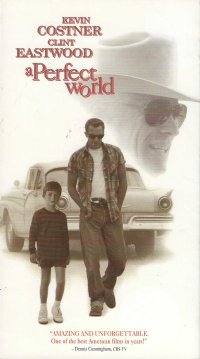 A couple of weeks ago, one of the blogs I read mentioned this film (not the Ace of Spade HQ movie thread which mentioned Clint Eastwood only this weekend). Sorry, but I read so many blogs that if I don’t post on something right away and instead, if it sticks a little nugget in my brain triggering a thought days later, it’s lost in the torrents of time. So sorry for no hat tip, other blogger. But when I saw you mention it, when it came time for a film at Nogglestead, I tried to tempt a young man to watch a film with me, offering Who Framed Roger Rabbit? or Fast and Furious, but when the boy demurred, I settled on this film which I bought sometime in antiquity. I know that not because it’s a videocassette–I buy them all the time inexpensively–but because it was in the movie cabinet and not atop it.
So I watched it.
The story details how two convicts, Kevin Costner and the other guy, break out of a Texas prison and go on the run. They end up with a hostage, a boy whose home the other guy invades instead of stealing a car, and Costner prevents the fellow from raping the mother before they get away. The boy and the fugitive bond a bit as the boy’s family is strict and the fugitive was abandoned at a young age, and he grew up in bordellos but did not grow up to be Brahms. Clint Eastwood leads a Texas state team of law enforcement in pursuit in a new mobile command trailer that has all the latest gear–and steaks and tots in the freezer. So we see the fugitive and the boy bond, but although we get some sympathy for the fugitive, he eventually goes a bit off the rails and is stopped when the boy defends another father from the fugitive. Which leads to a long climax/denouement and ending. And a closing that matches the opening shot which frames the whole thing for some reason.
So I guess the deeper story is the fugitive bonding with the boy, making some of the same mistakes he would have expected his father to make (trysting with a waitress at a roadhouse, for example, telling the boy to wait in the car) to his trying to rectify his father’s sins (making a father tell his son that he loves him presumably before the fugitive before the he is setting up to kill the father). But it doesn’t work for me, maybe because I’m a father busy making different mistakes than my own father (he was the type to tryst with waitresses), and I don’t have to project or empathize with the fugitive as much as many men without fathers might.
At any rate, not a bad film, but probably not something I’ll rewatch unless I’m on a complete Clint Eastwood retrospective. Which might happen in the next thirty years.
Buy My Books!
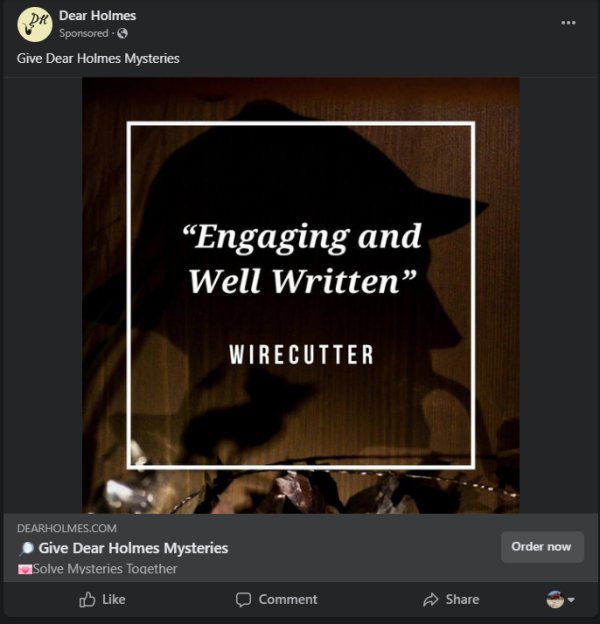
Well, if the guy at Knuckledraggin likes it, it must be good!
UPDATE: One moment: I have just been handed a note. This is probably not the Wirecutter they meant. But what other Wirecutter is there?
Buy My Books!