I have on occasion accused my children of ululating when I meant to say they were undulating on the floor.
Although, in my defense, often when they undulated on the floor in displeasure they also ululated.
To be able to say "Noggle," you first must be able to say "Nah."
I have on occasion accused my children of ululating when I meant to say they were undulating on the floor.
Although, in my defense, often when they undulated on the floor in displeasure they also ululated.
You know, this is actually a pretty good book. And not just a good book for a Bolan book.
In it, Bolan is tasked with helping protect a munitions manufacturer, but he discovers that the munitions manufacturer has something to hide: He is willing to exchange SDI technology secrets for an American mercenary group to spirit his unknown grandson of a Vietnamese woman and his KIA pilot son out of Vietnam. The munitions manufacturer has also tasked his younger son, now a mercenary himself, with handling the extraction from Vietnam. But the in-country mercenary has made some powerful enemies who learn of the stakes of the swap and move to intercept.
So we’ve got Bolan a bit in the dark about what’s going on, we’ve got a small mercenary group led by the uncle who don’t know the score, and we’ve got the Vietnamese criminals and corrupt military officials all heading for a reckoning.
The jump scenes between the different groups and the individual interplay between the players work better than in typical Bolan novels, and it all moves the story along pretty well. A couple of things disappoint–a bit of clumsiness in the action sequences, and the whole “we have to airdrop into Vietnam and hump through the jungle to Ho Chi Minh City” instead of catching a plane with a fake British passport–but overall, it’s a pretty good little book. Well, less little than they used to be–they’re up to 250 pages by the 20th anniversary.
It’s books like this that keep me optimistic that my march through the dozens of books in this and related lines I have on top my to-read shelves won’t all make me cringe. I’d hope that most of them would be this good, but I am a realist who has a long track record already with these books. They’re not the same without Don Pendleton writing them, and many, many of them are not very good.
LinkedIn thinks, based on my profile, that rapper Triple Nitti and I might know each other.

Well, as a software tester, I, too, often tell uncomfortable truth to power using rhyme and vulgar language. So we’ve got that going for us.
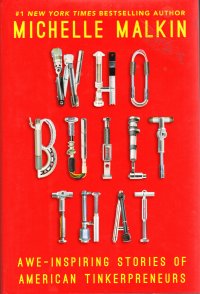
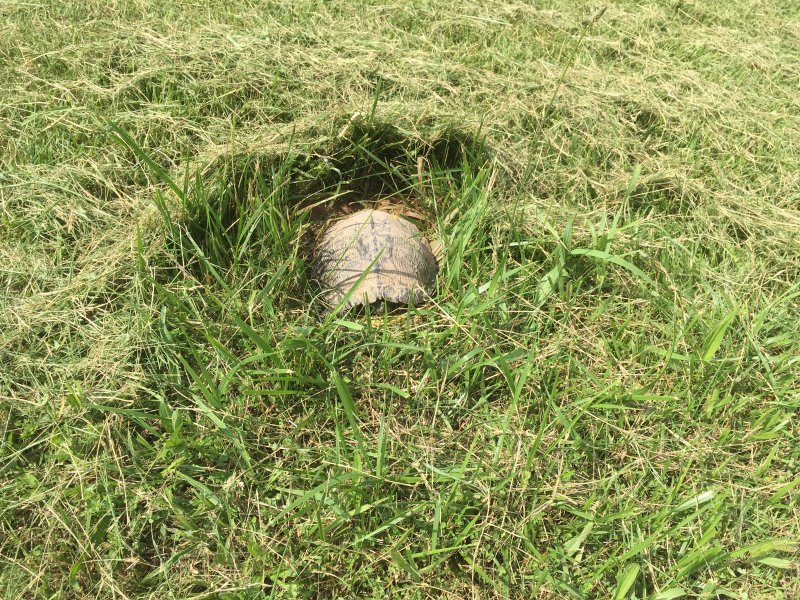
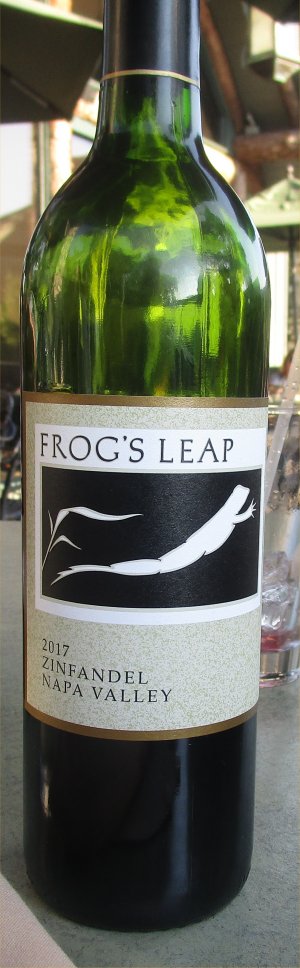
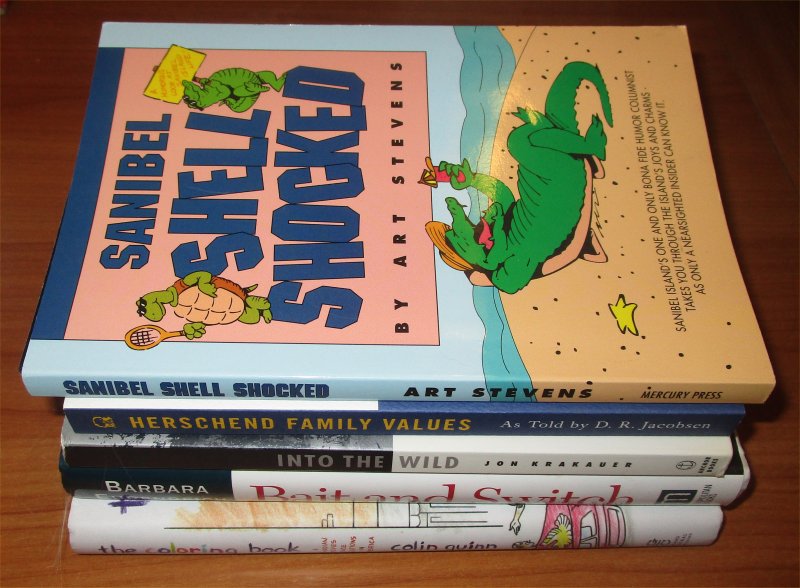
I mentioned that I had a stack of books on the side table of my sofa that I browse during football games and that some of the books, especially the ones with high text-to-pictures ratios tends to fall to the bottom of the stack and remain on the side table for years. Furthermore, I mentioned that I made it a mission this year to go through the stack and read those books to clear them away.
Well, I moved them to another book accumulation point, the side table beside the reading chair.
But yesterday, in light of the Super Bowl, I went through the stacks and selected a couple of books from my to-read shelves (not from the books that had hibernated on the sofa side table for years, as those books were clearly not fit for browsing during a football game):

Some of these had, in fact, resided on the sofa side table in years past. But I did not expect to be that involved in watching the Super Bowl itself, so I thought I could read more text-heavy tomes during the game.
And then I didn’t actually watch much of the Super Bowl.
Gentle reader, that is how these things get started. There’s no telling now how long the books will remain on the sofa side table, unread. But, with history as a guide, it could be years.
Well, no. I have already cleared them to the reading side table where I shall browse them relatively quickly. Or perhaps leave them for years. Those very years will tell.
I really enjoy the samba beat in this single, “You or Me”, from Janet Evra’s new album, Ask Her To Dance.
Although I’m only guessing samba; although it was briefly covered in Elements of Jazz: From Cakewalks to Fusion, I’ve already begun to forget what I might have learned from the course.
Janet Evra is also from the Saint Louis area (which explains why I saw her mentioned on WSIE’s Facebook page). I expect to get her new album when I feel comfortable just ordering new CDs on a whim again. Or for my upcoming birthday, since I spelled ‘Janet Evra‘ to my beautiful wife. Although I guess I did spell my last name to my beautiful wife at some point before I made her practice writing it over and over.
It’s been almost a day since a small business owner came around the counter and put me in a martial arts hold, but we’ll come to that by an by.
I bought this book in December at the same time I bought Taekwondo Kyorugi. I don’t consider myself a martial artist, but here I am reading about martial arts whilst training in martial arts.
This book is a very high level overview of martial arts and training in them; although the author is a teacher of kung fu, he does not focus on that style. Instead, he talks at a high level about thinking about studying martial arts, choosing a style that’s right for you, choosing a school, getting your mind right, training, fighting on the street, competition sparring, and other things. But all of it is at a very high level.
Although the book said it should include things that appeal and apply to someone who is already taking martial arts, nothing in it inspired me or provided me with any new insight. I agreed with some things, but probably disagreed with more than I agreed with (because my school is a blended style and recommends practicing at home, both of which are tut-tutted in this book). Much of the content is abstract to the level of pablum. I actually got more ideas from Taekwondo Kyorugi.
And I could not for the life of me figure out what the man was doing to that nice young figure skater on the cover:

From the clenched fist, I thought it was some sort of punch defense and counter, although the open hand of the riposte with the thumb toward the ear. Which doesn’t make much sense. So I asked my kyoshi.
“It’s a kung fu arm bar,” he said, and he came out from behind the front desk of the martial arts school to put me into it. It’s not a punch defense at all, but rather a counter when someone grabs you and you want to immobilize them. The sifu is actually pressing the attackers elbow with his body and has his forearm against Elvis Stojko’s neck and is pressing back and up. Which makes a little more sense than a block and a counter strike. I don’t know if it makes for a compelling martial arts cover, but I guess the other photos were not as good.
At any rate, I finished the book. It might be helpful if you’re thinking about trying martial arts and don’t have kids in a program somewhere that also sucks in the parents like our school does. But the book reads more like a vanity project designed to elevate the author’s brand as a martial arts/fitness consultant to celebrities and sports figures in Canada around the turn of the century.
What better book to review on Super Bowl week than a book about Brady? Except I flipped through most of this last week, only finishing it this week, and the Brady in question is Matthew Brady, the mid-ninteenth century photographer, and not the football player. Other than that, it’s almost the same thing.
The book sat on my side table for flipping through during football games, but the paragraph-length text was a little too detailed for distracted browsing, and the coffee table book size made it unwieldy for the sofa. But now that I’m clearing the books from that table, I spent some dedicated time with it.
Historians spend a lot of time poring over these photos in detail, but I looked at them a little less studiously. Mostly marveling at the photographs that are 150+ years old.
I did spend a lot of time with the captions, though, more than the glances at the images themselves. As I always do when I review picture books from the Civil War, I realize how little I really know about the details of it. I could do better, as I inherited a decent collection from my beautiful wife’s uncle, and I did just buy a reading copy of Ulysses Grant’s memoirs. Perhaps I need to want to brush up enough to stack the books on a table and then, in a year or so, make it a project to read them all to get them off the table.
At any rate, back to this book: A good collection, and amazing, of course, that these are pictures. Of the Civil War.
So we’ve got to design a bag for cherries. Of course, we’ll put a zipper at the top to keep the cherries from spilling out; all grape and prepackaged produce bags have them, so it’s a matter of course.
But you know what we need to really differentiate our bags? How about cutting holes in the bag to make it easier for the customer to pick up the bags on impulse.

Brilliant!
I tell everyone that I’m from Milwaukee, Wisconsin, so the cold doesn’t bother me.
But even Milwaukeeans have turned snowflakes in the 21st century when it comes to the cold.
No beer deliveries in Milwaukee today. Thanks a lot, Mother Nature.
Come on, suck it up. It’s only -13.
This book is a chapbook of poetry written by an elderly woman in the twentieth century. The book itself is not dated, but one of the poems says now in ’91, and there’s a prose story that praises one of Lawson’s relatives that is dated 1998. I cannot find any information about the author or this book on the Internet, so you’ll have to trust me that it exists at all.
It’s a little like Leah Lathrom’s The Best of Wheat and a Little Chaff.
The poems are simple, faith-based lyrics with good rhythm and end rhymes. Many, if not most, of the poems end with a Bible verse that inspired the meditation. Pretty simple things, not great literature, but a pleasure to read. A couple focus on the gospel teaching of not worrying about tomorrow and being thankful for what you have today, which you know, gentle reader, is a theme I constantly try to embrace and embody, so I really enjoyed those poems the most. Also, note I enjoyed it more than the aforementioned Lathrom book.
I love buying the packets of chapbooks at the Friends of the Springfield-Greene County Library for books like this.

How a breakfast cereal can help you show the bowfingers better is beyond me.
This would be a case of what Daddy always says, except my boys are past calling me Daddy, and this particular utterance only occurs in the very specific circumstance when someone asks Dad (as he is now known) what time it is at 4:30.
In this case, Dad always says, “4:30. It’s not late. Naw, naw, it’s just early, early, early.”
Because of a relatively minor hit for the Spin Doctors some 26 years ago, old man.
I don’t remember that it was a hit at the time, but Wikipedia says it went to #26 on the charts.
So Tom Selleck is doing reverse mortgage ads, which stuns me because apparently I’m too close to the demographic targeted for reverse mortgage ads when I haven’t even finished paying my forward mortgage yet. But as I watched the ad while riding on a stationary bike to prepare for an upcoming triathlon as I try to futile stave off and lie to myself about being close to the demographic targeted for reverse mortgage ads, I thought, Wow, Selleck is looking a lot like Robert B. Parker these days.


If they make a movie of Parker’s life, I think they know who to call.

Indeed.
I would say that it’s all my shell companies that I use to hide my ill-gotten gains, but, really, we have mail for two former owners of my beautiful wife’s company, two current owners of the same, me, and the “media company” owned by the son of this home’s former owners (nine and a half years gone) that left a couple of swords made from table legs and scrap lumber in our shed (that my boys still haven’t found and bludgeoned each other with and that I cannot throw away in case of apocalypse where I’d wish I hadn’t thrown them away should somehow I lose my two real swords and halberd and, oh, yeah, guns).
But six pieces of mail from what looks to be the same campaign? Indeed.com is casting a very wide net.
Well, I’m butchering an unrelated country song title, but I saw this meme on Facebook:

And I immediately thought about the song “The Bird” by Jerry Reed:
And I remembered when it was on the radio:
It was 1982. I was freshly ten years old; my parents were separated for probably a year. My mother listened to country and western on the radio when we lived in Milwaukee before shifting to oldies when we lived in St. Louis, which explains my listening habits as I grew up (I didn’t learn I could change the station on the radio and did not have a radio of my own until I was about thirteen, which explains why I was so pressed to think of a pop song as a favorite song on a questionnaire when I was chosen as Student of the Week in eighth grade and had to go with “Ghostbusters” as both my favorite song and movie). We spent a lot of time with the Odya boys, and I remember singing along with them when “The Bird” came on the radio.
I’m not sure I had heard the song between then and looking it up on YouTube to post as a comment on Facebook.
But now I have, and I feel all thirty-six years that have passed.
It’s kind of funny: I read tourist guidebooks for places I have not visited (such as Chichen Itza), and I don’t have trouble counting them in my annual reading list. But when I read a book about a place I have been, especially when it’s the same sort of touristy guidebook but for a place that I’ve been or a tour I’ve taken, suddenly I feel guilty for counting it in my annual total. You would think, gentle reader, with all the trickery I use to pad my annual books read total, I would become inured to the pangs. Oh, but no.
Regardless, I counted this, and you get to read a bit about what I think on it.
I bought this book on our 2017 trip to Wisconsin. The book covers a boat tour of the upper Wisconsin Dells; that is, the side of the river north of the dam downtown (in 2015, I suffered the same pangs when I reviewed a guidebook for a Duck Boat tour of the lower Dells in Old Trails and Duck Tales).
As such, it recounts some of the history of the area along with some of the questionable stories told in the boat crew’s patter. It includes bits about moving lumber down the river (the last such trip was in 1890; in context, this was four years after the last Impressionist art exhibition in Paris which featured Mary Cassatt–these two events would seem to be from far different times, but they were contemporaneous), and Witch’s Glen, a narrow gorge where tourists land and walk through a very cool and very narrow canyon to a gift shop run by the boat tour company.
With many of these stories, one has to wonder how much of the history and stories are retconned to fit the places where the boat goes and how much is true. Probably most of it, but you have to take it with a grain of salt. Although I learned quite a bit about Ho Chunk history on the tour which this book refreshed. Okay, the “quite a bit” is just my saying, “That should be Ho Chunk now” when passing a Winnebago RV on the road. But still.
I’m pleased to have read this book(let) as it refreshed some memories from that trip and the stories I heard on the tour. Which makes it more resonant than some of the guidebooks/tour books I read.
This is the second of the two books I bought about Cassatt last fall (the other was entitled simply Mary Cassatt).
Of course, the book has the standard art book template: A bit of bio in the beginning and full color plates of samples of Cassatt’s work along with a couple paragraphs of text about each. It’s pleasant to revisit the works that I have most likely seen recently.
More importantly, or more notably, a couple bits from her biography stick out from this book, whether because it appears in this book and not the other I read or because I’ve new connections in knowledge that make the things stick out:
Cassatt completely rejected Matisse’s work. In a letter to Louisine Havemeyer in March 1913, she exclaimed, “If you could see his early work! Such a commonplace vision, such weak execution, he was intelligent enough to see he could never achieve fame, so shut himself up for years and evolved this and has achieved notoriety…. It is not alone in polities that anarchy reigns, it saddens me, of course it is in a certain measure our set [the Independents] which has made this [freedom] possible.
I think the insertion of [freedom] instead of [excrement] is pro-Matisse commentary by this book’s author and not necessarily the intent of Cassatt. But I agree with her assessment (see also my report on the monograph Matisse. With this, though, Cassatt moves easily into a second-place tie with Manet in my list of favorite Impressionists.
Worth a browse, certainly, and worth the couple of bucks I paid for it at the autumn Friends of the Springfield-Greene County Library Book Sale.
Side note: Interestingly, Cassatt, the nineteenth century artist died in 1926, just three years before The Iron Mask was released. They seem of two completely different eras, but history is ultimately seamless.
“The Man In The Iron Mask, you mean?” you might ask.
No, old man, although that film is twenty-one years old now, and might be the last thing I’ve seen with Leonardo DiCaprio in it, the film I watched the other night is older than that.
I watched The Iron Mask which features Douglas Fairbanks. Originally filmed in 1929, it was reissued (re-released? remade for television?) with narration by Douglas Fairbanks, Jr., replacing the titles. Which is why it makes a sort of sense that I had to keep shushing my children so I could watch my silent movie.
The plot of the movie differs from the later film; in it, the rightful, benevolent king is replaced by the evil twin, but the musketeers intercede to place the benevolent king on his throne.
The film also incorporates elements from the book previously seen in the 1970s films The Three Musketeers and The Four Musketeers.
I was most impressed with the stunts in the film, and of course, the swordplay. The musketeers and their adversaries fight rapier-style, with thrusts and parries instead of big swings and blocks that you get out of most movies. Although my oldest child did look up from his gaming device and ask if they were dancing or fighting. But he was not paying attention.
In the original release and in this re-release, Douglas Fairbanks delivers a play-like prologue and epilogue that the original audiences would have heard and marvelled at.
So how does it hold up? It’s pretty good, especially with the narration added. The gags work, the stunts still work, and it moves along for its hour and a half.
I’m glad to have seen it and Douglas Fairbanks in action. I’ve seen Errol Flynn already (in Santa Fe Trail with Ronald Reagan).
Also, note the way I found the title of Santa Fe Trail: I knew it was a film with Errol Flynn and Ronald Reagan; I thought it might be This Is The Army because I remember my mother had that title on VHS (which probably means I have it on HS somewhere). So I scrolled through Reagan’s IMDB entry, and This Is The Army didn’t seem like the film I was thinking of. So I scrolled through Flynn’s and didn’t see any title that rang a bell. But then I remembered it had Raymond Massey in it as John Brown. You know, Raymond Massey, the guy who was Gail Wynand in the film version of Ayn Rand’s The Fountainhead. So I looked through his IMDB entry and found it. Because I knew Massey from The Fountainhead, which I watched over and over again in my youth.
Well, this isn’t really a review, is it? It’s more a musing which is more about the connections in my head and the thoughts I had on watching the film. I hope I’m not boring you too much, gentle reader, but mainly I’m writing for me in a couple years, and this post will jog my memories of this moment. You’re just here for the ride.
Oh, and if you’re wondering what I thought about Dumas’ book, you can find those book report musings here for the abridged version released with a cover tied to the 1970s film and here for the complete version. And by “you,” I mean “me in five or six years when I’m re-reading this post and remember I read the book, too.”
Well, it sort of emerged. I found another Christmas decoration in the first place you would think I would look: The mantel in the living room.

It’s a litte sculpture that was hidden behind a framed photo. I found it when I was dusting. I think it’s supposed to be a church. One of my sons made it two years ago, when he was ten. And he’s no worse with the polymer clay than I am.
You’re right, it’s the first time I’ve dusted the mantel this month, and I would have found it earlier if only I were a better housekeeper.
But I’m too busy blogging for my seven daily Google-search readers a day to bother with maintaining or improving the place I live. Besides, after nine years, we’ve about sucked the blood out of Nogglestead, and it might be getting time to find a new host.
And here I thought I caught the annual Christmas Straggler two weeks ago.
For Christmas, my oldest son received a gift card to a local sporting goods store along with a skateboard helmet, and at the end of last week, he actualized that gift card into a skateboard.

Which has led me to needing to announce the rules for the skateboard. Rules which I would have thought are akin to natural laws, that my pre-teen boys could reason or infer out of other rules that they have been told as well as the laws of physics they know.
Oh, but no.
I have had to promulgate:
And so on.
That’s why the call me Daddy Deutoronomy. Or they would if they’d thought of it.