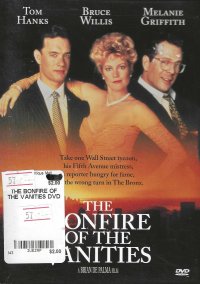
 As I thought Grosse Pointe Blank was a very 1990s movie–or at least one that captured if not the feeling of being in your twenties in the 90s, at least an archetypcial representation of the same, this film captures a 1980s New York upper class zeitgeist–if not a representation of the actual experience, at least a representation of how this particular situation was presented in the 1980s. Followed in the 1990s by Sex in the City and other stylized representation of glamorous life in the big city packaged for those who are not there.
Tom Hanks plays Sherman McCoy, a bond trader, son of a bond trader, who is on top of the world. He’s making millions, he’s married to a socialite played by Kim Cattrall…. But it’s not enough, or something. His wife is more into being a socialite than in being a wife. So he has taken up with a married woman played by Melanie Griffith. He picks her up from the airport and is taking her to their love nest when they miss their exit to Manhattan and end up in the South Bronx. When Sherman leaves the car to move a tire in their way, a couple of black kids approach, probably with bad intent. Maria (Melanie) slides into the driver’s seat, and in the process of their getaway, hits one of the youths. Sherman wants to go to the police, but Maria talks him out of it.
When police don’t seem to be doing much to seek justice for the incident, an Al Sharpton-style self-aggrandizing preacher grabs onto the incident, as does a Jewish district attorney who is running for mayor–and a new assistant D.A. wants to make his mark (and maybe Maria). Bruce Willis plays Peter Fallow, a talented but often drunk journalist who gets hold of the story and helps to drum up the pursuit of the driver (but his paper just wanted the press of the injustice of it all, as the preacher and the struck boy’s mother just wanted a lawsuit payday). When they catch Sherman and look to hang it on him, Fallow looks deeper into it, and even though Sherman’s life falls apart, he is exonerated.
The film cuts between the different players and their individual storylines in the overarching story pretty well–I was kept interested through the film. I know it comes from a thick Tom Wolfe novel (which I have here somewhere), and I could see where the characters might have been better developed in a novel. I was kind of looking forward to trying the novel or another Tom Wolfe novel (I have several, of course), but my beautiful wife said she started the book but put it down. And, you know, I could see how none of the characters would be likeable. A film can move this along–and this one does–but if a writer feels contempt for his characters and doesn’t give the readers anyone to like…. Well, I don’t know that I’m going to go looking for the book, anyway.
But as a film, it’s not bad. It bombed at the box office, though, so perhaps it fell into a crevice between the 80s zeitgeist and the upcoming 90s zeitgeist. Or maybe I just am on a kick of using the word “Zeitgeist.”
You might be expecting a Kim Cattrall vs. Melanie Griffith battle tucked under the fold here, but to be honest, I am kind of a Kim Cattrall partisan even though I’ve learned her biography is a bit, erm, varied.
Instead, I’m thinking if, overall, I’m more of a Tom Hanks character or a Bruce Willis character guy. Even aside from the types of films they’re in (comedy then drama, comedy then action), I think I’m more of a Bruce Willis character guy. His characters have a working man vibe to them that Tom Hanks’ characters do not.


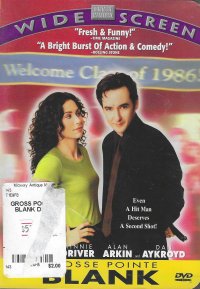 I guess it cannot be said that I’m on a John Cusack kick since the last film I watched of his was High Fidelity
  Ah, gentle reader, it was but
 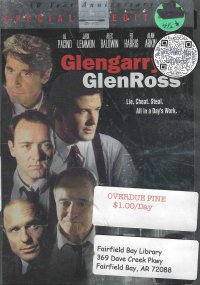 I got this DVD for a buck in Arkansas
  At Rob K.’s
 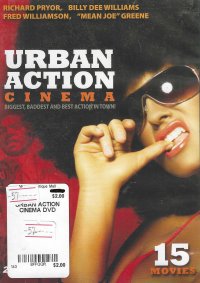 I don’t know where I bought this collection, but it looks to be fifteen films from the Blaxploitation era of the 1970s. And, to be honest, they’re not the best of them–one bets you could sell Shaft, Across 110th Street, Foxy Brown, Superfly, and a handful of other films singly–heck, I bought Get Christie Love! on a dollar DVD close to twenty years ago. But, you know, as I got into them, I discovered that they’re not so much Blaxploitation films as films with black casts.
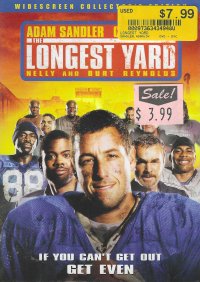 This is the Adam Sandler remake of the Burt Reynolds film
  I picked this film up
  Gentle reader, over Memorial Day weekend (that long ago, sadly–I am far behind on my movie reports and not so much my book reports), I watched this single videocassette with three Cary Grant films which I bought
  I bought this film at the Friends of the Springfield-Greene County Library book sale
 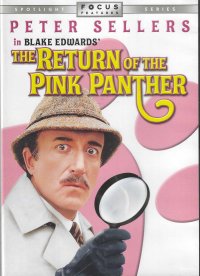 I kind of remember the Pink Panther movies from my younger years. I’d like to say that I saw one of them at the drive-in with my parents. We went a couple of times when I was younger, sometimes my parents, my brother, and I, and at least once with my mother and her friend the country singer and her two boys. Enough to think we went all the time, kind of like how a handful of Christmases and holidays from my very younger years set the pattern. But going to the drive-in in the late 1970s was already trending toward an anachronism. I’ve thought about taking my boys down to Aurora for the drive-in there (and mentioned it to my beautiful wife while talking about this film, triggering Facebook ads for that very drive-in). But I am sure my boys would find the experience underwhelming. I also think that I saw parts of a Pink Panther film when we later at the home of the country singer, her husband the wedding singer, and their two boys, either on a sleepover or in the interim month between exiting the projects and decamping for Missouri at the end of the school year–I remember the bit about Inspector Clouseau’s butler attacking him. I also remember that Inspector Clouseau was a bit of a, what, trope? when I was younger. You’d say someone was a Clouseau who was stating the obvious or was making a bad deduction. And look at his attire on the cover: He was the inspiration for Inspector Gadget, ainna?
 I saw this film in the theater, without Mike as I
  Ah, gentle reader, this film provided a bit of mental relief for me in the real world. When I proposed watching this film, my beautiful wife said to me, “We saw that in the theater.” To which I responded that I had never seen the movie. Given that the film came out two years before we met, we did not see it in the theater. I was pleased to see that she, too, pencils me into some of her memories from that brief interlude between childhood and marriage. I myself have on several occasions said something like, “Remember when we…” only to discover she was not a part of the we I was thinking of. I thought perhaps I alone was muddy on that brief interlude between summer 1994 and early 1997, the interregnum between college and being a couple, which were very busy and whose memories I sometimes retcon my wife into.
 I saw this film in the theatre with my beautiful wife probably on a date night–I mean, 2009 was a busy year for us, what with my sainted mother passing away, my brother returning to the St. Louis area, and our decamping Old Trees for Nogglestead. Still, a year is full of individual days that fit around the big events or the not-events of less consequential years. So we undoubtedly deployed our then-teenaged and by now nearly thirty babysitter and went to see this movie.
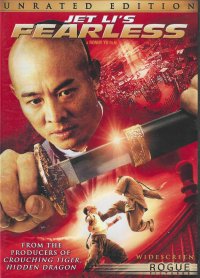 Well, gentle reader, you know what you’re getting with a modern Chinese film. You’ve got some star power in Jet Li (whose other films I’ve enjoyed, including Kiss of the Dragon,
  After watching
  I mentioned when talking about
 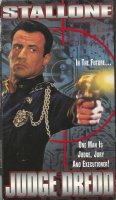 I bought this videocassette at the
 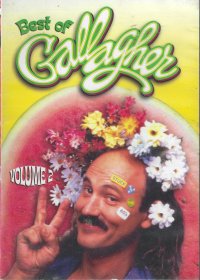 This DVD includes two of Gallagher’s comedy specials from 1983, The Maddest and Stuck in the Sixties. I recognized a lot of The Maddest from heavy rotation on Showtime in the years where I spent a lot of time in a mobile home with but a television (well, and a brother, and friends who were prohibited from actually being in the trailer when my sainted mother was at work). However, it’s entirely possible that Showtime played The Messiest, a 1986 compilation of bits from other specials.