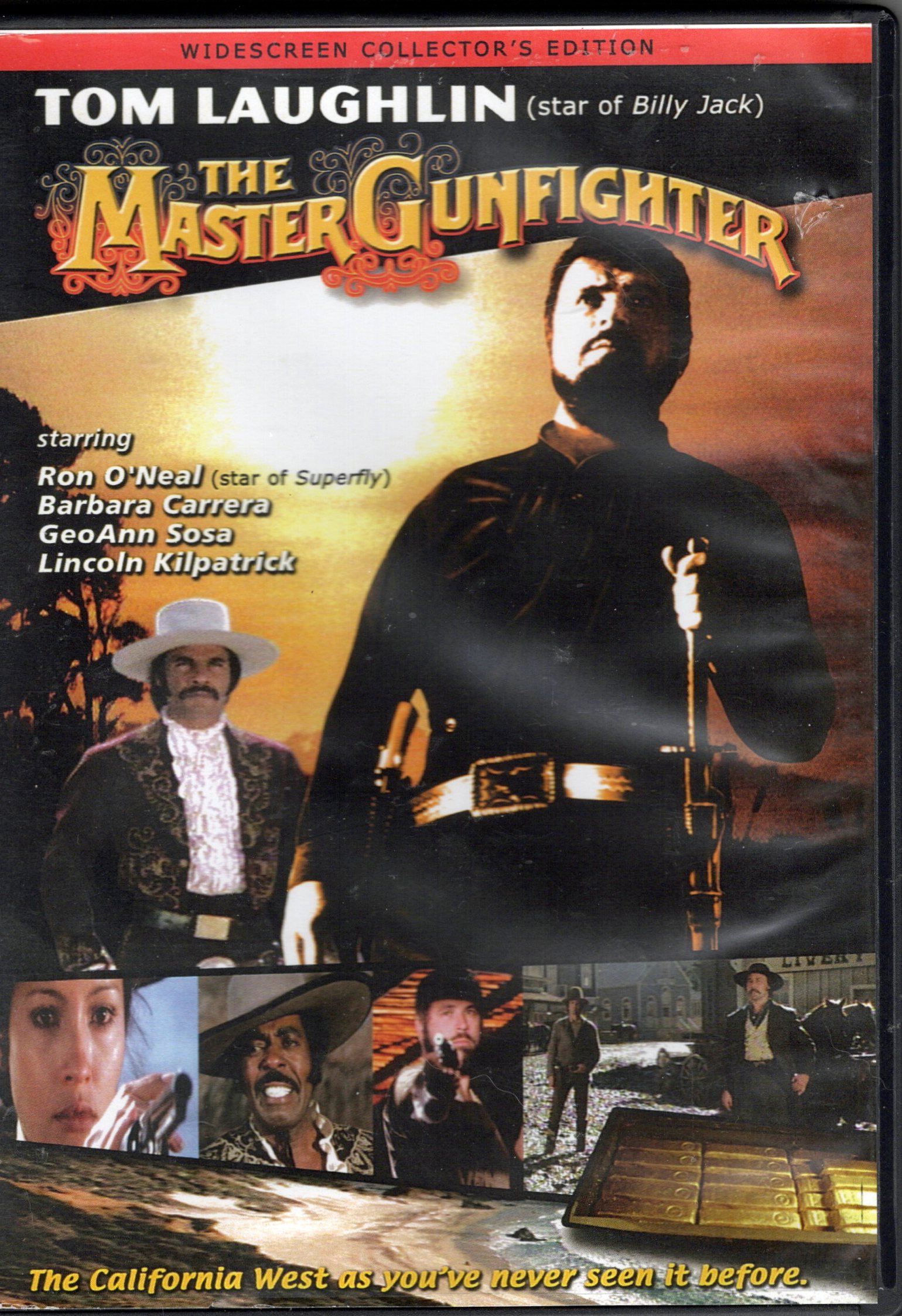
Movie Report: The Master Gunfighter (1975)

Book coverGentle reader, when I watched the 1993 anime film Ninja Scroll (and Ghost in the Shell), I said:

I would have enjoyed these films more as actual films with actors and stuff, maybe, but I’m too old to be watching a lot of cartoons.

And, in an amazing coincidence or bit of cosmic kismet, I proved that to be true within the week.

I grabbed this film thinking that it was going to be a sort of B-movie Western. I knew it starred Tom Laughlin, who played in the Billy Jack films so I expected it would have some political messaging.

The prologue voice over (provided by Burgess Meredith) tells of how the man was educated in Europe and the East, which explains why he was so skilled with a gun (a special 12-shooter) as well as the katana. But he, the Master Gunfighter, is leaving the hacienda of his father-in-law after the father-in-law’s men killed the native residents of a coastal village to cover for their illicit recovery of gold from a shipwreck. The Master Gunfighter, Finley, did not participate in the killing except to save himself when a villager attacked him, but he carries that guilt and cannot stay at the hacienda. Wait a minute, that’s the story from Ninja Scroll adapted to 19th century California instead of Tokagawa Japan.

Finley is working as a sideshow in Mexico when a group of gunfighters comes to find him and kill him because the leader of the hacienda is planning a similar slaughter to steal some gold to keep his hacienda running and wants to have Finley out of the way first. So Finley makes his way back to the hacienda to reunite with his wife, played by Barbara Carrera, and to dissuade his in-laws from pursuing their plans, meeting a mountebank, the only survivor of the first village slaughter, and a government spy along the way (the government spy, of course, tracks with Ninja Scroll as well). Gunfighting and swordfighting ensue.

After watching the film, I went to see if they shared a common source. And although Ninja Scroll‘s Wikipedia page does not mention it, The Master Gunfighter‘s Wikipedia says it’s a remake of a 1969 Japanese live-action film called Goyokin. Strangely, nobody on the Internet seems to have said that Ninja Scroll is also based on this film as well–I’ve found an article about anime that mentions both, but the listicle includes another anime whose soundtrack mirrors Goyokin‘s. So looky there, gentle reader: some original thought/connection/research here on MfBJN. That’s the insight you’re paying big bucks for. Born of a coincidence that still tickles me several days later.

At any rate, a little preachy, as you might expect from Billy Jack. It’s multi-layered though, and not as simplistic as you would get these days. The Americans are pressing the Spanish-ancestored landed gentry in California, who are then slaughtering natives for profit, and the natives abhor the Catholic missionaries.

I remember that my mother watched the Billy Jack movies when they came on. She might have had a little thing for Tom Laughlin, who was a native of Milwaukee and studied at the same university that I did, and I remember he ran for president in 1992.

But if the Internet had been around in 1975, well, public Internet, maybe we would have had Eula versus Chorika debates.
Continue reading “Movie Report: The Master Gunfighter (1975)”

Buy My Books!
Buy John Donnelly's Gold Buy The Courtship of Barbara Holt Buy Coffee House Memories

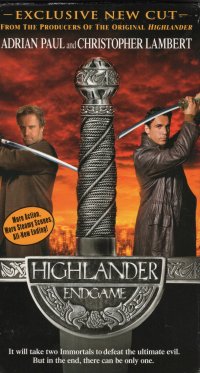
Movie Report: Highlander: Endgame (2000)

Book coverYou know, gentle reader, this might have been the first time I’ve seen this film. I mean, I have within recent memory gone through my videocassette collection of Highlander movies, and then I bought them again on videocassette to make sure I had them all (and have seen Highlander, Highlander 2: The Quickening, and Highlander: The Final Dimension again within the last year, roughly). But, as to the fourth film: I know I’d seen a Christopher Lambert/Adrian Paul movie in that penultimate run-through of the films, but I am not sure it was this movie. I think it might have been the pilot for the television show which originally passed the baton between Lambert and Paul.

At any rate, this film came out after the television series wrapped, and it looks as though there’ve been a number of other spinoffs since, including another series and an animated series not to mention comic books and novels (see my report on Highlander: The Element of Fire from twenty years ago, only ten years after the book was published, which is now, doing the math–thirty years ago?).

This film starts with Duncan MacLeod and Connor MacLeod meeting–apparently, Connor called for Duncan, but when they meet in New York, coming up from the subway, Connor is distant and promises to meet him later. But as Connor is coming to his antique shop, it explodes with a loved one inside, and a man with three crosses on his shoes walks away.

Years later, a group of immortals attacks the Sanctuary–a place where immortals can go and be drugged, kept out of the Game and dreaming (at their own request and as part of a plan from certain Watchers to always have one immortal on ice to keep any one from reaching The Prize). But Connor MacLeod, who was at the Sanctuary, was set free to hear the others killed.

The film includes numerous flashbacks to both Scotland and Connor’s wife Heather and to a time when Duncan married a woman whom he knew to be immortal but she did not know it. On their wedding night, after the customary several minute sex scene over 80s sensuous music, he stabs her to prove it to her–when she awakens, healed in bloody garb, she wanders into the night, and he has lost the love of all lifetimes.

Meanwhile, we learn that the big bad guy is a friend of Connor’s from Scotland, a man of God who participated in burning Connor’s mother at stake for not denouncing him (Connor) as a demon. Connor kills the man’s mentor, also a priest, in the height of battle or perhaps as vengeance, and the big bad Kell (also a K name, like the Kurgan, General Katana, and Kane) has been killing Connor’s loved ones for centuries, all the while with three crosses on the backs of his shoes. He has assembled a team of immortals, somehow, to help him, including Duncan’s wife.

Oh, and Jing Ke. When we first meet the team of immortals, Duncan recognizes Jing Ke, who serve the emperor Qin, and he calls him a man of honor. I know it’s not a comedy, but I laughed, because I have some knowledge of Chinese history not gleaned from…. well, I’m not sure where the writers of this film got their knowledge, but Jing Ke “served” the first relatively modern emperor of China by trying to kill him. So. Well, one does not come to Highlander movies for history.

At any rate, some chop/chop and fight scenes. One of the Watchers (mythos from the television series, I gather) says that Connor (2000+ immortal kills) and Duncan (1000+ immortal kills) will have their hands full with Kell (661 immortal kills). I’m not as good as math as I am at history, but, wait, wut? So Connor determines that only by killing Duncan and gathering his, um, Gathering or vice versa, can one of them defeat Kell. Kell goes on to kill the members of his team (probably 5 of them to bring his total to 666–get it?). And then, chop, chop in a standard random industrial facility with steel steps and catwalks and steam and sparks, finis!

Except! Although we were led to believe that Duncan’s wife was part of the race to 666, she lives, and he meets her at the end to try to reconcile with her, or to begin again (or until next time).

My youngest, returning to non-electronics sabbatical, wandered into the film about 45 minutes in and asked what was going on. Well. How to explain the entire mythos of Highlander including the series? I didn’t bother and let him pick it up as he went, and he got the basics pretty quickly. At the end of the film, he said they couldn’t make another since it wrapped everything up. Well, they could just ignore the other movies which was standard policy for the first two sequels after Highlander wrapped everything up. But the television show added a bunch of complexities, and immortals seem to have been born fairly regularly in the past, so I guess they could make a sequel where an immortal has gathered the prize, but another immortal is born so he has to go all King Herod and try to decapitate a baby. Or something.

At any rate, I think the way the film dismissed Connor MacLeod was a bit sad. He is a broken man, haunted by memories of his first wife (the flashbacks do not include much of Brenda or any of the other women he romanced in the series). I have to wonder how much old footage they had in the can from the first film that they could trot out as new for this one. But he basically loses his will to live and decides that he must fight Duncan so that the victor can be powerful enough to defeat Kell–although I’m not sure why this was the case. So the predilection to piss on established heroes to pass the IP onto the next generation is not a new thing. We just forget so much.

At any rate, a definite film in the series which adheres to its framework. But it’s entirely possible I will forget having seen it, especially if I already have.
Buy My Books!
Buy John Donnelly's Gold Buy The Courtship of Barbara Holt Buy Coffee House Memories

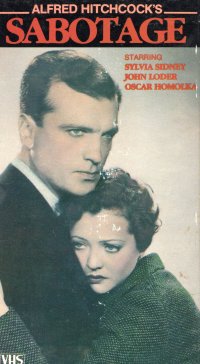
Movie Report: Sabotage (1936)

Book coverOh, but no, gentle reader. Next, after Dracula, I did not delve into a Godzilla movie. Instead, I picked up this early Hitchcock film as Universal was pitching Hitchcock movies on videocassette in the trailers before that film. As I had this on videocassette and had freshly let it play soundlessly to rewind it, I popped it in over the weekend as well.

You know, in English class, they warn you against starting your essay with a dictionary definition, and I’ve seen that happen a couple of times in the Lenten devotional my church’s congregation compiled. And Hitchcock uses it with the titles on this film: The camera focuses on a dictionary definition of sabotage as what we would later call terrorism (of a sort, of course, not necessarily involving sabots). A blackout strikes London. Outside a cinema, the patrons demand a refund from the woman in the box office, and she tries to put them off. A vendor next door sees the cinema owner return, and the cinema owner washes sand from his hands as authorities discover sand caused the outage. When he meets his handler at the aquarium, the handler tells him to do something more serious, but the man tries to demur, not wanting to have a hand in the loss of life. But the cinema owner eventually gets a bomb to plant in Picadilly, but his gang discovers that the vendor working next door is actually a Scotland Yard detective, so they want nothing to do with the plot. So the cinema owner sends his young brother of his wife (the woman in the box office) to deliver the package. So the main tension of the film is whether the boy will deliver the bomb before it explodes. He is delayed by a parade and whatnot, and….

Damn, Hitchcock has the bomb go off whilst the boy is on the bus. The origin of the bomb is recognized by the films that the boy was also carrying, leading Scotland Yard to his residence. But before they get there, the sister/wife stabs the husband, but the murder is eventually covered up by the arrival of the bomb maker who sets off another explosion covering the wife/sister’s crime.

It definitely has some of the earmarks of Hitchcock’s later work, the ratcheting of tension and the actual danger involved which imperils characters that you think would be safe (especially in modern Hollywood productions). But the director is still learning, so this is a film for serious film students. Or indiscriminate purchasers of dollar videocassettes.

I actually bought a boxed set of Hitchcock’s early movies on DVD, so I might have it elsewhere. Unlike, say, a Cary Grant movie, I will not feel compelled to watch it again should I come across it. It’s a public domain thing off of a bad film print. The first reel looks to have been in rough shape indeed, making me wonder if my videocassette player was on the fritz (as it had trouble handling a VHS copy of Cast Away earlier), but it looks to only have been the particular cassette.

I’ll definitely watch for Hitchcock’s Hollywood films in the wild, but the early British stuff (like this) can be a bit hit or miss.

Buy My Books!
Buy John Donnelly's Gold Buy The Courtship of Barbara Holt Buy Coffee House Memories

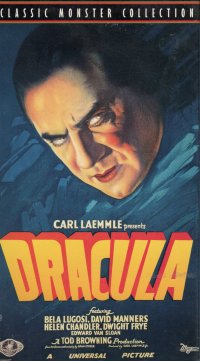
Movie Report: Dracula (1931)

Book coverAfter my recent spate of cartoons and cartoonish films (interspersed with a romantic comedy), I decided to watch a serious piece of film.
Just kidding. What happened is that I started handling videocassettes that I’d bought where the previous owner had not rewound them. I have been treating them as though they’re stuck and unable to rewind–with some older videocassettes, the spring inside develops some trouble so that if you try to rewind it, it will get up to speed and rewind for a second and then stop because it thinks it’s completely rewound. To fix it, you can open the videocassette and remove the spring (I think–it’s been a while since I’ve done it), or you can simply let the film play all the way to the end, which resets the spring or something because it will completely rewind then. So I’ve been feeding videocassettes into the player with the television and sound system off to trigger the full rewind, which means a number of old videocassettes are sitting atop the cabinets now, which means I will likely be reporting on a number of old movies in succession.

So: This is a 1999 videocassette version of the 1931 film starring Bela Lugosi as Dracula. To a contemporary viewer, it looks like it hits the tropes of a vampire film, but this film pretty much established the tropes. A man, Renfield, travels to the Count Dracula’s castle in Transylvania even though the local villagers think it’s a bad idea. He’s got papers for the count to sign to take possession of a property in England, and he becomes the count’s thrall. The count travels to England and takes possession of the new property next to a sanitarium/asylum (where they have put Renfield whom they think is mad because the ship carrying the count had something kill its crew). Once there, the count sets his eyes (and teeth) on the daughter of the sanitarium….owner? Manager? When people start to disappear/get ill, including the daughter’s close friend, they call in a specialist, Van Helsing (not played by Hugh Jackman) who learns that Count Dracula is the vampire whose presence he suspected.

The film makes its use of simple sets (and, apparently, some reused footage from an old silent movie for its shipboard scenes), and we get, like I said, things that we would come to expect (the vampire coming in the window, the leaning over the sleeping woman’s form, and so on). I know, some of it had been seen before, but we get Lugosi doing it. We get a lot of close-ups of his mesmerizing eyes. We get Dwight Frye as Renfield, chewing up the scenery and hamming up his madness.

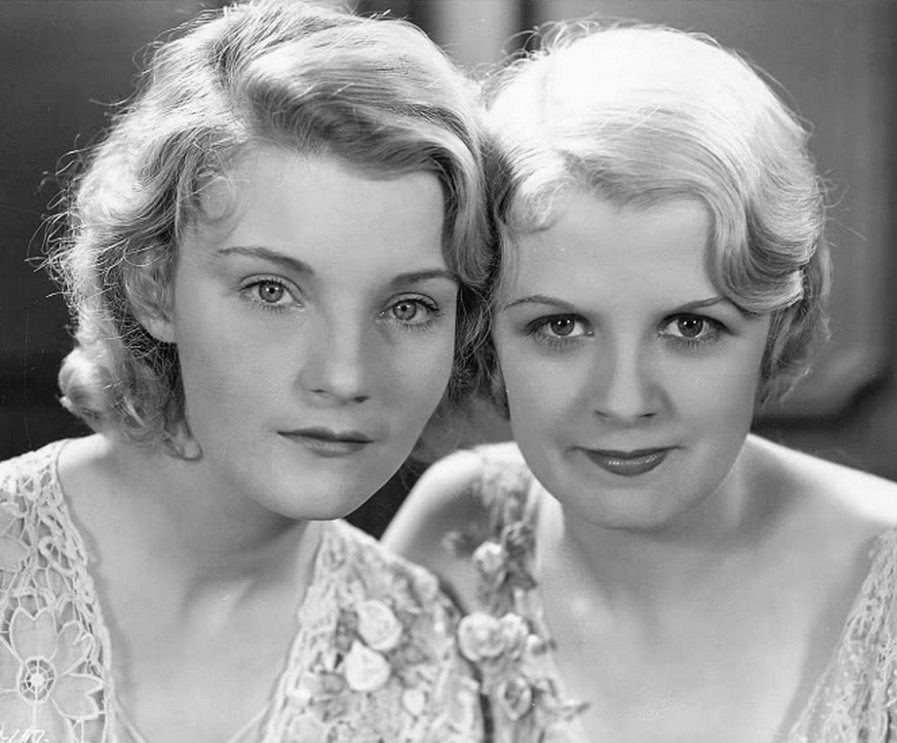
And we get Helen Chandler as Mina, the daughter of the sanitarium owner who is presumably saved from becoming a vampire (or is she?) and Frances Dade as her friend Lucy who does become a vampire (and whose ultimate fate is not mentioned in this movie). But if the Internet had been around in 1931 (I mean, that is, if it was not around but hidden from us by the government, like giant robots and powerful cubes hidden under Hoover Dam), ahem, if the Internet had been around in 1931, perhaps we would have Mina versus Lucy arguments on newsgroups.

I dunno, but I think I’ll take Frances Dade as Lucy (right).

Do we even still have those kinds of versus arguments on the Internet any more, or is our society too completely fragmented for it? Or are they happening in places I don’t frequent, like Reddit? Because I’m not seeing them on the blogs I frequent (generally too serious and sturm und drang) nor on Facebook (given over to “suggested posts” and the same three or four people’s days’ old posts every time I log in). I dunno.

So: You know, I’m glad to have seen this as an adult because it is a bit of cinematic history, something part of the Universal monster movies back in the day that were exciting and thrilling and then devolved into self-parody after a couple of decades. The Dracula story was retold in 1992 with Bram Stoker’s Dracula with Gary Oldman, Anthony Hopkins, Winona Rider, and Keanu Reeves–I saw that film, but given its date, I might have seen it with college friends, with the girl who preceded my beautiful wife, or with my beautiful wife. Eesh, I cannot remember with whom I saw the film. Isn’t that awful? It would partially retold in 2004’s Van Helsing with Hugh Jackman as the title character as an action hero. Fortunately, the timing of that film lends certainty yhat I saw it with my beautiful wife.

What’s next, Brian J.? A Godzilla movie, for crying out loud? You never can tell, can you, gentle reader?

Buy My Books!
Buy John Donnelly's Gold Buy The Courtship of Barbara Holt Buy Coffee House Memories

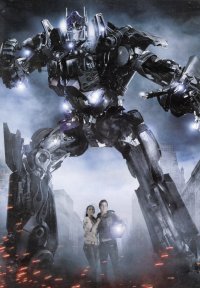
Movie Report: Transformers (2007)

Book coverWell, I watched it.

Maybe I had just moved out of the target demo when this film came out–I had my first son, so I was a father, and we were not DINKs (double income, no kids) eager to hang onto our childhoods who were going out to see a property based on toys (which we never owned until we got McDonalds Happy Meal things for our boys promoting these films). I have not seen any of the GI Joe live action films, either, even though I did have (and still have) a number of G.I. Joe films. Maybe I instinctively rebelled against Hollywood trying to make a man named Shia LaBeouf an action hero. But until now, I had not seen one of the live action Transformer films. And now I have.

So. The film retells the story of the Transformers, their war on Cybertron, the destruction, the loss of the AutoSpark in space, and whatnot in the voiceover prologue. The film-film starts out with arctic explorers in the early part of the 20th century who find something in the ice, leading to the leader of the expedition’s eyeglasses becoming the film’s MacGuffin because the location of the AllSpark is imprinted on them, although nobody knows what they found in the ice (nor what the AllSpark is–they did not benefit from the prologue). In the present, robots attack a military base in the middle east to break into the military network. The attack is repelled, but the bad guys find the location of the MacGuffin, so they go to LA to try to get Sam (Shia), a teenaged boy trying to raise money for his first car by selling his grandfather’s artifacts. On a trip to buy his first car, he discovers a beat up Camaro that essentially picks him–it’s Bumblebee, seeking to protect the MacGuffin from the Decepticons who not only want to find the AutoSpark but Megatron, their leader, whom the military has on ice. Bumblebee summons the Autobots to help, and they come and have some robot battles and… finis! Well, except for the six sequels (so far).

The film definitely was built to be a special effects spectacle–look! Giant robots! That transform into cars! But a cartoonish plot, cartoonish situations that make no sense, and shallow characters make it not much more than a cartoon for humans. (Hey, Brian J., haven’t you been watching cartoons lately? Yes, but I’ve not been enjoying them.)

The film also features Megan Fox as a gearhead girl (of course). Normally, I would tuck some pictures of the actress below the fold, but I’m still wavering as to whether I think she’s pretty or not. She’s right up there with Angelina Jolie in the “Kind of hot, sometimes, but weird enough to be off-putting.”

Oh, and I’m probably not going to run right out and gather the other Transformer movies. Even if they’re a dollar or fifty cents each. I have other things I’d rather watch ahead of them, including a set of films about the 1980s year by year and instructional woodshop videos that I mean to get around to sometime.

I should also mention that I watched this with my youngest who will be joining me for plenty of films this quarter as he’s restricted from devices on weeknights. He asked me if this was an old movie, and I guess it’s a fair question: It is, after all, older than he is. And he was also unimpressed even though he is closer to the target demo than I am (or was when it came out) and he had Transformer toys and exposure to the cartoons when he was younger.

Buy My Books!
Buy John Donnelly's Gold Buy The Courtship of Barbara Holt Buy Coffee House Memories

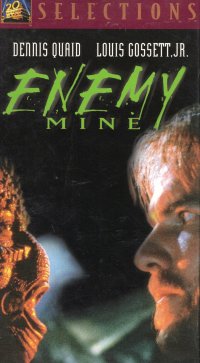
Movie Report: Enemy Mine (1985)

Book coverI saw this film over and over again when it was on Showtime and we lived in the trailer. Many times, I’ve said that a small set of films played on those long summer days when we were not supposed to leave the trailer when my mother was at work (and we obeyed infrequently). Not only were we limited to a 12′ by 60′ metal box–a very small mobile home even then–but the nature of premium movie channels in the 1980s gave us plenty of opportunity to watch the same film numerous times in a short time frame. You might not remember, gentle reader, but premium movie channels in those days would get a couple of new movies every month and would play the hell out of them that month, running them two or three times a day interspersed with some of the older movies–that is, the movies that had debuted a couple months previously, which were still getting a lot of play, available several times a week to view. It’s hard to imagine it in the 21st century, where the premium movie channels offer a couple of movies and a pile of original series, so their playlists, if you will, are far greater than what they were then. So my brother and I watched Enemy Mine a couple of times in the span of a couple of months, and I’m not sure that I have seen it since. But when I asked my brother about it before watching it, he said he’d watched it a couple of months ago.
It’s a pretty simple plot. Dennis Quaid is a human space fighter pilot on a space station when the lizardian Drac attack. When a Drac fighter blows up one of Quaid’s squad mates, Quaid wounds his ship and pursues him into the atmosphere of a harsh planet, which leads them to both crash on it. They’re alone on the planet and have to team up to survive, working from hostility to friendship. The Drac, played by Louis Gossett, Jr., (wasn’t he a gamer? He would play anything in the 1980s) becomes “pregnant” and delivers a baby drac (I will have to check my style guide to see whether I should be capitalizing Drac when I don’t capitalize human), he dies, leaving Quaid’s character to raise the boy. He does, but when Scavengers, human illegal miners who use Drac for slave labor, return, it leads to a confrontation that culminates in a shared understanding, Quaid liberating the slave labor while hunting for his young Drac charge, and eventually peace between the races.

A fairly simple storyline with special effects of the era. As my youngest is taking a bit of an involuntary sabbatical from electronics, he joined me in watching the film, and he thought it was good. Even in 1985, though, it bears some elements of what we would later call “woke”: The humans are the bad guys, as they started the war with the Drac by trying to seize some of their star systems (mentioned in the prolog voice over) and they’re the slavers in the climax, and the Drac are nothing but noble. But you can’t build too much nuance into a simple film like this. But that sort of inversion has become the norm in fictional themes to the point of being beyond irritating.

I told the young man that, to get the real flavor of living in a trailer in Murphy, Missouri, in the 1980s, we were going to watch it again the next night. We did not, and it might be another forty years before I pop this one into the last remaining VCR on earth to watch it again.

But the film did have Carolyn McCormick in it as the about the only female role who was not an extra, one of Quaid’s fellow pilots.

Continue reading “Movie Report: Enemy Mine (1985)”

Buy My Books!
Buy John Donnelly's Gold Buy The Courtship of Barbara Holt Buy Coffee House Memories

Movie Report: Sleepless in Seattle (1993)

Book coverYou know, it was easy for me to think this was the first of the Tom Hanks/Meg Ryan movies, but actually, Joe Vs. The Volcano was first in 1990. I don’t think I’ve seen that one all the way through, but I have seen this one and You’ve Got Mail (1998) before. I might have seen the latter in the theater, of all things, as I was dating a girl whose first introduction to me announced by the America Online “You’ve got mail!” voice. As it happens, that girl, now my beautiful wife, joined me in watching this film, surprised that I was watching a romantic comedy instead of some old movie or foreign film of dubious merit.
So: A young widower and his son move from Chicago to Seattle to start anew. Worried about his father, the boy (8 years old) calls into a nationwide radio program hosted by a therapist and explains that his father is lonely. Which leads to the father getting onto the phone and talking for a while about his love for his dead wife. Women across the country write in to learn more about the father, including a journalist from Baltimore, Annie (Ryan).

So the film details how the father deals with the attention and then finally tries to move on by dating a local woman he’s met through work whilst Annie deals with the doubts in her relationship/engagement with a Bill Pullman character. A Rosie O’Donnell character connives to get Annie to reach out, and the son connives with the help of a friend, to get the two together, and the film alludes to An Affair to Remember (which I just watched last September), including plans to meet atop the Empire State Building at midnight on a holiday.

So fluff and fantasy. Not funny-funny, but not dramatic. So a romantic comedy? Eh, not so much. But you know what you’re going to get by now.

And it stars a pre-work-done Meg Ryan.

Continue reading “Movie Report: Sleepless in Seattle (1993)”

Buy My Books!
Buy John Donnelly's Gold Buy The Courtship of Barbara Holt Buy Coffee House Memories

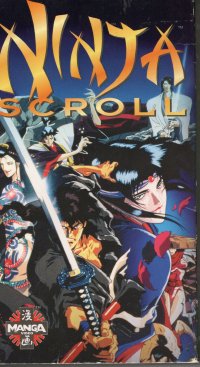
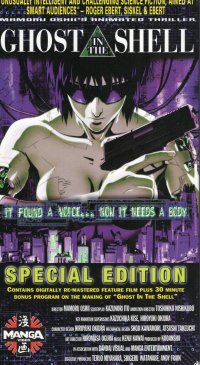
Movie Report: Ninja Scroll (1993) / Ghost in the Shell (1995)

After watching a couple of martial-arts / Eastern-produced movies (The Forbidden Kingdom and Jade Warrior and Blind Fist of Bruce) and having my fill of them for the nonce, I took Ninja Scroll out of the cabinet and saw mention of Ghost in the Shell. Which I also had in the cabinet. I picked both of them up at garage sales before I started tracking film purchases on the blog here, but I am pretty sure it was in the Casinoport or Old Tree days when I thought I’d familiarize myself with anime since the young people (then) were into it. I can’t help but note that the young people with whom I work now–people in their early 30s, so teens or so when I acquired these videocassettes, don’t seem to be into anime–it’s for people ten or twenty years older than they are (but not me, as we’ll get to by-and-by).

Book coverWhen I popped in this videocassette, I thought it would be a short, maybe 30- or 60-minute cartoon, perhaps like an episode of Robotech, one of which I actually watched with my boys sometime after readingRobotech: Genesis/Battle Cry/Homecoming (my young boys were underwhelmed with the story and/or animation). But, no, this is a full length movie. I then noted that its animation was about what you would have seen in imported Japanese cartoons that appeared on television in the late 1970 like Battle of the Planets before the American toy-based cartoons like G.I. Joe, He-Man and the Masters of the Universe, and Transformers took over in the middle 1980s. And I have to admit that, when I was a lad watching cartoons after school, I probably never thought, “You know what this cartoon needs? Gore, nudity, and sex!” Because this film has them.
In it, a mercenary ninja is hired by a wizened old Tokugawa government spy to help learn the fate of a village that died after an apparent plague arrived there. Meanwhile, a local clan leader sends a ninja team also to investigate, and they, too, are killed, except for one woman who reports back to the clan leader. She is sent back, where she encounters a devil who tries to rape her, only to have the mercenary ninja save her. Together, the trio uncover a plan by another clan to overthrow the government and they must face eight ninja with supernatural abilities to do so.

So it’s laden with intrigue and gore and nudity and whatnot. It was okay, I suppose.

Book coverAfter watching Ninja Scroll, I (re-) discovered this film in the library, and I figured I might as well watch it right away whilst my brief interest in anime was at its peak.
In it, a cybernetic government agent and her team (and directorate) investigate “ghost” hacking incidents where humans are “hacked” through maniuplated emotions to do actual hacking on behalf of a shadowy figure known as the “Puppetmaster.” She and her team discover that it might be a computer program another directorate created who has become sentient and wants to procreate.

The film dwells on some heavier themes than Ninja Scroll, including the nature of consciousness, the soul (the “ghost” in the “shell” of a physical body). Not too heavily–man, I am reading a particularly talky book that touches on Great Themes–but enough to maybe make you think.

This film has a different look than Ninja Scroll–the animators have a more Japanese traditional art influence (more straight lines and strokes) as well as the scene selection to animate was heavily influenced by traditional noir scenes. So more interesting to look at at times, but to be honest, I was a little lost on a main plot point when one pivotal character looked a lot like an earlier character who was unrelated–I got confused and just rolled with it, but better discernment on my part would have made a bit of it more comprehensible. Although I suppose with more experience and exposure to anime, I could get better at it.

But, no. I would have enjoyed these films more as actual films with actors and stuff, maybe, but I’m too old to be watching a lot of cartoons. And I’m not in my teens or early twenties, latching onto this particular “art” form to differentiate myself from the rest of mass consumer middle-brow taste at the end of the period that actually had mass consumer middle-brow taste.

Buy My Books!
Buy John Donnelly's Gold Buy The Courtship of Barbara Holt Buy Coffee House Memories

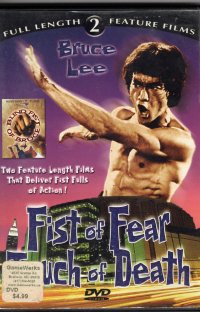
Movie Report: Fist of Fear, Touch of Death (1979) / Blind Fist of Bruce (1979)

Book coverAfter watching The Forbidden Kingdom and Jade Warrior, I thought I would throw in this DVD which I bought in June 2021 in Branson. I mean, I knew one of the films starred Bruce Li who was supposed to be a successor to Bruce Lee, but what did I just watch?

Fist of Fear, Touch of Death is not a Bruce Lee film. It was made after he died, and one of the currents is questioning whether he was murdered. I don’t know if the film makers were influenced by Kentucky Fried Movie or similar influences, but this is a jump-cut mockumentary (?) comedy (?) (it’s not funny though) centering on a karate tournament in Madison Square Garden in 1979, where the winner might be the successor to Bruce Lee. You’ve got Fred Williamson playing himself; you’ve got interview excerpts with Ron Van Clief (I’m familiar with both from the Urban Action Cinema Collection). You have a couple other martial artists who might be real or might be actors doing demonstrations. You also have a sparring match for the title at the end. In the middle, you have a fictionalized “biography” of Bruce Lee based on two films chopped and redubbed: one a samurai film purportedly depicting Lee’s Chinese samurai [sic] great grandfather, a mighty warrior, and the second a film starring a young Bruce Lee redubbed and cut to show him studying kung fu against his parents’ wishes. All of it is narrated by a sports reporter Adolph Caesar who does not appear to have been a sports reporter.

So is it a comedy? A quick cash-grab made for small theaters? That doesn’t matter. This film was a thorough waste of time except for the stories of some of the awful films I’ve watched. And this is not bad in a fun way that I’ll want to rewatch.

Blind Fist of Bruce, originally Mang quan gui shou, is a straight-forward kung fu film. Bruce Li plays the owner of a small town bank who is being taught kung fu by a pair of clowns whose tutelage has not actually taught the youth much. They stage an attempted bank robbery which proves the safety of the bank and the owner’s martial arts skills. However, when a real group of criminals moves into town, they shame him until he finds that the blind beggar is a kung fu master who can teach him how to really fight. He then bests the leader of the criminal gang, but they call in a favor, seeking a really bad guy called Tiger who was originally the student of the blind beggar–and blinded the beggar years before.

I guess the film is more of a straight-forward kung fu movie at the tale end of the 1970s resurgence–right as Jackie Chan was turning the genre into light comedy and before the wire work and CGI made it into video games. It was okay–you know, we thought films like this were great when we watched them at 11:30 on Saturday nights in Milwaukee, but now I look at them with a bit of experience, and when I see people blocking sticks with their hands or arms, I think, “Well, this fight is over,” but these things are filmed for how they look, not how they actually are.

I think this exhausts most if not all of the Chinese films in the library currently, and even if it has not, it has rather tamped down my interest in watching another such film any time soon.

Buy My Books!
Buy John Donnelly's Gold Buy The Courtship of Barbara Holt Buy Coffee House Memories

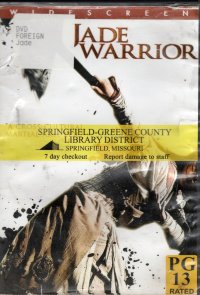
Movie Report: Jade Warrior (2006)

Book coverAfter watching The Forbidden Kingdom, with its Jade Emperor and Jade Warlord and mention made of a Jade Warrior, I looked into whether this film was related to it. And it is not; the jade in the title merely reflects the association of jade with China.

Like Kung Fu Yoga was supposed to be, this film is a joint production between Chinese and Finnish, as in Finland, production companies. So it has subtitles from both Mandarin and Finnish. The joint nature of the production gives it a bit of a tortured plot device to shoehorn Chinese actors/settings and Finnish actors/settings into it.

In it, a Finnish woman leaving her boyfriend brings some of his junk to an antique dealer, including a MacGuffin. The antique dealer recognizes it as a Chinese artifact and contacts the boyfriend, a down-on-his-luck fellow who has taken up smithing as a hobby. The MacGuffin opens a bit and reveals to the young Finn how, in a past life, he was a great warrior-monk who defeated a demon who was building a device to open the gates of hell.

In past China, the warrior/monk was destined to Kill the demon which would give the warrior to Nirvana when he dies–he won’t be reincarnated in other words, but he has fallen for a warrior woman played by Zhang Jingchu–who falls in love with him as well, but her long-lost first love returns–the warrior’s companion Cho. Instead of killing the demon outright, he locks the demon’s head in the MacGuffin box, but the demon tells him that in all the warrior’s future lives, he will fall in love with Pin Yu, but she will not love him or will love another more than him. Jeez Louise, that is a hell of a thing to contemplate much less to endure. The warrior, who is half-Finnish (of course), takes the MacGuffin to Finland.

In modern Finland, an antiques specialist whose archeologist/anthropologist partner has discovered a preserved body holding the MacGuffin. When it is partially opened by some dust from the Finnish woman’s boyfriend’s things, the MacGuffin opens just enough to allow the demon to possess the antique dealer. He seeks out the woman’s boyfriend and tricks him into completing the gate to hell as the modern Finnish man rediscovers memories from his past life. He kills the demon, which means that when he dies, he will reach Nirvana, and he decides to try to win the heart of this incarnation of Pin Yu, the leaving girlfriend, anyway. And finis!

It tells the two stories in parallel as the modern Finn smith recovers the memories from his past life as well as hints from an archeologist/anthropologist who discovered the remains of Cho and Pin Yu in Finland and a bit of a coda that explains how they got there after the Jade Warrior (presumably the half Finn/half Chinese guy was the titlular character) killed himself to begin his next pursuit of Pin Yu. Cho and Pin Yu went to protect the MacGuffins or something.

An okay film, a bit odd in its artificially grafted synergy. But it did have Zhang Jingchu (or Jingchu Zhang, depending on where you put the family name relative to the personal name) as Pin Yu.
Continue reading “Movie Report: Jade Warrior (2006)”

Buy My Books!
Buy John Donnelly's Gold Buy The Courtship of Barbara Holt Buy Coffee House Memories

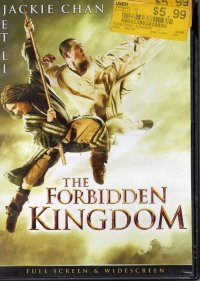
Movie Report: The Forbidden Kingdom (2008)

Book coverWhen it came time to delve back into the movies in or on the to-watch media center, I picked up this film. It must have looked interesting to me, as I bought it twice last year: once at the library book sale in April (although I called it The Four Kingdoms in that post) and once in Fairfield Bay, Arkansas, in June. Also, note that this doubled my odds of picking the film. Well, it would have, except that I had previously noted the duplication and put the copy with the Fairfield Bay, Arkansas, library sticker into the Little Free Library at the park in Battlefield. Perhaps whomever picks it up will wonder how that DVD got from Fairfield Bay to Battlefield as I often wonder how books and whatnot make their way to the Springfield area. I alone know the secret. Well, I guess my family, too, and given that Fairfield Bay is a “resort community,” whoever takes the DVD (if anyone) can probably assume a visitor to the resort there from the area did it, but it’s less romantic/heroic when you put it that way.
At any rate, the film features both Jackie Chan and Jet Li (both older by now/then) in dual roles, and neither is the true protagonist. Instead, a South Boston white teen named Jason Tripitikas travels to Chinatown (Boston) often to visit a pawn shop to look for kung fu movie bootlegs. He’s come to know the owner, Hop, during his visits. One day, he catches a glimpse of a staff in a back room and asks about it. Hop tells him that it’s waiting for a man to come to return it to its rightful owner, and that Hop’s grandfather, father, and now he waited for that man. When a bunch of thugs who bully Jason find out he knows the pawn shop owner, they force him to help get them into the locked shop for a robbery, and they shoot Hop. Jason grabs the staff and tries to fight them off, but ends up running to the roof, and he falls, and…..

He is transported to ancient, mythical China with the staff just outside a village being raided by the warlord’s men. A drunken martial arts master (Chan) saves him and starts to tell him the story of the Monkey God, a bit of a prankster martial arts master who invaded a ceremony held for the Jade Emperor and who embarrassed the Jade Warlord. The Jade Emperor only returns every couple of centuries from his meditation, and the Jade Warlord is in place while the Emperor meditates. The Jade Warlord challenges the Monkey God to a fight and tricks him into laying down his staff, and then he (the Jade Warlord) entraps the Monkey God in a statue. Before he’s completely encased, the Monkey God sends his staff far away for protection as it is the thing that can free him.

So Jason and Lu Yan (Chan) head off so that Jason can learn kung fu to handle himself as he is off to return the staff to the Monkey God. Along the way, they link up with a monk (Jet Li) and a young woman sworn to kill the Jade Warlord, who has taken the time to brutally conquer and suppress, etc. Then they get to the stronghold of the Jade Warlord, chaos and kung fu ensue, and….

Well, not finis. Jason returns to his own time without the staff, but uses his knowledge of kung fu to fend off the thugs and meets someone who looks just like the Golden Sparrow, the young woman whom he had to leave behind in ancient, mythical China.

You know what? I’ve been harsh on some Chinese and Chinese/American or Chinese/Elsewhere movies of the 21st century because they feature Chinese heroes fighting against Westerners who want to steal China’s treasures. This one does not ring the Chinese jingoistic or propaganda bells–although, note that the Western hero is bringing a Chinese treasure back to China. So I was pleasantly surprised by the film, and I enjoyed seeing Jackie Chan revisit the Drunken Master set (Lu Yen is an immortal, but his elixir, required to keep him ever young or strong or something, is wine), and Jet Li chews the scenery a bit in his dual role as the monk and as the Monkey God.

So, overall, a good way to pass an evening.

And then there’s Liu Yifei as the Golden Sparrow. Continue reading “Movie Report: The Forbidden Kingdom (2008)”

Buy My Books!
Buy John Donnelly's Gold Buy The Courtship of Barbara Holt Buy Coffee House Memories

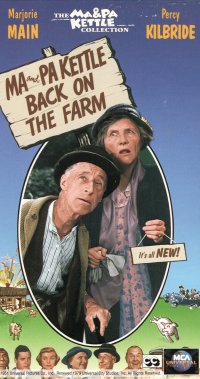
Movie Report: Ma and Pa Kettle Back On The Farm (1951)

Book coverAfter discoursing, briefly, on films that piss on Missouri, I popped this film in right away as I thought it was set in Missouri because Ma and Pa Kettle are yokels, and the Ozarks hillbilly was entering the popular culture about this time. But I was mistaken; apparently, the films are set in Washington state for the most part (although one later entry is The Kettles in the Ozarks). So this is not a piss on Missouri movie at all. And it’s funny, the passage of time; I would have sworn I just bought this film, but it was almost six months ago. Man, I am not watching movies as fast as I’m buying them.

At any rate, this is the first Ma and Pa Kettle movie I watched on purpose and all the way through. I say this because, gentle reader, well… pull up a chair and hear about the Olden Days. When I was a kid, before cable, the UHF stations on the dial and sometimes the VHF stations, would play two or three movies on Saturday and Sunday afternoons. These tended to include old black-and-white war movies and comedies from series, including the Ma and Pa Kettle movies and Francis the Talking Mule (a couple of series I remember). As a pre-teen boy, I tended to only get into monster movies on the creature feature show. So although I would have had the chance to watch probably everything in this series, I didn’t.

So: This is the third film in which Ma and Pa Kettle and their kin appear. In The Egg and I, they’re secondary characters to the main characters who move from the big city to the farm (and for which Marjorie Main was nominated for Best Supporting Actress). Then the films focus on them with various vagaries (my rigorous research indicates). In this film, the Kettles are living in a modern house with their son who graduated from college and invented an improved chicken egg incubator (the premise of Ma and Pa Kettle). Their son and his eastern wife are about to have a baby, and the in-laws show up, and the domineering mother-in-law takes over, driving the Kettles back to their farm which lacks the modern conveniences they’ve come to appreciate. Prospectors think they’ve found a vein of uranium on the Kettles’ land leading to their presumed chance at wealth. And the mother-in-law eventually drives the new parents apart.

In a series of humorous set pieces, everything is set aright.

I chuckled at a couple of the things. But I don’t know if I’ll order other films in the series. If I see them, I might pick them up–odds are better to find them here than elsewhere, perhaps. Especially for a buck or fifty cents at the book sale or antique mall.

And I don’t even think this would count as a pissing on kind of movie because it’s light-hearted comedic poking at archetypes. I count pissing on movies as earnest, this is how those lesser people really are kinds of films. Or perhaps I just slap the term around arbitrarily and without being informed about what I’m talking about. This is a blog, after all, and hot takes are often also spit takes.

Buy My Books!
Buy John Donnelly's Gold Buy The Courtship of Barbara Holt Buy Coffee House Memories

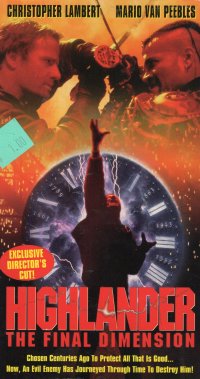
Movie Report: Highlander: The Final Dimension (1994)

Book coverIt seems like I just watched the first two films in this series, gentle reader, but I watched Highlander last January and Highlander II: The Quickening last May. And I watched the series of them in recent memory, recent being within the last decade. Seems I see them priced to move somewhere together and I buy another set of them, and I put them in my unwatched cabinet (or on it). You know, of all the media libraries, the VHS and DVD library is the smallest, so it has a slightly greater chance of being organized some day rather than the LPs, CDs, or books do, and I might learn how many copies of each of these films I own.
At any rate, this film ignores the contents of the second, rightfully so. In it, Connor MacLeod has traveled after his first wife dies in Scotland to Japan to study with another immortal, a Japanese sorceror played by Mako. The sorceror helps the Highlander to fashion his katana and to learn to fight with it. But Kane, a Mongolish looking immortal played by Mario Van Peebles arrives and kills the sorceror who tells MacLeod to run. Because he has booby trapped his lair so that when his head is taken, presumably by Kane, that it collapses, burying Kane and his fellow bad guy immortals.

In 1994, an industrial dig of some sort–the set is, of course, a generic industrial set–unearths the legendary cave of the sorceror and frees Kane. Of course, a beautiful archeologist played by Deborah Kara Unger is on hand to be a love interest after discovering the secret of MacLeod’s past. In northern Africa, the Highlander senses that another immortal is afoot and returns to New York, where Kane heads himself for the renewed Gathering. A couple of set pieces and cinematic sword fights later, Kane and MacLeod face off on another conveniently located generic industrial set of steam pipes and metal stairs and catwalks. Well, the last piece is set in New Jersey, so maybe it’s all like that.

So it’s a grand fun film to watch, especially Mario Van Peebles having the time of his life chewing up the scenery as the bad guy. The budget for these films must have been pretty low, as they didn’t spend a whole lot on set lighting or custom sets, but they’re still more fun to watch than modern action films costing hundreds of millions of dollars.

And in the Highlander film, I mentioned how both Roxanne Hart, as the then-modern Brenda, and Beatie Edney, as MacLeod’s first wife, were pretty. But, boy howdy, Deborah Kara Unger.

Continue reading “Movie Report: Highlander: The Final Dimension (1994)”

Buy My Books!
Buy John Donnelly's Gold Buy The Courtship of Barbara Holt Buy Coffee House Memories

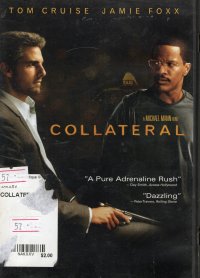
Movie Report: Collateral (2004)

Book coverThis film came out back when we still went to films in the theater–we were still in Casinoport. I had just started working as a consultant for the digital agency, starting my own consulting company and working from home for the first time. Basically, I’ve worked from home ever since except for a year or so when the agency hired me and had an office downtown. Perhaps that was not a film-filled summer–I was not only working full time for the agency, but I’d picked up short contracts with previous employers for in-office night work and white paper writing. So I had knowledge of the film when it came out and since–Foxx was something then, ainna? His Oscar winning turn as Ray Charles would come out a couple months later–and Cruise was in the mid-career doldrums, although his doldrums tended to move better than actual doldrums.
At any rate, the plot: Foxx plays a cab driver who picks up a blond Cruise at a courthouse after dropping off a prosecutor planning for a big case. Cruise has a couple of stops to have people sign papers for a real estate deal, so he engages the cab driver to drive him to all the stops. But, at the first stop, a body flies out the window and lands on the cab, and Max (the cab driver) learns Vincent (Cruise) is an assassin on a mission to… well, it develops, take out witnesses and the prosecutor in a case targeting one of his clients, or related organized crime figures.

Along the way, Max and Vincent develop a bit of a rapport. Vincent shakes Max out of a bit of a habitual, rote existence dreaming of better things (owning a limo company) and gets him to man up and demonstrate some confidence–one scene has Max going into a nightclub, pretending to be Vincent. But, in the end, the rapport is false, and Max has to protect his mother (whom he visited in the hospital with Vincent) and the pretty prosecutor who rode in Vincent’s cab earlier.

So the film has some depth in exploring the relationship between the men and how it evolves, mostly in Max drawing strength and confidence from the psychopath’s influence and ultimate his testing.

However, some of the plot turns are just that, plot turns, and not actual evolution of the situation. I mean, Max could have gotten away on several occasions before Vincent knew about his mother, but did not. And they’re driving around in a damaged cab with a body in the trunk as though they have nothing to worry about–although they are stopped by police at one point, saved only by the coincidence that the police are just then called to the scene of one of Vincent’s earlier crimes. So the plot as played out detracts a bit from it.

The film also features a young Mark Ruffalo as a police detective on their trail and Jada Pinkett Smith as the pretty prosecutor. Wow, she was pretty back in those days. Now, not so much. Not so much because she has aged–everyone has except my beautiful wife–but because her (Jada Pinkett Smith’s) character has been revealed to be reviled.

So an okay film. Not one I will watch over and over again, and not something that entered the cultural zeitgeist to be remembered or quoted much twenty years later.

Buy My Books!
Buy John Donnelly's Gold Buy The Courtship of Barbara Holt Buy Coffee House Memories

A Quiz, Sort Of

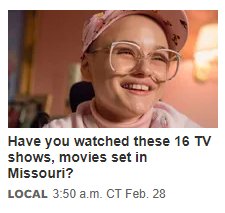
The Web site of the Springfield News-Leader has a tile that presents it as a quiz:

However, the title gets more to the point: These 16 television shows, movies are set in Missouri — but were they filmed here?

The majority of the series [Ozark] is set in the dark, ominous Ozarks, but critics didn’t hesitate to point out that hardly any of the episodes were filmed in Missouri. The majority of the series was filmed in Georgia, according to IMDb. As for the lake scenes, most of these were filmed at Lake Allatoona, a reservoir similarly shaped to the Lake of the Ozarks about 45 minutes northwest of Atlanta.

In recent years, “Ozark” may have been at the top of people’s minds when it came to how Missouri was showcased by Hollywood, but there have been several other award-winning television shows and movies set in the Show Me State — some of which, like “Ozark” weren’t actually filmed here.

Perhaps the journalist is disappointed that she does not have the opportunity to see stars on location, but the article points out that Georgia ladles tax breaks and incentives on production companies. One wonders if this is supposed to serve as a call to action for Missouri to also ladle out tax money so Shia LeBeouf can fly in and film for a couple of days before flying out.

However, since it was presented as a quiz, I must ask myself: How did I do? The sixteen from the article are:

  • The Act
  • Sharp Objects
  • Three Billboards Outside Ebbings, Missouri
  • American Honey
  • Gone Girl
  • Switched at Birth
  • Winter’s Bone
  • Up in the Air
  • Waiting for Guffman
  • Road House
  • Planes, Trains, and Automobiles
  • National Lampoon’s Vacation
  • Paper Moon
  • Meet Me In St. Louis

I’ve seen five of sixteen.

The list skews to recent and to piss-on-Missouri stories and includes a number of entries where a scene nominally appears in Missouri in a larger travel film. Coincidentally, the latter overlap a lot with the films on the list I’ve seen.

The journalist does disclaim:

Note: There have been countless television shows and movies set and filmed in Missouri. This list is not exhaustive.

However, if one goes to the AUTHORITY (the Wikipedia entry Films set in Missouri), one sees this pretty much is the pattern: Piss on Missouri or just passing through. Guardians of the Galaxy? Deep Impact? I have seen these films, and they might have a scene in Missouri, but to say they’re set in Missouri is a stretch.

I am glad to see One Night At McCool’s is listed. But Larger than Life is not. The latter falls in the “Passing through” category, with a scene in Kansas City, and something that was filmed in St. Louis–Mike and Todd, both veteran actors of The Courtship of Barbara Holt, were extras in a scene that did not make the final feature.

At any rate, I’m not much into movies, books, or articles that piss on the heartland or where the writer is from (after the writer has moved to the big time). So I probably won’t watch Winter’s Bone (although I did just check movie accumulation posts to make sure I hadn’t already bought the DVD somewhere) but I do have the book in the stacks somewhere (I ordered it from ABC Books during the LOCKDOWN).

Buy My Books!
Buy John Donnelly's Gold Buy The Courtship of Barbara Holt Buy Coffee House Memories

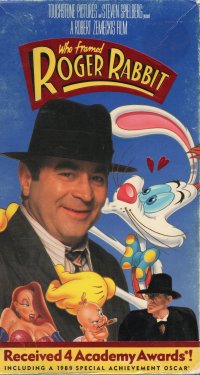
Movie Report: Who Framed Roger Rabbit? (1988)

Book coverAfter completing the 2024 Winter Reading Challenge, I took the opportunity to pop in some films. I was in the mood for this one for some reason, one that I thought maybe I could watch with my boys when they were old enough, but they’ve gotten too old now. Jeez, when did I pick this film up? Before I was enumerating film acquisitions on this blog, gentle reader, so a long time ago that was not so long ago.

I did not see this film when it came out, but it was a big deal at the time; the film blends animation with real characters and a sense of neo-noir, if you can circle that square. The film takes place in the late 1940s in Hollywood where cartoon characters exist and work side-by-side with humans on animated films. The film’s cold open features an adorable baby character, played by a fully grown toon in a baby body, whose mother leaves him in zany Roger Rabbit’s care. But Roger Rabbit blows the scene when he produces stars instead of birds when given a blow to the head. The head of the studio thinks Roger Rabbit has lost his head in jealousy over his wife, Jessica Rabbit, and rumors of an affair. So he (the studio head) hires a detective to get pictures of the cartoon woman in adultery with the owner of a factory and benefactor of Toon Town, the residence of the cartoon characters. Bob Hoskins’ detective gets the photos, and when the factory owner winds up dead, Roger Rabbit is the suspect. The detective discovers that it might be a frame job and looks to discover…. well, who framed Roger Rabbit and why. To do so, he’ll have to confront his greatest fears–a return to Toon Town and to confront the toon that killed his brother.

Still amusing, albeit silly and not cress. Because it’s fantastic and a retro/throwback film set before the 1980s, the film has aged well. It remains as fresh as it would have been in the last year of the Reagan administration and in the early days of the Internet, before the World Wide Web, when one could discover naughty pictures of Jessica Rabbit on bulletin board systems and newsgroups. Or so I heard.

Buy My Books!
Buy John Donnelly's Gold Buy The Courtship of Barbara Holt Buy Coffee House Memories

Movie Report: Raiders of the Lost Ark (1981), Indiana Jones and the Temple of Doom (1984), and Indiana Jones and the Last Crusade (1989)

Raiders of the Lost Ark (c’mon, man, it’s not Indiana Jones and the Raiders of the Lost Ark)
Book coverWell, since I just read the novelization of this film, of course I was going to rewatch the series. Well, the real Indiana Jones movies. I picked up a VHS box set from the turn of the century (it looks like the commentary is copyright 1999). Which is why the videocassettes call these Chapter 24, Chapter 23, and Chapter 25 respectively; the Young Indiana Jones Chronicles, a two season series plus four television movies, comprise the first 22 chapters of the story. And as far as the 21st century entries into the film canon go, well, we will not speak of them again.

So, Raiders of the Lost Ark: In the cold open, Indiana Jones is in a South American jungle, looking for an idol in a lost temple. When he reveals a map, one of his partners draws a weapon, only to have Jones whip it out of his hand. Native bearers flee when they reach the temple, and Jones and his remaining partner, Doctor Octopus, enter. Jones seemingly discovers the booby traps and swaps the idol for a bag of sand, and he must flee a final trap–the rolling boulder–and a betrayal from Doctor Octopus, and….

Well, never mind, gentle reader. You already know the story, and if you do not, you should definitely watch the movie and not read a recap. So I will just jump into my normal commentary on the film(s).

I did not see Raiders of the Lost Ark in the theaters, and it was some years after it came out on home video and cable that I saw it. I was familiar with the story, though, as I had one or more comic books telling at least part of the story. For some reason, I think I saw this in school, maybe in high school, eventually, and I’ve only seen it a couple of times since then. However, Indiana Jones was part of the zeitgeist in the 1980s, and it probably more than anything else popularized the archeologist/treasure hunter archetype that had a healthy go of it in the era–see also Firewalker, the Allan Quatermain movies King Solomon’s Mines and Allan Quatermain and the Lost City of Gold, and the Romancing the Stone/Jewel of the Nile movies and so on.

Sometime around the turn of the century, about the time I decided to ditch the gas permeable contact lenses and wear glasses instead, my beautiful wife decided that I looked like Toht, one of the bad guys in the film. So I asked her to write a JavaScript clickable image carousel for me, and Toht Or Not was born (and originally hosted on Geocities).

I posted that on Slack where I work (for the nonce), and those kids were not familiar with a lot of the concepts therein, such as dial up connection and certainly Hot or Not, which was a thing in 2003.

At any rate, Lucas and Spielberg put together a rollicking adventure that moved very well.

Oft quoted lines:

  • “Top. Men.”
  • “Snakes. Why did it have to be snakes?”

As I suspected, the book is paced a little differently than the book and includes several scenes which were not in the movie, particularly in the beginning of the film when the Nazis decide to go for the ark. It differentiates and elaborates on the German chain of command in a way that is lost in the film. And although Marion in the movie says that she was a child during her earlier affair with Jones, we’re left to imagine what that is. 18? 19? In the book, she goes on and mentions she was fifteen. No telling on whether that was in the script, filmed, and/or cut or if the novelizationer added that in.

Indiana Jones and the Temple of Doom
Book coverThis film, the events of which take place before Raiders of the Lost Ark, has a cold open where Jones has recovered the remains of a Chinese emperor for a gangster who does not want to pay and double-crosses Jones. Jones escapes with his life and the singer at the gangster’s nightclub, and although they (and Short Round, the annoying young sidekick) think they’ve gotten away, they’re passengers on a plane owned by the gangster–and the pilots bail out while Jones and crew are sleeping. Their narrow escape as the plane crashes in the Himalayas brings them to a village in India where the home stone has been stolen, and Jones decides to help return it. Which leads them to a fortress and a renegade rajah and a cult, including the cult leader who rips out still-beating hearts during rituals. Which is the gross-out moment in this film (akin to the face-melting in Raiders of the Lost Ark).

The film features some callbacks and in-jokes–the gangster’s club is Club Obi Wan, and at one point Indiana Jones faces not one, but two swordsmen who twirl their swords before attacking, and he reaches for his holster–but unlike in Raiders, he finds it empty and says, “Heh.” So already there’s a touch of fan service.

But the mine cart chase scene. Boy, howdy, did that go on for too long. Indiana, the nightclub singer, and Short Round hop into a mine cart to escape the bad guys from a–well, it’s not a mine, it’s a dig for the remaining Macguffins–and bad guys pursue them in other carts. Man, I don’t know if they were grabbing onto a height of roller coaster fame or if they had visions of future theme park attractions dancing in their heads, but the sequence is a bit over-the-top ridiculous.

It has gotten a bit of a bad reputation as the red-haired step-child of the Indiana Jones movies (before the delinquent foster children came along), but it’s not a bad sample of the genre. According to the Wikipedia entry, they set the film before Raiders so they wouldn’t have to make Nazis the bad guys again. If only they’d stuck with that. But in the 21st century, that’s the only real evil the world has seen, so it (and, perhaps, Republicans) are the only allowed villains in these simpler times.

Oft quoted lines:
Well, none, really, although maybe I will start saying, “Fortune and glory, kid. Fortune and glory,” to change that. Although my kids are not really kids any more.

Indiana Jones and the Last Crusade
Book coverI saw this film in the theater, gentle reader, I think. It seems to me that my brother and I came into a windfall that summer when the owner of my father’s favorite tavern at the time hired us to load a roll-on dumpster with junk stored in the three- or four-bay garage attached to the saloon. We worked two days and got sixty dollars each, and, gentle reader, we could do anything we wanted. So we went to see this film instead of UHF because this film had been out for a while and would likely be ending its run, and UHF had just opened. Well, as it happens, UHF also closed before this film. But we saw it at the first run theater on Mill Road, not the second run theater which was across the street. We had a wealth of options in the world; I guess we have a wealth of options now in our homes, but it really isn’t the same.

At any rate, this is the film with Sean Connery as Indiana’s father who goes missing when searching for the Holy Grail. Prior to going missing, he sent his diary of clues home to Indiana, and when an industrialist asks Indiana to continue the search for the grail, Indiana takes the job to search for his father. Along the way, he meets a headstrong Austrian doctor, Elsa, who helped his father as well, and unknowingly brings the Germans the diary, which they wanted to get from Jones Sr. So when Indiana frees himself and his father, they have to race to Berlin to recover the diary and then beat the Nazis and the industrialist (working with the Nazis, including Elsa) to the temple in the canyon of the crescent moon.

The film has some throwbacks, including an escape via plane where Jones Sr. asks Indiana if he knows how to fly a plane and Indiana says, “Fly, yes. Land, no,” which hearkens back to the plane scene in Temple of Doom, and a convoy fight scene where Jones has to rescue his father and Brody from a tank definitely throws back to the ark convoy scene in Raiders.

So eight years after the initial movie, the original trilogy wraps up in fine fashion. I guess Lucas started planning the fourth installment which sounds a lot like The Kingdom of the Crystal Skull in the early 1990s, but it would be fifteen years before that appeared. The cold open features a young Indiana Jones, played by River Phoenix, which laid some groundwork for the television series.

Quotable lines?

  • “It belongs in a museum!”
  • “We named the dog Indiana.”

I dunno. Not as prominently quotable as the first, and by that time the genre itself was starting to wind down, although examples of the genre have always been there (the Tomb Raider game came out in 1996, and the films in 2001 and 2003).

I spent $2 for the boxed set here (which did not include the television series, presumably available separately) and three evenings reviewing the material. Time and money well spent, or at least better spent than how I sometimes spend the evenings. It also makes me want to revisit some of the other listed examples of the genre even though I have seen Firewalker with my boys sometime in the last decade or so and Romancing the Stone and Jewel of the Nile sometime since I bought them again in 2015. The material and setting (at least of the cold opening of Raiders) remains fresh as I listened to part of an audio course last summer (and will probably revisit it soon) and because the news headlines have been full of new archeological finds in the Amazon and the highlands of South America. So one could imagine stories like this being told today with some technological updating.

And I’d like to just reiterate something I’ve noted in book reports from thrillers from the 1980s about the use of Nazis as bad guys. In the 1980s, Nazis were the bad guys in a lot of books because World War II was still in living memory and because some of the younger people would have grown up with the World War II movies where the Nazis were the bad guys. In the 1980s fiction, it was always old Nazis putting into motion their decades-old plots to start the fourth Reich. The trope was aided by the fact that actual German World War II Nazis were found or dying in South America and whatnot. However, now in the 21st century, the use of Nazis as the bad guys is just a photocopy of a copy, as the only experience modern film makers and authors have of Nazis is from the popular culture. Which is why the stories and films have a sort of washed out and faded sense of plot. Photocopies of photocopies.

And in a sad personal side note, I saved these films for watching with my boys until I thought they were old enough to handle the gross-out scenes, but I guess I waited too long, as the boys no longer want to watch movies with me. They’re too busy working and dating (the older boy) and building an ephemeral legacy in Minecraft (the younger). So no telling how much they would have enjoyed the films even though they’re about the age I was when I saw them.

Buy My Books!
Buy John Donnelly's Gold Buy The Courtship of Barbara Holt Buy Coffee House Memories

You Didn’t Have To Tell Me

From the story Five things you may learn from those who have actually seen the first Super Bowl broadcast:

Fred Williamson went on to a lengthy post-playing career in movies

Williamson, who was interviewed for the podcast, is still alive at age 85, and though he’s not a Hall of Famer like teammates Len Dawson, Bobby Bell, Johnny Robinson or Emmitt Thomas, he might have had the most notable career of any player on that Chiefs team.

The Hammer went on to a career in “blaxploitation” action cinema, following in some of the same footsteps as NFL legend Jim Brown. His numerous list of film credits include movies as recently the 2020s.

Ackshually, you wouldn’t have learned that by watching the first NFL/AFL championship game. But you would have learned it if you watched all fifteen movies in the Urban Action Cinema Collection, a full 1/3 of which are Fred Williamson movies.

Buy My Books!
Buy John Donnelly's Gold Buy The Courtship of Barbara Holt Buy Coffee House Memories

Movie Report: Kick-Ass 2 (2013)

Book coverWell, gentle reader. Well, well, well. For starters, I watched this film last month and it has lingered on my desk that long. To be honest, I’ve been fairly busy with the 2024 Winter Reading Challenge to watch or even think about movies this month so far. I must get through the categories therein before I return to my regularly scheduled occasional film watching.

I picked this film up last September in a burst of profligacy. I watched the first film in…. Well, in ages past, before I decided that movie reports were content for the search engine algorithms to ignore. I mention it in The 80s R in 2018, so that must have been about the time when I rented the DVD from the video store. Six years? Not quite closer to the film’s release than now, but close. But, oh, how I dwell on the passage of time outside my unchanging world.

The film takes place a couple of years after Kick-Ass and is less brutal than the original. Kick-Ass trains with Hit-Girl, and they’re both not really active but are training. The son of the big bad guy in the first film takes control of his father’s criminal empire and the family fortune and assembles a squad of super-villains hoping for revenge. Meanwhile, Kick-Ass discovers that a group of people in costume has gathered to fight crime as well, and he teams up with them. But the bad guys group starts killing members of the good guys group and Kick-Ass and Hit-Girl have to put a stop to it.

Less brutal, and it has some teen movie themes to it as Hit-Girl, in her secret identity, has to navigate high school. And she and Kick-Ass come to determine they’re more than friends.

A bit of deconstruction on the superhero films that were still gaining steam in that era. An amusing bit of watching, but not for younger viewers. And it can probably stand alone enough if you haven’t seen the original. Or, if you’re like me, and you’ve seen the original “recently” as understood by more seasoned readers, where “recently” can stretch back a decade or so.

Buy My Books!
Buy John Donnelly's Gold Buy The Courtship of Barbara Holt Buy Coffee House Memories

Movie Report: Corky Romano (2001)

Book coverAh, gentle reader. I took my beautiful wife to see this film in the theater. We were young, and we went to the movies often, apparently, and I not only made her suffer through not only films based on Saturday Night Live sketches, but also films starring Saturday Night Live alum. For some reason, we thought this would be a funny film, but she was not impressed.

Twenty-one years later (somehow), I picked the film up at a book sale and popped it into the DVD player. And I enjoyed it enough for what it is: a silly comedy.

Chris Kattan plays the title character, a happy-go-lucky veterinarian, basically a Chris Kattan character, whose father and brothers are mobsters. When their father is indicted, the family calls in Corky to impersonate an FBI agent to steal the evidence that the FBI has on them. So he does, impressing the other agents by resolving situations using his special methods–often frantic and panicked flailing of some sort–as he tries to win the heart of an agent (played by Vinessa Shaw).

It’s lightweight, and I might have enjoyed it a little more this time without worrying about how much my wife was not enjoying it.

You know, for a brief period there around the turn of the century, Chris Kattan was a movie star–well, all right, he was also in A Night at the Roxbury and Undercover Brother, both of which I saw in the cinema, so maybe Chris Kattan was just in movies that I went to–but lately (and by lately, I mean for the last almost two decades), he’s had guest starring roles on television and in other films, so he’s kept busy. Hopefully on his terms.

So: An amusing little bit if you’re in the mood for some slapstick and some late 1990s sensibilities. Not as crass as films that come later and a bit better-spirited, but it does have some drug humor and whatnot (but not the trope where the main characters purposefully get wasted to get into whacky situations or let their true selves shine).

Buy My Books!
Buy John Donnelly's Gold Buy The Courtship of Barbara Holt Buy Coffee House Memories