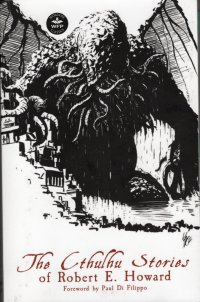
 Facebook must be reading my blog as it seems to know that I’ve read a pile of Howard this year (Tigers of the Sea, Conan the Invincible, and The Hour of the Dragon). So it’s been showing me a hella lotta Dungeons and Dragons suggested/sponsored posts. And, in June, an ad for this book, which I proceeded to order from Amazon.
The stories certainly do not have the flavor of Lovecraft’s stories of the mythos (or other writers who followed him). Instead, they only share some thematic elements, specifically that alien races preceded man on the Earth, including Atlantis which sank beneath the waves.
The book includes:
- “The Shadow Kingdom”, a Kull the Conqueror novella wherein Picts help Kull to learn that an ancient shape-shifting snake people have infiltrated his palace.
- “The Skull Face”, a novella wherein an ancient magician has laid plans in the shadows to unite non-white races to overthrow the white men around the world and establish his own global empire. The magician ensnares an opium-eater in London as his thrall, but the man recovers himself to ally with the authorities to try to stop the plot.
- “The Children of the Night”, wherein a modern Englishman is hit in the head and regresses to a previous life where he was a barbarian hunting the Children of the Night, an ancient race of non-humans, and when he returns to the present day, discovers one of his cohort is a desendent of them. This story has elements of the mythos and refers to the Call of Chulhu and other texts shared across the mythos.
- “The Gods of Bal-Sogoth”, a novella similar to the Wulfhere/Cormac Mac Art stories from Tigers of the Sea blended with Kipling’s “The Man Who Would Be King”. Two enemies are cast ashore on a remote island where the savage population has been ruled by a white woman who was their goddess until unseated by the practitioners of the old religion. She hopes to use the two to regain her throne.
- “The Black Stone”, a story wherein a traveler in the back roads of Europe decides to visit a mysterious monolith and has a vision of an ancient race celebrating a black and eldritch ceremony in the distant past.
- “People of the Dark”, wherein a modern man goes to a cave in a plot to kill his rival in a love triangle, but a blow to the head regresses him to a past life wherein he was Conan and entered the caves to capture a woman but has to unite with a rival to fight off a subterranean race. Then the modern man un-, de-, or re-regresses to the present day, he saves his rival and love from the remnant of the ancient race.
- “Worms of the Earth”, a novella wherein Bran Mak Morn summons an ancient race to attack Romans who have crucified on of his citizens.
- “The Thing on the Roof”, wherein an adventurer who has stolen a temple gem asks for help from an antiquarian to discover the meaning of its power in an old book.
- “The Haunter of the Ring”, a story wherein a man’s newlywed bride seems to be trying to kill him, and it’s tied to a cursed ring given to her by a jilted lover.
- “The Challenge from Beyond”, a story written in the round by many authors. C.L. Moore starts off with a conceit about a man finding a strange cube in the wilderness and gazing in it; A. Merritt extends the story; H.P. Lovecraft sets his stamp on it by setting up how it’s a mind transfer probe from a distant and ancient worm-like race to seek habitable planets to plunder and populate; and then Robert E. Howard and Frank Belknap Long turn it into one of their stories by explaining how the human mind transferred to the worm body conquers the worm planet due to the violence only human consciousness brings but rules as a benevolent despot. It’s funny how Lovecraft turns the story one way and Howard and Long turn it into one of their style stories at the end.
- “The Fire of Asshurbanipal”, wherein two adventurers in the Middle East are pursued in the desert but seek refuge in an ancient city feared by the locals, and, in it, they discover a gem in an ancient idol. Before they can steal it, though, their pursuers find them, bind them, steal the gem for themselves, and deal with the deadly consequences.
- “Dig Me No Grave”, wherein a man asks another man to help with a ritual that an old, old man who recently died tasks the man to perform on his death. It turns out to be an eldritch ritual releasing the man’s soul to the evil it had been promised.
So some of the stories have a modern-day setting to them that more closely aligns with stories in the Cthulhu mythos, but others are more straight-forward Howard stories.
I thought the book was a cheapo collection of public domain stuff, but it’s actually more than that: It’s part of the MFA program at Western Colorado University where students put together and publish a book. So it’s not riddled with typos and stuff (I saw one), and I have a couple of design notes I’d add. The page headers have the author’s name on left pages, but on right pages, they have the name of the novella if it’s a novella or the book title if the heading is on a short story. I’d have made it consistent, probably with the book title and story/novella title (the book title has the author name right in it). Also, the last chapter of the novella “Skull-Face” appears in the table of contents as its own short story (and the heading of the right pages does not have the novella title but the book title). Still, I have an eye for that.
I guess the program/publishing house has published a couple of other books, but I’m not going to run out and get them–I got this one just because I have been so much on a Conan/Howard kick this year. But binge reading them (if three or four books over six months is “bingeing”–) really highlights the tropes and repeated motifs that make the material seem less fresh. So I’ll likely put them down for a bit now.
 I passed over this book which was on the outer rank of books in the hall for a number of years. Even when I’m in the mood for a McBain, which happens from time to time (such as when I am working on the
  As I mentioned when I bought this book
  After reading
  This is the second book in the Bucky and the Lukefahr Ladies series; I read the first,
  I got this book
  I got three of these little Salesian Missions poetry collections
  I got this book and four others in its series and a related stand alone novel
  I was going to say that I just read this, but it turns out that “just” in this case means ten years ago as this title, the only Conan novel that Howard wrote, was included in
  This book is another of the paperbacks I bought in Berryville
  I picked up this book, another
 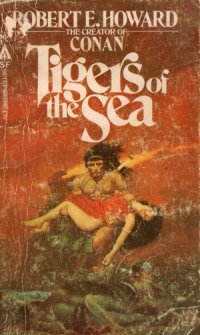 Ah, gentle reader. You are forgiven if you think that I’ve not been reading much these days, but it’s sort of true. I’ve divided my evenings between watching DVD sets that I bought twenty years ago (like
  After reading a century-old copy of
  I bought this book in
 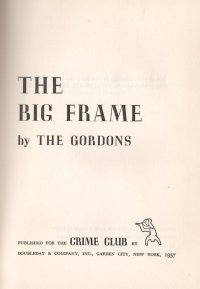 To be honest, I don’t know where I got this book. It doesn’t show up in almost twenty years’ worth of Good Book Hunting posts, and it has no distinguishing price marks. So did I pick it up before the turn of the century? Inherit it from my aunt? Who knows? All I know is that it is bound in the light brown Walter J. Black-esque cover used by book clubs that sent you books on subscription in the middle of the 20th century. This is, in face, a Doubleday Crime club selection. Only one book in the cover, though, unlike the three-in-one book club editions of which I have many.
 I got this book as part of a
 When I bought this book
  Gentle reader, I picked up this book to consider it for the
 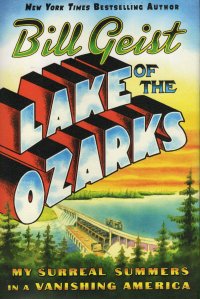 Gentle reader, I cannot find this book in a Good Book Hunting post, and I apologize as I know you, like I, relish the chance to revisit when and where I bought a particular book in the last 20 years. Now, as this is a 2019 book, clearly I did not buy the book before starting the Good Book Hunting posts. As it is in very nice shape and has no penciled prices in it, I have to guess I bought this new, perhaps as part of spending Christmas gift card or picked up while picking up Christmas gift cards. It has all the marks (figurative) of browsing the local interest section of the book store. Or perhaps I am a kleptomaniac who stoled it and don’t remember doing so.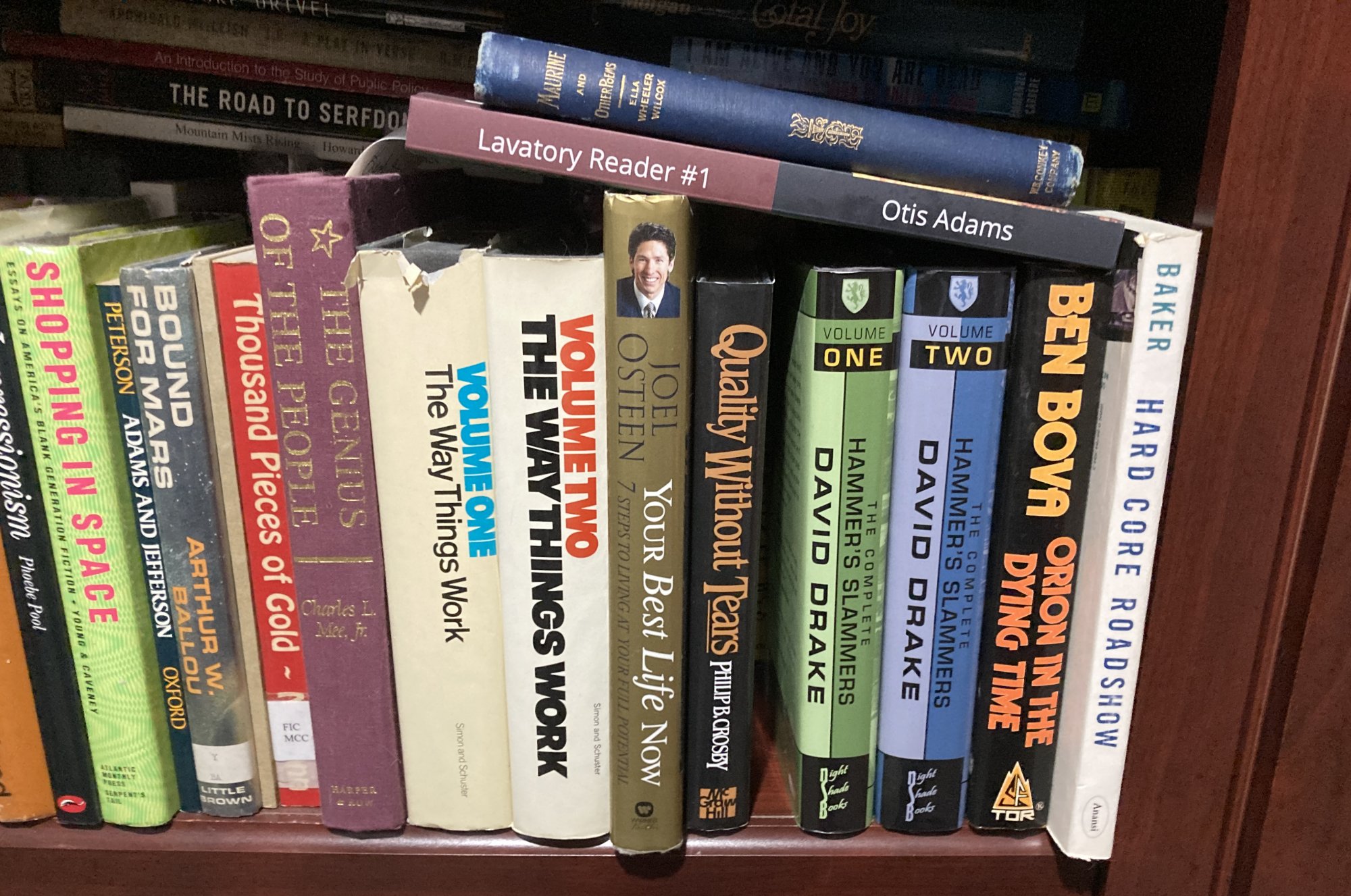
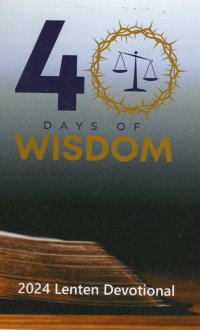 For the past several years, the church I attend has put together a Lent (and maybe Advent) devotion book written by members of the congregation. Full disclosure: My beautiful wife contributed three devotions this year. This is the first time I picked up a copy and went through it, not day-by-day but in spurts where I would read several days’ worth to catch up, read the day’s, and then read a couple of days ahead. To be honest, I am not the target market for devotionals, although I have given several as Christmas gifts–my mother-in-law reads several daily, including one that I have her several years ago that she re-reads every year.