More City of St. Louis Follies

A $600K mistake? St. Louis forgot to tax recreational pot sales:

City officials missed the deadline to begin taxing recreational marijuana sales this fall, leaving hundreds of thousands of dollars on the table.

The city was supposed to start charging a 3% levy in October. But until about a week ago, no one had filed paperwork with the state to turn on the spigot. And now, per state regulations, city officials will have to wait until January.

Early estimates suggest the city could lose between $480,000 and $600,000 to the mistake.

The Powers That Would Be want to spread this competence to the entirety of St. Louis County.

Unfortunately, I think this sort of competence is percolating up through all levels of government these days. And society.

Buy My Books!
Buy John Donnelly's Gold Buy The Courtship of Barbara Holt Buy Coffee House Memories

Movie Report: A Night at the Opera (1935)

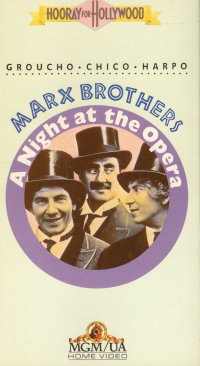
Book coverWell, gentle reader, I suppose since I just watched a couple episodes of You Bet Your Life on DVD, it was inevitable that I would watch this videocassette shortly thereafter. It’s been almost exactly two years since I watched Horse Feathers and Duck Soup which I liked so much that I bought this film the next spring. And it’s likely I will buy all three of them again when I find them for fifty cents or a quarter just to make sure I have them. And backup copies thereof.

But enough about the reification of my related watching and purchase activity. This is a movie report, ainna?

Groucho Marx plays Groucho Marx Otis Driftwood, a grifter working as a… manager? for a rich woman (played by Margaret Dumont) who wants him to introduce her to the heights of New York society. They open in Italy, where Driftwood introduces her to the leader of a New York Opera company director who is in Italy to bring Italy’s greatest tenor to New York. The tenor, Lassparri, insists that the New York Opera company also sign his female co-star whom he’s trying to woo. She agrees, parting with her lover, Ricardo Baroni, who is also a tenor. When Driftwood discovers how much opera singers make, he signs Baroni to a dubious contract to serve as his manager as well. Instead of waiting for his lover, though, Baroni and two Marx brothers stow away on the ship to New York and hijinks ensue, including what was apparently an iconic stateroom scene and a near-destruction of the opera house.

It’s an amusing film, probably moreso for me because I was an old soul even before I got old, and I lived in the Before times and even then had a bit of a predilection for old movies and whatnot. But perhaps the Marx brothers’ slapstick is more universal than that, especially as the film relies on a thin base plot and archetypes.

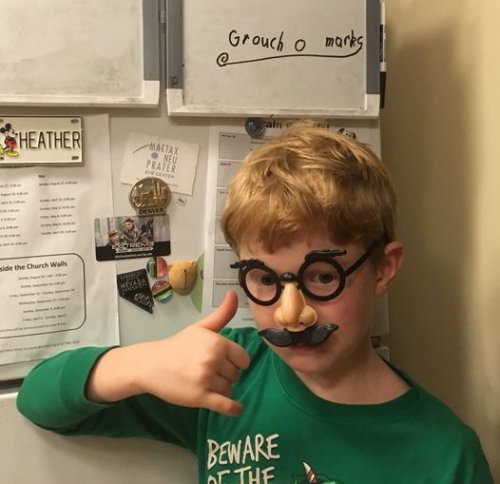
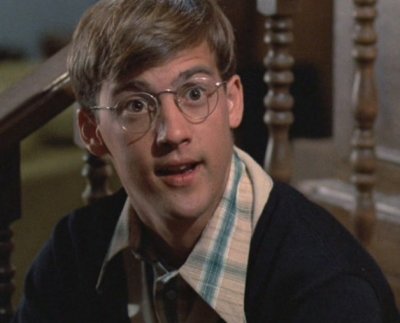
I’ve mentioned before that Marx’s impact carried on into the 21st century, in so far as you can still (or could still as of six years ago) find Marx glasses in the party store to put into elementary school birthday party gift bags. When I was watching You Bet Your Life, the following Facebook memory came up:

I told him I loved his work and asked for his autograph. Which he spelled like the plural of mark because he had not yet gone to a public school or university.

Six years? But my youngest is still that boy. He’s all of the boys he was and the young man he is now. Simultaneously. I am not sure how that works.

Buy My Books!
Buy John Donnelly's Gold Buy The Courtship of Barbara Holt Buy Coffee House Memories

The Springfield Police Chief Puts It Diplomatically

Springfield Police Chief addresses string of gun violence and more at city council meeting:

The chief says the recent shootings are not random, but the concern is still there.

“There is concern about an element in our society that hadn’t been there in the past that is growing,” said Chief Paul Williams. “We’re doing our best to keep a lid on it and take those people off the streets, but we really need the community to step up and be aware,” said Williams.

Back-to-back homicides are tragically hurting those in the Springfield area, with four deaths in just the last week.

The Springfield media is not so interested in finding what might be common threads between the victims and the perpetrators, instead focusing on the fact that guns were used since the Powers That Would Be are gearing up for a ballot initiative to supersede statewide law which keeps local governments from enacting gun control laws.

Buy My Books!
Buy John Donnelly's Gold Buy The Courtship of Barbara Holt Buy Coffee House Memories

If You’ve Lost Bill McClellan

St. Louis Post-Dispatch columnist Bill McClellan opposes efforts to merge St. Louis City and St. Louis County.

To all those who want to force a merger: Thanks, we’re good:

In 2019, our happiness faced another challenge. Better Together, which seemed like the Freeholders on steroids, announced that we would undergo some self-improvement whether we wanted it or not. They would seek a statewide vote on merging the city with the county. Steve Stenger would be the new entity’s unelected czar.

This was beyond shocking. No more municipalities. The tiny little burgs with their own mayors and police chiefs. Gone. Webster Groves and Kirkwood. Gone. Clayton and Chesterfield. Gone.

Never have I seen the entire region pull together like it did then — THANKS! WERE GOOD!

We prevailed.

Of course, the “good government” people never stop. In the wake of the Better Together debacle, the Municipal League of Metro St. Louis called for the Freeholders to be revived. That ended happily. The county named some people to the new Board of Freeholders, but the city could not agree on its selections.

That is the last I have heard of the Freeholders, but we know, in our collective heart, that the board never dies. It stays dormant for a bit, but it will rise again.

It’s a blatant and obvious attempt for the failing city (St. Louis can’t pay its bills on time. Darlene Green and her work hours draw attention., etc.) to grab a lifeline. And to ultimately also drown the county as well.

Buy My Books!
Buy John Donnelly's Gold Buy The Courtship of Barbara Holt Buy Coffee House Memories

Coincidentally

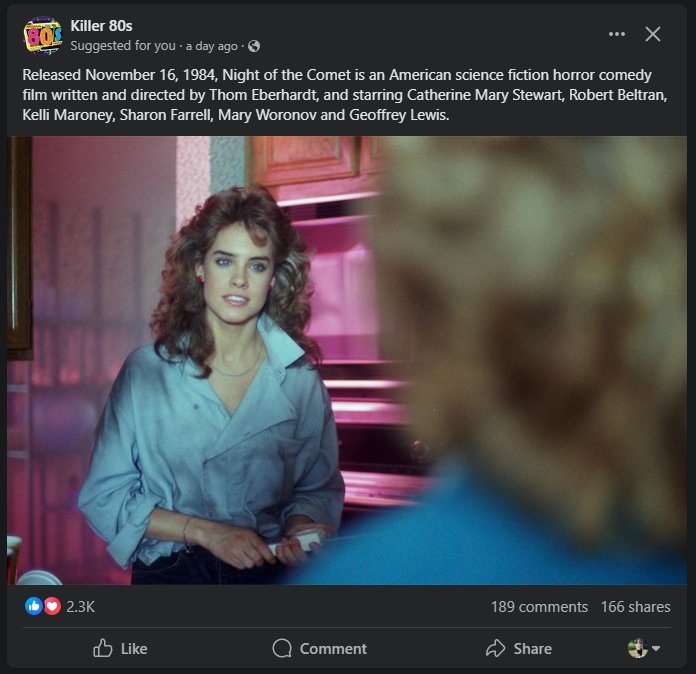
Facebook hit me with a bunch of suggested nostalgia posts yesterday about the film Night of the Comet (a Christmas movie by the way) because it was released this week in 1984.

Meanwhile, KY3 alerts me Look up! Leonid meteor shower peaks this weekend.

If anyone needs me, I’ll be barricaded in the local shopping mall. We still have one here in the Springfield area for emergencies just like the one I’m expecting.

Also, Friar, note: Geoffrey Lewis. Who was also in Spenser: Promised Land as I recall.

Buy My Books!
Buy John Donnelly's Gold Buy The Courtship of Barbara Holt Buy Coffee House Memories

Book Report: The Barrabas Fire by Jack Hild (1989)

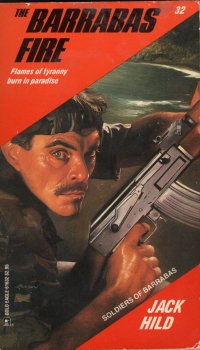
Book coverSweet Christmas, gentle reader, but sometimes these book reports, or at least the “research” in them, makes me feel old. In this case, I have discovered that the last time that I read a book in this series was in 2014 (The Barrabas Hit, #29 in the series). And, in my research (which means my trip to Fantastic Fiction), this entry, the 32nd in the series, is the penultimate one–the other that I have on my shelf, #33, is the last. Which kind of fits my general fin-de-siècle mood. Everything is coming to an end.

But enough about me: Let me briefly talk about me reading this book. Barrabas and his team (the same one from The Barrabas Hit) are hired to help a deposed president/king of a tourist-attraction archipelago in the Indian Ocean recover his throne. They face off against the new leader and his army of mostly untrained African mercenaries and a big boss French mercenary. So they come ashore, set up some guerrila ops, and then have the big battle with the tower defense of a particularly nice resort.

So a set of, well, set pieces and finis. Not a whole lot of threat, really, to the main characters, not a lot of character development, but it is a men’s adventure paperback. The literary equivalent of the 80s action film. If you’re into that sort of thing–as I am–you’ll enjoy this book and its type for a quick read amidst heavier books (well, not that Wizard or Wizard were particularly weighty, but…)

I will probably pick up the last of the series before long. But do not worry: I have plenty of other Gold Eagle paperbacks mostly from Executioner spin-off titles which I have not really gotten into since I finished the last of my Executioner paperbacks last June.

Buy My Books!
Buy John Donnelly's Gold Buy The Courtship of Barbara Holt Buy Coffee House Memories

A Work Hazard

As you might know, gentle reader, I am a software tester by trade, so part of my job includes creating a large number of first name + last name combinations.

As a reader of British tabs, I’m exposed to an awful lot of porn star and OnlyFans names, so I have this fear that I will sometime unwittingly combine a first name and a last name to match a porn star.

Actually, given the size of the industry and the number of names I’ve run through the various systems, this might already have occurred.

Probably, it would result in slightly less opprobrium than if I accidentally combined a first name and a last name to match a Confederate general.

Buy My Books!
Buy John Donnelly's Gold Buy The Courtship of Barbara Holt Buy Coffee House Memories

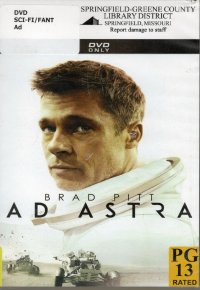
Movie Report: Ad Astra (2019)

Book coverThis weekend, gentle reader, I spent a moment to take the DVDs that in September at the Friends of the Library Book Sale (fifty or more) out of the box in which I brought them home. I fit some of them into the to-watch cabinet, a repurposed old stereo cabinet, and others into the ones atop the video game cabinet (including fitting some into the box atop the cabinet that I brought home my purchases from the April Friends of the Library Book Sale). I have been watching television DVDs of late, so I had a little space to condense the cubic feet of media. But something occurred to me. I have kind of made peace with the fact that I have more books than I will ever read (and, to be honest, some are just reference works and not readers, like books on trees of North America or weeds of the Midwest). But with these films piling up, for decades in some cases, I might be getting to having more movies than I will ever watch. Unless I make a concerted effort. Which I have here recently. I bought this film in September amidst the aforementioned fifty-some films because my oldest picked it up. And then I watched it without him.

Being a 2019 film, this is one of the more recent films that I have seen–Spider-Man: No Way Home and Top Gun: Maverick might be the only others I’ve seen as recent. And if you’re looking for a 2001-like film where at the end of the day it’s not an artificial intelligence that the hero must destroy but his own father, his hero, and perhaps his past (although I guess thematically, I am taking it one step too far there).

Brad Pitt, whom I saw recently in Mr. and Mrs. Smith from fourteen years earlier, shows some lines on him. He plays Roy McBride, an astronaut/space worker. When mysterious pulses devastate the electronics on Earth and in space, including sending him falling from–a space elevator?–he is tasked with going to Mars to send messages to a space station in orbit around Neptune which looks to be the origin. The Lima project, which was supposed to look for extra-terrestrial intelligence, went that far out to escape interference from the sun, and Roy’s father headed it up, but the project has not been heard from in 30 years.

A couple of side quests ensue on the moon and on Mars, from which Roy is supposed to send pre-written radio messages to the Lima project, but he breaks protocol and sends a personal message instead which causes Space Com to keep him from joining the mission heading to Neptune. He learns from Reina the station director the truth about the project: how McBride the father went mad in his obsession to find other intelligences out there–and that he killed her parents when they tried to leave the Lima Project. So Roy tries to stow away on the mission to Neptune–not a rescue mission, but a search and destroy mission with a nuclear weapon designed to destroy the Lima Project. The other astronauts discover him as he comes aboard, and Space Com orders them to dispatch him, so he kills them instead. He travels to Neptune (currently the furthest known planet from the sun even when you count Pluto) and finds his father, and the unfortunate truths.

As I said, it tracks kind of closely with 2001 in spots but without alien intelligence to guide or to provide the deus ex maquina. Roy returns with a lot of knowledge of Space Com’s wrong doings and cover-ups, which it seems to me would end the film on a bit of a sour note, but instead the film wraps up with McBride returning the data collected by the Lima Project over the decades, which includes exoplanets to explore and colonize, and he reconciles with his estranged wife, whom we see in numerous flashbacks as Roy has pushed her away in his drive to be autonomous.

A slower paced movie, but not a waste of time. Its depictions of life in space and space travel are very detailed and nicely filmed.

In addition to recognizing Ruth Negga (who played Reina in Agents of S.H.I.E.L.D.), I thought I recognized Liv Tyler as the wife even though her face is obscured, out-of-focus, or blurred in the flashbacks.
Continue reading “Movie Report: Ad Astra (2019)”

Buy My Books!
Buy John Donnelly's Gold Buy The Courtship of Barbara Holt Buy Coffee House Memories

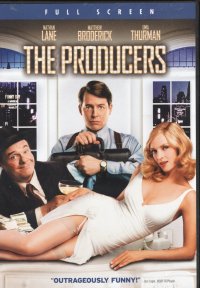
Movie Report: The Producers (2005)

Book coverWait a minute. Somehow, I got it in my head that this was a Mel Brooks movie, and it is. Sort of. This version of The Producers is the film version of the Broadway show, starring Matthew Broderick and Nathan Lane. The Broadway show, of course, was the Broadway show version of a Mel Brooks film from the late 1960s (The Producers starring Gene Wilder). Sweet Christmas, the only way this could peg the things Brian J. reads/watches meter would be if it were the novelization of a video game based on a novelization of a film of a Broadway show based on a film. Based on a Shakespearean play in the original Klingon or something.

So: Nathan Lane plays a Broadway producer, Max Bialystock, who was something sometime in the past, but whose latest shows have flopped. Broderick plays a timid accountant, Leo Bloom, who comes to do his books and mentions that a flop could make more money for the producers than a hit if dealt with the right way. So Max presses Leo to join him, and Leo eventually does, and they look for the worst possible play to produce. They settle on Springtime for Hitler, written by a former Nazi (played in the film by Will Ferrell). A Swedish actress (played in the movie by Uma Thurman) wants to audition, and she captures Max and Leo’s, erm, lower heart, and she gets to act as their receptionist until the show comes off. They hunt up the worst director they can think of, a flamboyantly gay man, who wants to make the show gay (along with his Village People staff). The Nazi comes to the audition and impresses everyone to take the part of Hitler, but on opening night, he actually breaks a leg and cannot go on. So the flamboyant director, who knows the role, takes the part. Although the audience gets restive and offended during the opening number, when the director hits the stage and vamps it up, they think it’s satire. And the show is a smash, which puts Max and Leo in a bind.

As a movie based on a Broadway show, there’s more singing and dancing than I generally prefer in films, but I could tolerate it since it was a Mel Brooks musical. It ends with the putting-on-a-show-in-prison trope which has become fairly common–was the original The Producers the source of this? The Blues Brothers came along later.

At any rate, an enjoyable bit. But I am still not generally a fan of musicals or Broadway shows. Not that there’s anything wrong with that (he said, making allusion to a 30-year-old television program, old man). Of course, one wonders how a younger viewer not raised on Mel Brooks would do with this job given that a lot of the humor is based on homosexuality and even some cross-dressing.

Buy My Books!
Buy John Donnelly's Gold Buy The Courtship of Barbara Holt Buy Coffee House Memories

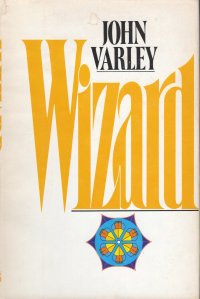
Book Report: Wizard by John Varley (1980)

Book coverWell, after reading Wizard by Ozzie Smith, of course I immediately picked up Wizard by John Varley. As it happened, they were close together, relatively, on the to-read shelves in the hallway which we just turned over as we painted the hall.

It turns out that this book is the middle book in a trilogy–I did not know that when I started it, as it does not seem to pick up en media res but instead introduces us to a couple of characters who will factor into the story and establish some world building. It starts with Chris, a schizophrenic in California who goes into the embassy of Gaea and meets some Gaeans–well, Titanides, who are centaur-like except that they have both sets of genitalia on the horse-part at the back but a single set of human genitalia on the front–heaven help us, this will be explored later. Chris seeks to visit Gaea, the god-like computer running a small Ringworld-lite space station in the outer part of the solar system as Gaea can cure his condition. Meanwhile, a woman raised in a woman-only society on a space station at a LaGrange point seeks a similar audience with the computer to heal her epilepsy.

They both make their way to Titan, the space station, and climb the kilometers-long cable to the hub where Gaea, represented by an old woman avatar, resides. She’s grown bored, having created and destroyed civilizations and races on her habitat over the millions of years, and she in recent millenia has started to have to deal with insubordinate local computer systems which run different regions of the planets. So Gaea encourages “pilgrims” to come try to visit her, and they can choose to live in her hub without their diseases or they can go out and do something “heroic” to earn a permanent cure. Both pilgrims decide to try something heroic, and they link up with Rocky, the titular Wizard, and her associate Gaby who is an engineer doing contract work for Gaea.

Turns out that Rocky and Gaby were the stars of Titan, the first book in the series, but they’re kind of introduced as individual characters, so early on it does not require a lot of knowledge of that book to get into this book.

So the party sets off, nominally to do something heroic, but easy heroic quests have already been done. Few dragons remain; the idols have lost their jeweled eyes; and so on. But Gaby and Rocky use the journey, nominally a survey of the regions and interviews with the sometimes rebelious, sometimes obsequious, regional computers, to determine what allies they might have in an attempt to overthrow Gaea.

So it’s kind of like Ringworld with some fantasy elements to it. In addition to the centaur-like creatures, the book features “angels” who have wings and a variety of other beasts, all created by Gaea for amusement or to set the stage for later heroics. As the party goes along and encounters difficulties, members die, so one does not know who might make it through the journey–and the actual point of the journey, from Gaby and Rocky’s intent, only becomes clear later as one lies dying and explains why the odds were so stacked against them.

And although the book starts off as though it were not part of a trilogy–with a good intro to the world (well, space station) and characters new and old, the ending makes clear that the story is To Be Continued. Although some survive and find resolution (abruptly), it ends with a vow of vengeance.

So it was an okay read; a bit disappointing in that it leads into the next book, Demon (and when I checked out the science fiction shelves at ABC Books last weekend, they only had a copy of Wizard–no first or third book available).

I did mention that the Titanides have both male and female horse genitalia in the rear and one set of human genitalia up front. The book goes into detail about how Titanides procreate, and it’s complicated, starting with the fact that the Wizard has to put the unfertilized egg in her mouth to activate it, and then it has to be fertilized both in the back and in the front and…. Well, okay, it’s weird. But a helpful appendix shows you the many ways it can occur between female and male Titanides. Also, Titanides and humans, as it turns out.

Also, I flagged a couple things in this book on a common theme. When we did our recent trivia night, one of the categories was words without the vowels. One of the questions was MSM, and my beautiful wife and I had the same answer: miasma. Cooler heads amongst our team realized that this word was more likely museum. But right after that, I found the word miasma in the book. Then, one night at dinner, I asked my boys if they knew what portage meant. They did not, so I explained it. And then I found the word in the book. On a later evening, my wife said the word offal, which would fit right into the book and…. Well, that word was not in it. But talking about two words that showed up in this book shortly thereafter probably speaks to the belief that the AI and algorithms are listening to us because we spot patterns about what we talk about and what ads we see on the Internet. And that lesson is: The AI in this forty-year-old Book Club Edition is smart enough to not also display offal to establish the pattern and make me suspicious. Truly, truly, I say to you, the world is magic and duplicitous. Which might also be the lesson of this trilogy.

So in looking back at the two other books of Varley’s that I’ve read–Millennium and The Ophiuchi Hotline, I’ve found them kind of meh, but I remember them fondly. If I had found one or the other of the books in this series this weekend, I would have bought it. And I have one or more books by John Varley on my bookshelves, and I’m not likely to recoil from them when I come across them in the future. Perhaps the next time I paint. In 2035 or so.
Buy My Books!
Buy John Donnelly's Gold Buy The Courtship of Barbara Holt Buy Coffee House Memories

Musings from a Tech Banquet

Last night, I attended a la-di-da technology group banquet in a suit and everything. I was not nominated for any awards, but my beautiful wife is on the board of the organization. So off to the event I went. It included a lovely dinner and everything. I spent most of the mingling time sitting at our dinner table with my trusty binder, trying to hash out a poem that probably won’t work anyway.

The group’s tech events tends to have a number of sales people and solution providers from companies that will manage your networks or manage your phones provide tech support or development work, or offer education or coaching in any number of disciplines. One rarely finds actual developers and never finds any QA professionals.

But some of the local software developers group appeared. I recognized several of them as I’ve attended a number of the group’s meetings this autumn. Turns out that several of them were up for the young buck awards. So I meandered over and struck up a conversation with a couple of them. The topic of self-assessment of expertise came up, and I said I couldn’t rate myself as a seven of ten in any programming language even though I’ve used several. “And I’m certainly not Seven of Nine,” I said.

You know, Seven of Nine.

“You know, Seven of Nine. The Borg from Star Trek,” I explained to my wife, leaving off how the actress’s divorce led to President Barack Obama. Then I looked at the two developers we were talking to, and one said, “Star Trek? I might have seen it once.”

And I was all like:

It suddenly occurred to me that I was almost twice the age of these developers, and although my heart lies more with them and their work than with tech executives, I was an old man to them.

Culturally, I am older than an old man. My tastes tend to run to books, movies, television, and even music from decades past, often before I was born. Whereas the geek culture of today tends to focus on the present. When I mentioned to the developers I work with that I have a kitten named Meow’Dib (well, formally Maud’Dib), they knew what who that was. Not from the book. Not from the 1984 David Lynch film.

Their geek culture comes from recent streaming series and video games. Not even movies so much any more. Maybe it’s good to have endless reboots even if they’re photocopies of photocopies. It’s the only thing keeping any threads of shared culture together.

The M.C. of the awards portion of the program also made a Star Trek reference because he is older than I am and also didn’t know the audience as well as he thought. At one point, he mentioned “the intrepid Captain Picard,” and I leaned toward my wife and said, “Picard did not captain the Intrepid” as I recognized it was the name of a Star Trek ship. I thought maybe it was the ship that Chekov was on in Star Trek II: The Wrath of Khan, but when I researched immediately after the program ended, I found that the U.S.S. Intrepid was in the original series’ “The Immunity Syndrome” and was crewed entirely by Vulcans. As I last read the Blish rendition of this episode in 2005 and last year when I walked through some of my duplicates in the series, I am surprised I remembered it (and then I remembered the ship Chekov was on was the U.S.S. Reliant).

So I thought I would ambush the M.C. to give him the true flavor of a tech meeting: Someone handing him an ackshually over esoterica in expired pop culture.

I mentioned this to my wife and one of her acquaintances (and my LinkedIn connections, which is lower than acquaintance) about how amusing my plan was, but that I would not carry it out. And all of a sudden I was all like:

I am awkward and off putting even at tech events.

One of the members, an Air Force veteran, stepped up to the podium to recognize veterans, and he asked the veterans in the crowd to stand up.

Five people of 249 did. My wife was a little shocked that the group included so few. Tomorrow, at church, half of the men in the congregation will stand when called upon.

I twirled my finger to indicate the crowd and said, “They went to college.” And did so in the years after mandatory service and after the peace dividend of the end of history which has left us probably ill-prepared for what might come.

So, yeah, these are not my people natively, but I can eventually make small talk with them. Or maybe just the older people among them.

Buy My Books!
Buy John Donnelly's Gold Buy The Courtship of Barbara Holt Buy Coffee House Memories

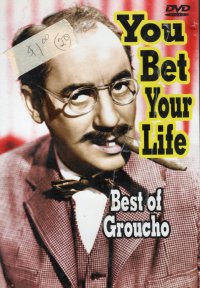
Television Report: The Best of Groucho: You Bet Your Life (1961)

Book coverI picked this DVD up at a church garage sale four years ago (which, come to think of it, was the last time our church had a garage sale, it seems). I watched Duck Soup and Horse Feathers in 2021, but I guess my recent viewings of old Twilight Episodes got me more in the habit of watching a couple of old shows in an evening instead of watching a film. So it continues here.
This show aired the same time as the Twilight Zone episodes: 1961ish, when television was still black and white. Color was coming a couple years later, although widespread penetration would continue into the 1970s–both my beautiful wife and I remember secondary television sets in our homes were black and white.

At any rate, this DVD features two episodes of the game show wherein a set of couples essentially play one category’s worth of Jeopardy! and try to amass a higher dollar amount than other participating couples. Each round begins with Groucho reparteeing with the couples, and this really amounts to about half of the show. Then the couple gets to choose questions from a category that they’ve previously selected with dollar amounts up to $100. If they get it right, the amount is added to their score, and if they get it incorrect, an amount is deducted–so you can see how I compare it to Jeopardy! At the beginning of the show, the duck drops down with the Secret Word, a common word, and if either of the contestants mentions it, it is also added to their score. The winning couple gets a crack at a question of higher value at the end of the program, and if no one gets it right, the value increases for the next program. That’s basically it. Groucho hamming it up and a couple of questions for contestants in between.

I found one particular thing interesting. The show looks to have three cameras: One on the contestants, one on Groucho, and one wider view. Most of the show uses camera’s one and two, but when they begin the question and and answer period, they go to the wider shot for a second, and the announcer comes in, and the viewer sees how small the set is. The contestants are on the left, the announcer has a hanging mike on the right, and Groucho is on the right, and the space between them is that of a small kitchen table (although they’re standing, and it’s not actually a table). Compared to modern game show sets, it’s tiny and intimate.

So I found it more interesting as an artifact of what was on television sixty years ago and because I like Groucho Marx more than a quiz show, although I did okay and the questions were, again, akin to the things you would find on Jeopardy! today. Maybe a little dated, but certainly closer to my wheelhouse than modern trivia nights. Where, I guess, I do okay which is not winning.

Buy My Books!
Buy John Donnelly's Gold Buy The Courtship of Barbara Holt Buy Coffee House Memories

They Saw Me Coming

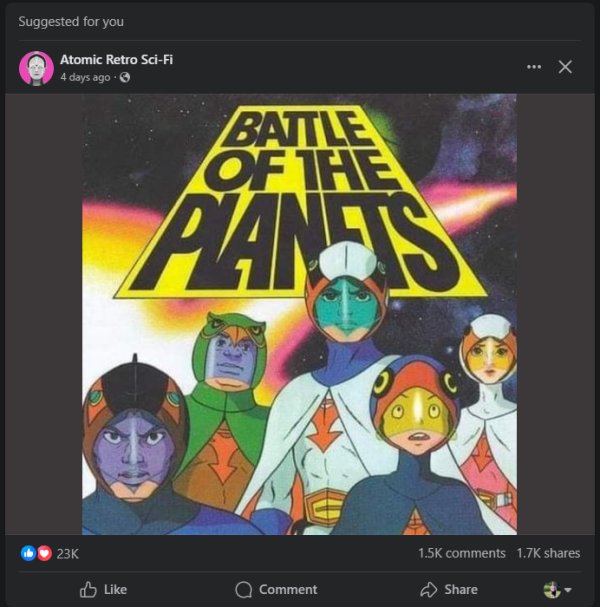
Facebook has taken to showing me suggested posts from 1970s science fiction television programs,including stills from Battlestar Galactica and Buck Rogers in the 25th Century, and they sent me back with this one:

Let the first amongst you who has not said, “Broot-doot-doot. SPECTRA!” in the manner of Keyop cast the first stone.

I loved this show as a kid when it was in heavy syndication. I can’t remember if it came on before or after school–probably both at different times. But it was my favorite of the Japanese imports that preceded the toy-based cartoons (the Transformers, the Go-bots, G.I. Joe, He-Man and the Masters of the Universe) that would come along in a couple of years.

And, like with Airwolf doing the loop, the climax was generally not over until they reluctantly decided to use the Fiery Phoenix (where some sort of plasma fire covered their regular space ship and they were about invulnerable). Although unlike Airwolf’s loop, the Fiery Phoenix did come with a cost as demonstrated by the agonized character stills that accompanied it every time they used it.

Ah, well. Facebook seems to have turned, if not only for me, into a wellspring of nostalgia. In addition to the aforementioned shows, I get vintage cheesecake served up (some overlap) along with nostalgia-themed pages about growing up in the 1970s and 1980s. Maybe it’s just tailored that way for me since I primarily log into Facebook these days to see what I posted on Facebook in years past. Kind of like what I use this blog for primarily.

Buy My Books!
Buy John Donnelly's Gold Buy The Courtship of Barbara Holt Buy Coffee House Memories

Television Report: The Twilight Zone Volume 21

Book coverWell, the joke is indeed on me, as I said when I reviewed Volume 19:
I’m clearly not watching them in order–well, it will become obvious when I finish the next volume and its number is not higher than 19….

Even though I shuffled them into the cabinet instead of keeping them together, I somehow ended up pulling them out in order. Well, unless there’s another one that I haven’t spotted which is somewhere in the middle of the volume numbers. Which is, again, not akin to order in the actual television series as each volume includes episodes from different seasons of the original series.

The wingspan of this volume is wider than the others; it includes an episode from the first season as well as from the fifth season whose opening was the one used on the syndicated program when I was growing up, so the one I associate most with the series.

At any rate, this volume includes:

  • “Mirror Image” from the first season where a woman at a bus station finds that the man at the counter and a woman in the restroom mention encounters and conversations with her that she does not recall, and she has checked her suitcase–or has she not? When looking in the restroom mirror, she sees through the open restroom door herself sitting on the bench outside. A friendly man, played by Martin Milner (who played Tod on Route 66, some episodes of which I watched in 2021 and I mentioned here and here), listens to her story but agrees with the station manager that she must be crazy. After the nice policemen take her away, Milner’s character sees himself run out of the bus station door. And he pursues his mirror image but loses him outside. And the episode ends, not with a DUN DUN DUH! but without a resolution. More speculative.
  • “Dust”, a message-based episode. The son of an immigrant family accidentally runs down a girl in an old west town and is sentenced to be hanged. The grasping peddlar who sold the rope to hang the young man also sells the superstitious father a bag of magic dust–a fake–to save his son. At the actual hanging, the father throws the magic dust at the townspeople, and his actions and words cause them to rethink the hanging. A message program again with no DUN DUN DUH!
  • “Five Characters in Search of an Exit” finds several different people in a featureless cell from which they seemingly cannot escape until a new resident convinces them to make a human pyramid to reach the edge where they discover they are toys in a toy collection bin in Victorian England. A nice bit of speculative work here even with its DUN DUN DUH!
  • “Ninety Years Without Slumbering” features an elderly man who believe he will die if his grandfather clock stops, so he tinkers with it constantly. His family, with whom he lives, makes plans to get rid of the clock to prove to him that it is not the case. AND IT IS NOT THE CASE! A reverse DUN DUN DUH?

An interesting collection, especially with the inclusion of something from the first season which might have been the strongest, before Serling and crew were driven by necessity to churn out more boilerplate and genre-adhering shows.

Still, my television watching these days has pretty much been confined to black and white, and it’s probably not at a personal loss.

Buy My Books!
Buy John Donnelly's Gold Buy The Courtship of Barbara Holt Buy Coffee House Memories

Movie Report: D.O.A. (1949? 1950?)

Book coverWhen I mentioned that I was watching this film to my beautiful wife, she associated the title with the 1988 Dennis Quaid film of the same name (which is now almost as old as the original was in 1988). But, no, I was watching the original, which is (does math) 74 years old now. But it doesn’t seem dated to old people who remember life before computers and cell phones. Of course, the Quaid film also comes from the before time, but shots probably included office environments with PCs, so it would look slightly less alien to kids.
Also, I have seen this film listed as 1949 and 1950 in various sources, so I am not sure whether the film was released in 1949 or 1950. I guess I could watch it again and convert the Roman numerals, gentle reader, for proper accuracy in this movie report, but I am far too lazy for that.

In it, Edmond O’Brien plays Bigelow, a California accountant who decides to have a holiday away from his town and his receptionist/flame Paula in San Francisco. He joins a group of convention attendees on a night out and is unknowingly given poison by a figure in a suspicious looking get-up. When he falls ill, the doctors tell him he has only a short time to live. So he investigates and learns that someone from San Francisco named Philipos has been trying to reach him–and said fellow has committed suicide. It looks to be tied into a bill of sale that Bigelow notarized for Philips, almost forgotten because it was a while back and a routine transaction for someone passing through Bigelow’s home town, and that leads Bigelow to encounter some organized crime types who might have stolen the sold good–iridium–and whose theft put Philips into a legal jam.

There’s a twist ending, but the twist is not that Bigelow survives. The film has a frame story which seems to have been popular at the time (Double Indemnity had a similar one) where the main character tells someone the story in flashback–in this case, Bigelow is telling it to homicide detectives.

So if you’re a fan of original noir films, this one will please you. If you’re a damn kid, you’ll probably be bored through it.

I mentioned the main actor, Edmond O’Brien. You know, he won an Academy Award (for his supporting role in The Barefoot Contessa) and was nominated for another (for Seven Days in May), and he appeared in films I’ve seen like The Man Who Shot Liberty Valence and a bunch of other notable films. But he’s not a common name now. He was that guy for a long time, but the world has moved onto its insipid streaming series instead.

Still, it has made me curious to watch the Quaid version. Which I think I will have to find on videocassette. Online sources indicate there are three other iterations of this film, although it counts the Jason Statham film Crank among them, so the connection to this film as the source looks to be more inspired by than remake.

Buy My Books!
Buy John Donnelly's Gold Buy The Courtship of Barbara Holt Buy Coffee House Memories

Proper Music For The Reading

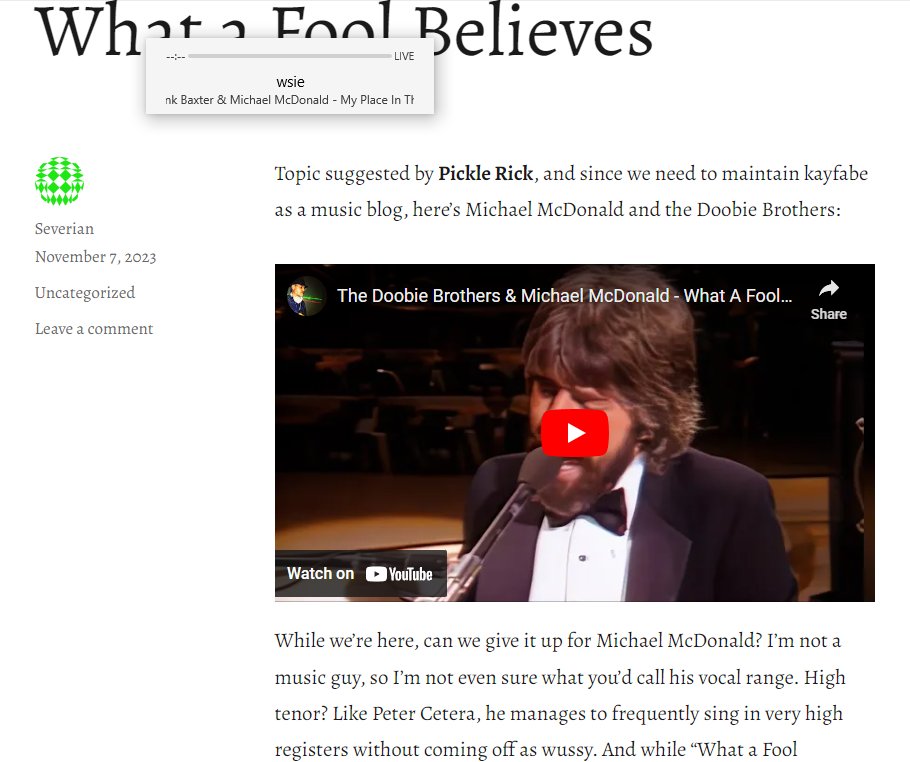
Yesterday, Severian started a post by talking about Michael McDonald (What a Fool Believes).

WSIE provided the proper music for the occasion.

Although, to be honest, WSIE plays a hella lot of McDonald, whether with the Doobie Brothers, with a single other Doobie Brother (depicted), solo, or with James Ingram. WSIE has a pretty small playlist, and no matter how often I send a message on the request line to play the Pitch Pockets, no, here’s Steely Dan with “Aja” again.

Buy My Books!
Buy John Donnelly's Gold Buy The Courtship of Barbara Holt Buy Coffee House Memories

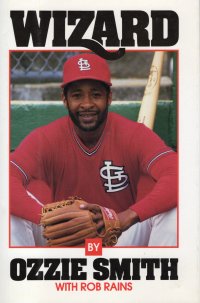
Book Report: Wizard by Ozzie Smith with Rob Rains (1988)

Book coverI read Bob Gibson’s From Ghetto To Glory earlier this year, so it seemed a prime time to pick up this book as I came across it in a partial book turning this autumn.

Ozzie Smith played a generation after Gibson, starting his career in the late 1970s in San Diego before being traded to the St. Louis Cardinals. I knew him twice: Once as an enemy as a member of the team that eventually beat the Milwaukee Brewers in the 1982 World Series, and a couple of years later as a favorite on the team that then lost the World Series to the Royals and then to the Twins. He didn’t get traded; I moved from Milwaukee to St. Louis, and the St. Louis Post-Dispatch kept me awash in free Cardinals tickets for good grades. Between my brother and I, we got to see six to eight games a year gratis, so we became fans of the hometown team. So I’ve seen Ozzie Smith in person, and I’ve seen him do a back flip as he took the field, and I booed Royce Clayton when he appeared in the Dennis Quaid movie The Rookie (Tony LaRussa replaced Smith when Clayton in the 1990s, which caused a rift between the Cardinals and Smith that took years or decades to heal).

At any rate, this book does talk about Ozzie Smith’s race (he’s black), and it mentions he lived in the ghetto (Watts, during the riots in the 1960s, when Smith was very young). But the book focuses mostly on the business side of baseball–Smith’s dealings with the Padres, a penny-pinching team in that era who didn’t want to spend money on retaining players and vilified players who went elsewhere for more money, often beginning in their contract years if the players did not sign right away–to the difficulties and pressures of being a highly paid defensive player. The book also focuses on how Smith approaches self-improvement, including trying to become a better hitter even after he received a big contract.

So the book is more inspirational throughout than the Gibson book. I wonder how more modern sports bios written later than 35 years ago and with different generations scan. Probably not as hopeful as this one.

Not many books have sentences where I know exactly where I was when they happened. This one does.

Some of the fans may have had a little doubt in their hearts about then, but we didn’t. If anything, the Brewers’ rally picked us up as we came up to bat in the bottom of the sixth. We loaded the bases, and that brought up Keith Hernandez to bat against Bob McClure, who had been Keith’s teammate in Little League in California. Keith must have had the book on him, because he came through with a single to score me and Lonnie and tie the game.

Gentle reader, my brother and I left Boogie’s apartment, where his mother had been watching us while my mother had gone out, when the score was 3-1, and when we got to our apartment in the next building over, the score was tied. And we know how the game turned out–if not, you can read this book to find out–and I cried myself to sleep. For a long time, I called Bob McClure “Chicken” McClure, and that probably wasn’t fair. But I was ten, understand.

I also flagged a bit in the book where Ozzie Smith said about a trip to San Francisco for the All Star game where he was going to start the game for the second time, but he was more excited to meet Huey Lewis. C’mon, man, did Ozzie Smith say that, or did Rob Rains through that in because Huey Lewis was one of the biggest musicians of the 1980s? I guess we’ll only know when there’s an estate sale at Smith’s house–if we see a bunch Sports and Picture This on cassette, we will know he really was that excited.

Given that he retired a couple of decades ago, he’s still a beloved figure in Cardinals nation. We used to eat at Ozzie’s when we lived in Casinoport, and a relatively new medical center called Ozzie Smith IMAC Regeneration Center opened in Springfield a couple years ago.

Maybe someday I’ll come across a copy of Ozzie Smith–The Road to Cooperstown by Smith and Rains, written 14 years after this book. I’d like to think it has a similar tone, but one never knows when it comes to athletes who have retired and are not in the middle of their careers.

Buy My Books!
Buy John Donnelly's Gold Buy The Courtship of Barbara Holt Buy Coffee House Memories

In Local Deep State News

Republic City Administrator gets smaller raise after report showed imbalance:

After KOLR 10 Investigates uncovered Republic City Administrator David Cameron received several 5-figure salary raises in recent years, city council approved a more conservative pay bump during his most recent review.

Cameron’s impressive raises included an almost $60,000 raise in 2021, which pushed his salary over $262,000 last year. But now for the first time in three years, his merit raise will come in under $10,000.

Cameron’s previous combined raises more than doubled his salary between 2018 and 2023. Taxpayers we interviewed for the original story in May were mostly shocked to learn how much he’s making.

I would say so. I would be, too.

If I recall the last city administrator in Republic ended up going somewhere bigger (Casinoport?) which illustrates that, unlike elected officials, city administrators might not represent the communities in which they’re employed–not elected. They could easily represent instead their guild (government experts) and themselves moreso than the small towns who need “expert” help.

Buy My Books!
Buy John Donnelly's Gold Buy The Courtship of Barbara Holt Buy Coffee House Memories