Any song that Frank Sinatra did that Eydie Gorme also covered, Eydie Gorme did it better.
Continue reading “They’re Gonna Take My Fedora For This, But….”
To be able to say "Noggle," you first must be able to say "Nah."
Any song that Frank Sinatra did that Eydie Gorme also covered, Eydie Gorme did it better.
Continue reading “They’re Gonna Take My Fedora For This, But….”
You Never Move Your Settler! – Opening Strategy Splits Civ V Studio:
“What?! Are you crazy?! You never do that! You fool!”
People got a little crazy during a routine design meeting in the Firaxis Games offices, where the developers of Civilization V take strategy very seriously. A designer talking about his recent playthrough to a large group of his gathered colleagues casually mentioned he didn’t like the starting position of his settler so he moved it that turn to look for greener pastures. The reaction was immediate. Half the designers in the room erupted in anger and disbelief – while the other half vehemently defended the move. They ditched what the meeting was supposed to be about, and instead argued for or against a specific move in the first turn of a Civ game. Clearly, this issue was very important. Sid Meier once said that all good games were a series of interesting decisions, and it’s a testament to the power of Civilization that even the first decision could evoke such a strong reaction in the current Civ team at Firaxis.
I don’t play Civ V because, well, when I got it, it challenged my computer, and, secondly, the Steam login every time I started my computer was a pain and its TSR components lingered and impacted my machine’s performance even when I wasn’t playing the game. Also, I’m feeling a little old to learn new game concepts after, what, a decade on Civ IV?
But I don’t tend to move my settler the first move unless I’m moving off of a desert or frost square onto a better grassland or plain square where I can still build my first city on the first turn.
I also have a host of other bad habits, such as playing the easiest level even after a decade on it. In Civ II, I am pretty sure I tried upping the difficulty, but I just dabble in this game, and a long (or short) frustrating learning-style game just wouldn’t satisfy me. So I also abandon a lot of games early when I don’t start in a strong enough position.
Because I’m doing this to be entertained, not to learn something.
With McDonald’s recent innovations in having double order boxes in their drive-through lanes but still only one set of windows, they’ve codified a practice that should fill them with shame: asking someone in the car to please pull forward.

Let’s unpack just how disparate these words are when jumbled together.
For starters, once you’ve been asked to park, it’s not longer a drive-thru. Man, how I hate to misspell it to keep up with the current marketing-based illiteracy. But if you park your car and someone brings you your food, it’s car-hop service, not a drive through. I go to a drive through because I want immediacy. I want to grab a sack of food I’ll regret later and be on my way. I don’t want a moment to reflect on the significance of signage at McDonald’s. If I had this much time, I’d have stopped at Sonic.
Priority? Obviously, my priority was continuing to keep in motion. If we’d adhered to my priorities, I’d be a mile or so down the county highway by now. No, my sitting here fits with McDonald’s priorities of getting more money in the cash register inside the window by shuttling people through with ever-increasing speed. Obviously, it’s past the point where they can adequately service the customers in a timely fashion. Also, note I’m parked in the second pull-ahead spot. I’m not even the top priority among the secondary priority customers.
A drive-through pick-up? The very concept wars with itself. And it’s not a pick-up except when I’m parked there. It’s a quick toss of a sack through the car window before the employee runs back into the McDonald’s before you discover the error in the order. At the normal drive-through window, you can sort through the sack and account for the received goods. If there’s a discrepancy–because, as Leo Goetz says, they make mistakes in the drive-through–you’re right there at the window to demand remediation.
When you’re at #2 Drive-Thru Priority Pick-Up and the employee has run back inside and out the back door for a smoke break, you’ve got to further impede your vehicular progress by exiting your car and going inside to get your missing cheeseburger.
Suddenly, your exclusive “priority” “drive-through” experience involves walking into the store.
Bah. I’m glad I’ve mostly put drive-through dining in my rear view mirror.
Headline: Two Missouri dads arrested after fight at kindergarteners’ play.
It sounds like it might be an instance of a couple of competitive paterfamilias duking it out over whose urchin made the better barnyard animal or something, does it not?
In reality:
One of the men was the stepfather of a child in the play. The other was his biological father.
Yeah, that’s a domestic disturbance in an exotic location.
Bonus points to the actual article writer, too, for making it sound like a double homicide.
Tam K. on collecting the old-fashioned way:
(I’m not going the internet auction site route, because it always feels to me like the gun collecting equivalent of hunting over a baited field. It’d be like having a computerized database of exactly what old sports cars are in which barns across the country, or having clear wrapping paper on your Christmas presents.)
In all the various things I collect and/or accummulate, I generally limit myself to things I find in the wild at garage sales, estate sales, flea markets, and the occasional antique mall. I could hit eBay and fill out my collections easily and, sadly, start new collections too easily. But that’s so… cold. I get a lot of satisfaction in digging around and finding something on my own and holding it in my hands.
So much of collecting is hunting for things, of almost getting them but not quite. The thrill of finding a stash of Herb Alpert albums in an estate sale, the brief hope that it will include You Smile – The Song Begins but finding it only includes the best sellers from the 1960s. That little disappointment will sweeten the triumph if I ever do find it.
Collecting comes with stories about collecting. Stories about estate sales you’ve seen, different homes you’ve visited and explored while looking, different things you’ve bought. Ask me about my Robert B. Parker collection, and I won’t tell you about the advanced reading copies, television scripts, and limited edition numbered copies I bought on eBay. I’ll tell you about the hour and a half I spent in the 18-and-older back room of a downtown Milwaukee bookstore scouring through shelves of men’s magazines (blushing the whole time, I’m sure) to find a copy of the Gallery magazine from May 1984 featuring Parker’s short story “The Surrogate”. Thankfully, I found one and included it among a stack of other lesser books picked up because I hoped, foolishly, to camouflage the men’s magazine amongst them. But the clerk knew what I was doing. Of course he would.
Finding that sort of thing on the Internet ain’t collecting. It’s buying.
Also, let’s be honest, you don’t find bargains on Internet auction sites. Most of the power sellers know the maximum price the market will bear, and many of the inexperienced sellers price their articles above what the market will bear. What I want, I want cheap. Generally.
Hey, don’t you work for a company that helps collectors more effectively leverage the Internet to add to their collections? Yeah, I know. But my preferred style is still in-person. And the service will let me hunt for other people, which can be almost as fun as hunting for myself.
P.S. I was going to ding Ms. K for adding to her collection by going to gun shows, quipping that gun shows or any other collectible shows are the low-tech equivalent of Internet marketplaces, but I can’t take a collectior-than-thou stance here given my affinity for book fairs. Besides, shows are opportunities for fellowship, and Internet marketplaces are not.
P.P.S. To further undercut my point, during my research for this post, I found a copy of Gallery from May 1984 listed on Amazon for ten bucks. So I bought it. BECAUSE I MUST OWN THEM ALL.
This book is a fifty-year-old collection of science fiction short stories from some of the luminaries of the business.
It includes:
Overall, in retrospect, these are some pretty grim tales that don’t necessarily present an optimistic view of the future. However, they’re very imaginative in that they go off in a variety of directions, and you’re not sure where they might end up. So each has the potential to be a treat in its own right. I liked the book, and I think this is shaping up to be a science fiction year for me already.
Books mentioned in this review:
Problematic headline: How Much Is That PC in the Attic?:
You know that old computer that’s been sitting in your basement for years? The one you’ve been meaning to throw away? Well, maybe your laziness will pay off.
Old computers, it seems, are becoming hot collectibles. And so are many of the items associated with them.
I won’t leave it to you to guess: The problem is that none of the collectibles mentioned in the article is a PC.
As you know, gentle reader (because you’re an old man, old man), PCs refer pretty specifically to computers running MS-DOS or Windows. Of course, the first PC was the IBM PC and then the IBM PCjr., and then the race was on in the late 1980s and into the 1990s as a bunch of manufacturers made PC ‘clones’ running the same software.
These things are commodity boxes with little fan loyalty or brand differentiation, so they won’t be collectibles like old Apples or Commodores or more esoteric things are. Come on, who’s going to pay anything for an old Packard Bell or Gateway? Really? Well, I’d pay a buck for them, and then I’d gut their components for handicrafts and dump the rest at the computer recycling shop.
The collectible stuff is the older, differentiated things with nostalgia value and brand identity. Apple, Commodore, Atari, and so on.
But, alas, you never see these things in garage sales anymore. All the basements containing them have been cleaned out already.
Haven finally succeeded in its primary mission in making other societies feel good about themselves, NASA can turn to its secondary objectives: producing pro-NASA propoganda:
In William Forstchen’s new science fiction novel, “Pillar to the Sky,” there are no evil cyborgs, alien invasions or time travel calamities. The threat to humanity is far more pedestrian: tightfisted bureaucrats who have slashed NASA’s budget.
The novel is the first in a new series of “NASA-Inspired Works of Fiction,” which grew out of a collaboration between the National Aeronautics and Space Administration and science fiction publisher Tor. The partnership pairs up novelists with NASA scientists and engineers, who help writers develop scientifically plausible story lines and spot-check manuscripts for technical errors.
Yay for tax-payer funded bureaucratic thrillers whose protagonists are pencil-pushers and rent-seekers. They’ll undoubtedly be as gripping as Ben Bova’s novel Precipice.
Anyone remember when NASA put people in space or on other worlds? I am too young to actually remember.
What’s the over-under on whether these novels will have non-binary gender?
UPDATE: Thanks for the link, Mr. Hill.
Take Convoy and mix it with Every Which Way But Loose and you’ve got:
(Source: A conversation where my beautiful wife asked me what films Kris Kristofferson had been in, other than Millennium, to which I replied Convoy and A Star Is Born, but naturally she’d never heard of those and only responded, “Oh, THAT guy!” when I mentioned Blade II. But that’s another story.)
I picked up this book as I was browsing my bookshelves and the name Vox Day popped out at me. I’ve visited his blog a couple of times recently (and how recently that might actually be is subject to speculation, as we will see below), so that’s good enough reason to read the book immediately.
The book is based on a video game, but I’m no stranger to books based on video games (see The Dig or Halo: First Strike). However, the authors of the book are actually responsible for the game itself, so that means they have a greater understanding of it and can put the story they would want you to play into the book, kinda like I ran Dungeons and Dragons games back in the day: No matter what you players do, you’re not getting in the way of the good story I’ve put together.
The book deals with a lunar rebellion. It seems to me I just read a book about a lunar rebellion. Well, I did. In 2009. That’s the second time recently I’ve been stunned that so much time has passed since I read a particular book.
At any rate, this book is pretty good as a read, but. It jumps right into the rebellion, with the beginning of the rebellion and not a lot of leading material as to why the moon’s colonies are rebelling. The lunar colonists have secreted parts for weapons and materiel over the course of a decade (it is discovered). So the UN sends up Peacekeepers, which are surprised by the resistance. Then the UN turns to the Germans, and it gets complicated as they eventually start pushing the lunar rebels back.
It’s got engaging characters, including a proxy for the game-playing reader, a gamer himself who’s a good hacker. The technology isn’t dated in the book, as it’s the beginning of the Internet era so the projections aren’t squirrelly in other directions from where we’ve gone in these twenty years. There are a couple of spots where they shout-out to the video game — finding a hidden elevator, for example–but it’s got some depth that’s not grafted on.
Unfortunately, it builds to a point, and then, instead of a climax, we have the big reveal which is not exactly a climax and no resolution. After all, there’s a sequel to wrap it up. That’s unfortunate, but it doesn’t turn me off to more books by the author if I should find them in my immense stacks. But I’m not so invested that I’m ordering the sequel right this minute.
Books mentioned in this review:
I almost got a key to the city once, but the DEA got me at the county line.
Inspired by Trey. Who hated my novel, incidentally.
Boy saved from Eau Claire bowling alley ball-return machine
A toddler who wandered down a lane at a Wisconsin bowling alley and was pulled into a ball return machine is rescued by one of the alley’s employees.
There are so many quips one could make about this incident, but only because the lad is okay.
After I finished The Coming of Conan the Cimmerian, it felt the right time to delve back into the Gor series. I was taken a bit aback how long it’s been since I read the previous book in the series–I read Raiders of Gor in October 2007.
This book, though, was a bad place to resume. It’s not a Tarl Cabot story. Instead, it’s one of the one-off stories featuring a woman on Gor. The first, actually. It deals with a spoiled high society girl from Manhattan who’s taken to Gor to be a slave. And so she does.
The basic story arc is that the ship in which she is a passenger is shot down; she’s found by a slaver, trained to be a slave, gets rescued by some Forest Girls who are like Amazons, except they’re really just ‘liberating her’ to sell her to someone; she’s delivered to that someone in a building in the woods, but she escapes from that to be recaptured by guards of her original slaver. She’s sold and sold again, finally becoming the property and lover of a leader of a town, but he sells her, and she goes from owner to owner until getting pressured into an attempt on a merchant’s life.
That’s the high view. The details and bulk of the book are in the politics of the slaves, how this character is a weak liar, thief, and betrayer of other slaves. She’s never really redeemed in any fashion except (perhaps according to the ideology of the book) that she becomes a perfect slave.
There are hints and foreshadowing that she’s been chosen to be part of something, so I’d hoped that would come out at some point, but ultimately, it gets related very hurriedly in the last chapter, where she’s part of an assassination plot. At that point, things foreshadowed and hinted at are dumped into a couple of paragraphs, and it resolves kinda poorly.
So I was disappointed with this book, and I’ve got at least three remaining on my shelves. I might pick up another one soon–before 2021, I would hope. You can see a little bit as the series progresses, or at least I can looking back to my reports of the books, as to how Tarl Cabot gets to do a lot of different things like Conan did. He’s a pirate, he’s a warrior, he’s a slave. Norman really owed those old pulp books a debt, and he repays them pretty well.
Just not in this book.
Books mentioned in this review:
Everyone has heard of the five second rule (Wikipedia link for those callously excluded and oppressed by my use of the word “everyone” to imply “everyone good, intelligent, and moral” when that does not include you, you oppressed victim of my facile, lazy turn of phrase).
However, not everyone knows the five second corollary:
When transferring laundry from the washer to the dryer, if you drop a clean but damp article of clothing to the floor, it will not pick up dirt from the floor if you pick it up within five seconds. If you do, you can just throw it in the dryer.
Science.
UPDATE: Thanks for the , Mr. Hill.
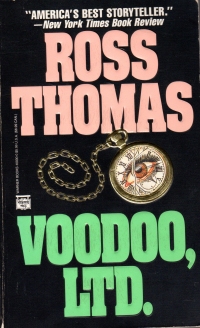
This is a fascinating book, especially on the meta level.
It is the autobiography of Horace Conner, born in 1919. Here’s how he puts it in the first lines of the book:
I was born on May 15, 1912 in Cotton County, Oklahoma, the southern part of Oklahoma on the Little Red River. I was the second child. The year I was born my father’s house was blown away in a cyclone.
And we’re off.
The book chronicles, in some order, his youth in a large, blended family; his businesses throughout the Depression with his father, particularly working on farms and orchards; his drafting into World War II and his service in the Navy and in post-surrender Japan; then his return to the United States, his failed marriage, his carousing and carrying on with women; and then his jobs after the war, including time in a produce market and a distribution center for Marshall Fields in Kansas City.
It’s a life of some dude who didn’t do particularly heroic things or live a particularly memorable life. But the voice is complex and engaging, or maybe I’m reading too much into it.
He’s humble, saying he wasn’t very good at writing at school, but here he’s written the book. He does a lot of humble bragging, where he does something and throws in that someone who saw him do it thinks he’s the best they’ve ever seen at it; I’m not sure if he is actually humblebragging because he’s good at it and wants affirmation of it or if he’s throwing it in to say it’s because he’s showing us he is too good at something. Some of the things he’s done that are less than heroic are just dropped in, like selling stuff from the Navy on the black market. But he also throws in stuff that he does that’s all right, like feeding Japanese war orphans from the back of his ship. He admits that he’s a bit of a carouser and not good relationship material, but that’s matter-of-fact and he doesn’t regret it or think it’s immoral or counterproductive. He goes out of town on a pleasure trip and ends up missing a day of work, and the excuse he gives his boss is that he was in jail in Sedalia. That’s his best excuse. And the manager buys it and keeps him on. What does that say outside the text of the book?
Most tellingly, he mentions that he wanted to have children and that he enjoyed time with his stepson while he was married, but he leaves no admitted progeny. He talks about retiring and picking up his small entrepreneurial ways, delivering some produce and selling it from his trucks. But he doesn’t much mention church–although he claims to read the Bible, particularly Proverbs. And he talks a little about his methodology of research at the library to make sure he gets his dates right in the book.
But he never explains why he wrote the book.
It’s not for his kids. Perhaps his nieces and nephews? I don’t know. For someone who claimed to not be a good writer, he didn’t do badly. But why did he do it? The writing of this book does not necessarily jibe with the simple man described within it.
As I said, on the meta level, it’s fascinating. And it wasn’t a bad read (better than An Ozark Boy’s Story for example) but there’s no real climactic payoff. After all, this is the life of a man. Also, gentle reader, it’s apparently $125 on the Internet, so you’ll probably not pick it up.
Books mentioned in this review:
She blinded me with Scions.
You’ll have to make your own set-up for it, though, since I’m coming up with nothing.
A subject line fail from Apple:

I mean, isn’t kinda the thinking around the holiday that you are the great match for your Valentine?
Certainly not that of the Wall Street Journal columnists.
First, in Bret Stephens’ Dancing in the Nuclear Dark, a bit of alt-pop-culture:
Where do federal government reports go once they’ve been published and (lightly) chewed over by second-tier officials, congressional staffers and think-tank wonks? I picture them being packed into crates and stored in some vast warehouse, like the Ark of the Covenant in the last scene of “Indiana Jones.”
The film’s name was Raiders of the Lost Ark.
At the bottom of the page, Fay Vincent offers Ten Tips for New Executives which includes:
Be sure to manage down. Spend time with the lower-level employees in your company and try to be decent to all of them. A polite greeting to the elevator operator, a thanks to the mail delivery person and a kind word to the assistants will be appreciated.[Emphasis added]
The elevator operator? Might as well have guided people to be kind to the stenographers and the milkman.
The New York Observer sez:
IT’S WELL KNOWN AMONG THE SMALL WORLD of people who pay attention to such things that the liberal-leaning reporters at The Wall Street Journal resent the conservative-leaning editorial page of The Wall Street Journal.
Apparently, the fact checkers hate them, too.
(Link to the Observer piece courtesy of the Ace of Spades HQ sidebar.)
Trog links to a piece on The Federalist entitled The Top Ten Books People Lie About Reading and enumerates those which he, Trog, has read between Danica Patrick fan fiction (between two and five, because Trog counts partial reads).
I’d seen the linked piece before and considered doing a list-post comparing what I’ve read to the actual list, but my laziness precluded me. But now that all the cool kids are doing it (“If Trog jumped onto a river, would you?” “Yeah!”)
A little note, though: the item at the Federalist says “ten” books, but one list entry is actually two books. The math, it is hard for English majors.
Ergo, here is the list, with the ones I have read rendered in bold:
I do own Les Miserables and Democracy in America with the intent to read them. I also own Ulysses, but I’m not sure I’ll ever reach a point where I pick that up before another book unless it’s a post-apocalyptic world where I’m burning books for warmth.
That’s six of eleven. And The Art of War and The Prince are a hundred pages each. They’re not books. They’re fat pamphlets.
I can’t believe I have to replace this belt already! I just paid $10 for this belt at Walmart three years ago and wear it almost every day.
Jeez, I’ve definitely turned a corner in aging gracelessly, ainna?
And don’t get me started on these cheap black sweatpants that I bought because I could not afford a gi when taking bujitsu in 1997. Can you believe they’re wearing thin in spots already?