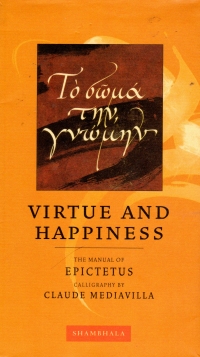
As you might recall, gentle reader, I bought this book at ABC Books last month because I thought it said Epicurus. I’ve already read Epictetus’s Discourses. This book is derived from a subset of the Discourses called the Manual or the Handbook or the Enchiridion (depending on who’s talking about it and the translation, I gather).
The producer of this book is a calligrapher living in Paris who presents epigrams from Epictetus, formatted like poems, with Greek versions of the same or derivatives calligraphied up on the facing page. As such, the author presents it more as a calligraphy/art book than anything else. His afterword section describes his life and technicque in greater detail than the preface described Epictetus.
Still, it was a quick breeze to read (and adding to my woefully behind annual reading count this year), and it does present some of the wisdom of Epictetus in a koan, Tao Te Ching kind of fashion.
But as to calligraphy as an art form in itself, I’m not sold.
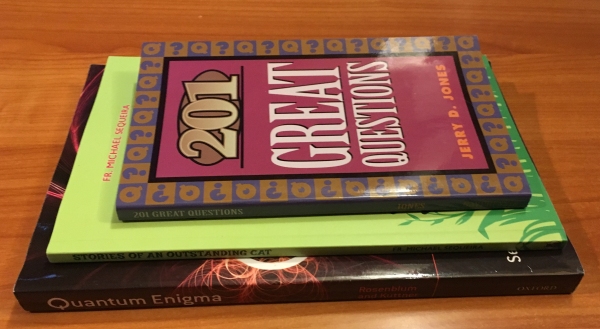
The church I attend has a cart near its library with cullings from the library that people can take home. Most of the time, this mostly includes devotionals and Bible translations, but last week I spotted a couple of more non-churchly titles on the cart, and I was interested.
I decided to wait a week to give everyone else a chance since I’m not exactly hurting for things to read. But since nobody else grabbed them, I took some.
I got:
Quantum Enigma, a small textbook about quantum physics. I’ve tried to read a couple of higher physics books in the last year, and each time, I follow along thinking, “Okay, that makes sense. I get it.” And then I come to a sentence or two where I’m all like, “Wuh?” and then I can’t understand any more and sometimes I lose the understanding of what I thought I got. I’m hoping that eventually repetition and different approaches from different sources will make it click permanently.
Stories of an Outstanding Cat, a collection of anecdotes by a retired Catholic priest about a cat that joined him at the rectory at his last church. I’ve picked it up, and it looks to be a quick read full of exclamation points.
201 Great Questions, a book of questions that might make a better road trip conversation book. Better than Zobmondo!, anyway.
Of course, the owner of ABC Books came along while I had a free book, and I had to play cool, like I wasn’t doing anything wrong.
Wow, Brian J., you might ask. Didn’t you used to read books? I know I ask myself that question frequently. But my reading time was curtailed the first quarter of this year. First, I didn’t have a lot of time to read a small “carry” book that I took out with me to various locations where I’d have a half hour or hour to kill. I’ve not been going to martial arts classes enough this year so far, and when I do, it’s been on days where I’ve not had to get there for my children’s classes, where I would wait for mine to begin thirty or forty five minutes later. And instead of sitting on a bench in church on Sunday mornings during the Sunday School hour, I’ve been schlepping my laptop to a local coffee shop to try to bang out the beginnings of a novel. Also, as you might recall, I’ve been working my way through some Shakespeare, and the book that I’ve picked up in the middle of Measure for Measure is long, too. So I’ve not been adding to my annual to-read list very much this year.
However, this month I have determined that the schlepping of the laptop is a lot of work compared to the actual throughput I get in writing (currently, I’m on page two of the novel, as it takes me ten minutes to get to the coffee shop, a couple minutes to eat a pastry or several, and then I have to pack up twenty minutes later to return to church to pick up my family), so I decided to return to my perch at church to do some reading.
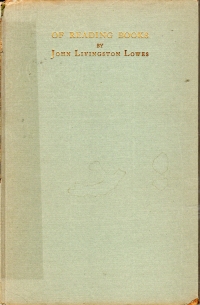
I started with this volume that I got in December. Because it’s short, and it’s about reading books. How meta.
At any rate, the author gave this particular speech at two separate commencements to the graduating class of 1929. It’s broken into three parts. The first talks about reading at the university, and how so much of the university is designed to teach the students marketable skills and not so much about the classics and the love of learning. The second talks about how it’s important to learn to love reading when you’re young, as the things you read then you will read with relish and zeal that you lose a bit as you get older. The habit, built then, will lead to a lifetime of reading which might lack the zeal of the young but brings its own pleasure. In III, he explains the benefit of being well read, where it will lead you to make synthetic connections between things that you might not otherwise get, and that only broad reading gives you this chance to make those connections between the things you read and encounter.
The book is very literate, chock full of allusions and quotations (without sourcing) that he expected a college graduate to get in 1929, many but not all of which I recognized in spite of a twenty-some year old degree in English and philosophy and continued reading since then (he quotes Miranda from The Tempest which is fresh in my mind).
But his address really just illustrates that what goes around comes around. You find contemporary thinkers worrying about the university not teaching young people to think or read the classics and only teaching them skills for commerce. Of course, William Wordsworth talked about too much getting and spending, too, even before Lowes.
The commencement addresses were given to college students of the late 1920s, which were more hoity toity than you get today after the GI Bill and government loan programs made it available to everyone. And they hit the workforce and the real world months before the stock market crash that launched the Great Depression. So history has made itself a double-effect narrator that makes us cringe a bit for those students.
So worth an hour or so of your time if you’re into books or history, I suppose. Or if you have to start furiously padding your annual list of books read.
Well, not the Poet Laureate of the United States. I’m not sure who that actually is these days.
However, I did actually do a poetry reading with the poet laureate of St. Louis, once. Well, sort of, and it was before he was the poet laureate of St. Louis.
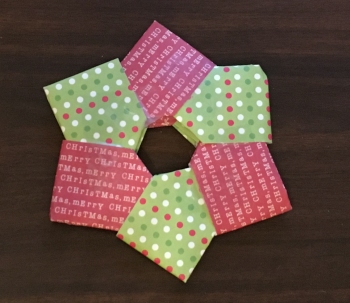
And I thought, Cool, one of the boys made a throwing star.
Then I noticed it had six points, and I thought Maybe it’s a Jewish throwing star.
Then I noticed it was made of Christmas cardstock and bears the initials of one of the boys, which might indicate it was a Christmas-themed throwing star.
That it might, in fact, be a wreath never entered my mind.
Because wreaths are not as cool as throwing stars.
And I’m sure no boys of mine would use that as decoration.
And as to it surfacing now, three months after Christmas, well, let’s just say that my children are not timely with the contents of their backpacks. They have delivered Christmas cards for their teachers in the following May on occasion. (The occasion being Christmas. Every year.)
Here at Nogglestead, we’re looking for some replacement ceiling fixtures for our kitchen, and I’m reluctantly browsing Amazon for possibles.
I say “reluctantly” because I’d rather touch the items and look over the boxes before buying, but when we hit the local big box hardware store this weekend, we found a couple of possible units, but our kitchen currently has six lights, and we’d like to replace them one for one. But Lowes only stocked three or four of each light type, and we were hoping to get this done soon. So I’m browsing Amazon.
Which is proving that you have to be very, very careful in reading all the mangled English. At least in the keyword-choked item names.
Like this one:
Clearly, someone learned Peter Jackson’s perspective tricks from filming The Lord of the Rings or someone is just photoshopping things in. Because that is the biggest 3.5 inch light I’ve ever seen, or the smallest bedroom.
My youngest son, who is not as young as he used to be, is reading Where The Red Fern Grows in fourth grade. His teacher is reading the book in class, but the youngster like the book and wants to read ahead, so he picked up a copy and will probably finish the book this weekend.
This morning, he said to me, “This is not Miss Cole’s. This is ours. Whatever book Miss Cole is reading, we already have.”
Well, yeah. And most of the books his English and Philosophy professors would have assigned him thirty years ago.
Now, not so much.
Confession: Being that I have yet to read either of them, I sometimes confuse Where The Red Fern Grows with The Red Badge of Courage.
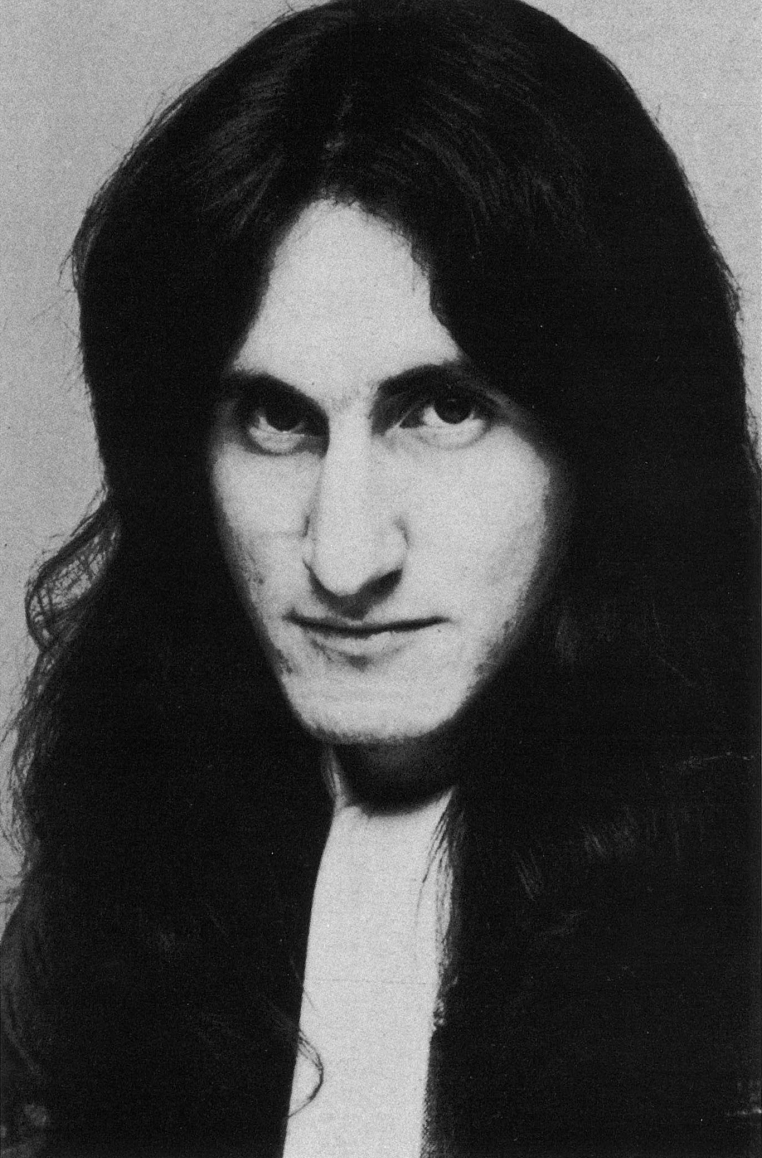
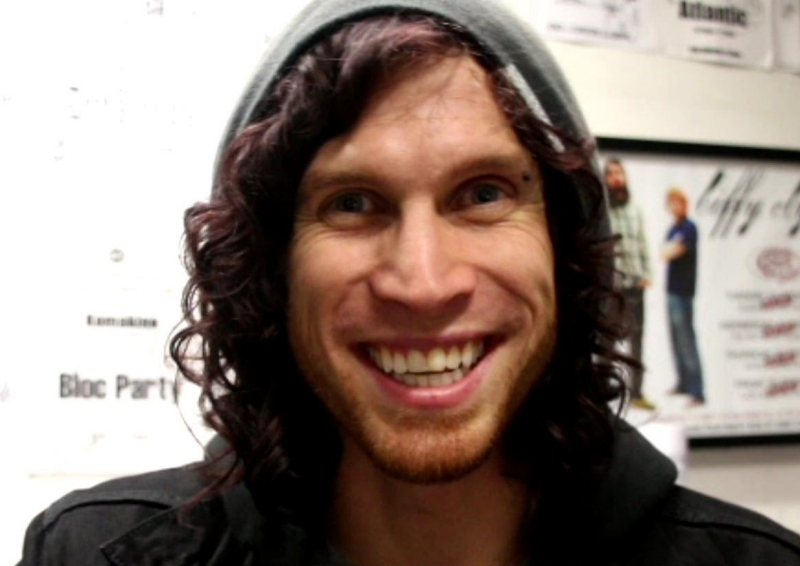
These guys can rock, but they sure look like they’d be more comfortable on the other side of the screens, drinking Mountain Dew right out of the two liter bottle and rolling dice on a Saturday night.
#3: Geddy Lee.
He’s a little older now, but so are pretty much all the Dungeons and Dragons players. Kids these days are into the MMORPGs and mobile games, I think.
#2: Jonny Hawkins of Nothing More.
Of course, at the first sign of orcs, he’d tear off his shirt to make the rest of the gaming group feel bad about their sunken chests. And he’d be sure there you would encounter orcs early just so he could.
Back in my coffee house days (yes, those very ones which produced the poems within Coffee House Memories), I hit numerous open mike nights around town, and attendees knew what to expect from me, from sonnets to ending with the poem “An Evening Walk.” I would mix in some “covers,” where I would recite a poem by another poet or even cool prose from someone like Raymond Chandler.
But if I went to an open mike for the first time, I would do a little trick: I would perform Edna St. Vincent Millay’s “Love, though for this you riddle me with darts….”
You can see what this sounds like when a proper British woman reads the poem:
That’s not how I did it, though.
I’d sign my name on the sign-up sheet, and when the MC would call it, I’d go to the stage or the microphone with slumped shoulders, clutching a set of papers shyly, and I’d warble my voice breathlessly into the microphone, “This is a, um, sonnet” as though I were suffering stage fright (which Edna St. Vincent Millay herself did–she was known to take a belt before readings). And then I would throw the papers aside, leap from the stage or in front of the mike, and shout/snarl the first ten lines like a challenge to fight Cupid waving my fist in the air. Then, I’d deliver the last two lines like an aside.
I wouldn’t need to pick up the prop papers I brought, though, as I had whatever I was going to perform memorized. Ask me someday how long it takes to recite Eliot’s “The Love Song of J. Alfred Prufrock” at the Venice Cafe.
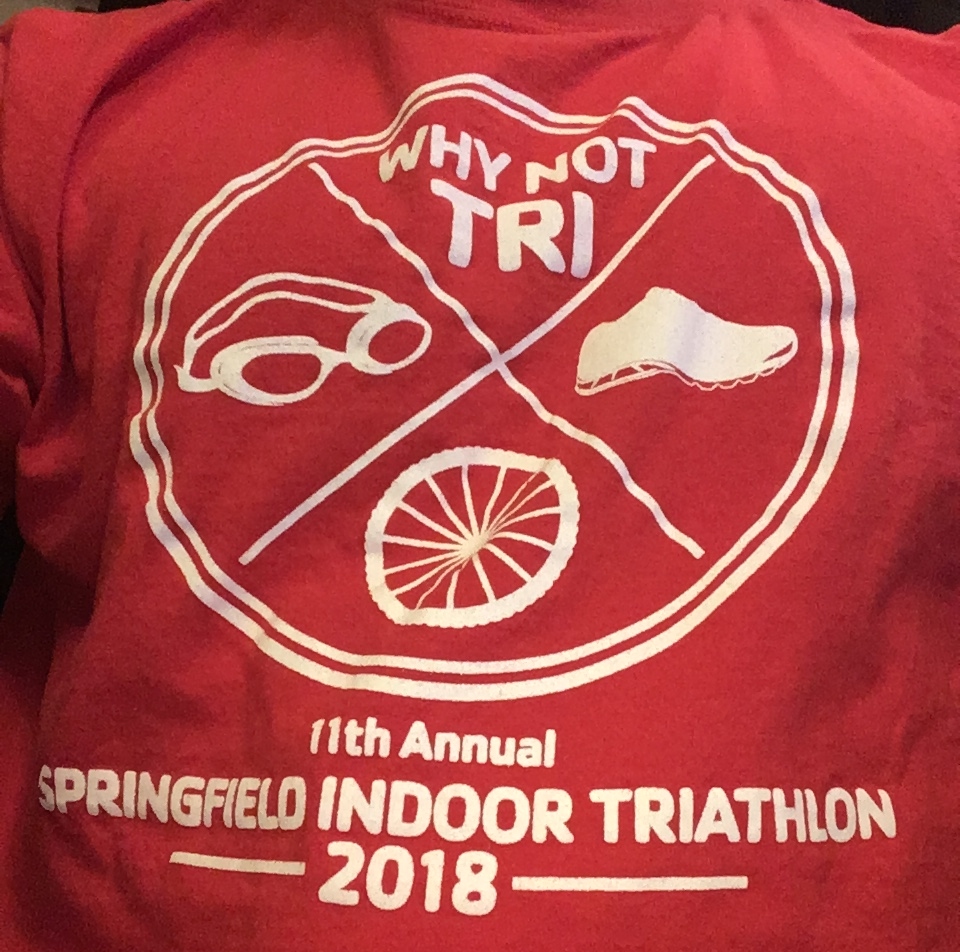
Participated in my second Y Not Tri indoor triathlon at the Pat Jones YMCA.
It’s my second year in a row, and my third overall triathlon. The morning did not get off to an auspicious start. I have my phone alarm set for five and six am (in case I want to sleep in, I can just shut the alarm off and go on sleeping without fumbling to reset the alarm). So last night, I turned off the five o’clock alarm so I could sleep in directly, but I’d failed to remember that just last week I set the alarms off on Saturdays since I like to sleep in (generally, until seven, which is a far, far cry from what “sleeping in” meant in my younger days). Fortunately, though, I awakened at 6:11 and managed to get to the YMCA plenty early to check in.
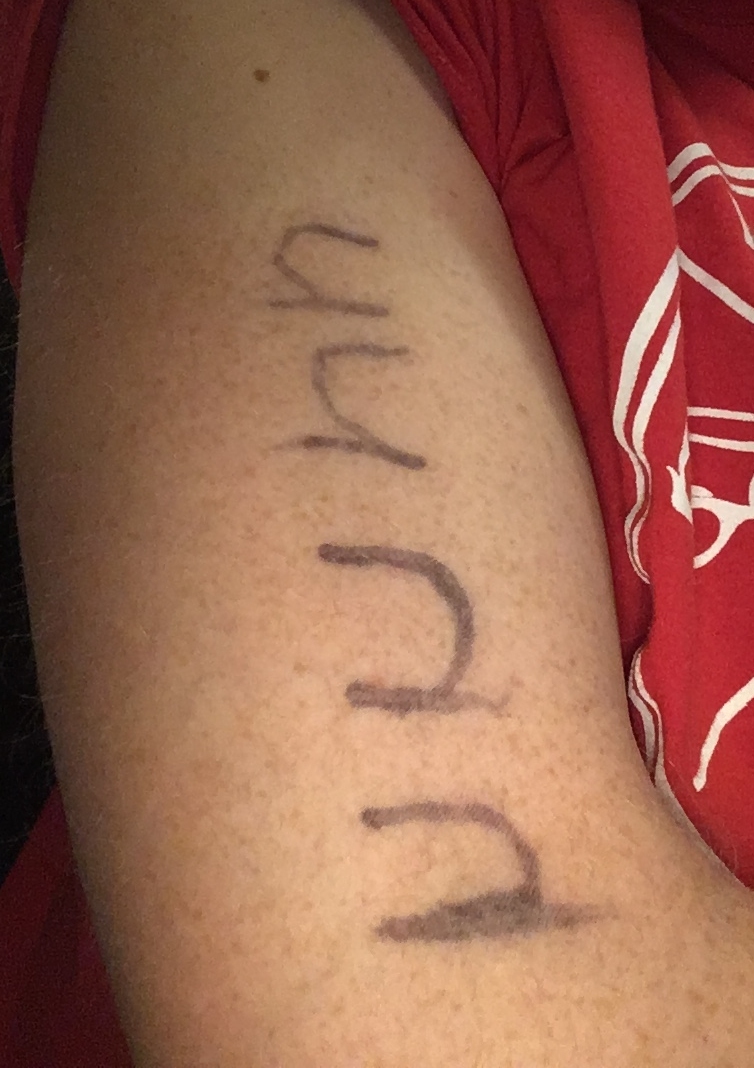
While checking in, we were to put our own numbers on our biceps instead of having a volunteer do it for us. So I looked down, and did my best, and inked my number right side up but backwards.
So I wrote it again under it.
I tried to tell everyone I did the first one like the flag patch on the right sleeves of the military (backwards, but to make it look like the military is charging into the wind). I’m not sure anyone bought it.
So I survive the triathlon, and then I jumped into my car and raced westward so I could…
Attend a martial arts class.
I got to the martial arts school seven minutes before class (that is, 23 minutes after I finished the triathlon), dressed out, and hit the water fountain. I didn’t drink a lot of water during the triathlon because I didn’t want to swallow a lot of air, but then I had about a liter of water in the truck. Which meant when I put on the heavy gi, I started sweating a lot, and I briefly wondered what I was doing.
But I got through the class okay. I didn’t make too many tired mistakes while sparring (well, my head would have only been knocked off once or twice).
But I made it through, and more importantly, I impressed my beautiful wife.
Later in the day, a little logy from the day’s activities and a short nap, I went out again, where…
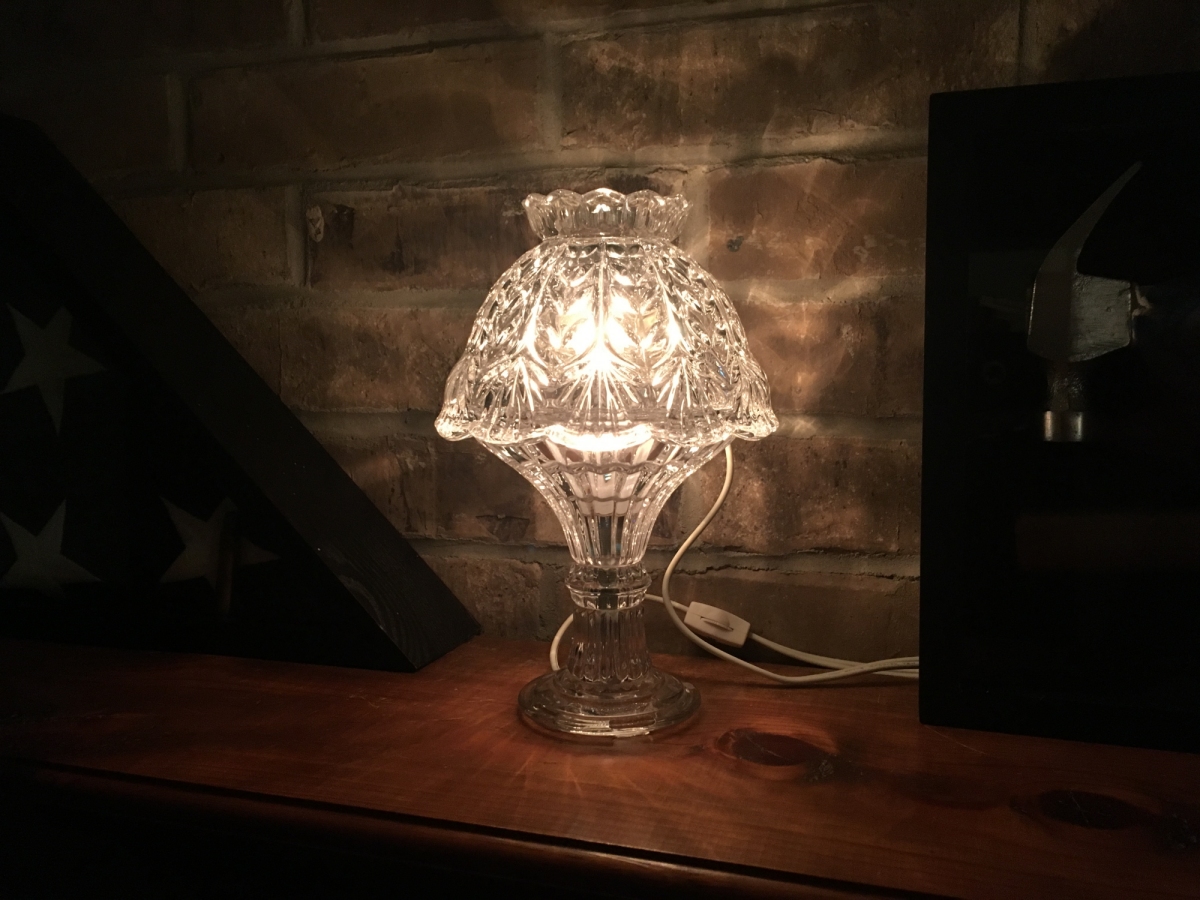
I Went to the antique mall and bought a charming little Tiffany lamp that is perfect for our mantel.
I got home just in time for the dinner hour, but nobody was really hungry since we’d stopped at a pizza buffet for lunch, so…
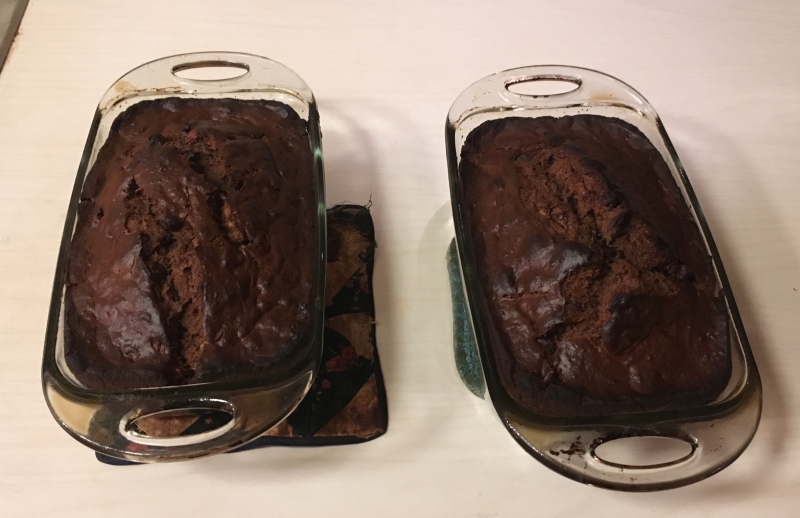
I baked some delicious chocolate banana bread.
I have a very rigorous banana-eating timeline, which is as follows:
Week 1: I LOVE BANANAS! I EAT ALL THE BANANAS!
Week 2: I buy an extra couple bunches of bananas to sate MY DESPERATE NEED FOR BANANAS!
Week 4: I need to do something with these very ripe bananas.
This has happened a couple times in a row (well, the row is several calendar months). The last time, we gave the second loaf of banana bread to the teachers at my boy’s school. Tomorrow…who knows?
So, basically, the masculinity arithmetic today was basically a wash.
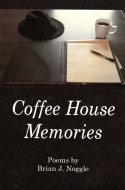
As part of my marketing push, such as it is, for my collection of poetry entitled Coffee House Memories, I’ve started posting actual memories on the Web site.
The first one is about my reading poetry in the middle of the night on a radio station at the behest of a fellow who ran the open mike night at the Oasis coffee house and who was a substitute disc jockey at KDHX.
So the local Jack station (a radio format term as dated as Adult Contemporary or Album Oriented Rock by now) plays old American Top 40 radio programs on Sunday morning, so I get a chance to catch old songs that don’t get a lot of radio play now.
When Bertie Higgins’ “Key Largo” came on, I thought, not actually featured in the film Key Largo.
And then it struck me: He is singing about the movie Key Largo. I hadn’t known that when I heard the song previously.
I mean, when he sang about Bogie and Bacall, I thought about them in the context that I’d known them at the time I heard the song: From the film The Big Sleep and as a married couple. I didn’t see Key Largo until much later.
So all this time, I thought Bertie just wanted to sail to Key Largo, and that he was watching old movies like The Big Sleep with the woman in the song.
How daft I am.
Fun fact: I’ve actually seen Key Largo twice in recent years (meaning within the last, what, decade?). The first by myself and the second with my beautiful wife as I’ve tried to convince her share in my enjoyment of old movies. So we’ve watched two together, the other being His Girl Friday with Cary Grant and Rosalind Russell.
But even in a practice grounded in the peculiar, former Texas-San Antonio (UTSA) edge rusher Marcus Davenport turns heads when he tells personnel men about his love of poetry.
“They’re like, ‘Really?’” Davenport said last month at the Senior Bowl. “And I’m like, ‘Yeah, that’s one of my things.’”
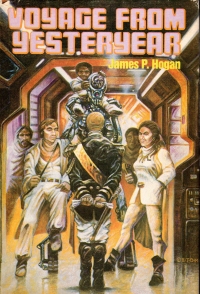
As you might recall, gentle reader, I am a pretty big fan of James P. Hogan (see also the reviews for The Multiplex Man, Paths to Otherware, The Legend That Was Earth, and Martian Knightlife). However, do not let the stretches of time between those book reports diminish my claim. That I apparently haven’t read something by Hogan since 2009 more indicates how time flies when you get older.
The exposition of this book: In the near future (nearer to us than to readers in 1983), international relations are tense (the Soviet Union is still around, and the Chinese/Japanese alliance (?!) is a rising power). An international space probe is launched to a habitable planet around Alpha Centauri. At the last minute, the building blocks of human life are added with the thought that the robots and computers on the probe can build habitation and factories and whatnot that will then build human children to live on the distant planet to ensure humanity survives in case of a cataclysm on Earth. A major war erupts, and an American civilization rebuilds first and sends a generation ship to the new planet, Chiron, to enlist the residents there in the predicted war against the Eastern Asians, who send their own ship four years after the Americans. In the twenty-year journey, the Americans on the Mayflower II have developed their own politics and expectations of their first encounter with the Chironians, and they’re stumped when confronted with the libertarian utopia that has evolved in the forty years when the society with its abundant technologies build itself from scratch.
That’s the setup, and the bulk of the book describes the interaction and adjustment or lack thereof of the individuals and institutions to the Chironian way of life. About halfway through the book, I thought perhaps the book would take a twist akin to a book I’d read some time before — Code of the Lifemaker. Which, as it turns out, is Hogan’s next book. But this book did not take the turn I expected, and it was straight forward and earnest throughout.
Thematically, the book deals with how a society might build structure itself if the base understanding of life and the universe was one of abundance instead of scarcity. How would they organize politically? How would they make their lives meaningful? The book goes into some alternative science premises that Hogan used a lot. As I was reading, I was thinking the Chironian society was like something I’d seen before in The Probability Broach by L. Neil Smith.
Overall, the sweeping themes and meta nature–with political subplots and chapters on quantum physics (with which I’ve tried to grapple with on numerous occasions recently) bogged down my reading of the book. I would have enjoyed it with fewer characters and sidelines, but that’s probably because my attention span has shortened over time.
Also, I think Hogan’s hopeful thesis about how people raised in abundance and without the death-focused strictures that I assume he associated with Christianity and old timey religions would behave. Forty years later, our Western society’s generations raised since this book came out, have proven to be quite petty instead of interested in all being little Howard Roarks and Dagny Taggarts.
Still, an interesting concept and a breath of fresh extraterrestrial air amid the Shakespeare comedies I have been reading this year.
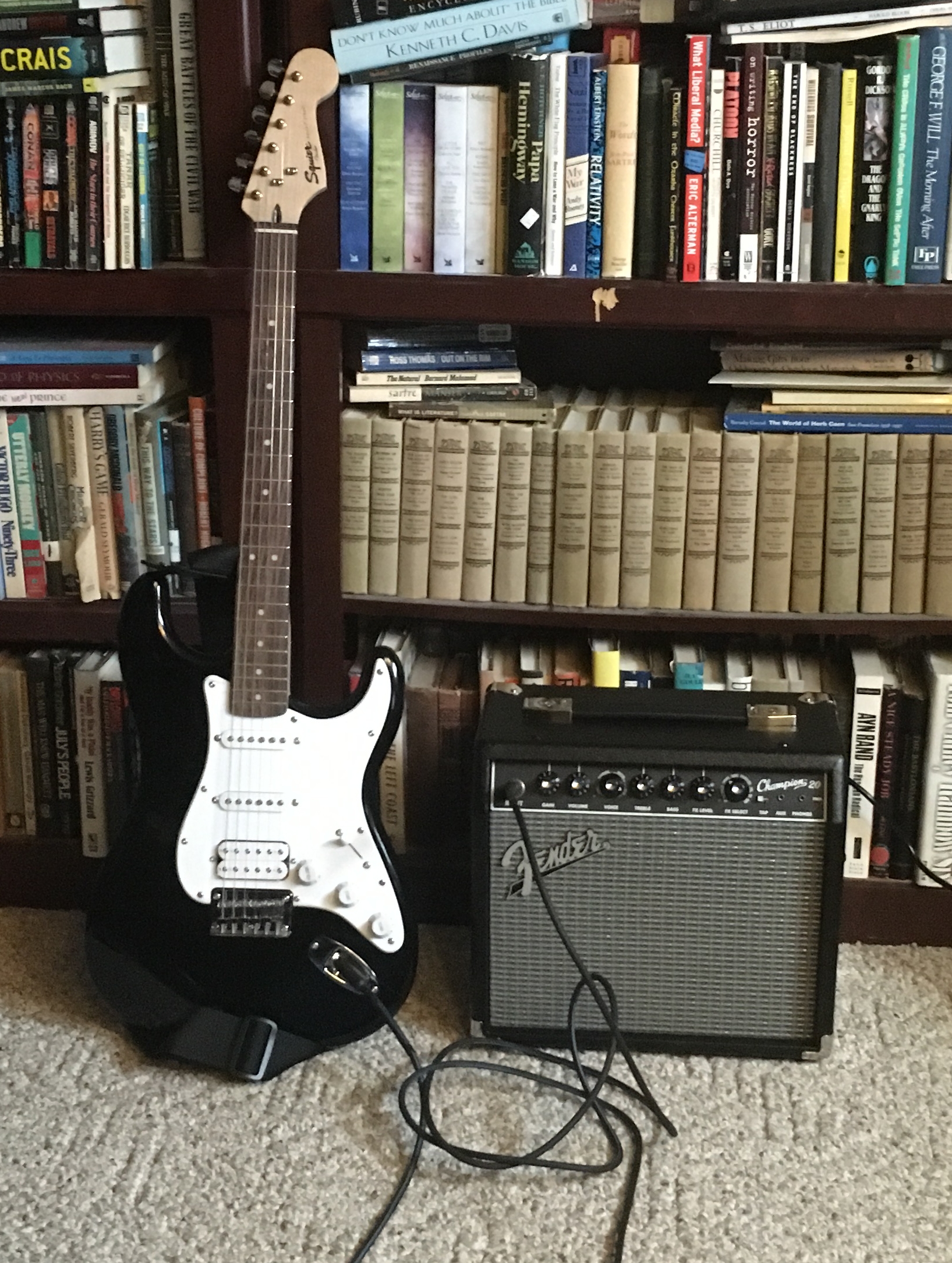
As part of a continuing series called “Brian J.’s Three Quarter Life Crisis” (previous entries include “Brian J. Learns A Martial Art”, “Brian J. Does Triathlons”, and “Brian J. Publishes A Book Of Poems“), I took gift cards from Christmas and my recent birthday and bought an electric guitar.
To be honest, it is not my first. When I was at the university, I bought a bass guitar and noodled with it for a while, including actually getting together on a couple occasions with a couple guys with other instruments and jamming with them (that is, strumming or picking the bass guitar clumsily while they picked their instruments clumsily, or in the case of my sessions with The Variation Machine, actually pretty good).
But I did not pursue it and did not stick with it with any discipline. I had a lot of time–witness the number of poems and short stories from the time as well as the spoken history of the era. But I lacked patience.
Before I got the bass guitar, I asked for a keyboard for Christmas in 1990, and I got two (the reduplicative benefits of a broken home–one from the mother and one from the father). I tinkered with it a bit, trying to do a little autodidactic learning on it, but I could barely read music and play with the right hand, sort of. I learned “Suicide is Painless” (the theme from MASH), but little else. I wrote a song for a girl named Peggy who was in my Bio 2 class and another English class, but when I told her, she and a friend mocked me through one particularly long Bio 2 lecture. The song even featured using the left hand. Was it any good? I’ll have to ask the beneficiary of Peggy’s disdain: My beautiful wife, who can play all the instruments and even some that have not been invented yet.
Where was I? Oh, yes, I’ve not had much luck with follow through on the musical instruments.
I’ve not had a lot of luck with autodidacticism in other areas. Like trying to learn software programming. I mean modern software development. I’ve written programs before, but I’ve not had much luck with putting all the pieces together on a language or an application. Part of it has been time, of course–since I’ve had children and a family, full evenings dedicated to a hobby has disappeared. So I don’t have the time.
But I have learned patience. I definitely credit the years of martial arts classes for this. When studying or playing with anything in the past, I’ve always found that I learn a lot rapidly and take pride in it, but then I plateau and become disappointed that I’m no longer rapidly advancing. I end up putting things aside, and going onto something else. But I’ve learned how improvements become more subtle over time, and just putting in the effort and time generally leads to improvement.
So I’m hoping to apply that lesson to learning the guitar. A little bit of practice every day, and eventually I will learn it.
I’ve also learned that I do not learn mechanical or physical things from books very well. I’ve discovered YouTube videos for insights on making mechanical and household repairs, so I’ll start out with this guy teaching me guitar:
He seems very patient. And British.
And if this does not work, I will get lessons. Another thing I’ve learned in my crisis journey is that even though I’m not friendly enough or extroverted enough to natively join a community, I can pay someone to tolerate me enough to teach me something. One would think that I would have learned this in my youth, when I spent tens of thousands of dollars for professors to humor my dreams of being a best-selling author or famous poet. Oh, but no.
At any rate, ask me again in six months about my progress to see if I can stick with it as much as I’d like to think I can (this time).
Also, drop me a line if you want to be in my rock and roll band. I have a cool idea and concept, but I’m not sure how well my voice can hold up to grindcore, and my children’s voices haven’t changed yet.
Dustbury has a post about the theme song from The Bob Newhart Show that appeared in a longer form on an album; playing off of another user’s comment, I gave a partial list of television theme songs that charted, including the obligatory John Sebastian, Mike Post, and Henry Mancini numbers.
To the meat of the matter: Catch-22 is drivel; unreadable schmaltz. So is From Here to Eternity. In fact, many of the so-called classics are crap, Moby Dick first and foremost. Joyce, Cervantes, and Milton all are impossible to read. Hawthorne I can manage, but why would I want to? Bunyan, blah. I will take bawdy Moll Flanders over The Vicar of Wakefield any day.
The blogger wants entertainment with his classics.
You know, he’s not far off in deriding more modern classics–particularly the stuff that comes out of the 20th century. Classics before that are generally popular. I mean, Shakespeare wasn’t high-faluting. The novels of Austen were popular and entertaining to their set. Hemingway, sure. Faulkner–well, that’s 20th century academic classics talking.
With a lot of things in translation, what’s ‘classic’ is what’s based on an academic’s taste and inclination in translation as well. I always assign an asterisk to what I read in translation anyway. And the aforementioned Indianan made it through War and Peace but I didn’t. I can tell you why: It’s keeping the characters straight. It’s bad enough when it’s a big cast in a broadly focused saga; it’s far worse when each character has multiple appellations depending upon who’s talking to him.
Popular classics from yesteryear become less approachable when the argot and manner of expression changes, whether across cultures (such as War and Peace and other Russian classics) or centuries (one can appreciate Shakespeare’s occasional turn of phrase without getting the jokes). To really grok the works like that, you really have to dive into them and read a bunch from the era or culture. Then you’ll be steeped in it and might even get the jokes without the footnotes. Back in college, I did get the jokes in Shakespeare because I was concurrently reading Jonson and Chaucer and contemporary poets, so I was conversant in Middle English. But I’m not that way now, and it’ll take a little work to get back to that.
But it does take a little effort to really get into those classics, and they’ll be more entertaining if you’re so inclined. I am, mostly because I’m pretentious and want to read the classics.
But it’s a matter of taste, and not everyone is going to like everything.
But, yeah, James Joyce’s work might be the last couple of things on my shelves that I would read should medical science make us virtually immortal.
In a book report for the tome The Joy of Not Working, I questioned whether the book was relevant in the 21st century:
Perhaps the message was on-point in 1997, but we’ve got a couple self-actualizing generations that have sought meaning outside work (or meaningful work instead of careers) since then. So many of the lessons aren’t applicable to more modern readers.
Kim du Toit would probably disagree based on his post Working Dogs:
I took an older guy somewhere during my early-morning Uber shift, and we got to chatting about retirement. He was in his early sixties and was thinking about retirement in the next couple of years or so — he’d reached all the retirement “qualifications” in terms of his age, length of service, and so on — and when I asked him what he was going to do after retirement, he said quite simply, “I don’t know.” He had no outside interests other than his work, he said, and had no hobbies or anything to keep him occupied when he would quit working.
This set off all sorts of alarm bells in my head, because I’d confronted the very same thoughts when I planned on retiring back in 2016 on reaching age 62 (which seems to be the “killer” age discovered by the researchers).
Worse than that, I either know men personally or have heard of many instances of men who have died soon — very soon — after retiring early. (When men retire at a later age, they paradoxically seem to live longer, as the study shows.) Sometimes, men die within six months of getting their gold watch, after many decades of working with little or even no time off for illness. Where I differ from the study is that I think I know the real reason why this happens.
We’re working dogs.
Perhaps I’m a little closer to the millenial mindset than I like to admit, or perhaps I’m just laid back, but their experience differs from mine.
On the plus side, people in my line die at sixty, give or take, so I won’t have to worry about dying after I retire.
Whenever I’m asked why I haven’t seen the new Masters of the Galaxy (or whatever it’s called) movie, I simply reply that I quit reading comic books at about age 11*, as should every adult. The storylines are boringly repetitive, the action equally so, and the characters’ emotions are, well, set at comic-book level (which is what’s required for a preteen audience who don’t have the mental software to appreciate or even recognize complex emotional issues). It’s fine for kids, in other words; but if someone age 50 tells me he’s still seriously into comic books and/or their movie derivatives, I actually start to wonder about his mental maturity.
You know, I sometimes wonder about what it says about me that I still pick up comic books from time to time. I do prefer the ones from my youth, though; stuff that I have seen from this century, if you can believe it, is more simplistic as the focus has shifted from the story and the writing to the pictures, as though the pictures themselves are the worth of the thing. No, not really. The stories are.
Suddenly, I’m all defensive about my reading habits. Aw, who cares, read what you want. Classics, comic books. Just have something interesting to say about them.
So I have released my infrequently threatened/promised collection of poems.
Entitled Coffee House Memories, it contains just short of 100 poems that I wrote mostly in my college and immediately post-college life. I spent a lot of evenings at coffee houses and their attendant open mic nights.
Man, I wrote a lot of sonnets, and some of them are pretty good, I still think. But some of them are a little, erm, saucy? Not bawdy, but they’re clearly about making love. So this, like John Donnelly’s Gold, is not something my children can take to school for show and tell. It’s funny; I used to perform said poems in coffee houses in front of dozens of people, but it’s been a while. I’m pretty sure I’d feel like a creepy old man reading one of them out loud now. And/or I’d blush furiously. But I’m convinced they’re good poems, so they’re in the collection.
Not included: “Springfield Panera Bread BDU”, although I did include a number of other haiku. And pantoum or two. And a couple villanelles, I thing. I did write a couple bits of free verse, but I always favored more structured forms, like the sonnet.
The book includes two chapbooks I released in the middle 1990s, Unrequited and Deep Blue Shadows. The latter is named for a poem inspired a bit by a song by the band Lillian Axe.
It might be the only poem inspired by anything by Lillian Axe.
In my defense, the book also features three poems inspired by “One Day I Wrote Her Name Upon the Strand” by Edmund Spenser. So clearly, my influences are varied.
At any rate, it’s available for Kindle now for 99 cents, and hopefully will be available in paperback in a week or so.
So if you’ve got a buck and a Kindle, grab one now.
In related news, I guess I still have four or five ISBNs left, so perhaps I should write something else.
 As you might recall, gentle reader, I bought this book at ABC Books last month because I thought it said Epicurus. I’ve already read Epictetus’s Discourses. This book is derived from a subset of the Discourses called the Manual or the Handbook or the Enchiridion (depending on who’s talking about it and the translation, I gather).
 Wow, Brian J., you might ask. Didn’t you used to read books? I know I ask myself that question frequently. But my reading time was curtailed the first quarter of this year. First, I didn’t have a lot of time to read a small “carry” book that I took out with me to various locations where I’d have a half hour or hour to kill. I’ve not been going to martial arts classes enough this year so far, and when I do, it’s been on days where I’ve not had to get there for my children’s classes, where I would wait for mine to begin thirty or forty five minutes later. And instead of sitting on a bench in church on Sunday mornings during the Sunday School hour, I’ve been schlepping my laptop to a local coffee shop to try to bang out the beginnings of a novel. Also, as you might recall, I’ve been working my way through some

 As you might recall, gentle reader, I am a pretty big fan of James P. Hogan (see also the reviews for