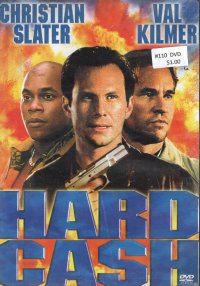
Movie Report: Hard Cash (2002)

Book coverI picked this film up over the weekend, and I popped it in on Sunday. I thought, man, Val Kilmer, Christian Slater (and, it turns out, Daryl Hannah and Verne Troyer). How did this escape my notice in the 1990s? Ah, but gentle reader, it was because this was an Eastern European direct-to-video movie. Sort of a Borscht action movie, if you will. Given that the actors in the films were on the back-end of their best mainstream success, maybe Hard Cash Grab might have been a better name for it.

So: The before-the-credits bit shows a two groups of criminals; one is offering to buy some counterfeit currency, but the deal seemingly goes south when the seller starts to insult the Eastern European money launderer. But it turns out that the buyers, led by Christian Slater, were there to steal the money through an elaborate gimmick which involves Daryl Hannah (I later learned) plays the part of a seemingly pregnant woman who infiltrates Verne Troyer into the household. After the householders are all incapactitated–but not killed–the team comes back in, but the police show up, and Slater’s character (Taylor) gives himself up to let his team escape. That’s all before the simple opening credits.

The bulk of the movie takes place a year later when Slater is released from prison. He gathers his gang together again, and they stage an elaborate rip-off of an off-track-betting establishment. But they discover after their success that the money is all marked by the FBI, so they have to turn to the money launderer from the year before. Things take a turn when Taylor discovers that a corrupt FBI agent (Kilmer) was using the OTB parlor to launder his ill-gotten gains. So he blackmails Taylor (and his by extension his crew) to rob a money drop from off-shore casinos.

Also, Taylor is trying to reconnect with his young daughter whom he hasn’t seen in a year and the doxie who took care of the kid while he was in the can, but she seems to be working for Kilmer.

So there are a lot of double-crosses and a rather bloody, but without a great deal of budget for blood, ending, and….

Well, I guess there are worse ways to spend a couple of hours.

But ultimately, the film was a little slowly paced and was just…. I dunno, off a little bit. Maybe the Eastern European look of it–and I only suspected its provenance when I watched it, but research did prove it out. Maybe the dialog–maybe English was not the screenwriter’s first language (although Willie Dreyfus sounds American, but this is his only writing credit, and he has two acting credits: in this film and in an episode of Tour of Duty).

One thing that was on the nose: Sara Downing played Paige, the doxie, and she definitely hit the look of trailer park hot.
Continue reading “Movie Report: Hard Cash (2002)”
Buy My Books!
Buy John Donnelly's Gold Buy The Courtship of Barbara Holt Buy Coffee House Memories

Good Media Hunting, August 30, 2025: Thriftin’ with Brian J.

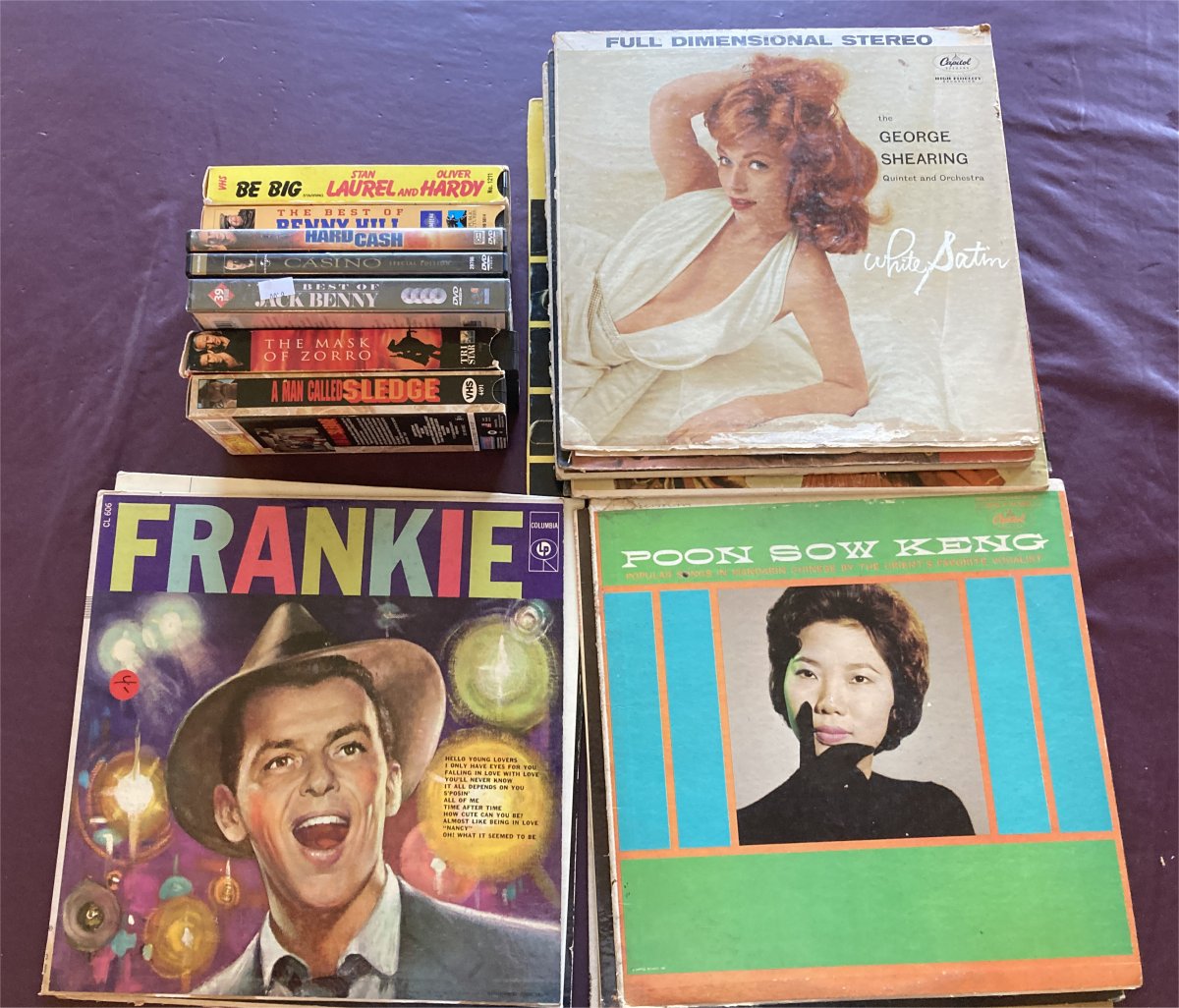
I mentioned I wanted to step away from the computer yesterday, so I did some second-handing. I hit a garage sale, an estate sale, an antique mall, and a thrift store, which I believe is hitting for the cycle. I’d really wanted a couple of things: Christmas presents for the few people for whom I buy Christmas presents these days, and a loud or out-of-date sports jacket for this year’s Trunk or Treat.

Well, I did find a sports jacket which is not too loud but looks like brown corduroy (which I will louden up with what I wear under it). No gifts, though, so this is not part of the one-for-you-one-for-me protocol which I will use as we get closer to Christmas.

I got some records and videos.

Most of the videos come from the thrift store, and most of the records came from the estate sale.

As for videos, I got:

  • The Best of Jack Benny on DVD at the estate sale. It was marked like $8, and it was half price day, so I was willing to pay $4 for the collection since he was George Burns’ best friend after all. But the woman at the register let me have it for $2.
  • Casino, the mob movie.
  • Hard Cash with Christian Slater and Val Kilmer. Which I’m not sure I’d heard of even though I was a Christian Slater fan back in the day.
  • The Mask of Zorro on videocassette. I think we might have it on videocassette. I guess we’ll see.
  • Be Big with Laurel and Hardy, I think. The videocassette in the case does not have a label that matches the case. So this is definitely a case of videocassette roulette.
  • The Best of Benny Hill. C’mon, man, I’m never likely to see this in the wild ever again. And apparently “old comedy” was the theme of the day.
  • A Man Called Sledge, a James Garner western. Videocassettes at the thrift store are marked a quarter each. So I should go check back often. And they degrade less than DVDs do.

As for records, I got:

  • Popular Songs in Mandarin Chinese by Poon Sow Keng, a Chinese singer of some reknown. The estate sale was thick with world music for a couple bucks each as you will see.
  • It’s My Way by Buffy Sainte-Marie.
  • Italy Dances! by Gigi Stok’s Orchestra. Some music for pasta night at Nogglestead.
  • Frankie! by Frank Sinatra.
  • Jazz Praise by John Mehler and Kenneth Nash.
  • In Person by the Four Freshman since I’ve accumulated a number of their records. I left behind a bunch of similar acts like the Four Lads at the thrift store because I don’t need other artists to accumulate.
  • Lightly Latin by Perry Como which I guess I already own. I’ll have you know I did pass on some of his records which I knew I owned, thank you.
  • White Satin by the George Shearing Quintet. To go along with Black Satin which I bought in 2018 and in 2023. I sure like George Shearing, but he flies under the radar of the current vinyl hipsters. And when they discover him, they will have to pay MY PRICE! Muahahaha!
  • Music of India Volume 2 with Ravi Shankar on the sitar.
  • The Streets of Tokyo: Tops Pops Song in Japanese by Nippon’s Favorite Record Stars.
  • Songs of India with the voices of Utpala Sen and Shyamai Mitra. Because as any grousing I might have done about H1-B abuse indicates, I hate India and its residents.
  • Dance Music of India conducted by Timir Baran.
  • Julie Budd by Julie Budd, a 1971 soft pop/rock release I will probably listen to once and archive/shift left.
  • Right Back Where We Started From by Maxine Nightingale. I think it’s that song which was a hit.
  • The Kai Winding Trombones featuring the Axidentals. (not to be confused with The Accidentals from whom I really should order a couple more CDs.

So that’s fifteen LPs and hours upon hours of television and movies to watch. I spent, what, $40 or so including the brown sport jacket. Not bad.

But between this and the book sale last weekend, I have filled the top of the video cabinet fuller than it’s been before. And I thought I had been making progress. Ah, well.

Maybe I should get away from my desk and get to the end of the sofa where I sit to watch the television.

And despite the videos that Facebook teases, I did not buy anything to “flip” online. I get suggestions for videos containing the secrets of people who resell collectibles and clothing that they find at garage and estate sales on Ebay or Facebook Marketplace. And I’m tempted–remember, gentle reader, I did a lot of that at the turn of the century–but then I go to the antique mall and see piles of stuff overpriced which is not moving, and I remember I have two aunts who had antique mall booths who gave it up–and I realize that there are too many people grinding at that now, and the only real winners nowadays are Ebay, Facebook Marketplace, and the owners of the antique malls.

Buy My Books!
Buy John Donnelly's Gold Buy The Courtship of Barbara Holt Buy Coffee House Memories

I’d Welcome Him To The Party, But….

I started buying DVDs and CDs again in 2025 and it changed my mind about streaming

He and anyone he influences is driving up used media in the wild.

His article reads a little like the story about how I joined a video store for the first time in decades in 2017. Sadly, the video store has since closed.

(Link via Ed Driscoll on Instapundit–and it sounds like he’s not a fan of physical media–or is he just saying that to keep used DVD prices low?)

Buy My Books!
Buy John Donnelly's Gold Buy The Courtship of Barbara Holt Buy Coffee House Memories

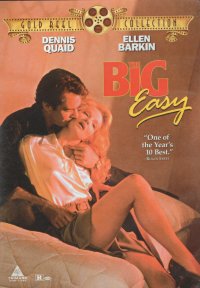
Movie Report: The Big Easy (1986)

Book coverSince I just watched Innerspace with Dennis Quaid, since this film was also atop the video cabinets (since I just bought it at the Friends of the Springfield-Christian County Library Book Sale in May), I thought I would watch it to properly be on a Dennis Quaid kick.

The film is a thriller set in New Orleans. Quaid plays a police officer lightly on the take–they all are–who starts looking into the death of a mafia heavy that was probably to be a message to his mob. Ellen Barkin plays an assistant district attorney who is assigned to look into it as well–but she’s really looking into police corruption. They become lovers (hot and spicy for the 1980s scenes follow), but when Quaid’s Remy McSwain is caught in a bribery stakeout, they fall out (and she prosecutes him). He engineers getting the charges dropped, and she challenges him to reflect on whether he’s even a good guy any more–so he leaves the “Widows and Orphans” group of police sharing in bribes.

As McSwain continues to investigate the “gang war,” he finds that police officers might be involved in several, or all, of the deaths, which leads him to confront his captain–the man who plans to marry McSwain’s widowed mother.

It’s a slow burn film, not as kinetic as you get in the 21st century, and the final climax is rather tame by comparison as well. But it’s a good film, although everyone plays it with a pronounced Cajun accent which, in at least my personal post-The Waterboy, seems funny. Although I might end sentences for some time with cher for a while. Given I am still coming out of my personal post-Shōgun period, my sentences are likely to end with Karma, neh, cher? which will lead to people with whom I speak to beg me to return to my native ainna?

So, I thought I would next watch Bull Durham to continue on my Quaid-kick, but, c’mon, man, a moment’s reflection made me realize that was Kevin Costner, not Dennis Quaid. Then I thought, boy, they are of different eras, neh, cher? Dennis Quaid, whose most noteworthy films come from the 1980s, kinda hams it up. I associate Kevin Costner, who had a string of successes in the late 1980s, more with the 1990s. And he’s so damned earnest in his roles. I suppose if I could turn this into a term paper were I still in college, but you’ll have to just live with my thesis and contemplate it on your own if you’re so inclined.

Also, it led to a little tension at Nogglestead. She said Dennis Quaid was in her favorite Saturday Night Live skit, Mustang Calhoun, from 1990. I said, no, that was Randy Quaid.

In my defense, and in the post-Independence Day world where Randy Quaid played a pilot, you tell me:

That is Dennis, who is Randy’s younger brother.

So maybe my Dennis Quaid kick is over. Which is a shame. He’s fun to watch. In a way Kevin Costner is not. In a 1980s way.

Buy My Books!
Buy John Donnelly's Gold Buy The Courtship of Barbara Holt Buy Coffee House Memories

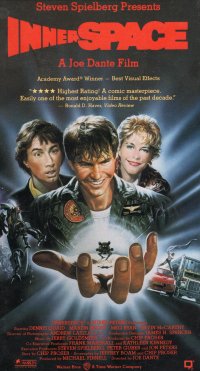
Movie Report: Innerspace (1997)

Book coverI just bought this videocassette in June, so it was atop the cabinet and awaiting quick viewing since I’m too lazy to actually open the (glass-fronted stereo) cabinet holding years’ (decades’) worth of accumulated unwatched videos. And as I popped it in, I thought it was odd that I had never seen the film.

Ah, but as I watched, I realized this was, in fact, a film that appeared on Showtime back in the day, and I had seen it probably more than once albeit not in over 35 years.

So it’s a bit of an action/comedy take on The Fantastic Voyage. Dennis Quaid plays a former Navy pilot working with a lab team working on minaturization; the lab team is going to shrink him and inject him into a rabbit. Just as the experiment begins, though, the lab is attacked by a black ops crew working to steal the technology. The lead guy takes the syringe containing the shrunken pilot and capsule and flees, injecting them into a hypochondriac played by Martin Short (not to be confused with the hypochondriac played by Tom Hanks–have we really lost the stock comedic hypochondriac character? Probably.). They, helped by Pendleton’s (that is, Quaid’s) reporter girlfriend (played by Meg Ryan) have to retrieve a computer chip and re-enlarge Quaid before his air supply runs out.

So it’s a series of chases, impersonations, and comedy that turns out all right at the end.

The film has Robert Picardo in it, and although I saw the name in the credits, I didn’t recognize him. It also has Henry Gibson and Kevin McCarthy playing the kinds of roles they did. I see a lot of overlap in their film careers around this time and have learned that they must have been part of the Joe Danteverse, the director of this film and others like The ‘Burbs. I shall probably forget this trivia presently, but I bet you know what you’re getting when Joe Dante directed a film.

At any rate, not a bad way to spend a bit of an evening, but since I’m not trapped in a tin can in a trailer park in 1988 with nothing but Showtime to occupy me, I probably won’t watch it over and over again. Especially since I have a full cabinet and the tops of two littered with accumulated things to watch and another book sale bearing down on me in two weeks where I will likely add to the pile faster than I watch them.

Buy My Books!
Buy John Donnelly's Gold Buy The Courtship of Barbara Holt Buy Coffee House Memories

Movie Report: Rodan (1956)

Book coverAfter watching Godzilla vs. Mothra, I did, in fact, pop this DVD in for my next movie watching a night or so later.

This film is eight years older than the Godzilla movie I just watched and features the origin of Rodan, or at least of the species known as Rodan. Miners digging coal near a volcano in Japan reach an unheard of depth, and water floods the cave, leading to two missing miners who previously scuffled on the surface. The film plays out for the first portion like a horror movie: Something in that deep tunnel is deadly, but what is it? They eventually discover that giant insects are killing the miners and investigators. When the army goes in with force, a cave-in separates an engineer from the rest, and when he is found on the surface, he has amnesia. Meanwhile, a supersonic UFO is devastating different cities in Asia and defeats, somehow, some military jets. The engineer recovers his memory when his fiancée shows a nest with one of her songbirds’ eggs in it, ready to hatch: In the mine, he saw an egg hatching, and the giant winged creature ate the giant insects. From then on, it’s a straight-up monster movie with the military trying to deal with the giant dinosaurs (there are two) who seem impervious to bombs, missiles, and artillery. Spoiler alert: The barrage triggers a volcanic eruption which kills the pair, although a voiceover at the end indicates that the remaining mate might not wanted to live without its partner.

A fairly short film, of course, and again it hearkens back to my youth when we saw these movies “all the time” (again, where “all the time” might have meant on ten or fifteen Saturday afternoons in our eternal youth).

So I got to thinking: It’s clear that this film was made with models and toys in the cases of most of the military equipment and destroyed cityscapes. But we were kind of forgiving of this back in the day because that’s how our toys looked and so they were fake, but akin to what our imaginations produced on their own. Modern films look a lot like video games with all the computer imagery, and I’ve probably mentioned that I’ve found old films upscaled to 4K or whatever to look like video games, too, with different layers of things pretty clearly grouped together for rendering. But how do modern films look to my children, whose toys for the last five years or so and even before them, were video games and screen-based. Did it impact their imaginations so that modern films more clearly align with how they imagine things (if they imagine things outside what the screens provide)? How much of our youthful amusements shape our imaginations not only in content, but in shapes, appearances, textures, and the other underlying framework?

An interesting thought exercise, and were it my job, I could go into great and kind of tedious detail about it. But, gentle reader, as you know, I have no job, so I will not.

Buy My Books!
Buy John Donnelly's Gold Buy The Courtship of Barbara Holt Buy Coffee House Memories

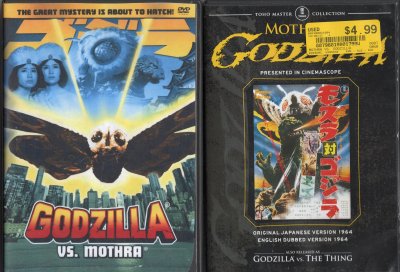
Movie Report: Godzilla vs. Mothra (1964)

Book coverWhen I shelved the two new Toho monster movies that I bought in April–well, topped them as “shelving” them means putting them atop my unwatched video cabinet–I put them by the old Godzilla movie I already had up there. And I did not look closely, and it was only when I picked one to watch the other night that I realized I had Godzilla vs. Mothra and Mothra vs. Godzilla. Which, it turns out, are two releases of the same film (also known as Godzilla vs. The Thing, which is how I think I originally saw it forty-some years ago).
So: An egg washes ashore after a great taifun (after reading Shōgun, watch I drop transliterated Japanese words in blog posts for a couple of weeks). The fishermen sell it to a Businessman who, with his business partner, are going to make an attraction of it. Two little fairy-sized singers come to ask them to return the egg to its home from whence it was washed during the taifun (doesn’t count; it’s the same word re-used). When the Businessmen rebuff them, they turn to a Reporter, a Photographer, and a Scientist to help them. A Politician moves forward with building an industrial area after the storm, but this awakens Godzilla (this picture is the last of the Toho era where he is the antagonist) who starts destroying things. The Reporter, the Photographer, and the Scientist go to the home island of the fairy girls and the home of Mothra to seek his/her/its help in defeating Godzilla. And, after the egg hatches, Godzilla is dispatched into the sea. Until next time.

I capitalized the characters by their job titles instead of names because, c’mon, they’re archetypes, ainna?

Oh, man, did this film make me think of the olden days. On Saturday afternoons, one of the television stations in Milwaukee had a Creature Feature where they played these old Toho Godzilla movies along with classic Universal monster movies and the like, hosted by a Svengoolie knock-off. I remember seeing at least the end of this film because I didn’t understand what it meant when the recently-hatched caterpillars head out to sea, and my sainted mother explained they were returning to their home island. So I knew that much, anyway. Perhaps the original Mothra movie ended in a similar fashion. I can’t be arsed to look.

When I was at my brother’s house recently, a commercial for an upcoming bloc of twenty-year-old movies had my nephew exclaim, “Hot Tub Time Machine 2 is twenty years old?” (It is not, actually.) I asked him if that’s the first time he’s experienced the double-decade ago. It’s funny, but when I saw this film on Milwaukee television, it would have been less than fifteen years old. But it definitely looks different, more archaic, even then compared to how 21st century movies have changed (more looking like video games in big budget pictures, but Hot Tub Time Machine 2 wasn’t that).

So I suppose I will view the other monster movie (Rodan) sometime soon, and I have to think of how to dispose of my duplicate copy of this film. Which is not a true duplicate, but good enough. Free book cart at church? Maybe!

Buy My Books!
Buy John Donnelly's Gold Buy The Courtship of Barbara Holt Buy Coffee House Memories

Movie Report: Return of the One-Armed Swordsman (1969)

Book coverI picked this up in spring of 2023 along with a stack of other films at the Friends of the Springfield-Greene County Library book sale. Looking back at the list, I’ve done okay on watching the films I bought then–out of 37 or 38, I guess I’ve watched a dozen or so. Which counts as okay for the video-buying excursions’ buy-to-watch-within-two-years ratio at Nogglestead.

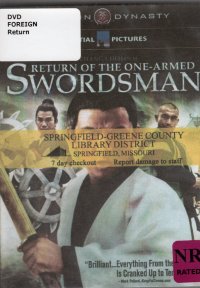
As the Return (as with Legend) indicates, this is a sequel to an earlier film which I haven’t seen. In this film, the one-armed swordsmen is approached by a pair of swordsmen, one in black and one in white, to participate in a competition at the castle. He demurs, saying he’s just a farmer now, and they leave, but he is approached by other local “families” who have also been approached. They go, and he ends up taking up his broken sword (which looks like a big cleaver) when the bad guys persist and take the “fathers” of the families hostage–and their “sons” approach him for help. One of the sons takes the one-armed swordsman’s wife hostage to get his help. So the one-armed swordsman leads the “brothers” to the stronghold to fight the Eight Sword Kings–the big boss bad guys (well, seven guys and a girl) with gimmick powers or blades. Well, they fight some of the Sword Kings on the way, but ultimately free the “fathers.” However, during their night of celebration, the Eighth Sword King, the “Unseen” attacks with a bunch of ninjas, but the One-Armed Swordsman eventually triumphs and returns home. Until, perhaps The Legend of the One-Armed Swordsman.

It’s a particularly bloody and brutal bit of kung-fu theatre (wuxia, I believe the Chinese term is)–most or all of the “brothers” die, sometimes in bloody fashion. And I have put the family relationships in quotation marks because the dubbed version I have refers to “fathers” and “brothers,” but apparently other dubbed versions and probably the original say that these are martial arts schools, not clans, and the “fathers” are instructors while the “brothers” are students. Which kind of makes sense given how many “brothers” each family has. Still, we’re not watching for the plot. We’re watching for the stylized fighting and gimmicky villains. And we got them.

Less than a decade later, and I might have seen this on kung fu theater on Friday or Saturday night after MASH and Hawaii Five-O. No telling what films I actually saw. Come to think of it, there’s no telling how many times we actually watched this when the Odya boys were sleeping over. Five? Ten? Not as many as twenty, surely. But all the time as it seemed at the time. Then all the time ended unnoticed as it often does.

Buy My Books!
Buy John Donnelly's Gold Buy The Courtship of Barbara Holt Buy Coffee House Memories

Movie Report: Happy Gilmore 2 (2025)

Book coverYou know, I would not have expected to watch this film, as it is on a streaming service and I’m an old school media kind of guy. But a week ago, we visited my brother and his family, and they have all the streaming services, and so we watched this film.

And….

Well, it was okay.

It takes place a couple of decades past the first film (obviously). Happy Gilmore became the tour champion several times, but an errant tee shot kills Virginia (after she had borne a pile of kids). Happy hits the skids, becomes an alcoholic, and drops out of golfing and ends up the lowest of the low: A grocery store produce clerk (hey! wait a minute! I was a produce clerk for a long time in a couple different places!). A wealthy guy approaches him to join his new gimmicky golf league–Happy’s youngest daughter needs $300,000 to go to ballet school (an approachable problem for every man), but Happy demurs and looks to rejoin the pro tour to make the dough. Meanwhile, in a scene reminiscient of Batman or more likely Mystery Men, someone springs Shooter McGavin from the insane asylum where he has spent the decades–to rival Gilmore or to help him?

I mean, it was okay. A lot of memberberries, a lot of flashback footage from the original, and a couple of chuckles. But some things were gratuitous, such as the inclusion of Chubbs’ son who is also missing a hand. A lot of cameos–I recognized Travis Kelce, of course, and I did not recognize Eminem–and it has a lot of the Sandlerverse in it, including bringing back Ben Stiller as Hal, this time leading a court-ordered alcohol rehabilitation program, and a pile of Sandler’s actual children. Perhaps it’s part of the nature of Sandler’s contract with Netflix that allows him to be a bit self-indulgent in his cash grabs.

But it’s not likely to be the touchstone that the other one was. I cannot think of a single line from it worth repeating, and I allude to the original with disturbing and disappointing frequency (given that it’s almost thirty years old now).

But: Some things of note outside the film itself.

One, not long after watching it, Facebook presented this to me:

While watching the film, I said to the assemblage, “That’s Travis Kelce,” when Kelce appeared on the screen. Facebook knows what I said.

Second, Ben Stiller’s character in this film compels the recoveries in his substance abuse program to do work around his house much like he had the nursing home residents doing handicrafts for profit in the original.

Meanwhile, in Missouri:

Niangua pastor charged with forced labor in Webster County:

The founder and director of a Niangua-based sober living program has been charged with six felony counts of Abusing an Individual Through Forced Labor, following a sweeping investigation that spanned multiple years and exposed a pattern of alleged exploitation.

* * * *

The charges stem from numerous allegations that Tilden used his position of authority to coerce court-ordered residents into unpaid labor under threat of being removed from the program, potentially sending them back to jail.

According to the probable cause statement, Tilden allegedly forced at least six individuals to perform extensive labor between 2023 and July 2025. The reported work included roofing, farm labor, moving personal and church property, running thrift and feed stores, and construction projects, including the building of a pole barn for which one witness said Tilden was paid $1,500.

Ripped from today’s headlines. Is this actually prevalent? Or did I just happen to see this headline (in an actual, physical paper) and it struck me because I just watched the film?

Spotting these patterns probably explains a lot of my Internet-is-listening paranoia. Which, comes to think of it, is very similar to the patterns I spotted watching Jeopardy!

But my madness doesn’t mean the Internet isn’t listening.

Buy My Books!
Buy John Donnelly's Gold Buy The Courtship of Barbara Holt Buy Coffee House Memories

Movie Report: Last Stand at Saber River (1997)

Book coverStrangely enough, I watched the films in the Tom Selleck Western boxed set that I bought in June in reverse chronological order of when they were made and, perhaps, when they were set. Monte Walsh was made in 2003 and was set in 1892; Crossfire Trail was made in 2001 and was set in 1880; this film was made in 1997 and was set in 1865.

In this film, Selleck plays a returning Confederate Civil War veteran who comes back to his family in Texas after years away at war. He’s estranged from his wife and family and did not even learn that the youngest died while he was gone. They pack up to return to their homestead in Arizona (territory, of course, as it would not actually become a state for almost fifty years–1912) but find that other local ranchers, including one who served in the Union army, have moved into the valley. Conflict arises, abetted by a Confederate sympathizer running the local store and smuggling guns for the cause. Things come to a head, of course, and there’s gun play, and a resolution that brings the neighbors together and gets the husband and wife to start to reconcile.

Pretty stock stuff. To be honest, after watching three television Westerns in a row (and watching in the genre in watching The Adventures of Brisco County, Jr. over the course of the last year or so), I’m ready to switch genres for a while. I actually watched this a couple of weeks ago not long after Crossfire Trail (I guess it’s only been a week and a half maybe–the review is dated July 17) but am only now getting to review it (and eventually to shelve it).

But I still like Tom Selleck as long as we can spread out the television Westerns over a longer period of time.

The film had Tracey Needham as the daughter of the rival ranching family.
Continue reading “Movie Report: Last Stand at Saber River (1997)”

Buy My Books!
Buy John Donnelly's Gold Buy The Courtship of Barbara Holt Buy Coffee House Memories

Thank Goodness This Is Not Yet A Thing

I saw this on Facebook the other day:

Posted by a social media account claiming to be Catherine Mary Stewart, who played the love interest in the first film from forty-one years ago.

Ah, gentle reader, as you might recall, some years ago I did a scientific study of reasons why The Last Starfighter is better than Star Wars (one of which is that Catherine Mary Stewart was/is prettier than Carrie Fischer).

But. No.

You know, I was a bit… uh… about Richard Hatch’s drive to resurrect Battlestar Galactica in the 1990s, only twenty years after the original series when the original characters would have…. twenty years later, had more adventures without having found Earth. The same with Red Dwarf, whose first six “series” I watched in 2024. The first six series were from 1988 to 1993. The last of the series was… what, 2017, with a movie in 2020? At some point or age, the original premise continuing on for decades gets depressing when one thinks about it.

The same with the recent cash-grab memberberries films like Bill and Ted Face the Music (although I saw Top Gun: Maverick in the cinema and liked it).

Fortunately, this thing, should it come to pass (the thing in development hell is The Last Starfighters which deals with Alex’s children–not sure how that would work that they would be his children, and twenty years later he has not rebuilt the Starfighter by then….

Eh. I won’t have to worry about it. I don’t watch streaming channels, and I don’t go to the movies any more (Was Top Gun: Maverick the last time I’ve been in a movie theater? Maybe!). I guess if Tom Selleck isn’t in it, I won’t see it anyway.

But stop trying to make my childhood relevant to this contemporary world. Just kidding. Stop trying to use things I valued in my childhood to extract money from me.

Buy My Books!
Buy John Donnelly's Gold Buy The Courtship of Barbara Holt Buy Coffee House Memories

Movie Report: Crossfire Trail (2001)

Book coverAfter watching the later Monte Walsh (from 2005), I picked this film from the Tom Selleck boxed set I bought in June because I have already seen Last Stand at Saber River–I already have it around here somewhere on DVD, which I’ll have to find and donate somewhere once I re-watch it to get the whole box set off of the video cabinet.

This is Louis L’Amour’s Crossfire Trail, so it’s based on a L’Amour book. In 2001, presumably that meant something on a movie. Probably not so much any more.

In it, a dying man on a ship asks Tom Selleck, playing Rafe Covington, to take care of his family and ranch. When the dying man finishes dying, Covington beats the captain of the ship, and he and two other shipmates leave the ship on the California coast with their wages, a packet from the dead man, and not the money they could have stolen from the captain while he was incapacitated. They part ways as the Irishman wants to go to Montana to work in the gold mines, and the youngster and Covington ride to the Wyoming ranch of the dead man. They visit the ranch and find that the widow has moved to town, so they set about restoring it. Covington town and earn the ire of a local badman who claims to have witnessed the dead man dying a year before in a Sioux attack–and Covington calls him a liar. A former ranch hand, played by Wilford Brimley, accompanies Covington back to the ranch, but before they get there, they help a Sioux woman, the daughter of Chief Red Cloud, who is fleeing from a trio of bad men who kidnapped her.

So the main conflicts are not only with the bad men, but also the local businessman, played by Mark Harmon, who wants the ranch and its 40,000 acres and petroleum as well as the widow (played by Virginia Madsen–I guess I can’t call watching this part of a Virginia Madsen kick as I last saw her in Sideways and Highlander 2: The Quickening two years ago). Covington is attracted to the widow as well, and she comes to appreciate him as well before the bang-bang shootout finish.

To be honest, I liked this film better than Monte Walsh because the central conflicts arose early instead of just some scenes of cowboying and some conflict arising in the second half.

As far as Brandman/Selleckverse, we have Barry Corbin in this film as well. Although Robert B. Parker does not have a writing credit, his son Daniel has a small role in it. And, to be honest, the big baddie Beau Dorn was played by Brad Johnson, whom I mistook for William Eads, the big baddie from Monte Walsh. They looked close enough dressed in black and in shadow that I thought this was a Lee Van Cleef situation, where the same actor played two different characters (in For a Few Dollars More and The Good, The Bad, and the Ugly). But no.

So I have one left from the boxed set, and I’ll get to it soon, undoubtedly. And I’ll probably be mindful from here on out (meaning the Nixa book sale in August, which will feature racks of DVDs) to extend my Selleck collection. A boxed set of Blue Bloods? Maybe if it’s season one, although it would take me a while to get through it.

Buy My Books!
Buy John Donnelly's Gold Buy The Courtship of Barbara Holt Buy Coffee House Memories

Movie Report: Monte Walsh (2005)

Book coverSo I bought a three-pack boxed set of Tom Sellect television movie westerns at the Lutherans for Life garage sale in June, and apparently I have decided to wade into them now as I’m three hundred pages into Shōgun and am through five discs of The Adventures of Brisco County, Jr.. Because I’m all about living in the past, donchaknow?
At any rate, this was the leftmost in the box set, so I started here. Tom Selleck plays Monte Walsh, a cowboy when the frontier was closing. After a hard winter, most of the ranches in their corner of the West are out of business, and a large corporation is buying them out which creates hard times for cowboys. Some catch on with a corporate outfit, but when later cuts come, one of the crew turn to a life of crime including killing a colleague, leading Monte Walsh to have to track him down whilst thinking about what he will do when he, too, is let go. Maybe settle down with a saloon girls he’s sweet on? Nah, she dies. A lot of them die. It’s actually a pretty dark movie in terms of body count (it’s a remake of a 1970 Lee Marvin movie, which was undoubtedly true to its dark story). An unnecessary epilogue has Walsh returning to town and seeing that it has changed, and the colleagues who remain in town see that he has not.

To be honest, it’s more of a slice of cowboy life of the period; bits include roping, riding, and dealing with a cook who smells terribly–the cowboys forcibly bathe him–, breaking a bronco, getting insight into the life available as part of a wild west show, and so on. The actual gunplay and whatnot seems a bit tacked on at the end, as though it was not really the film that they wanted to make.

The film is a Michael Brandman production, and Robert B. Parker gets a partial writing credit on it. So it features what I might start calling the Selleckverse, or maybe Brandmanverse. William Devane is in it (he’s also in Thin Ice) as is William Sanderson (Daryl from Newhart all those many years ago–he’s been in so very much before and since, but he’ll always be Daryl to me).

It’s a serviceable film which I enjoyed more than Open Range–which I haven’t reported on because I have yet to complete watching it. Maybe its nature as a television movie limited the ponderous self-indulgence that bigger screen Western pictures seem to have. Also, I could watch Tom Selleck in anything (I did watch Her Alibi, after all, and I did see Three Men and a Baby over and over again because it was on Showtime in my trailer park days). He has and still does portray heroes one can try to emulate.

Buy My Books!
Buy John Donnelly's Gold Buy The Courtship of Barbara Holt Buy Coffee House Memories

Movie Report: RED (2010)

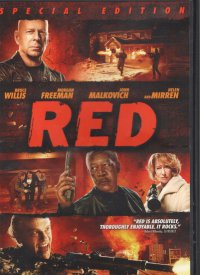
Book coverStrangely enough, this film came out within months of The Expendables (the original) in 2010, and it spawned a sequel as well. So it’s easy to compare and contrast them: Both assemble superteams of Boomer action(ish) actors showing that they still have it. This film, though, features Bruce Willis, Morgan Freeman, John Malkovich, and Helen Mirren as the good guys and Richard Dreyfuss as the bad guy. So these are more serious actors than you get in the Expendables films, but to the same result.
Also, let it be noted that fifteen years later, we still have Boomers as action heroes because the Generation X actors are too pretty, and, c’mon, man, Shia Le Beouf? You want to make an actor with that name into an action hero we can aspire to be? Shia? Le Beouf?

Bruce Willis plays Frank Moses, who lives a lonely life whose only outlet is tearing up government checks and then calling the help line, where he talks to Sarah Ross (no relation to Barney Ross–or is there?), an analyst who helps him but who has gotten to talk to Frank about other things as well. When a black ops hit team tries to take out Frank, he takes them out instead and heads to Kansas City, Missouri, to protect Sarah, whom Frank knows will be in danger. But she’s a little reluctant, so he kidnaps her and takes her to New Orleans where he can get some information from a colleague, Joe, who’s in a nursing home (Freeman). Joe finds that a reporter in New York was working on a story was recently killed, but she had a list of CIA agents working on a mission in Guatemala in 1981…. So Frank gathers his friends, including a former Soviet agent and a British sniper, and they find a plot that goes all the way to the vice president who wants to be the president–if he can get clean from his past.

So it’s got some set pieces, some reverses, nice flourishes. Definitely a touch headier than The Expendables and its sequels. Willis was still Willis in the film. Amusing, and I’ll have to keep an eye out for the second in the series.

The film had Mary-Louise Parker as Sarah, the younger woman who flirted with Frank over the phone and then came to like-like him.

Continue reading “Movie Report: RED (2010)”

Buy My Books!
Buy John Donnelly's Gold Buy The Courtship of Barbara Holt Buy Coffee House Memories

Movie Report: The Expendables 2 (2012) / The Expendables 3 (2014)

Book coverI bought this film in April at an estate sale. I’d watched the first one two years ago (already?) and thought it was a serviceable action film with just a hint of Albert Camus in it.

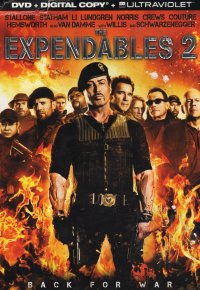
This film goes in a slightly different direction. After an intro small mission that saw Stallone’s team rescue a Chinese billionaire as well as Arnold Schwarzenneggar’s Trench who was there to rescue him first, a CIA operative named Church, played by Bruce Willis in a role where he might not have been all there already, tasks them with taking a computer whiz (Yu Nan or Nan Yu depending upon where she is credited) to recover a MacGuffin from a crashed plane. They get t the plane and extract the MacGuffin only to be ambushed by another group looking for it led by Jean-Claude Van Damme. Van Damme’s character, Vilain, kills the youngest member of the team, so the Expendables go on a hunt for the bad guys. The MacGuffin was a hard drive with the map showing where in an old Soviet mine the Soviets buried several tons of weapons-grade plutonium. Vilain and his criminal gang have been working local villagers to death in the mine to find it, and as they are about to make off with it, Barney Ross and company arrive to thwart them.

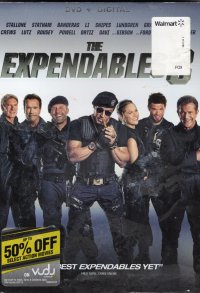
So the team includes Jason Statham, Terry Crews, Randy Couture, Dolph Lundgren, Liam Hemsworth (briefly), and Jet Li (in spots). But some of the meta-fun in it is the appearance of other action stars (when the Expendables are pinned down by the criminal gang, including a tank, a deus ex Chuck Norris takes out the tank and the bad guys before walking out of the smoke, delivering a Chuck Norris fact, and then disappearing around the corner because he works alone). The characters call back to other movies and exchange each others’ tag lines from those movies. So it’s amusing for the memberberries, but pretty much a direct-to-cable plot otherwise.

It did, feature Yu Nan. Or Nan Yu. But we’ll get to that later.

Book coverThe third film came out two years later (four years after the first). I mention this in passing because two other Expendables films came out after 2023, which is another ten years on the stars ages. As they were streamed. I guess they might have gotten home media release, but they’re probably not out there in vast quantities for me to stumble upon for a dollar. Or who knows? I picked this up in May after picking up the second in April. So perhaps I’ll find the later films at my next garage sale.

This film begins with the rescue of a former member of the Expendables, played by Wesley Snipes, who has been held in a dictator’s prison for eight years. Instead of taking him home, they go to Africa to prevent a shipment of weapons from reaching a warlord. They discover that the arms dealer behind the deal is a guy named Stonebanks who was supposed to be dead–by Barney Ross’s hands. So their new CIA handler, played by Harrison Ford, directs them to find him. Ross (Stallone) basically fires his current team and recruits, with Kelsey Grammer’s help, a new team comprised of Ronda Rousey and some other guys who will look kinda familiar if you’ve seen recent action movies (I haven’t, much). The new team gets captured, and Ross is going to go it alone to rescue them when his old team and one of the fellows he didn’t recruit for the new team, a comic relief motormouth played by Antonio Banderas, join him. Which leads them to a former Soviet base in some -istan where the whole -istan army is waiting for them.

Again, a different turn, a bit of a direct-to-cable (or direct-to-streaming these days) plot with lots of callbacks (When asked why he was in the dictator’s prison, Wesley Snipes’ character says, “Tax evasion.” As we all remember, Snipes did two years and change on an income tax charge.) and meta humor. I guess some people were disappointed that they dialed the gore down a little to get a PG-13 rating, but it is what it is. An amusing passage of time.

But you’ve really only read this far for the actress, ainna?
Continue reading “Movie Report: The Expendables 2 (2012) / The Expendables 3 (2014)”

Buy My Books!
Buy John Donnelly's Gold Buy The Courtship of Barbara Holt Buy Coffee House Memories

Movie Report: Who Am I? (1998)

Book coverAs my evening contract’s project is moving into abeyance, I had time for a double feature one night last week. So after watching Thin Ice, I popped in this recently acquired Jackie Chan film. I’d tell you what a great Jackie Chan fan I am, but I guess I’ve only watched a handful of his films since I started writing down my thoughts on them. I watched Shanghai Noon last November; Legend of the Drunken Master in January 2023; Jackie Chan’s First Strike! in November 2022; Shanghai Nights in March 2023 (I know, I saw this series backwards, but I also acquired them out-of-order); Kung Fu Yoga in May 2021; and Rush Hour in January 2021. However, I did watch several of them this century (Supercop? Operation Condor? Rumble in the Bronx for sure), and I did actually see several of them circa 1996 when one of the members of our D&D group screened a couple on VHS. So I’ve known who he was even before or as he was breaking big in the American market. Martial art movie hipster, moi? Maybe.

At any rate: In this film, Jackie Chan plays some sort of commando (named Jackie, which is why I like writing movie reports for his films–the actor and the character names are the same, so I don’t worry about where to cut over in the movie report) on a mission to kidnap/rescue some scientists. After the rescue succeeds, his cross-national (mercenary?) team is double-crossed, and only Jackie survives, although with amnesia. Some natives find him and help him recuperate, although they think his name is WhoAmI. When he is better, he visits the helicopter wreckage containing the bodies of his team members (people dressed like you, the natives told him). He spots a rally race in the distance and departs his native friends. He finds and helps a brother-and-sister driving team and leads them to victory in the race, amazing everyone–he is dressed in native garb, and the herbs he used to help with a snack bite have numbed his mouth so he cannot talk to humorous effect.

The race ends in J-berg, Seffrica, and he is spotted by a reporter who wants to interview him in depth. And by shady psuedo-military operatives and a CIA leader. They’re on his tail, and he works to recover his memory and to find out what the operatives want with the scientists and the material they are studying–a part of a meteorite with great destructive power. Action takes place in South Africa and then shifts to Rotterdam as presumably both locations kicked in funding for the privilege.

Wikipedia tells me this is the second film that Chan scripted and shot in English, and to be honest, early in it, I was wondering if it was dubbed–I guess the audio syncing is just off a bit, or I’m just a knob. The film has a lot of Jackie Chan humor in it, but it is only about halfway through that we get the trademark Chan comic fighting stunts.

Still, amusing. Probably in the middle of his work both temporally and quality wise.

Being the Internet was in its infancy at this time, we do not have any Christine vs. Yuki arguments in the Wayback machine, but we could.

Michelle Ferre played Christine, the reporter who turns out to be a good ally. Mirai Yamamoto played Yuki, the rally driver who accompanies Jackie in Africa.

Hard to say, but I favor Christine slightly.

Buy My Books!
Buy John Donnelly's Gold Buy The Courtship of Barbara Holt Buy Coffee House Memories

Movie Report: Thin Ice (2009)

Book coverSince I just bought a Jesse Stone book (Colorblind), I popped in this film which I bought on DVD in May. It doesn’t look like it’s based on a novel nor has been made into a novel. So there’s parts of the Spenserverse that are not in print. Well, aside from Spenser: For Hire and A Man Called Hawk. But I really have moved on from Parkerania collecting since Stranger in Paradise, a Parker Jesse Stone book, inverted the whole idea of a moral code amongst the characters.

However, I guess I still dabble based on what Parker once meant to me.

But I digress: In this film, Stone (played by Tom Selleck) is on thin ice with the town council because he’s acting as a lawman and not just a source of revenue writing tickets for the town’s coffers. And because his busts are sometimes violent (see also the preceding television movies). The film starts with Stone and Healy on not-a-stakeout in Boston where Healy is being coy about what they’re doing. An unknown gunman shoots them in their car, leaving Healy near death but only grazing Stone. So Stone makes it a priority to discover why Healy was watching that address. Healy eventually claims that it was to watch a nephew who was having a tryst with his saxophone teacher, but Stone eventually uncovers a pimp running a string of underage prostitutes. In Boston, which is not Paradise, which does not please the town council.

The second strand is a woman who comes to Paradise because she received a letter that said, “Your child is loved.” Her newborn had been reported as dead seven years earlier, but the mother maintained that the decomposing body with her baby’s hospital wristband was not actually her child. The letter had been postmarked Paradise, Massachussetts, two years earlier (her now ex-husband had not shown her the letter then), and she hopes that the Paradise police can investigate. Stone demurs, but Rose (the white Rose), takes up the investigation and eventually uncovers the who, but a tragedy will likely not lead to complete satisfaction for the real mother. Spoiler alert: The kidnapped child fell through thin ice two years ago and died. The movie ends with Stone on the bus to New Mexico to talk with the real mother about what she wants to do, I guess. Probably prosecute, but that’s not shown.

So: A decent television movie with the two-plot structure that seems to permeate a lot of series books. The movie also handles some series business with Stone and Jenn, his ex, along with working things out with his shrink (played by William Devane, last seen at Nogglestead in Payback). We also get interactions with Gino Fish (played by William Sadler, last seen at Nogglestead in Die Hard 2 last Christmas) who obliquely helps Stone. So it’s definitely written with an eye to long-standing fans of the films and/or books.

I’ll probably pick up others in the set as I come across them cheaply. As much because I like Tom Selleck as I like Parker/Stone/Brandman.

Buy My Books!
Buy John Donnelly's Gold Buy The Courtship of Barbara Holt Buy Coffee House Memories

Movie Report: Joe Versus the Volcano (1990)

Book coverOf the Hanks/Ryan romantic comedies which also include Sleepless in Seattle and You’ve Got Mail. As I noted in the report on the former film, this is the first of their team-ups; the others were 1993 and 1998.

And this film feels like an 80s film for sure (more like The Burbs or The Money Pit than a 1990s film). It starts out with Hanks’ character, a functionary who manages the advertising catalog library for a medical device company coming to work. It’s quite a brutal little bit, trying to get a little Metropolis or Kafka feel with dim, flickering lighting and a boss on the phone repeating himself over and over. He has to take a long lunch to go to the doctor, who tells him he has six months to live, and he will be symptom free until he dies. Joe Banks, that is, Tom Hanks, is a bit of a hypochindriac who knew it. He goes to his job, quits, tells off his boss, and asks his coworker, played by Meg Ryan, out. She’s impressed by his new fire and intensity, but when he reveals he has six months to live, she cannot handle it and leaves.

The next day, an industrialist played by Lloyd Bridges approaches Joe. He knows about Joe’s lonely life and diagnosis, so he has a proposition: On a remote Pacific island, the tribe has a tradition of sacrificing a volunteer every hundred years to propitiate the god in a volcano, and he (the industrialist) needs a mineral from the island. He hopes to trade Joe to the natives as a sacrifice and convinces Joe to go along with it since he is doomed anyway. Live like a king for a month or so of his remaining time and then jump into a volcano.

So the film is a five paragraph essay with five bits or movements, essentially. The aforementioned first bit. The second bit is a shopping spree in Manhattan outfitting himself in nice clothing and apparel for the voyage, including a very high-end set of steamer trunks. During this bit, he is counseled by his driver played by Ossie Davis who asks Banks who he really is. In the third bit, he goes to L.A. and is met by the industrialist’s shallow and vapid daughter who is an artist (played by Meg Ryan) and writes poetry but mostly lives off of her father’s money. They spend the evening together, but not the night together. She takes him to the small yacht (it’s a sailboat–was that a “yacht” in 1990? We expect more from yachts in 2025) where the industrialist’s other daughter (played by Meg Ryan) is to sail with him to the island. The fourth bit is their voyage where Banks and the good daughter get to know one another and fall in love, which happens despite a typhoon that sinks the vessel and leaves them adrift on a raft made from the steamer trunks. The final act is their arrival on the island, his decision to go through with it, and the coup de grâce ex machina where Banks and Ryan3 are spit from the volcano as it erupts, destroying the island and leaving them adrift on the steamers again. And finis!

So, yeah, it feels like an 80s movie. I mean, it’s not bad, but I cannot imagine it’s on a list of personal favorites for many people, either, unless they have special memories involved with watching it, such as going on a first date with it or something. But as for me, it’s one more to lose in the library and maybe watch again if it comes up in blogversations.

Buy My Books!
Buy John Donnelly's Gold Buy The Courtship of Barbara Holt Buy Coffee House Memories

Movie Report: Every Which Way But Loose (1978)

Book coverMan, this film (and its sequel Any Which Way You Can) loomed large in my youth. Perhaps it was on HBO, and we saw it when staying with our friends who had HBO. Maybe it had made its way freshly to network television when I was ten years old and was in heavy rotation there. But it was part of the 1970s and early 1980s ape sidekick schtick, and maybe other things along the line blurred with this film. But forty-some years later, I still say, “Right turn, Clyde” sometimes (although that’s from the sequel, not this film).

At any rate: Eastwood plays Philo, a truck driver who does underground bare-knuckle boxing for extra cash, and he’s pretty good at it. He falls for a blonde country singer (Sondra Locke, whose character is not raped in this film) named Lynn with whom he thinks he has something going. But she disappears, presumably on her way back to Denver where she hopes to open a club of her own. But she’s traveling with her boyfriend; they have an open relationship of some sort, but he blasts Philo’s truck with a shotgun before they leave. Philo also runs afoul of a local biker gang after beating two of its members and then embarrassing others. Or the opposite order. And he beats up a police detective in the honky tonk who also plots revenge. So when Philo decides to follow Lynn east from L.A., his best friend Clint and Clyde come along, and the other parties have to find out who he is and where he’s going which lead to some humorous encounters with a trailer park manager and Ma, whose subplot is that she’s foul-mouthed and keeps failing to get a driver’s license.

When he gets to Colorado, he discovers that the woman and her “boyfriend” pick up men in bars and bowling alleys all the time for some sort of hustle, and she’s not really into Philo (is she?). He leaves her in Colorado. And Clint sets up a fight with Tank Murdock, a legendary bare-knuckle brawler who has lost a step or three. Clint starts making short work of him, but he hears how the Tank fans turn on the older, more portly fellow, so he takes a dive to keep the man’s reputation alive and so that he does not have to start carrying the burden of being the man who beat Tank Murdock.

So, that’s it. The protagonist does not win the fight at the end, and he does not get the girl–who might not be worth getting anyway (although I guess, from reading the synopsis, the sequel reverses this a bit). But it’s an ending of a nominal comedy that has a lot of pathos if you look at it in a certain light. As the group makes their way back to L.A., though, they pass the pathetic remnants of the biker gang and the defeated police detective, so I guess Philo overcomes some adversity. Perhaps the only thing that has changed is his perspective on women he meets in honky tonks and the glory and profitability of winning.

So as the film was moving into its dénouement, my beautiful wife passed through the room and said “Clint Eastwood and a chimpanzee.” I corrected her, of course, but she later said she was familiar with pair from her childhood even though she had not seen the films. They were really, really big at the end of the Jimmy Carter presidency, and they’re almost forgotten now. Perhaps overshadowed by what Clint Eastwood has done or a shift in the zeitgeist. But if I see Any Which Way You Can for fifty cents or a buck, I’m picking it up.

Buy My Books!
Buy John Donnelly's Gold Buy The Courtship of Barbara Holt Buy Coffee House Memories

Video Report: Bill Cosby :49 (1987)

Book coverI picked this video up recently and was in the mood to watch something but not a full movie, so I popped it in. I’ve made no secret that I’ve been a fan of Cosby–see my book reports for his books (Love and Marriage twice, once in and once in ; Cosbyology in 2010; and Fatherhood in 2011). I might have one or more of his records around here, but, if I do, I don’t recall listening to them (although I do buy and listen to comedy records, I don’t spin them a bunch as they, like poetry records, require attention). And I see I also have his video Bill Cosby, Himself, an earlier special which I also bought earlier (2024) but have not watched yet (although the book report for Cosbyology indicates that I watched it in 2010 somehow.

So, with all that background and additional self-linkage out of the way….

All of the aforementioned books and videos come from the great Cosby burst of the 1980s, when he was the king of television with The Cosby Show. Thematically, it overlaps with some of the books. Cosby riffs on growing older, his body making different noises, and how his body responds to running these days (personified pain). He does a number on marriage and defense mechanisms therein, and how his marriage evolved over time so his wife has a bit more co-equal role in it, at least as far as winning arguments goes.

The video is just over an hour long, and I guess I’d rather read Cosby than watch him in any long form. I’m kind of that way with videos, too, and I really don’t like podcasts for information intake. But books on tape are all right if I’m driving; I don’t want to listen to them in my spare time at home.

At any rate, it’s all right. And a videocassette with the Kodak logo on it? You cannot be any more 1987 than that.

But you don’t need to find a copy of your own as it’s presently on YouTube in its entirety. For now.

Buy My Books!
Buy John Donnelly's Gold Buy The Courtship of Barbara Holt Buy Coffee House Memories