I Wish Paul Ryan Were In My Township

Rep. Paul Ryan is getting a lot of undeserved heat for his recent purchase of $350 bottle of wine in a hotel restaurant. Apparently, when leftwing blog Talking Points Memo asked him about it, he said:

Yeah, I was like this is ridiculous. Who buys wine that expensive? It surprised me, and I think it’s stupid under any circumstance to pay anything close to 100 dollars for a bottle of wine.

James Joyner quips on the “parallel” to John Edwards’ $400 haircut:

Second, Edwards’ $400 haircut story had so much traction because it reinforced the image that he was less than the manliest of men and spent far to much time caring for his pretty hair. What’s the parallel here? Republicans like wine?

It’s true. Republicans do like wine if my old township is any example.

My old Township Republican Club in the St. Louis area had a wine tasting after its monthly meetings. Whoever provided the wine certainly espoused the Paul Ryan Theory of Wine Purchasing: They served Foxhorn wines, which cost like $8 for the 1.5L bottles. I know very well, because that’s the kind of wine I buy for myself. One thing about Foxhorn: it certainly is a wine tasting because unlike, say, $10 bottles of (750mL) wine, you sure can taste Foxhorn. Sometimes for quite some time after you’re done with a glass.

It certainly played against the stereotype of Republicans that elements of the left are trying to perpetuate with this non-story.

Buy My Books!
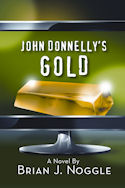
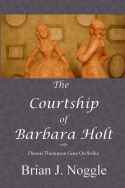
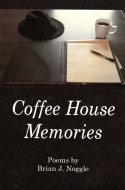
Buy John Donnelly's Gold Buy The Courtship of Barbara Holt Buy Coffee House Memories

Why Can’t Modern Football Players Act?

So someone help me out here: why don’t modern football players transition to acting careers as successfully as old timey football players did?

In the Olden Days, we have:

In the modern era, we have, what? Brett Favre in There’s Something About Mary? Brian Bosworth in Stone Cold?

Take a look at this list: 50 Football Players Who Acted in Movies and note that the ones who could be said to have made a successful transition to films and television played prior to the 1980s, and that most of the roles from then on are as “Self”? Is it a transition in football culture? Is it that older players were better-rounded and most professionals these days are football robots, funnelling all their energy into it from an early age?

Buy My Books!
Buy John Donnelly's Gold Buy The Courtship of Barbara Holt Buy Coffee House Memories

Gun Control Advocates Were Right!

They said if Wisconsin got legal concealed carry, the blood would run in the streets. And they were right!

A 29-year-old social worker who has lived in Milwaukee’s Riverwest neighborhood for 10 years said he was punched in the face, a 28-year-old census worker said he suffered a black eye and a 28-year-old man who has also lived in the area for a decade saw a female friend thrown to the ground, beaten and her backpack stolen.

All three were among a group of friends at Kilbourn Reservoir Park Sunday night who say they saw a group of young people running in the park. They say the group threw bottles and beat several people.

Mark Peterson, 28, who owns a home in Riverwest, said he saw a female friend beaten.

“I saw her get thrown to the ground. There was blood all over her face. A guy swooped in and grabbed her bag she dropped when they threw her to the ground,” said Peterson, who said he was punched in the back of his head and his jaw.

Although turning Milwaukee into the Wild West, where law abiding citizens can strap on big iron to defend themselves and their town from the thugs who prey upon them, might actually represent a step up.

Also, it provides an experiment group to the Illinois control group. If these sorts of incidents decline in Wisconsin when people start getting concealed carry licenses, but continue at the same level or increase in Peoria and Chicago, it might prove something.

Global Warming, no doubt.

Buy My Books!
Buy John Donnelly's Gold Buy The Courtship of Barbara Holt Buy Coffee House Memories

Book Report: Dave Barry Does Japan by Dave Barry (1992)

This is my second Dave Barry tome this year (I read Dave Barry Turns 40 in March). Somehow, Dave Barry or someone convinced Random House to send Dave Barry and his family to Japan for three weeks to get a book about it. Really. It must have been something to be a humorist in that golden age. My employer here at the blog won’t even pay for my trips to the coffeepot.

The book comes at the height of Dave Barry’s popularity and the height of Japan’s economic power. A couple year later, Japan hits the economic skids and falls from the front rank of American citizens’ bugbears. To put it clearly: Instead of American sitcoms dealing with the zany antics of a fish-out-of-water American in a Japanese auto company (Gung Ho, and yes, I know it was a movie first, but it was later a sitcom), we get American sitcoms dealing with the zany antics of a fish-out-of-water American in an Indian call center (Outsourced, which was also based on a movie). No word on if someone is going to send Dave Barry to India for three weeks.

My point in the preceding, aside from having the sudden urge to compare Gung Ho to Outsourced, is that the book is a period artifact since it fits into the period genre of trying to understand the Japanese who were economic geniuses. It has Dave Barry’s amusing spin on it and has a travelogue thing going on, but it’s mostly Dave Barry being Dave Barry.

An amusing read.

Books mentioned in this review:

Buy My Books!
Buy John Donnelly's Gold Buy The Courtship of Barbara Holt Buy Coffee House Memories

British Journalist Misses The Point

Ed Driscoll and Instapundit link to this Independence Day column in the British The Telegraph paper where the journalist describes the American Revolution but misses the point by a little, and a lot:

On this day in 1776 a group of 13 colonies broke away to found a new nation free to govern itself as it saw fit, pledging that each citizen would have the unalienable right to “life, liberty and the pursuit of happiness”. A nation, as Americans are apt to declare without equivocation, which became the greatest on the face of the earth. [Emphasis added.]

Erm, no.

Let’s go to the text:

We hold these truths to be self-evident, that all men are created equal, that they are endowed by their Creator with certain unalienable rights, that among these are life, liberty and the pursuit of happiness.

Understand these rights are inalienable and bestowed by the Creator. They are not proffered nor pledged by citizens, the founding fathers, or whatever government or governing documents they and we write or elect.

I don’t know if this is the Continental or the Transnational mindset or what, but certain people–not necessarily this journalist–would like you to believe that the government is the source of rights and can manufacture them or remove them at will. Strangely enough, a lot of those certain people are in or would like to be in the governmental Department of Rights Management.

We need to be sure that we educate people to the proper, and intended by the framers of our nation’s founding documents, defintion of right.

Buy My Books!
Buy John Donnelly's Gold Buy The Courtship of Barbara Holt Buy Coffee House Memories

Messing with Alex

As some of you know, I’m officially in the hopper as a potential Jeopardy! contestant for the next 17 months, 2 weeks. Someday, I might stand behind a podium with an illuminated negative score after the first commercial break, letting Alex Trebek and the audience get to know me a little better. Have you ever noticed that sometimes, the Jeopardy! contestants seem a little surprised at the thing Alex mentions? That’s because you write them down on a piece of paper before your audition. So by the time you’re on the show, a year and a half could have elapsed before Mr. Trebek brings it up. Bloody heck, I’m already forgetting what I wrote down, and it’s been three weeks since my audition.

But various alternatives are running through my head: responses I could make whatever Alex brings up. Responses like:

  • Your intelligence service is very good, Mr. Trebek. I’ve never told that story before to any living person.
  • Deny it. What? I don’t know what you’re talking about. That never happened.
  • Burst out weeping.

Of course, that would really never happen. I would probably be vibrating like the Tacoma Narrows Bridge and would have to focus too much on keeping myself together to be clever.

I’m much funnier on the Internet than in person.

Buy My Books!
Buy John Donnelly's Gold Buy The Courtship of Barbara Holt Buy Coffee House Memories

Ebooks Versus Paper Books, Read Ducks

Wired lists five reasons ebooks are not “there” yet, which is five reasons why the particular writer isn’t fully sold on ebooks as permanent replacements for printed books. Boiled down, they are thus:

1) An unfinished e-book isn’t a constant reminder to finish reading it.
2) You can’t keep your books all in one place. [That is, in one file format/application.]
3) Notes in the margins help you think.
4) E-books are positioned as disposable, but aren’t priced that way.
5) E-books can’t be used for interior design.

Here are some reasons why nutbar Brian J. Noggle does not own a portable ebook reader and is not going to replace his extensive library with one:

  • Theft.
    An electronic gizmo is the target of theft; should this occur, you lose your investment in your device and your investment in purchases for it. No one is going to steal my library without a dump truck and frontloader.
  • Damage.
    Again, by centralizing a large investment in a single place, if you drop it or leave it on the roof of your car, you’re in danger of losing the library instead of a $1 book you bought at a book fair.
  • The rapid expansion of technology.
    You’ve bought the gee-whiz Kindle now, and it can hold thousands or billions and billions of Carl Sagan books. But in a year, publishers are going to embed videos in the books to justify the price of the books. In a couple years, they’ll embed three-d videos and memory-intensive applications so you can create a community with other readers. Suddenly, your device can’t hold the robust complete edition of The Chronicles of Narnia.
  • The rapid obsolescence of technology.
    Your device can hold today’s ebooks. Will they hold ebooks developed in 2017? You are new here, aren’t you? Device creators will need reasons to get you to buy new ebook devices, so they’ll make new bells and whistles (hey! Customizable skins!) And suddenly, six months after you buy your reader and load it with books, you could find that the device maker is ending support for it. There will be no more ebooks for you until you spend money to upgrade your device and maybe even your entire library.
  • You don’t own ebooks.
    Ask any purchaser of this Kindle edition of 1984. They own the content and they let you borrow it. Read your license agreements and, if you understand them, weep.
  • If the lights go out, you have nothing to read.
    I’m not just talking about TEOTWAWKI. In very recent memory, parts of Missouri have lost power for weeks. If that happens, will your electronic device have enough battery to keep you in books and to help you with that reference material you need? You’d like to think so, but you won’t know so. Also, in the actual event of TEOTWAWKI, your device will only briefly heat your hovel and will release toxic chemicals to do so. Meanwhile, I can burn old Dungeons and Dragons novels for hours.

I don’t think any developments in ebook readers will ever dispel my reservations about them. I’m not enough of a luddite to proclaim that I’ll never own something like it–probably eventually some smartphone with text holding capabilities–but it won’t replace real books.

Andrea explains why the list items do not apply to the Spleenville book lifestyle. I’d like to dialog with her text a bit.

“E-books (sic) can’t be used for interior design.” Well, duh. I can’t scatter the internet about my apartment either — not unless I waste ink printing out a bunch of websites. That’s not the point. Some people don’t want books “cluttering up” their domiciles. Yeah, don’t ask me, I don’t get it either, but as meaningful as the idea of needing physical paper books everywhere to make me feel like my house is a home, I accept that some people aren’t like me and don’t think of books as augmenting their “interior design.” Unless they’re like those sad, sad people who buy random books in bulk with jackets all of the same color merely for the purposes of making their living room or stairwell look like that one they saw on HGTV.

Strangely enough, the wife of a former office co-habitant did just this. We went to some garage sales one weekend, and she bought books based on their cover/jacket colors and whether they would go in her living room. The content of the books didn’t matter.

Real bibliophiles go right to the bookshelves when they visit a place for the first time to see what the host reads. Or, in her case, that the host does not. You can’t do that with an ebook device, can you?

“3) Notes in the margins help you think.” This comes straight out of academic thought patterns, and is irrelevant to readers of novels and other “light” fare. Unless you really think that readers of things like the Twilight books carefully write their thoughts (“I heart Edward! I wish he were my BF!”) in the margins. Anyway, if you really can’t “think” without scribbling all over your books, maybe e_books are not for you. Or maybe you should carry a little note pad, or maybe you should learn to think without having to depend on notes.

Yeah, I remember being encouraged to “dialogue with the text.” That came along with the wide-margined notebooks so you could comment on your own journal entries about what you were thinking or feeling about things you were covering in the class. I haven’t written in the margins in decades. The only dialoging I do with text these days is when I throw the paperback copy of a book by a liberal author to the floor and stomp on it.

Frankly, because I’m not an academic, going over and over the same narrow niche for years of full-time work, I’ve gone back to something I’ve read for something I wrote in its margins. I have, on the other hand, gone into this blog’s archives for something I wrote about something I read.

At any rate, as I said, I’m not rushing out to buy an ebook device. I am, however, rushing headlong to profit from ebooks. See also John Donnelly’s Gold.

BECAUSE I’M A HYPOCRITE!

UPDATE: Thanks for the link, again, Ms. K.

Buy My Books!
Buy John Donnelly's Gold Buy The Courtship of Barbara Holt Buy Coffee House Memories

City of St. Louis Demands Higher Parking Rates

Come on, we do know what this means, don’t we?

Mayor Francis Slay has asked the city’s building division to require downtown parking lots to hire attendants, in hopes of stopping a rash of car break-ins, his staff announced today.

Police were investigating more than 60 break-ins that occurred downtown and in surrounding area parking lots last weekend.

This means it will cost more to park in downtown St. Louis either for an event or as part of your monthly “privilege” of working in the Big City.

Because the city has better things to do with its time and money than to police the city, and the signs that warn visitors to downtown that your valuables are forfeit are already thick enough to keep weeds from growing in the cracks of the underused and crumbling city sidewalks.

Like saving the building that housed a failed taco joint and/or giving money away to redevelop the site.

Buy My Books!
Buy John Donnelly's Gold Buy The Courtship of Barbara Holt Buy Coffee House Memories

Were I Ten, I’d Want It

A library designed by Trout Studios that looks like it has a swing to hoist you up to the higher shelves, which extend up into the ceiling:


A swing/hoist library

You know what? I’m not ten years old, but I still think I kinda want one. Except it’s more of a modern look, and ultimately I prefer the old English kind of look with wood, a fireplace, and a bar.

(Link seen on Unhappy Hipsters.)

Buy My Books!
Buy John Donnelly's Gold Buy The Courtship of Barbara Holt Buy Coffee House Memories

The Incandescent Rapture

Instapundit has spent some pixel inches recently covering the year-end ban on 100-watt incandescent light bulbs. Some of the things he links to, such as this Investors Business Daily piece, talk about people up in arms about it. However, the people who get linked by Instapundit and who pay attention year-round to the governments’ actions tend to remain a minority. I fear most people don’t know about what the government does in its omnipotentbus bills and their eventual effects years later.

Remember, the bill banning light bulbs was passed four years ago. Long enough for cause to be forgotten when effect rolls around. Did the Department of Energy send its armed SWAT units into stores to forcibly remove them from the shelves on the day the law went into effect? Of course not.

But at Instapundit’s reminder, I stopped by the light bulb aisle to pick some more up (remember, I am a noted stockpiler). Even as I was in the aisle, the store employees were completing a reset of the shelf space. Gone were the 24-packs of incandescent bulbs. Instead, the aisle was given over to a wider selection of LED and fluorescent bulbs.

And when the year-end arrives, the 100-watt bulbs will just be gone without fanfare or explanation. In coming years, the same will happen to the remainder of incandescent bulbs. Consumers not engaged in the political process will not know why; they just will not have the chance to buy them and will have to spend a couple bucks on a nice expensive toxic-waste-to-be glass corkscrew instead. Kind of like how all the old timey used children’s books with “Good vs. Bad” or “Building Things Is Good” style plots disappeared, leaving only the new timey “Love Those Who Are Different From You” and “Unspoiled Nature Is Better Than Any Human Activity” plots remain available.

The government acts, time passes, and the citizen’s choice just seems to evaporate years later with no clear reason why. Maybe, sometimes, a consumer will say, “Hey, I remember when I could get a 25 cent light bulb,” but that thought doesn’t necessarily translate into sustained political action.

So pardon me if I’m not sanguine on the prospects of a government reversal. The bureaucracy in charge does not want to lessen its control. The Democrats in the elected government don’t want to anger their activists. The Republican professionals might not want to take away a galvanizing issue that gets the dander of its voters up–after all, if Republican elected officials were to solve the problems they were elected to solve, why would Republican voters vote next election?

No, I guess I’m with Instapundit. Stock up while you can, if you can anymore.

(Cross-posted on 24th State.)

UPDATE: Welcome, Instapundit readers! If you work in IT, check out my software quality assurance blog QA Hates You.

UPDATE 2: Thanks for the link, Ms. K.

Buy My Books!
Buy John Donnelly's Gold Buy The Courtship of Barbara Holt Buy Coffee House Memories

Book Report: Can A Lawn Chair Really Fly? by Jess Gibson (1993)

I bought this book not because I’m a big fan of self-help motivational books, but because I knew how the main conceits story ended, right about the book was publshed. Larry Walters attached some helium-filled weather balloons to a lawn chair because he wanted to fly. Armed with a pellet gun to shoot the balloons to control his altitude, some sand bags for ballast, and a six pack. He shot up to 18,000 feet and into the flight paths for LAX. After he finally came down and got tangled in some power wires, he told a reporter he did it because “You can’t just sit there.” A great conceit for a self-help motivational book.

In 1993, Larry Walters killed himself. A little less rousing premise.

So I opened the book to chuckle at the woe-begotten central conceit, and indeed some of the other examples in the book are dated and the end result of the stories ends up not being optimal for the participants. Aren’t I a sophisticated cosmpolitan pooh-pooher?

Jess Gibson was a businessman before his calling to serve the Lord, and it shows. The book is definitely a business kind of motivational book with some scriptures overlaid. I can’t say that it’s roused me out of this chair to do something–I’m busy writing book reports that upwards of a dozen people will read–but if you’re the kind of person influenced by this, maybe it will help you. Actually, I wonder about people who read a lot of these kinds of books. People who read self-help motivational books tend to read a lot of them, don’t they? Do they build up a tolerance, or do they just need a steady diet of motivation? Hey, if it works for them, I won’t knock it.

On a side note, although the author looks a little, uh, seasoned in the jacket photo, he’s still around. I just saw him on PBS promoting funding for public television. Good for him.

Books mentioned in this review:


Buy My Books!
Buy John Donnelly's Gold Buy The Courtship of Barbara Holt Buy Coffee House Memories

Book Report: The Best of Clarence Day by Clarence Day (1948)

When (if) you think of Clarence Day, you think of Life With Father. And with good reason. Not only was that middle-1930s reminiscience of growing up in the 1880s Manhattan a good bit of nostalgia that really caught on, including a Broadway play of the material, but it’s really about the only good thing Day wrote.

This volume includes: Life with Father, which collects a number of memoir essays that Day published throughout the Manhattan publishing world of the 1920s and 1930s; Life with Mother, a collection that tried to recapture the success of the earlier work, but was published by his widow and contains scraps and fragments and does not work because Mother was not the character that Father was; This Simian World, his first published book that muses upon civilization as a collection of apes, complete with wondering what civilization would be like if ruled by catmen or elephantmen; and a collection of drawings with short bits of doggerel below them.

I read Life with Father in 1999 or 2000, right after I got married. I was not yet 30, so I identified a lot with the narrator of the pieces, Day and his double-effect narrator self-appointed omniscience. Although I would not have applied those adjectives and adverbs then. He was the young guy, and Father was the old man stuck in his ways. Upon re-read, I identify more with Father, bellowing for his dinner or his way after working all day at the stock brokerage. The character of Father is seen through the eyes of a child, retold by that child as an adult. As such, Father is a bit of a cipher and a bit of a caricature. But he’s providing a damn good life for his wife, a lightweight deb of the postbellum world, and his four boys. Underneath the buffoonery of his wanting his own way and throwing what look like temper tantrums to get them, he’s a good man and the son knows he cannot emulate the father.

Aside from the father/son relationship, this book is great for the view of New York City in the 1880s. Gas lights. The installation of telephone replacing the bell you ring for a message boy. The horses and carts riding underneath the El to the farmland north of Central Park. Fascinating. I started reading this soon after I read The Virginian; in that book, the Virginian tells a tall tale that involves the New York restaurant Delmonicos sometime in the recent past. In Life with Father, Father takes the son to Delmonicos, probably right about the time the story from the western was set. Interesting confluence of my reading.

Life with Father, frankly, is the best of Clarence Day. The other things really aren’t worth much.

Interesting side note: This is a 1948 edition of the collection (I can’t imagine there were many more); the previous owner used a photocopy or reproduction of an industry article from 1948. The bookmark was in the early part of Life with Father, so the previous owner did not make it far into the book at all.

Books mentioned in this review:

Buy My Books!
Buy John Donnelly's Gold Buy The Courtship of Barbara Holt Buy Coffee House Memories

A Dilettante Writer

You know, I wrote my first short story when I was in elementary school. Entitled “Willie the Great,” it told the story of a handicapped kid who learned magic and put on a show. I wrote it in my grandmother’s trailer on a visit to Missouri from Wisconsin. My talented cousin Jack was doodling on some scratch paper my grandmother had, and I needed to compete. So my first short story was composed on the back of some yellow heavy paper with a fancy letterhead on the front, and I got to read it to my grandmother, mother, and maybe an aunt or two.

I made my first submission in the eighth grade, a story about my dog written in the first person perspective, that I sent to McCall’s because 1.) my mother had a subscription and 2.) I saw they published a short story each issue. It was rejected–or ignored–but I submitted bad short stories throughout high school and college to myriad magazines. I was going to be a writer.

I did some time as a technical writer, cranked out a novel that’s not half bad, and have blogged more or less continuously for 8 years, but my ultimate output has really declined to a couple real essays or articles a year and a couple of stunted attempts at short stories–after writing fiction mostly through school, suddenly I find fiction hard. I’ve even had pretty good luck actually placing work with consumer magazines you could pick up on the news stand and in trade journals that don’t pay money. But now I’m at an age where I’m no longer eligible to be a young writer success story and am too ossified to dream myself in a Manhattan apartment mingling with other denizens of the slicks (and I’ve outgrown that dream anyway).

The realization came to me when I read this Cracked piece and the writer says:

There are some days that I write for 16 straight hours, knowing that everything I just typed will be deleted and replaced with a completely different idea, or rejected outright.

That, my friends, is a writer.

Me, I’m a dilettante, living the rest of my life and sometimes dabbling in wordcraft.

I need to determine if that’s what I want to be, or if I want to dedicate a little more time and energy to the real writer thing. Maybe apply some, I dunno, discipline to it and write for sure every day on something that’s not a 200 word or less blog piece. I’m coming to a point in my life where more time will be available. I just need to commit to using it.

Buy My Books!
Buy John Donnelly's Gold Buy The Courtship of Barbara Holt Buy Coffee House Memories

A Wealth Unimagined

Upon my counter, I have a wealth that emperors and kings from centuries and dynasties past (and some present) could not imagine:

A wealth unimagined.

I have apples from Washington, USA; I have oranges from Florida or California, USA; and I have bananas from Costa Rica. Fresh (relatively, since the apples are from last autumn’s harvest, but they’re not dried) delicacies from the far reaches of the continent, from over 3000 miles. Genghis Khan could not have unthinkingly stocked his larder like this. Not Caesar, not Victoria, not Montezuma, and most certainly not Peter the Great. They could not have put together this collection of delicacies even for the most sumptuous feast.

Yet I can do it for a couple hours’ worth of work at a minimum wage job that does not kill a measurable percentage of its participants. Because a civilization of specialized workers exist to plant, harvest, transport, store, and sell those goods to me as commodities. Although that civilization has existed for all of my life and for the preceding generation’s, it is not a natural phenomenon and it is highly dependent upon civilized people working to their own ends.

I hope this does not become a wealth only remembered.

Buy My Books!
Buy John Donnelly's Gold Buy The Courtship of Barbara Holt Buy Coffee House Memories

Summer Is The Time For Reruns, I Guess

The only reason we ever hear about Coral Gables, Florida, is when they decide (again) to enforce their pick-up truck ban.

2011:

Starting this month, the city of Coral Gables will issue warning notices to owners of pickup trucks who do not park their trucks inside their garages at night.

Since the 1960s, the city has banned people from parking their pickup trucks in their driveways or on city streets from 7 p.m. to 7 a.m.

Flashback to 2003 and one of my first blog posts:

In Coral Gables, Florida, you cannot park your pick-up truck on the street or in your driveway between 7 pm and 7 am lest you be mistaken for someone who actually has to work for a living. The city enacted the law in the 1970s to preserve its sense of uniquely fake Mediterranean decorum, to keep property values and tax assessments suitably elevated, or simply to thrash property rights whereever it can, and most of Coral Gables was fine with it until recently.

The pick-up owners have rebelled. Now that pick-ups have evolved from utilitarian cargo haulers to 250 XXL Buses-With-Lidless-Trunks-For-Beds, the pick-up owners think their trucks are no different than SUVs, so the SUVs should be banned from driveways and streets at night. And the powers that fill the city’s coffers with ticket revenue agreed. Dadgum, SUVs are trucks!

History repeats itself, but on a shorter time cycle than Nietzsche imagined.

(Link seen on Dustbury.)

Buy My Books!
Buy John Donnelly's Gold Buy The Courtship of Barbara Holt Buy Coffee House Memories