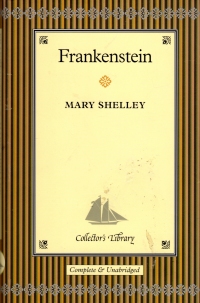
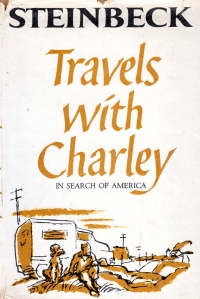
Book Report: Calvin and Hobbes: The Sunday Pages 1985-1995 by Bill Watterson (2001)

Book coverI don’t want to make you feel old, old man, but Calvin and Hobbes hasn’t been in the newspapers in twenty years. One day soon, you’ll have a doctor born so late that he’ll never have read it in the funnies, and how can you trust a doctor that young?

This book is not a comic collection. Instead, it describes an art exhibition that took place in 2001, fourteen years ago and six years after Watterson ended the strip. Watterson’s Sunday work was rolled into an art exhibition, and this book describes some of the history of Calvin and Hobbes as well as some of the Sunday comics. Each included comic includes the rough sketch and the finished product along with some commentary about the comic. Readers also get insight into how the Sunday comic is structured–in many cases, the first line of a three line comic is expendable as editors might have to cut it out to fit it into a particular newspaper or they can be sold “as is” as a half page, wherein the panels can be sized differently than normal and won’t be cut (Calvin and Hobbes started as the former but ended as the latter).

It’s a good bit of information, and the cartoons themselves are timelessly humorous.

The cartoon has been gone twice as long as it actually appeared in the paper; however, that’s probably a good thing, as Watterson got to end it on his terms, and readers were spared the endless “vote which cartoon stays” sorts of polls pitting Calvin and Hobbes against the Boondocks or having to write letters to the editor to get it restored.

I’m glad these books appear, though, because my children are coming to enjoy the strip. To be honest, my oldest son borrowed this book from the library and I poached it.

Books mentioned in this review:
Buy My Books!
Buy John Donnelly's Gold Buy The Courtship of Barbara Holt Buy Coffee House Memories

The Reason My Child Said That Crazy Thing, Part I

When my youngest child was in preschool at age 3, he won a pencil for something, and he told his teacher, “My daddy can put it in the garden!”

Which made no sense to the teacher, but it does make sense, sort of, if you know my son’s daddy.

I use pencils to mark things in the garden. When I plant a root that’s going to grow into something, I stick in a single pencil. For row crops, I use two pencils to mark the ends of the rows and then tie a string between them.

I mean, I could use a Contractor’s Grade Row Marker or a My Little Hobby Farm Organic Row Marker (either available at the local home center for $4.99 each), or I can use pencils I buy at Walmart at $3 for 20. They’re yellow and easy to see, and they are cheap and expendable.

So the lad likes to work in his garden with his father, and he cannot think of anything he’d rather do with a pencil that he won than to use it in the garden.

Although this is three years ago, I’m pretty sure he feels much the same way today, since I was working in one of the garden beds today, clearing away some weeds and old growth on the asparagus (and marking the asparagus with fresh pencils), and the boy was very upset that I was planting in the garden without him.

Buy My Books!
Buy John Donnelly's Gold Buy The Courtship of Barbara Holt Buy Coffee House Memories

How Have Things Improved Thirty Years Later?

Book coverI recently read The Human Fly #15 (Marvel Comics 1978) with its cover line “War in the Washington Monument!”

The Human Fly is a stuntman who fights crime, and it’s apparently based on a real stunt man from the era who did charity events. But that’s neither here nor there.

The plot of this particular issue is that (SPOILER ALERT!) two Vietnam veterans, one confined to a wheel chair and one mentally unstable, have taken over the Washington Monument to protest the conditions at their local VA hospital where the greedy doctors enrich themselves at the expense of the suffering veterans. Don’t worry, the Human Fly prevents them from destroying the monument, but it’s still going to be closed to the public the next time you’re in Washington, D.C.

Thirty years later and many reforms later, and we’re pretty clear now it’s not the doctors who are the problem.

It’s pretty said that these particular plots can be recycled for a quarter of a century when dealing with government programs.

Buy My Books!
Buy John Donnelly's Gold Buy The Courtship of Barbara Holt Buy Coffee House Memories

Book Report: Downton Abbey Rules for Household Staff (2014)

Book coverI received this book for my birthday this year; it’s definitely the kind of book bought new as a gift. Or perhaps by serious, institutionizable fans of the show. It contains no narrative, no fan stuff: It’s basically an introduction by the fictional Carson (the butler) writing for new hires at Downton Abbey followed by tips and tricks for each job and their attendant responsibilities.

I’ve said recently what I think of the show these days, but there’s not any of that to dislike in the book.

Carson’s introduction is a nice bit of Stoic philosophy encouraging new workers: You are part of something meaningful and grand, and you should do your best at it. Then the tips and tricks are pretty much polish it with chamois leather. That’s two things I learned from the book: That chamois leather is good for polishing, and the source of the pun inherent in the ShamWow name.

Yes, friends, there are gaps in my classical education, and I’m unlikely to get certain French puns, especially those relating to cleaning products and practices, until decades later when reading gift books tied into British soap operas. Which probably means the chamois/ShamWow joke is the only one I’ll get.

So the book is an interesting little read if you get it as a gift or pick it up at a book fair, but it might not be a thing you order. But just in case you’re institutionizable, note this post is full of convenient links.

Books mentioned in this review:
Buy My Books!
Buy John Donnelly's Gold Buy The Courtship of Barbara Holt Buy Coffee House Memories

The Source Of That Thing Daddy Always Sings

Back when my children were young, which was not so long ago and yet was a very long time ago, they’d watch a PBS program called Between the Lions which featured a segment called Cliff Hanger that had a little theme song:

Cliff Hanger,
Hanging from a cliff,
and that’s why they call him Cliff Hanger.

Ever since, I’ve been using this song for any three syllable phrase that ends in -er. Like the grocery store Price Cutter:

Price Cutter,
They’re cutting all the prices,
and that’s why they call them Price Cutter

(In the St. Louis area, you might want to substitute Price Chopper for the same effect.)

Or for the tabby I’ve nicknamed “Big Bopper”:

Big Bopper,
The bopper who is big.
That’s why they call him Big Bopper.

(Not to be confused with the recently former kitten I’ve nicknamed “Little Bopper” but who is now as large as “Big Bopper.”)

For some reason, Between the Lions came to my oldest boy’s mind recently, and he talked about a segment or episode of it at the dinner table. I said, “You know, that’s where I got the song from.” And he didn’t remember the Cliff Hanger segments or the theme song. Even though it was only a couple of years ago that he watched them.

Alas, this is why I must post these footnotes to the things I say to my children. Not just to prove that I’m not making everything up out of whole cloth, but also so that I remember in the coming years where these tropes come from.

Buy My Books!
Buy John Donnelly's Gold Buy The Courtship of Barbara Holt Buy Coffee House Memories

Book Report: The Town Council Meeting by J.R. Roberts (2009)

Book coverThis book starts out with an interesting conceit: The Gunsmith is playing poker when a group of ranch hands come into town and claim that he has killed their boss who was planning to hire him for something. It turns out he’s playing cards with the mayor, the judge, and the town’s attorney, so they call an impromptu town council meeting to order the sheriff to keep the men out of the saloon. So we’re presented with something novel: Clint tries to find out who killed the rancher by interviewing people while playing cards.

Ah, just when we’re wondering exactly how the author will handle this conceit throughout the book, it ends, and Adams sneaks out the back door to do a little, erm, investigation in that way he does. And he uncovers a pretty staple Western trope that ends with a gunfight in the street where (spoiler alert!) the title character of the series wins.

It’s unfortunate that the book couldn’t carry on with the novel setup to its conclusion, but that’s not what buyers of the series want or expect.

Me? I expected a thin bit of book to read that I spent a quarter on. And I got it.

So it’s the least bad of the books I’ve read in this line because of the novelty. I’ve only got one more in the series, and I don’t expect I’ll buy any more, though.

Books mentioned in this review:
Buy My Books!
Buy John Donnelly's Gold Buy The Courtship of Barbara Holt Buy Coffee House Memories

Book Report: Paramilitary Plot by “Don Pendleton” (1982)

Book coverThis book is another in the 1982 Bolan books; at this time, they seem to have gone to the monthly model, which means of course that individual entries are passed onto different authors, which accounts for an uneven series.

This entry isn’t bad, but its plot is exceedingly similar to the others reviewed recently (Terrorist Summit, Return to Vietnam, and The New War especially). In each, Bolan gets wind of someone being held in an enemy camp (twice a jungle, once a desert, now a swamp). Bolan infiltrates the compound, leaves the compound, and then has to go into the compound with the bad guys on alert to extract the hostage and blow everything up.

In this case, the hardsite is a compound in the Everglades run by a right-wing corporate government contractor who wants a biological weapon to facilitate the invasion of Grenada, where he can then start properly trying to take over the world for right-wing reasons, which seem to be just being corporate and having a military.

This book preceded the actual United States invasion of Grenada, so its author was a little prescient in recognizing the political situation with the small island nation making it unstable. So I got a little history lesson on that which covers some of the gaps I didn’t gather when it happened because I was eleven years old at the time and dealing with boyhood things, like my parents’ divorce and my mother’s nascent plans to uproot us from Wisconsin to Texas.

So, as a book, it’s too much in the line with then-recent Bolan offerings but an interesting artifact in a meta way.

Books mentioned in this review:
Buy My Books!
Buy John Donnelly's Gold Buy The Courtship of Barbara Holt Buy Coffee House Memories

Why I Gave Up On Downton Abbey

A couple years ago, I got swept up in the Downton Abbey mania, and by “got swept up in,” I mean my beautiful wife and I had gotten a Roku and were looking for something to watch on Amazon Prime when we agreed on this British program because so many other people were watching it and because my wife likes British accents.

But I gave up on it after a couple of seasons for a couple of reasons which I’ll go into below the fold. Be advised, there are spoilers below.
Continue reading “Why I Gave Up On Downton Abbey”

Buy My Books!
Buy John Donnelly's Gold Buy The Courtship of Barbara Holt Buy Coffee House Memories

Book Report: Curse of the Gypsy Woman by Lin G. Hill (1993)

Book coverThis book is a chapbook containing a single short story by a local author; I think I have one of his full length works here somewhere. I must have gotten this book in a package of books for a buck at the Friends of the Springfield-Greene County book sale.

At any rate, in this story, an author with writer’s block and a looming deadline agrees to take a quick vacation to a random spot on a map, and he ends up renting a car and driving with his wife into the Ozarks. They pull off the highway where a sign promises a restaurant and a place to stay, but the road turns to a dirt road. They pass an old gypsy woman and do not give her a ride, which leads to her placing a curse upon them. When they reach the ramshackle inn, they find it’s run by gypsies, and they’re kidnapped and taken to a hidden gypsy camp where they are locked in a ramshacklier shanty on the Night of the Wolf. And werewolves attack, and they survive. BECAUSE THEY’RE NOW CURSED WITH LYCANTHROPY.

It’s a pretty basic story, and not a very good one. But it hearkens back to a time of less cellular coverage and fewer smartphones. In a more deft storytelling, this might not have been quite so disparate, the distance between then and now, but reading it left a lot of brainpower for thinking about other things instead of the primary text.

Geez, Charles, I hope this isn’t your brother I’m pooh-poohing.

Buy My Books!
Buy John Donnelly's Gold Buy The Courtship of Barbara Holt Buy Coffee House Memories

The Platter Stack

Every week, I listen to a pile of records. Well, not a pile. A stack.

You see, as I get them out from the shelves to give them a spin, I start stacking them next to the record player not unlike a college student stacking his beer cups at a Milwaukee church fair. As trophies of music listened to. Also, it ensures I get decent rotation on the LPs so I listen to different things daily.

At the end of a week, it looks like this:

The platter stack

Last week, I listened to:

  • The George Shearing Trio Jazz Moments
  • Living Brass Songs Made Famous By Tom Jones
  • Herb Alpert’s Tijuana Brass Volume 2
  • Frank Sinatra September of My Years
  • Frank Sinatra That Old Feeling
  • Maynard Ferguson Conquistador
  • Herb Alpert Rise
  • The Swedish Gospel Singers Take A Little Time to Sing
  • Sergio Mendes & Brasil 66
  • Guy Lombardo Alley Cat
  • Jackie Gleason Presents Music to Make You Misty
  • Herb Alpert & The Tijuana Brass What Now My Love
  • Bobby Dukoff Sax in Silk
  • Herb Alpert & The Tijuana Brass SRO
  • Herb Alpert & The Tijuana Brass Going Places
  • Herb Alpert & The Tijuana Brass Warm
  • St. Louis Symphony Orchestra Debussy La Mer and Ravel La Valse and Valses Nobles et Sentimales
  • Herb Alpert & The Tijuana Brass The Brass Are Comin’
  • Los Norte Americanos The Band I Heard In Tijuana
  • The Melachrino Strings and Orchestra Music for Relaxation
  • Dean Martin You Can’t Love ‘Em All
  • Mercury Records Music to Live By
  • Rocio Jurado Senora
  • Daniel Barenboim Mozart in Minor
  • Maynard Ferguson High Voltage
  • Emil Gilels Beethoven ‘Emperor Concerto
  • Frank Sinatra Only the Lonely
  • Herb Alpert & The Tijuana Brass Sounds Like
  • Jackie Gleason Presents The Torch with the Blue Flame
  • Chicago Chicago
  • Herb Alpert & The Tijuana Brass Greatest Hits
  • Soundtrack Bridge on the River Kwai
  • The Paris Conservetoire Orchestra/New Symphony of London Favorite Overtures
  • Lawrence Welk Polka Party
  • Dean Martin The Dean Martin TV Show
  • Jackie Gleason Presents Music, Martinis, and Memories
  • Herb Alpert & The Tijuana Brass Coney Island
  • Gary Graffman and the New York Philharmonic Rachmaninoff Second Piano Concerto/Rhapsody on a Theme of Paganini
  • Herb Alpert Beyond
  • The Trumpets Unlimited Sounds Tijuana!
  • Percussion Espanol
  • The Jay Gordon String Orchestra Music for Day Dreaming
  • The Houston Symphony Orchestra Johannes Brahms Symphony 3 in F Major
  • Bamberg Symphony Orchestra Rossini William Tell and other famous overtures
  • Henry Mancini The Music from Peter Gunn

I also probably also listened to a Beethoven symphony or two, but I put the boxed sets away immediately and don’t stack them.

As you can see, I favor the 1960s Tijuana trumpet sound. Also note that the record collection tends to run towards big band, crooners, classical, and trumpet selections with only a few post-1960s titles and movie soundtracks. Because that’s what I like to play in the background for meals or main level house living. The rock is all on the computer for work-time listening.

Buy My Books!
Buy John Donnelly's Gold Buy The Courtship of Barbara Holt Buy Coffee House Memories

Book Report: Terrorist Summit by “Don Pendleton” (1982)

Book coverThis book reads so much like an authentic Don Pendleton book that I checked Fantastic Fiction to see if Pendleton wrote it. He did not; Steven Krauzer did. Krauzer, apparently, had read some of the Pendleton books before starting out. You have a lot of the elements of the Pendleton Bolan in the book, but a decided bit of tomfoolery at the end that is uncharacteristic of Pendleton.

In the book, Bolan has to go to Algiers to look for a missing technology executive whose daughter was kidnapped by terrorists of some stripe. For ransom, they want a prototype suitcase nuke the exec’s company had developed. The man goes to Africa himself to find his daughter and is instead captured, and it’s up to Bolan to get him out. Bolan does so early, getting the nominal plot out of the way so it can turn Pendeltonesque. Bolan pursues the woman to a camp in the Sahara where a Soviet-trained bad guy has assembled a summit of numerous terrorist groups to organize them under an umbrella operation headed by him. Bolan infiltrates the base posing as a Mafia-based bigwig and turns the groups upon themselves. This is all pretty Pendletonesque.

However, at the climax, Bolan is escaping from the site in a Range Rover when a Jeep pursues. He puts down his rifle to pick up his trademark .44 and has the Range Rover spring into reverse so suddenly he’s coming at the terrorists hard and fast while firing the handgun. Instead of, you know, shooting them with the rifle from a distance.

The tacky ending makes me wonder how the whole business worked. Did the editors have this cinematic ending in mind and perhaps on paper when turning it over to the writer to fill in the gaps? I dunno, but it diminishes the book.

I’m going to start calling these things the thrown silverware moments in honor of Silent Night: an outlandish moment in the climax thrown in for cinematic value but that leaves any thoughtful reader agape.

Books mentioned in this review:
Buy My Books!
Buy John Donnelly's Gold Buy The Courtship of Barbara Holt Buy Coffee House Memories

That Christmas Feeling

Twilight at Nogglestead with snow cover looks like this:

Which reminds me of this Christmas album:

In my memory, the album cover is more grey than blue.

Which gives me a little Christmas feeling in February.

Not to be confused with the Christmas feeling I’ll get in March when I finally get to my thank you cards, but still.

Buy My Books!
Buy John Donnelly's Gold Buy The Courtship of Barbara Holt Buy Coffee House Memories

Book Report: Silent Night by Robert B. Parker and Helen Brann (2013)

Book coverThis book was a little bit of a gift; it was, for me, an unexpected new Robert B. Parker Spenser novel. And although I savaged a lot of his later work on this very blog, because I know (suspect) this will be the last of his Spenser novels (although it was completed by someone else), I enjoyed it.

The plot: Around Christmas time, a boy comes to Spenser for help. The boy is associated with an unlicensed youth help facility. Run by the brother of an importer/exporter. Of drugs. The center is funded by the brother, who is unhappy about it but promised his mother to take care of his brother. Someone is attacking the brother who runs the shelter, trying to drive him off. The authorities are on the drug-smuggling brother, and he’s about to bolt, but he’s going to tie up some loose ends–including his former tennis pro girlfriend who might know too much. Until Spenser.

You know, trying to sum up the plot, I wonder if it holds up to scrutiny, or if the plot is merely the excuse for some Spensering.

Regardless, it’s full of proper Parkeriana: “Wouldn’t it be pretty to think so?” and unnecessary asides and psychoanalysis. We also get the obvious errata, like describing a Playstation and a couple of game cartridges or taking the shells out of a rifle. But because this is the last new Parker Spenser I’ll (probably) read, I kind of viewed them with affection.

Although I did laugh out loud in the climax, when the tennis pro is faced with a killer at a dinner party and picks up a knife from the table and throws it at the fellow, stopping him cold with a table knife to the chest. and Helen Brann, I presume. That does not read like something Parker would have done.

At any rate, I enjoyed it affectionately, and as time passes, Parker’s rising again in my memory. Perhaps I will fill out my collection of his works after all.

Now, with this rosy glow, do I pick up some of the latest John Sandford novels from the library?

UPDATE: As he mentions in the comments, Friar has already read this book.

Books mentioned in this review:
Buy My Books!
Buy John Donnelly's Gold Buy The Courtship of Barbara Holt Buy Coffee House Memories

The Default Antecedent

At Nogglestead, sometimes we’re unclear in our communications. Sometimes, we use pronouns whose antecedents are in our heads, like when we think of a particular item but call it:

That thing

Such as:

  • “I’m going to bring that thing in.”
  • “Hand me that thing.”

And so on. It might not be clear what “that thing” is, which can result in a communications error.

For clarity, we’ve established a default antecedent in this case.


“Where are you taking that thing?”

Whenever someone says “that thing” without an appropriate gesture or talking about something specific prior to its usage, “that thing” is replaced with “Chewbacca” in the sentence.

For example:

  • “I’m going to bring Chewbacca in.”
  • “Hand me Chewbacca.”

This has improved interpersonal and intrapersonal communications greatly.

Feel free to use Chewbacca yourself.

Buy My Books!
Buy John Donnelly's Gold Buy The Courtship of Barbara Holt Buy Coffee House Memories

I Scored 5 Out Of 6 On This Quiz

An eight month old article in the Wall Street Journal called The Psychology of Clutter included this graphic which looked enough like a quiz that I took it, and I got 5 out of 6:

A clutter quiz that I passed

Here’s how I did; the ones in bold are the ones I got right (although my beautiful wife might disagree with my characterization of having these traits as “right”):

  • The Way Things Were: As you know, gentle reader, I am a hoarder of personal relics. I don’t like to get rid of things I got from different eras in my life, things that my family gave to me, or things that belonged to members of my family. (Cue violin.) So many of the people, of my family, who knew me when I was younger have passed away, so I don’t have anyone to share memories with, to confirm that things happened as I remember them. So I hold onto the physical manifestations.(</violin>)
     
  • Three Sizes Ago: Also true, although I’ve not ballooned three sizes, thank you very much. I do have a lot of pants with 34″ waists, which are just uncomfortable, thank you very much, and I might get down there again. I’m pretty sure I have a couple of adult medium things that I’ll never fit in again, but I’m saving them, for in a couple of weeks (or so it will seem), I will have boys that will grow into them (briefly).

    On the other hand, I have piles and piles of clothing that I’ve gotten and inherited that are not in the current heavy rotation that I’ll continue to hold onto just in case my current crop of clothing fails and I can’t afford to replace it with similar Walmart apparel for ten bucks a throw.

    And I’ll continue to hold onto the scraps of things that have worn out in case I become crafty or civilization collapses and I need the material to patch the remnants of our clothing to hold us on until one more failed growing season leads us to die of starvation. Or maybe we’ll eat the clothes.

    One more thing: As to this last, I have been eternally justified in holding onto these scraps of worn out things as just this very weekend, my beautiful wife hand-washed some tunics that bled dye badly, and she needed a couple of old towels to use in drying them. “Do we have any old towels?” she asked. “My darling wife, dawn of the Ozarks, of course we have old towels. We have every old towel we have ever had during our marriage and some from even before we wed,” I said (or words to that effect). And if I hadn’t saved everything like that, where would we have been in our time of need?
     

  • Buy Then, Pay Later: No, sir, this is not an issue for me; I am not a woman. I do not buy outfits because I might need them later. I buy things to wear now.

    And to prove my point, I did buy a black button-up shirt a couple months ago (like $10 at Walmart, thank you, George), but I haven’t worn it because most of the slacks and khakis I own (and the ones I wear) are black. So I bought it, and it hadn’t gotten worn yet. So I put it on with a pair of blue jeans just so I could avoid any semblance of this sort of clothes-horse based hoarding.
     

  • ADHD Storage: This is my garage and part of my office in a nutshell. Partially complete crafts, craft supplies (and note some of this “craft” stuff involves power tools). I also pick up raw materials at garage sales that sits around waiting for usage for years. Also, then there are the completed projects that I don’t know what to do with once I’m done with them, like this:


    I don’t know anyone who likes chickens, but I had a piece of wood from a garage sale to use the chicken template I had, so I did this and used a couple of hanging hooks to cover a couple holes in it and a woodburned drawer pull at the bottom. So I don’t know who to give it to as a gift, I don’t have enough to fill out a full booth at a craft fair, and I haven’t tried Etsy yet. So I’m hoarding them until I do, I guess.
     

  • I’ve Got It Here Somewhere: Indeed I do. Fortunately, we have a big enough house with adequate storage that I can generally lay my hands on things as soon as I want them. My twelfth grade elf D&D characters? Got ’em. 1984 Milwaukee Brewers cards distributed by the Milwaukee Police Department? Got ’em. A Commodore 64? You bet. I’m a little less organized with my books’ to-read shelves, though. So I might have a copy of Jane Austen’s Middlemarch. Or I might have two.
     
  • An 8-Track Mind: Come on, you know me. Although to be honest, I did get rid of our only eight track player last year. But I’ve got spare cassette decks, old computers, videocassette players, DVD players, and so on. Although, in most of these cases, I still use the technologies.

So I got a five out of a possible six (and possibly six out of six).

I’m very proud of my score.

How did you do?

Buy My Books!
Buy John Donnelly's Gold Buy The Courtship of Barbara Holt Buy Coffee House Memories

Book Report: Red Water by “J.R. Roberts” (2008)

Book coverIn case you’re wondering, it looks like it takes about nine months for me to forget how much I don’t like a series. I read A Daughter’s Revenge last May, and it took me until February 2015 to pick up this book.

Clint Adams, the Gunsmith, is camped out when clumsy horse thieves try to get the drop on him and steal his horse. He outfoxes them, goes to a nearby town (Red Water of the title), has an, erm, encounter, discovers the local marshal is forming a posse to hunt those dangerous (but clumsy) outlaws. The Gunsmith thinks that’s odd, and when he joins the posse after an, erm, encounter, he finds the marshal doesn’t have a plan for all the town’s decent gun handlers except that they’re out of town. Apparently, the marshal is in on a scheme to steal the plans of safes made by a local safemaker. Which Adams thwarts amid the, erm, encounters.

Of the contemporary Jove Western series, Longarm is the better of the two. As to the Gunsmith series, I think I’ll put them on a higher shelf and avoid them until I forget, again, how I feel about them.

Books mentioned in this review:
Buy My Books!
Buy John Donnelly's Gold Buy The Courtship of Barbara Holt Buy Coffee House Memories

Book Report: The Gallic and Civil Wars by Julius Caesar (2006 ed)

Book coverAs I mentioned, I got this book at the end of December with a Christmas gift card from ABC Books, who were having a half off sale on Folio Society books at the time, which is why I ended up with such a la-di-da edition. But Folio books are pretty handsome editions with heavyweight paper for the pages and a box to keep the dust off the top. I won’t join Folio Society and pay its prices for these books, but when I see them in the wild relatively inexpensive, I might pick them up if they’re something I want to read.

And I wanted to read this book after reading Last Seen in Massilia which takes place during the Civil War.

This book collects not only Caesar’s commentary on the Gallic War and the Civil War, but also the African War and the Spanish War (which were essentially extensions of the Civil War but with Pompey’s sons.

I’ll spare you the complete history lesson, but I will tell you what I learned about Roman warfare in the process:

  • With every campaign, Caesar informs the reader that he has secured a source of corn. This is no mere battlefield heroics tale; Caesar emphasizes the importance of logistics throughout, and the choice of camp sites for their access to food, water, and forage are continuously emphasized.
     
  • The amount of engineering and digging involved in soldiering in the Roman era took me a little by surprise. Whenever camping, the soldiers fortify their camp, and if they’re going to stay a while, they dig a lot of trenches and build earthen walls. To say nothing about the Battle of Alesia.
     
  • The Civil War has a different tone than the The Gallic War. The history of his campaigns in Gaul have the flavor of writing for history; the Civil War account has more of the feel of a contemporary political tract, where he’s justifying what’s going on for current readers, not history.
     
  • Caesar proves awful forgiving at times, allowing those whom he defeats to retain their lives and some of their privileges. This might have been prudent politically and strategically, as it allowed opponents to know that surrender did not mean death. It probably shortened many sieges. This contrasts with the Mongols, who drove refuges from captured towns before them to terrorize their next victims.
     

At any rate, it’s a pretty easy read even though it took me almost two months; as you know, I’ve been reading some other unrelated things alongside it. The translation seems pretty contemporary, and the narrative moves along, although I could have used a couple more maps sprinkled in the text to keep the movements straighter in my head. Also, I admit letting a large number of the names of the participants and places wash over me a bit.

I read a lot of these heady tomes, and I’m reading them, for the most part, and not studying them. I’m not highlighting or taking notes to write a paper on them. Perhaps that makes me less of a student than I should be, but the aggregation of the things I read builds connections between them so I am pretty sure I’m getting smarter as I do. But this isn’t the place for a detailed analysis of the Roman impact on Egyptian politics or the Egyptian impact on Roman politics in the first century BC, nor is it really my interest. Sorry, Googlers.

Also, note: This book was (mostly) written by Julius Caesar. Before the new Testament. Caesar is, you know, Caesar. A figure of such import to history that rulers bore his title two millennia later (that’s the Russian Tzars, as a reminder). There’s something inherently cool in my mind about reading his books. I’ll probably feel the same way about reading Thucydides and Plutarch once I really get into this Greek-Roman History rabbit hole.

I recommend it. It looks like you can get this edition for about $40 on the Internet, but the Kindle versions are cheaper.

Books mentioned in this review:

Buy My Books!
Buy John Donnelly's Gold Buy The Courtship of Barbara Holt Buy Coffee House Memories

The Gameshows of Nogglestead

So I’m sitting in the parlor, reading nine month old Wall Street Journals (Russia is causing trouble in Ukraine! Syria is a mess! The whole middle east is going up in flames!), and my six-year-old comes into the room. He has the cover for the pegs from the Electronic Battleship game, which means the pegs are all over the floor somewhere, and a small plastic toy bin inverted, which means the toys are all over the floor somewhere. He’s banging on the bottom of the bin in a beat that I’ve heard described as quarter notes. “Guess the song,” he says.

“Jesus Loves Me,” I say, looking over my paper much like I expect Clarence Day’s father would. I’d heard him mention that song to his older brother a couple minutes ago.

“No!” he said. “It’s ‘We’re Going to Rock Out To Electric Avenue’.”

In his mind, it sounded like this:

He wandered out of the parlor and reappeared a moment later, beating on the bin with the same rhythm. “Guess the song,” he says.

“‘Rock You Like A Hurricane’,” I answer.

He looks surprised. “You’re right!” he says.

To him, it sounded like this:

“You win!” he says. Then he gives me my winnings, a piece from some random game that means the rest of the game is all over the floor somewhere.

“It’s an honor just to be nominated,” I reply. And he went off, drumming, towards the bedrooms.

Buy My Books!
Buy John Donnelly's Gold Buy The Courtship of Barbara Holt Buy Coffee House Memories

Don’t Leave Her Pocketless

An old gun ad:

No pocket for the pocket gun

The tagline for the gun is fits in a pocket.

The woman is wearing a sundress with no pockets.

Ergo, if she’s not going to put it into a pocket, she could opt for something larger or with a larger magazine.

Or, men, you could not leave her pocketless.

(Side note: I swiped this from a 2012 American Rifleman magazine that was in the bottom of my (relatively) recent magazines. Ah, the olden days. It also has stories on Chris Kyle and the 2012 elections which both have disappointing epilogues as we know in 2015.)

Buy My Books!
Buy John Donnelly's Gold Buy The Courtship of Barbara Holt Buy Coffee House Memories