The Horns of a Dilemma

25 minutes before game one of the 2011 National League Championship Series, and I can’t decide for whom to root.

The Cardinals versus the Brewers

Do I go with the team of my homeland, the team for whom I cried when I was a lad when the St. Louis Cardinals beat them in the World Series? Or the team whose games I attended throughout the 80s and into the 90s and 00s after I relocated to St. Louis?

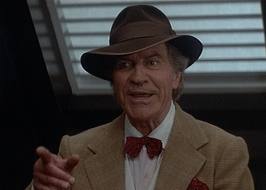
By the way, the shirts/numbers are: Milwaukee Brewers #15 (Jim Edmonds); Green Bay Packers #74 (Aaron Kampman); St. Louis Cardinals #7 (J.D. Drew).

Buy My Books!
Buy John Donnelly's Gold Buy The Courtship of Barbara Holt Buy Coffee House Memories

Rolling Stone Poll Voters #OccupyMemoryLane

According to a Rolling Stone poll, Starship’s “We Built This City” is the worst song of the 1980s:

This could be the biggest blow-out victory in the history of the Rolling Stone Readers Poll. You really, really, really hate “We Built This City” by Starship. It crushed the competition. This isn’t the first time this happened to this song. In 2004 Blender named this song the Most Awesomely Bad Song of All Time.

As much as I hate to differ with that aging Boomer hipster magazine of record, that song is a pop rock anthem:

I mean, it’s a bit of raging against the machine in a sort of inchoate fashion that captures some of the angsty adolescents crave. Who rides the wrecking ball into our guitars? They do! Don’t tell us you need us, ’cause we’re the ship of fools. I don’t even quite know what it means, but I know I felt (and still sometimes) feel that way.

I mean, it’s not even Starship’s weakest hit of the decade. Continue reading “Rolling Stone Poll Voters #OccupyMemoryLane”

Buy My Books!
Buy John Donnelly's Gold Buy The Courtship of Barbara Holt Buy Coffee House Memories

Book Report: Missouri Hard-to-Believe-but-True! by Carole Marsh (1990)

Book coverI remember reading another book in this series, and I was surprised that I bought two. I’d have been more surprised if I had bought the second after I read Missouri Bandits, Bushwhackers, Outlaws, Crooks, Devils, Ghosts, & Desperadoes earlier this year. But I bought them both at the same time.

It’s more of the same: a couple things native to Missouri, many more things that were not native to Missouri but were instead made relevant by appending phrases like “folks in Missouri” to them, wingdings in words, and all that business.

Maybe I’m in a slightly more charitable mood in October than I was in January, since I will say these books might not be a complete waste of about an hour of a baseball game’s in between pitches time. I did find at least worth investigating for a written piece. But I won’t cite this book as a source, as you cannot take anything in it as truth.

Books mentioned in this review:

Buy My Books!
Buy John Donnelly's Gold Buy The Courtship of Barbara Holt Buy Coffee House Memories

Book Report: Paris, Tightwad, and Peculiar: Missouri Place Names by Margot Ford McMillen (1994)

Book coverThis book at the Republic branch of the library had been teasing me for some time. When I’m there with the children or when my beautiful wife needs to pick up a book, I look over the regional history shelves. I picked up this book on a couple of occasions and put it back, vowing to read my own books before I check another out of the library. But as you know, gentle reader, I’ve been a little susceptible to library books recently, and I fell for this book.

From the title, one might expect some encyclopedic or list-based review of place names. That is not the case. This book covers, broadly, Missouri area history from the Indians in the area to the French, then Spanish, then French, then American settlers and the industries that moved through the area and how each impacted the naming of areas. Then the book gives a couple examples of it. Many of the names come from considerations when it came to creating the Post Office for each one.

So it wasn’t what I’d hoped for, but it’s a nice little read that’s more of a high-level history of Missouri than a real in-depth study of place names. I got a couple ideas for pieces out of it, which is really all you can ask for any survey book like this.

Books mentioned in this review:

Buy My Books!
Buy John Donnelly's Gold Buy The Courtship of Barbara Holt Buy Coffee House Memories

A Bacheloresque Movie Review

As you can probably guess, I have two sets of shelving for my videocassettes and DVDs. Not based on format, but based on whether I’ve actually watched the videocassette or DVD. Not based on whether I’ve watched the film, mind you; based on whether I’d watched that particular copy of the film since I bought it for a quarter at a garage sale or book fair. Sometimes, too, I put a movie back on the to-watch shelves when I want to watch it again sometime soon, and sometimes that sometime soon stretches into years.

But when the aforementioned beautiful wife travels for business, I relive some of my bachelor nights and pseudobachelor-but-before-children nights where I watch a couple of films to pass an evening. This week, I had the chance to do so and watched and rewatched a couple of videocassettes. Frankly, I like videocassettes because they present the film from start to finish, often with coming attractions that take you back in time (see also this recent post, wherein by “recent” I mean “almost two-year-old”). Also, if a videocassette fails, it fails spectacularly, whereas my recent viewing of Charles Bronson’s The Mechanic on DVD ‘failed’ by skipping 20 minutes of content, and given the pacing of the movie, we weren’t really sure whether it was just a 70s stylish jump cut.

But I digress.

This week, I watched:

The Eiger Sanction starring Clint Eastwood, which is why I own it. It sounds like a Ludlum title, and it has some elements of the basic thriller, wherein an assassin is called out of retirement to ‘sanction’ assassins who ‘sanctioned’ one of our agents, and although he can get one guy with intelligence provided by the albino, former Nazi head of the agency employing Eastwood, who is a professor teaching art history and collecting smuggled art work with his fees. Very similar to the Chuck Norris character in Good Guys Wear Black and, for that matter, the original Jason Bourne.
 

The film then takes a big detour into mountain climbing training, as intelligence indicates only that the other assassin will be part of a team attempting to climb the Eiger’s north face in the Alps. So Clint Eastwood’s character teams up with an old covert agent buddy who’s the ‘ground’ man for the team and tries to climb the mountain with the team, uncover the assassin’s identity through intrigue, and carry out his assignment.
 

Definitely a product of its time and of Eastwood’s emerging film direction/production ego. It’s said he wanted to make this film because he wanted to climb mountains and whatnot. What, Where Eagles Dare was not enough seven years earlier? I guess not.
 

At any rate, it’s not a great bit of work, as you can tell by the fact that 40 years later, only die hard Eastwood fans watch it.

Just Visiting starring Christina Applegate and Jean Reno. Friends, you can claim to be a Jean Reno fan, but unless you’ve seen this film more than once, you’re a piker. Sure, Ronin and The Professional are okay, but are they essentially a French comedy brought to the States and Americanned up by John Hughes? No, they are not.
 

It’s a funny enough bit about a medieval nobleman and his squire brought to modern (pre-September 11) New York when they seek to go back in time slightly to right a dastardly bit of courtly intrigue. Hey, I laughed at it a couple times. And this, after I saw it in the theater in 2001.

Frankly, it’s only the proven depth of my Jean Reno and Clint Eastwood fandom that allows me to admit that I watched The Cutting Edge. Again. What can I say? I’m a fan of montages, and this film has them in spades. Figure skating montages, though.
 

If you’re not familiar with the story, it’s about a hockey player who’s hit by the West Germans in the Olympics and loses some sight and can’t play hockey again. It’s also the story of a figure skating princess whose father’s dream has been an Olympic gold metal since she was young, but she sabotages her performance on ice and her relationships with her skating partners. It’s his last chance and her last chance.
 

Hey, I can relate to a story of a hardscrabble guy from up north falling for a girl above his class. Also, this film taught me everything I know about skating: when I’m at the rink’s skate rental counter, remember to ask for hockey skates so I don’t trip over the toe pick.

I discovered while researching this post that there were three sequels 26 years after the original came out: The Cutting Edge: Going for the Gold (2006), The Cutting Edge: Chasing the Dream (2008), and The Cutting Edge: Fire and Ice (2010). I have no words to express how I feel in light of this new knowledge.

Geri’s Game is a Pixar short, an early bit of computer animation that won the Oscar for short films in 1987. How short is it? It took me longer to rewind the wonky videocassette than it took to watch the whole thing. In it, an old man plays chess in a park against himself.
 
Not to be confused with Gerald’s Game.

So I’ve moved 4 videocassettes out of my cabinet of unwatched films to the wall of watched films. This will probably hold me until my wife’s next trip. But I did take a moment to rearrange the dozens of movies, documentaries, and television shows to bring things I wanted to watch this week closer to the front. Although whether that will hold true next time I get a hankering for cinema remains to be seen. If you can call the above films cinema,.

Buy My Books!
Buy John Donnelly's Gold Buy The Courtship of Barbara Holt Buy Coffee House Memories

Book Report: Triumph TRs by Graham Robson (1981)

Book coverYou remember when I bought this book four years ago? Me, either, but I remember I bought of books about the little British automobile at the time. I thought it might be a good little picture book to flip through while watching sports.

Well, I was sort of wrong.

This is not a mere picture book with lots of loving plates depicting the automobile. This is a very detailed history of the automobile and its evolution over the decades of its history written by a high-level employee of Triumph. The book pretty much enumerates the stock parts on every Triumph built based upon serial number. It will tell you that the Triumphs up to his serial number had this engine, and then to this number they had that suspension, and all the way up from the original TRs to the TR7. To be frank, I’m not a gearhead, so most of the information just rolled over me.

I say the author was a high-level employee because he has a low view of the labor that built the automobile. No, strike that: he had a low view of the organized labor that stopped the production of his beloved TRs at various plants at various points. He calls them suicidal and bloody minded at one point. Also, he has no truck with the United States government and its safety and emissions controls that start shackling the automobile’s performance in the 1960s. This guy is a Tea Partier, between the Tea Parties and drinking tea.

So what did I take away from this book? Well, I have a favorite TR body (the TR6, which was built in the 1960s and looks a little like the American pony cars of the era), and I have some insight into the importance of rally cars and those races to automobile dealers and manufacturers in Britain in the early 20th century. Also, I have a pile of research, so sometime, somewhere, a character in a book might drive a TR.

So it’s a worthwhile read if you’re into British cars or if you’re just out-of-control in your reading habits.

Books mentioned in this review:

Buy My Books!
Buy John Donnelly's Gold Buy The Courtship of Barbara Holt Buy Coffee House Memories

My Default Setting Is “Ass”

Monday night, I’m reading the auld laddie a book when the telephone rings. I’m uplifted a bit, since my wife was traveling on business, and both the boy and I thought it was her calling to wish him good night. But it’s not.

Me: This is Brian.
Woman’s slightly garbled voice: Mommy?
Me: This is not your mommy.
Woman: Mommy, where are you? We can’t find you.
Me: She’s not here.
Woman: We can’t find her.
Me: She’s not here.
Woman: Can you help me?
Me: No.

I hung up. At first, I didn’t know if the woman (not a girl) was on drugs or what, but I think she was distraught. The boy was agitated; he heard the whole exchange because I answered the phone on speaker as is my wont. When I didn’t hear the my wife’s voice, I immediately became curt and guarded. I didn’t know if this was some sort of prank or what. Maybe it was some distraught daughter calling her mother’s cell phone and distraughtedly reaching my home phone at 7:10. I dunno.

So I was an ass, I suppose. I don’t know how I could have helped her over the phone except to tell her to call the police. And maybe have been a little more polite. But I’m the suspicious sort and guarded, so my default setting is “ass.”

The whole thing confounded me. I feel like Clarence Day’s father, but with a fouler mouth.

Buy My Books!
Buy John Donnelly's Gold Buy The Courtship of Barbara Holt Buy Coffee House Memories

Book Report: Might As Well Be Dead by Rex Stout (1956)

Book cover This book is the second of the two in the Three Aces omnibus edition I’m reading (remember, gentle reader, I have begun to break out the individual novels within omnibus editions for individual review, but when I’m done, this will still only count as a single volume for my annual book count).

At any rate, the plot: A businessman from the midwest comes to New York, seeking his son whom he drove off after the businessman thought the son had embezzled some money. Now that the real culprit has been identified, years later, the father wants to reconcile. Well, the mother wants to see the boy again. However, the police cannot find the son, so either he’s long gone or he’s changed his name. Wolfe guesses that the son will still retain his initials, so he has Goodwin place an ad in the paper that says, “P.H., we know you didn’t do it.” Strangely, that is the name of a recently convicted murderer who couldn’t be the guy, could he?

Of course he is. He’s taking the fall for killing his twue wuv’s husband, mostly because he thinks she’s done it. She thinks he’s done it. Since someone has begun to follow Goodwin, Wolfe suspects that the real culprit might still be out there. So he cogitates and Goodwin and the other bit players start running down leads. Other deaths during the investigation confirm Wolfe’s suspicion, so the book progresses until Wolfe unmasks the real killer in a sitdown in his (Wolfe’s) office.

It’s a good book for the genre. Those olden days mysteries, especially the good ones like this one, keep it moving, don’t get too detailed, and come in under 200 pages. Remember those days? Modern authors don’t, but I guess if you’re going to drop $30 on a hardback, the authors want to give you 140,000 words to make it worth your money. I think ebooks will change that for the better, make reading less of a daunting undertaking. Or so I hope.

Books mentioned in this review:

Buy My Books!
Buy John Donnelly's Gold Buy The Courtship of Barbara Holt Buy Coffee House Memories

The Funniest Sentence I’ve Written All Day

I don’t care who you are or where you’re from, but if you’re from Wisconsin, you idolize Vince Lombardi, or you’re a heretic.

Followed closely by:

He coached the Green Bay Packers, the small-market blue collar National Football League (fútbol norteamericano, not soccer, you international readers) and led them to something like 14 annual championships in 8 years. He was that good.

Both from my other review of Run To Daylight, entitled "Management Lessons from Vince Lombardi".

Buy My Books!
Buy John Donnelly's Gold Buy The Courtship of Barbara Holt Buy Coffee House Memories

Book Report: Run to Daylight by Vince Lombardi (1963)

Book coverThis book chronicles the week of preparation that the Green Bay Packers the week before the October 7, 1962 game against the (spoiler alert) Detroit Lions from the perspective of head coach Vince Lombardi. The book doesn’t name the opponent, but a little research will yield it. Although a Google search asking who the opponent was for this book apparently has not until now not yielded the result. Instead, I sussed it out by the final score and confirmed it by the mention of the UCLA upset of Ohio State. Look, ma, I’m a researcher!

At any rate, it discusses how much Lombardi studies films, how short that the actual practices are, and how long the meetings with the players are. It reminds those of us who have played the game a little for fun but never in an organized fashion how complex the games are, where each play in the playbook has variations upon variations not only upon where the players are supposed to line up, but also what shoulder they should block on their blocking assignment and whatnot. Even the rockheads on the line have to remember so much. Frankly, a detailed book like this makes me appreciate what they do weekly, and it also reminds me why I only want to dedicate six or nine hours of my life a week on it instead of 50 hours a week year-round.

If you’re a Packers fan, it’s definitely a worthwhile read to get a little behind the Lombardi legend. The book takes place five years before Jerry Kramer’s Instant Replay, which I also recommend, and the time frames are different (Instant Replay is the story of a whole season, not just a week). Are modern football books this detailed, or are they personality-based? The ones I’ve read aren’t like this.

Books mentioned in this review:

Buy My Books!
Buy John Donnelly's Gold Buy The Courtship of Barbara Holt Buy Coffee House Memories

Book Report: America Alone by Mark Steyn (2006)

Book coverYes, I do realize that I’m a book behind on Steyn’s works. I run a little late on political books, since I can only take a couple of them annually. I read enough blogs to get my fix of this sort of material daily, and when you’re reading it daily, the book form seems to be a bit tiresome.

I actually picked this book as the first selection in a shared reading experience a friend of mine in Minnesota suggested. Sort of like a book club, but just the two of us, and over the phone. We were talking about demographics one day, and I remembered I own this book, so I recommended it. He borrowed a copy from the library, and when I called him again, he fumed a bit about it and said he couldn’t read it because… well, because Steyn is that way. Also, my Canadian friend in Minnesota is quite probably not that way, which is to say obnoxiously conservative.

So I read it with an eye toward what it would mean to my friend, who is not a conservative. The thrust of Steyn’s argument lies in three facets: 1) Demography is destiny, 2) Sclerotic, secular, non-reproductive societies have their roots in their cradle-to-grave welfare systems, and 3) A certain worldwide demographic wants to destroy the West and make the world submit to its religion, and its birthrate exceeds that of the West. If you’re reading this blog, you’re familiar with it. In Steyn’s thesis, Western Europe and possibly all of Europe will be overrun by Islamic citizens in the near term, which will destroy those countries as they’ve been known, and of all the West, only America will maintain its civilization since it is barely replenishing its citizenry through things done routinely in seventies science fiction in extraplanetary zoos by human captives on display.

Steyn weaves the three main thrusts of his arguments together instead of building them syllogistically to the conclusion, and he puts barbs into the text. Between those two things, it’s really not going to convince my friend and maybe not many who are yet unconvinced. However, I think the target audience of the book is those who are already convinced and want affirmation or restatement of their beliefs, hopefully so they can go forth thoughtfully and convince others.

Five years after the book, I’m not as gloomy as Steyn was (and is now, given the title of his latest book–After America for those of you who might not know). The sweep of history is broad and long, and its predictors are more often wrong than not. However, the book does crystallize, or should, that our Western traditions and heritage are better than all the others that have been tried and do require some conscious defense thereof. If you merely enjoy liberty without recognizing its sources, someone will quickly take it from you.

Books mentioned in this review:


Buy My Books!
Buy John Donnelly's Gold Buy The Courtship of Barbara Holt Buy Coffee House Memories

Book Report: Super Incredible Trivia by Fred L. Worth (1984)

Book coverIs it super? Well, it’s over 4,850 entries spread over 506 pages, mostly on popular culture with heavy emphasis on films, so it’s big.

Is it trivia? Well, some of it is. A lot of it, though, depends upon phone numbers, house numbers, and license plate numbers of sets in films, sometimes the sort of thing you only glimpsed once. These researchers were thurough, and probably only working from videocassettes or laser discs when they compiled the book.

Is it incredible? Here’s the entry for KITT:

Michael Knight’s (David Hasselhoff) special black Pontiac Trans-Am in the TV series “Knight Rider.” KITT, which stands for Knight Institute Two Thousand, is voiced by William Danielson.

Incredible, as in you cannot believe any of it. Quick, what’s wrong with that entry?

Since it’s from 1984, all of the sports records have been broken since then except for Ivory Crockett’s 100-yard-dash record, which this book fails to mention. What it does rely on, though, is a very, very good knowledge of the author’s or the researchers’ favorite films, which explains why so many entries deal with Time Bandits or Somewhere in Time.

At any rate, it’s something that I kinda flipped through as I was winding down for bed or during sporting events over the course of months. I don’t know how much of it I’ll retain for Trivia Nights (the one item I’ve worked hard to retain is the name of the only singer to chart a rendition of “The Star-Spangled Banner”.) It also reminded me of how many interesting old movies I’ve not yet seen, and it assured me that Kate Mulgrew had done something else besides "Alien Lover" (which I have seen in its entirety) before Star Trek:Voyager.

Is it worth reading? If you’re a trivia masochist like I am.

Books mentioned in this review:

Buy My Books!
Buy John Donnelly's Gold Buy The Courtship of Barbara Holt Buy Coffee House Memories

The Wayback Machine Is ON!

Apparently, Jason Bateman tweeted:

It’s true. We will do 10 episodes and the movie. Probably shoot them all together next summer for a release in early ’13. VERY excited!

I responded:

Thank goodness! I was very distraught when “It’s Your Move” ended abruptly.

It’s Your Move, as you know, was Jason Bateman’s first sitcom. Well, he had been on Silver Spoons and Little House on the Prairie, but It’s Your Move was his first starring vehicle. It only lasted a season.

Sometimes, one might confuse Jason Bateman with Jerry O’Connell (or one might think someone else might). Jerry O’Connell’s big breakout was My Secret Identity, which ran several seasons in syndication.

Of course, my wife is not familiar with such things; her English teacher mother did not let her watch television. Whereas I was a latchkey kid living either in a trailer park or in a valley off of a dirt road, consigned to whatever snow-occluded broadcast television could reach me.

I hope this will become relevant sometime in a Jeopardy! taping.

Buy My Books!
Buy John Donnelly's Gold Buy The Courtship of Barbara Holt Buy Coffee House Memories

NSFW, But Access For Children Is Mandatory

As some of you know, it’s Banned Books Week, which is a facile celebration of librarians and educators of how they, not parents nor citizen-accountable school boards, know what’s best for you and your children. I’ve written before on the subject of the Republic school board and its decision to implement a policy of not providing books that do not meet standards of age-propriety to its students (see Local School Board Makes Decision; Right-Thinking People Disagree, Condescend and “Ban” Does Not Mean “The Government Fails To Give It To You”).

I’ve recently read the book, as you might know, and I didn’t really see anything textual that would make it age-inappropriate. Sure, the narrator or the character of the narrator character admits to having a large wang. Sure, he has sex with a skin flick starlet in an alien zoo. Hey, who doesn’t? (I mean, when I was in high school, I read The Demu Trilogy, written a couple years after Slaughterhouse Five–what was it with the writers of that era and compulsory sex in alien zoos? Or have I now completed the entirety of the sub-sub genre?)

However, text aside, Vonnegut adds a couple of line drawings to the text because…. I dunno why he did it. The doodles don’t really add anything to the narrative, I think. Since the book was written to be argued by students by a creative writing professor, I’m sure entire theses and maybe even dissertations have covered them, though.

And on page 153, we get a line drawing of a heart-shaped pendant bearing the Serenity Prayer between a pair of boobies. If you want to see a picture, here it is. I realize that some of you are at work and might get into a spot of fired if you clicked that link and looked at the boobies, line-drawn as they are. I’d like to point out you might already be flagged since the content filter analysis has already run across the word boobies several times.

But isn’t that a pip? If you tacked that picture on your cubicle wall or the inside of your locker door, you would have done your part to make the workplace a hostile environment and made someone uncomfortable. The lawsuits would rain from the heavens or, at the very least, you would get a stern warning from HR.

Somehow, though, it’s unconscionable for some people to even discuss whether teenagers should have publicly sanctioned and funded access to something that I’ve had to mark NSFW on the Internet.

Buy My Books!
Buy John Donnelly's Gold Buy The Courtship of Barbara Holt Buy Coffee House Memories

Friday Afternoon Masculinity Moment

There are two kinds of men in this world: Men who own drain augers, and men who do not have drain augers but sometimes really wish they did. Males who do not know what drain augers are are not men. Men who call them drain snakes or cables are men, too. People who think drain augurs tell the future from the way plumbing parts fall to the ground after being cast into the air are interesting, but they are not men. Masculinity has a very complex set of rules, as you can see.

So this morning, while I was preparing to shave, my basin’s drain fell closed and became unresponsive to the manipulations of the opening and closing mechanism. I had to use my wife’s basin, and it drained very slowly indeed, as she wears her hair long these days. I knew I could call a plumber to come clean it, but no. I am of the first type of man (being one who owns two augers: a small drill-mounted one and a smaller one designed exclusively to scratch up your toilet bowl while you clear a clog).

So I disassembled two drains, cleaned the p-traps, and used the auger to push any blockage deeper into the pipes where my auger cannot reach it. I have found that my drain stop became stuck in the closed position because its horizontal rod (where the stop rests) had actually rusted through and broke off so that the spot that should have held the drain plug open was actually in the p-trap. Do you know what I mean? Score yourself two Man Points.

So I will pick that up this afternoon and replace it (a five minute repair), and after I reassembled the p-traps, water is again flowing from the sink basins (and not into the cabinets under the sink, bonus). I’ve done nothing else this afternoon, but when one does a home repair this complex, one can coast on it for a while.

Of course, I do know what this ultimately means: people will know I have an auger of some sort and will want to borrow it.

Buy My Books!
Buy John Donnelly's Gold Buy The Courtship of Barbara Holt Buy Coffee House Memories

Wait A Minute, That Thing From That 30-Year-Old Movie Doesn’t Make Sense

You know, in the 1982 film Poltergeist, at the very end, the whole You moved the cemetery, but you left the bodies, didn’t you? thing? That doesn’t make sense.

I mean, look at it: it’s a completed subdivision with fire hydrants, roads, and basements. There would have been a lot of construction, digging by a lot of different groups of people, from the water company to the electric company, not to mention the people putting in the houses and the swimming pools and whatnot.

You’re not going to cover up leaving the graves. Seriously, they would have plowed up a lot of people.

29 years after the film comes out, I’m suddenly bothered by this.

UPDATE: So I’ve heard that it makes perfect sense in California, where due to homes on slabs, corrupt contractors, and lack of a frost danger meaning they leave the utilities lying on the ground instead of burying them deeply, that Poltergeist is accurate.

I’ll broaden my point: That state where this 30-year-old movie was set doesn’t make sense.

Buy My Books!
Buy John Donnelly's Gold Buy The Courtship of Barbara Holt Buy Coffee House Memories

Book Report: Bad Blood by John Sandford (2010)

Book coverOh, a churchpeoplewhohomeschooldunit.

Well, it’s not as bad as all that, but you do kind of start keeping score about how many bad guys would be likely to vote Republican, don’t you? In this particular novel, the bad guys are a bunch of people in a free-lovin’ (and “free-lovin'” includes children) religious group out in the hinterlands. Some kid, a gay football star held back from college ball by an injury, kills a farmer at a grain elevator, which in turn leads to a deputy who’s in the free-lovin’ church killing him, who leads to someone killing the deputy to silence him. Virgil Flowers comes to southwest Minnesota to investigate and to romance the lady sheriff in town.

As with Sandford novels, the action jumps between the good guys and the bad guys, so you know whodunit and why very early in the book, and the real puzzle is how the cops will prove it and deal with the political fallout. Frankly, it’s a bit of a narrative cop-out, no pun intended, but it does keep the plot moving along (and the writing of the novel, I’m sure). This book hits a bang-bang climax, but that’s not the climax. Instead, like the book Painted Ladies, we end up with a later ‘climax’ where it comes down to a dysfunctional family resolution wherein the protagonist is present, but really is only a witness to something happening, which is also dissatisfying.

So it’s a disappointing book overall, but it’s paced well. So you might not mind the disappointing elements if you don’t think about them too much or if your taste varies from mine.

Books mentioned in this review:

Buy My Books!
Buy John Donnelly's Gold Buy The Courtship of Barbara Holt Buy Coffee House Memories

Spending a Legacy in Office Supplies

After someone dies, you know if someone close to you has died or you attend estate sales, the families are left with a pile of the effluvia of daily living in addition to the fine china, the antique buffet, and the savings bond worth $25 that is not worth putting through probate. In my family’s case, I have inherited a number of office supplies. Yesterday, I used a number of those heirlooms.

My mother saved every notepad ever given to her as a fundraising come-on or as a piece of swag from someone who performed a service for her. Because I could see the utility of such notepads, I carried out a file box full of them with her name at the top and, sometimes, handwritten notes to herself on them. I have a drawer full of them:

The notepads

I hate to get rid of the little scribbles in her handwriting, because her handwriting is now a fixed, limited resource, and every sample lost will go unreplaced. Although I’m melancholic and maudlin, I do let those go.

My mother’s only been gone for two and a half years now; my Aunt Dale has been gone for five or six, and I still have a pile of her office supplies. Report covers? Got ’em! A metal stand for a reference-style book or catalog? I don’t know what I’ll use it for, ever, but I still have it. Come to think of it, I don’t know what she would have thought she would use it for.

But the box of 500 number 10 envelopes? I’m still working on it, mostly because one uses so few envelopes of one’s own these days:

Dale's envelopes

And as I prepared to send out a number of review copies of my novel, I needed a mid-sized sheet of paper to handwrite notes to the recipients on. Preferably one without my mother’s name at the top and the name of a questionable charity at the bottom. Fortunately, I have some sheets left in the steno pad I also got from Dale:

The steno pad

Just simple little things, little office supplies, but reminders of my ancestors. Well, my mother and my aunt, anyway. Both of them would be pleased that I was frugal and thrifty enough to save these things and to use them. And, probably, to remember the sources.

Buy My Books!
Buy John Donnelly's Gold Buy The Courtship of Barbara Holt Buy Coffee House Memories

Your Press Release Is Not “Breaking News”

The NHL sent me an email with the BREAKING NEWS: subject line prefix. For what? A plane going down killing lots of NHL players? No, silly, the fact that the NHL has scheduled its annual outdoor game. For January 2. 2012.

Not exactly breaking news

Wow, let me rush right to my television at 9pm on a Monday night to see if ABC has broken into its regular programming to go to live coverage of this life-altering event.

No, of course not. This is a run-of-the-mill press release, and someone in marketing hoped that only the BREAKING NEWS: portion of the subject line would show up in the lower left hand corner of the desktop so people would click through.

Pah. Breaking news.

Buy My Books!
Buy John Donnelly's Gold Buy The Courtship of Barbara Holt Buy Coffee House Memories

Adding To The Confusion, Muddying The Issue

James Rummel is afraid that some people might confuse him with the Scottish monster Big Gray Man:

But there’s far more than that to Ben Macdhui. The mountain is the reputed home of a vile and terrifying man-beast: the Big Gray Man, as it has become infamously known. Indeed, while on Ben Macdhui, witnesses to the phenomenon known as the Big Gray Man describe how they have variously encountered footsteps, a sensation of a “presence,” occasional sightings of a large humanoid creature, and an overpowering sense of panic.

I should add that Big Gray Man should not be confused, either, with the "Little Grey Man".

Buy My Books!
Buy John Donnelly's Gold Buy The Courtship of Barbara Holt Buy Coffee House Memories