Overlooked GOP Candidate Selection Criterion

Ladies and gentlemen, as the GOP presidential primary and caucus process continues to its conclusion next year and a candidate to challenge Resident Barack Obama in 2012, we’ve been fed a steady diet from the campaigns and the media of white papers, plans with varying numbers of bullet points, and doodyhead/am-not claims. We have focused on issues, and by issues, I mean the aforementioned “doodyhead” considerations, but we have failed to take one important question into account:

Which candidate will make the best giant puppets and effigies for 8 years of protests?

Mitt Romney: How will he look in effigy?    Newt Gingrich would make an excellent giant puppet

I have to go with Newt Gingrich on this one. Not only is he more easily caricaturable, but there are many, many editorial cartoon artists ready to come out of retirement to lend their expertise to criticizing him.

You don’t want to challenge the protestors too much, do you? They only have masters’ degrees in puppetry and papier-mâché.

Buy My Books!
Buy John Donnelly's Gold Buy The Courtship of Barbara Holt Buy Coffee House Memories

Book Report: The Handle by Richard Stark (1966, 1988)

Book coverI bought this book back in November, and I’ve already read it. I do sort of have a last-in-first-out method. The fresher the purchase, the closer I am to the eagerness to read the book that drove me to buy the book.

I’m not sure if this is the first Stark book I’ve read; I don’t have any other book reports on them on the blog here, so I haven’t read one in the last ten years. If I did, it probably came during my high school years, but I don’t remember it. So it’s like going into a series fresh except for knowing what the series character is and seeing a portrayal of it on the big screen (Payback, donchaknow?).

So Parker is an amoral, immoral bad guy who does heists for the Outfit. One or two a year, not enough to get greedy. This time, the Outfit wants him to hit an offshore casino run by a former German officer on an island claimed by Cuba. When the Feds get wind of the operation, they want Parker to grab the man himself and bring him in. So Parker cases the island, builds a team, and executes the plan–which goes awry when a rejected team member tips the casino that the heist is coming.

It’s a quick, pulp read. It’s just a little off in that some of the detail and description in the beginning is, I don’t know, a little overdone, a little out of the pace of a proper pulp novel. From the front matter of this book, I see that Stark is a pen name of Donald Westlake. You know, Westlake is an author of whom I’ve read a couple of books, but not someone I’ve rushed out to read all. I wonder if the poor pacing in the beginnings is what does it. I don’t know.

This volume is a LARGE PRINT EDITION from 1988, which is 22 years after the initial publication date. Man, those pulp books could stay in print, couldn’t they? Aside from some of the huge bestsellers today, what do you think will still be in print in 2034? Not a whole lot, probably, with the industry changing as it is. I mean, if you look at the sales stats today, the more modern edition I’ve linked to is still in the top 100,000 books sold on Amazon. So it’s got longevity that even my torpid review won’t dent.

Books mentioned in this review:

Buy My Books!
Buy John Donnelly's Gold Buy The Courtship of Barbara Holt Buy Coffee House Memories

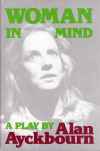
Book Report: Woman in Mind by Alan Ayckbourn (1986)

Book coverAs you probably don’t know, I like Alan Ayckbourn ever since I saw his plays The Norman Conquests when the Rep in Milwaukee was putting all three of the plays on, rotating which play was showing nightly, so that viewers could see all three. Even though I was a hardscrabble working college senior, I managed to see all three–and with three different women (and Table Manners twice due to a scheduling error). Norman would have approved.

This book is a single full evening play. Within it, a woman who is hit on the head gets some attention from a doctor as she comes around. As he goes to get some tea for her, her loving family, clad in tennis apparel, checks on her. She’s a successful historical novelist with a doting husband, an attentive daughter, and a protective brother. But as the doctor returns, they fade away, and her family is really an uncommunicative and distant son and a parson who’s estranged from his wife. As the play goes on, the family visits intersperse, and her doctor tells her she’s suffering from hallucinations related to the head injury.

So as I’m reading, I’m interested to see how this will resolve and somehow hope that she’s really suffering from hallucinations of the bad family and root for a twist where she’s really the successful woman hallucinating a poor existence, but we end with a penultimate scene where the faux daughter is at her wedding, but it’s really a horse race where she’s a horse, and it gets surreal (obviously) and the play resolves where the woman with the head trauma has imagined all of it and is in an ambulance right after the head trauma.

So it disappointed me, ultimately, because I like my plays to veer a little less into the surreal. I mean, I can read a surreal play and know what I’m getting into (The Balcony) and even enjoy it (Rosencrantz and Guildenstern Are Dead). But when a play leads me to believe some surreality is going to resolve but ends up more surreal and unresolved, well, meh.

Books mentioned in this review:

Buy My Books!
Buy John Donnelly's Gold Buy The Courtship of Barbara Holt Buy Coffee House Memories

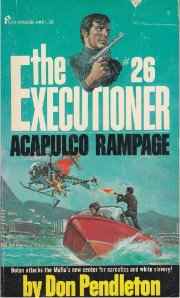
Book Report: Acapulco Rampage by Don Pendleton (1976)

Book coverThis book is not one of the strongest in the Executioner series. In it, Mack Bolan travels to the Mexican resort to keep the Mafia from getting a stronger grip on the criminal warlord currently running the rackets there. After he kills a frontman and contact point for the bad guys, Bolan takes in the man’s secretary and traveling companion who claims to be innocent. He gets on-the-scene help from a washed-up actor that had been a front man for prostitution and white slavery as Bolan tries to find a solution that will keep the Mafia out of Acapulco.

Sadly, although its plot like the others differs from boilerplate, this book ends rather abruptly with a twist for a twists’ sake.

Not one of the better ones in the series, but still a quick and interesting enough read.

Books mentioned in this review:
Buy My Books!
Buy John Donnelly's Gold Buy The Courtship of Barbara Holt Buy Coffee House Memories

And On That Note

At the end of the aforementioned Scooby Doo, Cartoon Network’s The Hub plays an anti-bullying PSA (embedding disabled by request, because if there’s one thing you want to upload onto the torrents, it’s an anti-bullying PSA) with Tom and Jerry shorts:

I gotta ask you, which message do you think resonates with young viewers?

Frankly, I think the PSA is like one of the adult gags in the cartoons that the kids don’t get yet. It does, however, sound the proper notes to today’s concerned parents.

Buy My Books!
Buy John Donnelly's Gold Buy The Courtship of Barbara Holt Buy Coffee House Memories

Generational Skipping Stones

In the other room, my children are watching an episode of The New Scooby Doo Movies with Davy Jones in it.

The program originally aired on December 2, 1972, so I probably didn’t see it when it ran first. A couple years later, I watched it with my mother and brother, and I remember distinctly the joke that Davy Jones makes “I’ve never sung for frogs before, just monkeys.” She explained that he used to belong to a band called the Monkees.

Of course, the Monkees were most active between 1966 and 1968, when the television show appeared, but a decade later when I watched the cartoon, Davy Jones was a has-been, if a little boy thought of such things. Regardless, he was off my cultural radar, if I had such a thing at about 10.

Of course, a couple years after that, in 1985, MTV started airing the television program and brought about a brief Monkees revival. The shows played on MTV and Nickolodeon, the band toured, and I even ended up with a greatest hits album.

When the children heard that Scooby Doo was meeting Davy Jones, their only knowledge was of the guy with the locker. Although this reference precedes any of the pop-culture musings above since it’s a nautical term for the undersea place where drowned sailors go, the boys only know of it from what they’ve heard about the Pirates of the Caribbean movie series.

That’s a lot of generational history wrapped into a single episode of a forty-year-old cartoon.

Buy My Books!
Buy John Donnelly's Gold Buy The Courtship of Barbara Holt Buy Coffee House Memories

Deer Thugz and Disharmony

I moved from the city to a small town to get away from just this sort of violence:

Authorities say the woman was standing in a service station parking lot in Ellisville when two deer ran through the lot. One of them ran into the woman, knocking her to the ground.

This was just part of the deer and his gang of malcreants’ crime spree, which also includes an apparent B-and-E.

(Jeez, I make light of his, but I hope the vic gets well and the perp makes a tasty sausage.)

(Also note that we’ll see a wave of crime and insurrection not seen in this country in 200 years if the deer align themselves with the emus.)

Buy My Books!
Buy John Donnelly's Gold Buy The Courtship of Barbara Holt Buy Coffee House Memories

Smells Like Twee Spirit

I’ve been a curmudgeon since elementary school, but I cannot feel like an old curmudgeon these days when confronted by stories written, obviously, by a 20-something who thinks history began sometime in Bill Clinton’s reign.

First, this piece in Vanity Fair talking about the sameness of culture since that era:

The past is a foreign country. Only 20 years ago the World Wide Web was an obscure academic thingamajig. All personal computers were fancy stand-alone typewriters and calculators that showed only text (but no newspapers or magazines), played no video or music, offered no products to buy.

This is a surprise to anyone on Compuserve, Quantum Link, and BBSes running on CG-Net or WWIV-Net or people who used Commodore 64s or Amigas that could plays music and show short snippets of video.

Then there’s this: Five Video Games You Loved as a Kid But Will Hate If You’re Dumb Enough to Play As an Adult:

Perusing through my massive back catalog of games from my childhood has led me to one conclusion: Games of the past have more capacity to challenge the imagination than those on today’s consoles.

Pocky and Rocky for the Super Nintendo! Can any childhood be complete without it? Come on, surely I’m not the only one who has played this? No?

In essence, the 2-D warmth of games we played as children symbolize a spoiled innocence that has been long lost, which has since been replaced by so-called “Massively Multiplayer Online Role Playing Games” (MMORPGs) and first-person shooters. Games can still be addictive, but the enhanced technological capabilities of today often provide a shortcut. Technological innovation replaced game play innovation. Today game story lines are often bogged down with tedious cut scenes which just take away from the game play more than anything else. The titles on older systems of the ‘80s, ‘90s, and first half of the ‘00s weren’t just reduced to the number of polygons or shades of green. They relied on fun game play and clever artwork to keep their patrons entertained – instead of hooking hopeless addicts with make believe social lives which require a monthly subscription fee and the final ounces of one’s self-respect.

Perhaps though, I should be more balanced about the Video Game’s Golden Days. In some ways, it was actually the Dark Ages.

This is what Pokemon Stadium looked like when it first came out in 2000. It may have been state of the art at the time, but play it now and you’d better have some killer weed.

It would be misleading to say that all of the games from the past deserve recognition. Video games are just like all media: the majority of titles were overhyped, derivative, and poorly designed. This list covers some of the worst offenders from my own vast collection. After weeks of gaming I’ve narrowed down my list to five guilty titles that were considered classics at the time of their release but now do little more than piss you off. Play at your own risk.

He was a child when the SuperNintendo was out. ‘Nuff said.

Jeez, I realize that there are gonna be kids writing because kids are cheap. I’m even almost made piece that I’ll even have doctors who are younger than I am with names like Kailee and Ayden and Tyler. All right.

But I hope they’re old enough to know things went on before they were born.

Buy My Books!
Buy John Donnelly's Gold Buy The Courtship of Barbara Holt Buy Coffee House Memories

Fortunately, My Workout Is Different

From The 27 Rules of Conquering the Gym:

No one in the history of gyms has ever lost a pound while reading “The New Yorker” and slowly pedaling a recumbent bicycle. No one.

Which is why I read Forbes, The National Review, St. Louis Magazine, and 417 when slowly pedaling a recumbent bike. They’re more intense.

This, on the other hand, sounds a lot like my workout:

There’s also the Strange Guy Who is Always at the Gym. Just when you think he isn’t here today…there he is, lurking by the barbells.

Buy My Books!
Buy John Donnelly's Gold Buy The Courtship of Barbara Holt Buy Coffee House Memories

Let’s Do The Time Warp Again

Yesterday, Instapundit linked to someone doing a takedown of someone tut-tutting Heinlein.

I read it and scanned the comments and something leapt out at me:

triticale says:
6/26/2005 at 8:45 pm

I happen to be reading “Tramp Royal” at the moment; Heinlein’s memoirs of a trip around the world by cargo liner which he and Ticky (as he consistantly calls his wife) took in 1954. His travels unquestionably made him more worldly. Even today I doubt the average reader of “Outside” magazine has made it to Tristan de Cunha or the black market currency exchange of Djakarta.

One interesting quote – when discussing the effect of cultural differences on their dealings with a customs inspector (Ticky pulled a dumb stunt later echoed by Podkayne’s brother), he speaks of being a “stranger in a strange land” which would be a pretty good title for a science fiction story.

The name leapt out at me: Triticale gave me the Commodore 128 I currently have and a box of miscellaneous computer stuff that he cleaned out of his garage five years ago. I didn’t meet him in person, as he was in the Milwaukee area and I was not, but I got the stuff through an intermediary (my brother, briefly a blogger himself in 2005).

Triticale’s name leapt out at me because he passed away four years ago.

Instapundit’s been doing these archive posts of his lately, but this one didn’t mention it was going to the archives. Instead, it just sort of sucked me back.

How long have we been here, gentlemen?

Buy My Books!
Buy John Donnelly's Gold Buy The Courtship of Barbara Holt Buy Coffee House Memories

Book Report: A Treasury of Early American Homes by Richard Pratt (1949)

Book coverThis book is a sixty-year-old collection of Ladies Home Journal stories about old houses. You know, you hear the word McMansions to refer to large homes in the suburbs, but there’s a vast difference between large homes in the suburbs and most of these mansions.

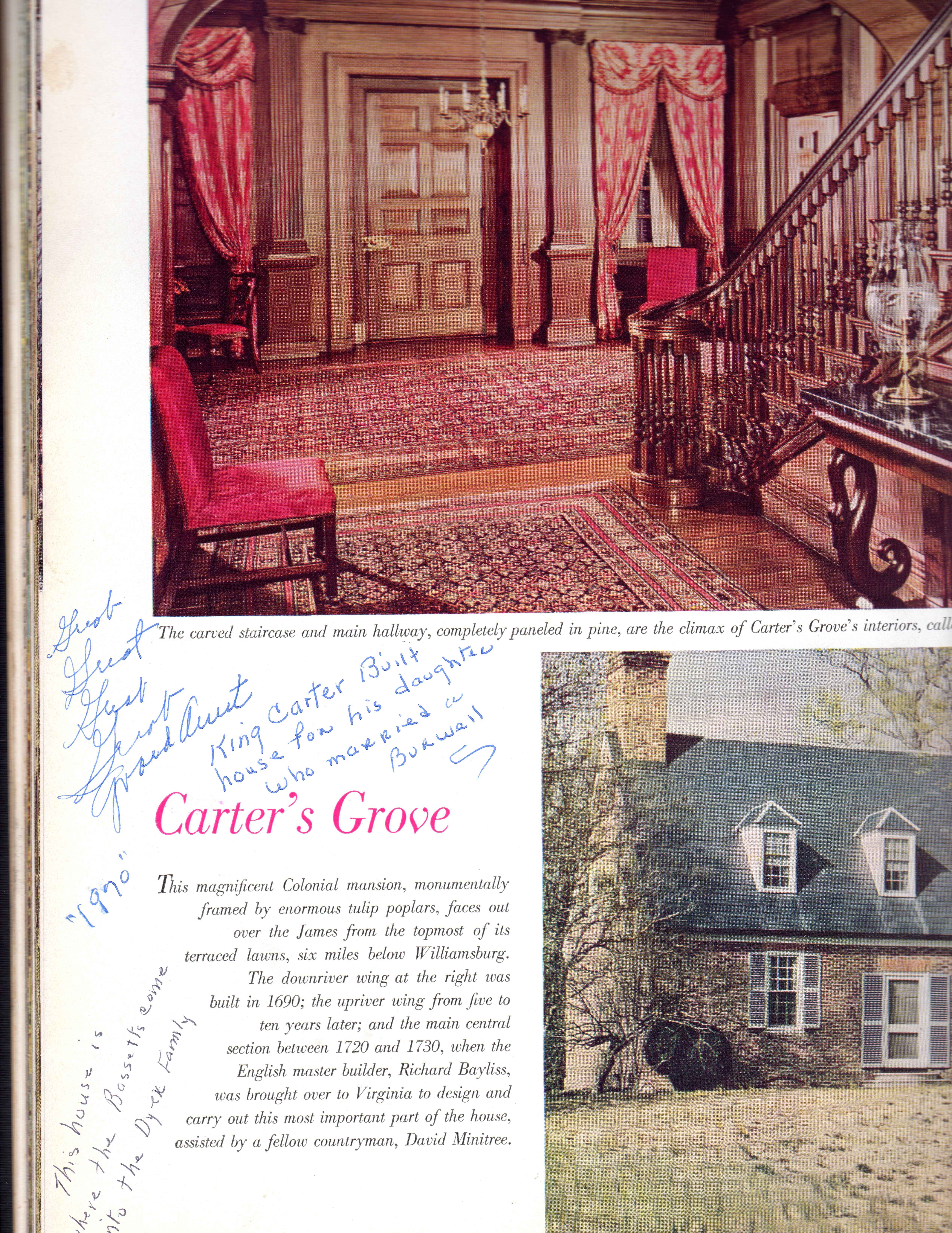
One element of this book raises it above other volumes of its ilk that I’ve seen: this book was previously owned by someone related to one of the homes within’s original owners. Check out the handwritten notes:

Carter's Grove

Fascinating and poignant.

A good browser, for certain.

Books mentioned in this review:

Buy My Books!
Buy John Donnelly's Gold Buy The Courtship of Barbara Holt Buy Coffee House Memories

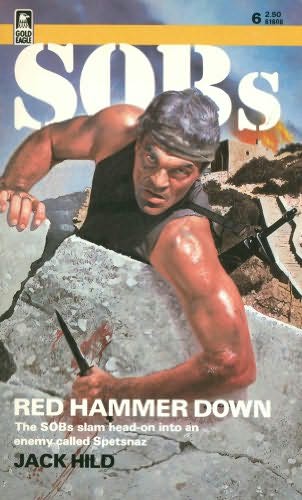
Book Report: Red Hammer Down by Jack Hild (1985)

Book coverI read this book as a break in more serious books. It is the sixth book in the series, so it’s the one right after Gulag War, which was the first of the series that I read in 2009. It deals with the aftermath of that book: After a successful mission to Siberia that embarrassed the Soviets, the SOBs scatter and hide out, only to find Spetsnaz kill teams on their trail. The SOBs discover that a fallen team member isn’t dead and is bait for a Russian trap on Majorca. But if you’re trying to trap the SOBs, you might find that the metal clamps shut around you.

The book is 218 pages, and about 120 of those pages are the climactic battle on Majorca. The preceding 90 are also action-packed and move along very rapidly indeed. There’s less exposition and setup even than the Executioner novels. Although, ultimately, this means they’re not as deep nor character-rich, but as an ensemble cast of sometimes expendable characters, you should expect some of that.

I’m surprised that the SOBs didn’t get some sort of movie treatment in the 1980s, frankly, and I look forward to stumbling across more of these books in the future.

Books mentioned in this review:

Buy My Books!
Buy John Donnelly's Gold Buy The Courtship of Barbara Holt Buy Coffee House Memories

2011: The Year’s Reading In Review

Well, here they are: The 106 books I read in 2011.

  • Buried Treasures of the Ozarks by W.C. Jameson
  • Remembering St. Louis World’s Fair by Margaret Johanson Witherspoon
  • Missouri Bandits, Bushwackers, Outlaws by Carole Marsh
  • A Political Bestiary by Eugene J. McCarthy and James J. Kilpatrick
  • This Is It, Mike Shayne by Brett Halliday
  • Battlestar Galactica by Glen A. Larson and Robert Thurston
  • Split Image by Robert B. Parker
  • The Turqouise Lament by John D. MacDonald
  • The Virginian by Owen Wister
  • Great Sonnets by Edited by Paul Negri
  • Fresh Lies by James Lileks
  • Goodbye, Nanny Grey by Susannah Stacey
  • Goldfinger by Ian Fleming
  • Code of Honor by “Don Pendleton”
  • Unsolved Murders & Mysteries edited by John Canning
  • The Brookline Shoot-Out by Shirley Walker Garton and Bradley Allen Garton
  • The River of Used To Be by Jim Hamilton
  • Telefon by Walter Wager
  • The Gingerbread Lady by Neil Simon
  • Dave Barry Turns 40 by Dave Barry
  • Fletch Forever by Gregory McDonald
  • California Hit by Don Pendleton
  • Boston Blitz by Don Pendleton
  • Thunderball by Ian Fleming
  • Where There’s Smoke by Ed McBain
  • Battlestar Galactica 2: The Cylon Death Machine by Glen A. Larson and Robert Thurston
  • Traces of Silver by Artie Ayres
  • The Fellowship of the Ring by J.R.R. Tolkien
  • Selected Poems by John Donne
  • Casual Day Has Gone Too Far by Scott Adams
  • Garfield Takes Up Space by Jim Davis
  • Washington IOU by Don Pendleton
  • Bite Size History by Hugh Westrup
  • Triviata compiled by Timothy T. Fullerton
  • The Two Towers by J.R.R. Tolkien
  • Vintage Reading by Robert Kanigel
  • San Diego Siege by Don Pendleton
  • The Well-Stocked Bookcase
  • Sicilian Slaughter by Jim Peterson
  • Jersey Guns by Don Pendleton
  • The Return of the King by J.R.R. Tolkien
  • Texas Storm by Don Pendleton
  • The Best of Clarence Day by Clarence Day
  • Can a Lawn Chair Really Fly? by Jess Gibson
  • Dune by Frank Herbert
  • Dave Barry Does Japan by Dave Barry
  • Storm Prey by John Sandford
  • The Treasury of Clean Jokes by Tal D. Bonham
  • The Seinfeld Universe by Greg Guttoso
  • New Orleans Knockout by Don Pendleton
  • Firestorm U.S.A. by Jack Hild
  • The Bittersweet Ozarks at a Glance by Ellen Gray Massey
  • The Kentucky Rifle: A True American Heritage in Pictures by The Kentucky Rifle Association
  • No Shirt, No Shoes, No Problem by Jeff Foxworthy
  • Point Blank by Jack Hild
  • Ozark Tales and Superstitions by Phillip W. Steele
  • Treasure Hunting for Fun and Profit by Charles Garrett
  • Time Enough for Love by Robert A. Heinlein
  • Atlas of Ancient History: 1700 BC to 565 AD by Michael Grant
  • The World’s Great News Photos 1840-1980 by Craig T. Norback and Melvin Gray
  • South Park Conservatives by Brian C. Anderson
  • Slaughterhouse 5 by Kurt Vonnegut
  • Hawaiian Hellground by Don Pendleton
  • Silent Prey by John Sandford
  • Painted Ladies by Robert B. Parker
  • Sixkill by Robert B. Parker
  • Bad Blood by John Sandford
  • Anerica Alone by Mark Steyn
  • Incredible Super Trivia by Fred L. Worth
  • Run to Daylight by Vince Lombardi
  • Paris, Tightwad, and Peculiar by Margot Ford McCullen
  • Triumph TRs by Graham Robson
  • Missouri Hard to Believe But True by Carole Marsh
  • A Bag of Noodles by Wally Armbruster
  • Remembering Reagan by Peter Hannaford and Charles D. Hobbs
  • One Hour Crafts for Kids by Cindy Groom Harry
  • Bruges and Its Beauties
  • Gainsborough: A Biography by Elizabeth Ripley
  • Ripley’s Believe It or Not Special Edition 2005 by Mary Packard
  • Great Quotes, Great Comedians by compiled by Michael Ryan
  • Jokes and Anecdotes for All Occasions by Ralph L. Marquard
  • Corporate Madness by Mark Lineback
  • Orvieto: Art-History-Folklore
  • Whiplash: America’s Most Frivolous Lawsuits by James Percelay
  • 28 Table Lamp Projects by H.A. Menke
  • Three Aces by Rex Stout
  • Empire of Lies by Andrew Klavan
  • Halo First Strike by Eric Nylund
  • Outland by Alan Dean Foster
  • I’m Not Anti-Business, I’m Anti-Idiot by Scott Adams
  • The Porkchoppers by Ross Thomas
  • Ghost Radio by Leopoldo Gout
  • The Book of Questions and Answers by Joshua Coltrane
  • Canadian Crisis by Don Pendleton
  • Daytrip Missouri by Lee N. Godley and Patricia M. O’Rourke
  • Home for Christmas by Lloyd C. Douglas
  • Wild Horse Mesa by Zane Grey
  • Kill Me Tomorrow by Richard S. Prather
  • Colorado Kill-Zone by Don Pendleton
  • General George Patton: Old Blood and Guts by Alden Hatch
  • Love and Marriage by Bill Cosby
  • Attila, King of the Huns by Patrick Howarth
  • Buried Prey by John Sandford
  • Do the Work! by Steven Pressfield
  • In Odd We Trust by Dean Koontz and Queenie Chan
  • Missouri by Bill Nunn

To sum up:

I read a lot of Don Pendleton’s The Executioner series, as is only fitting because my beautiful wife bought me 47 of them for my birthday in February.

I spent a lot of time this year getting my geek cred back by reading The Lord of the Rings and Dune, and I threw in Time Enough For Love by Heinlein. That’s some 2000 pages of science fiction and fantasy right there.

In the late spring and early summer, I started and even finished a number of compendium books, especially about literature, in advance of my Jeopardy! audition. Since I’ve forgotten most of what I read in them, it’s just as well that I’ve not been summoned to Los Angeles.

I didn’t read too many classics or serious things this year. I got in a couple of bios, especially late, and a number of Robert B. Parker and John Sandford works.

This next year, I expect I’ll read more seriously but will get my fill of pulp and picture books.

Buy My Books!
Buy John Donnelly's Gold Buy The Courtship of Barbara Holt Buy Coffee House Memories

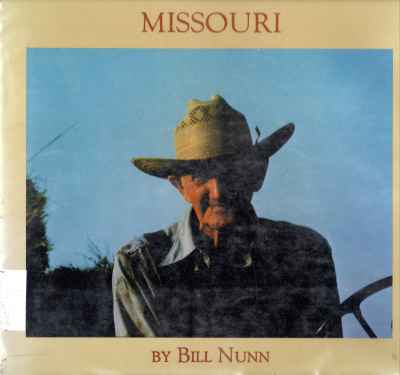
Book Report: Missouri by Bill Nunn (1982)

Book coverCenterre Bancorporation brought us this book to celebrate the opening of its new headquarters in St. Louis in 1982. Don’t remember Centerre Bancorporation? Boatmen’s Bank bought it out in 1988. Don’t remember Boatmen’s Bank? NationsBank bought it in 1996 and sent the Boatmen’s Bank Guy pitchman to MagnaBank, where he became Magna Man. Don’t remember MagnaBank? That’s not relevant here. Don’t remember NationsBank? It eventually became Bank of America.

Whew.

At any rate, I got this book from the library as a picture book I could browse while watching football games, but the text-to-photos ratio is not particularly conducive to that. The book is almost endcapped by glowing tributes to the revitalizations of St. Louis City and Kansas City, and it’s almost handicapped by those tributes. For the last 30 years or so, St. Louis has always been on the verge of returning to its glory back in the days where it had the only bridge over the Mississippi River. But it never gets there, and any boosterism text is suspect.

But the book also takes a bit of a tour through small towns in Missouri, and it has a lot of pictures of historic Missouri (of 1982!). So it’s got that going for it, and it wasn’t an unpleasant couple of hours of browsing.

Books mentioned in this review:

Buy My Books!
Buy John Donnelly's Gold Buy The Courtship of Barbara Holt Buy Coffee House Memories