 My goodness, it has been a year and a half since I read the first in the Harbison Mystery series (Terror Near Town, which I read in January 2022). It’s been two years since I got the series at a book signing at ABC Books. This probably means that there’s another one or two in the series since real writers are writing books whilst I write intermittent blog book reports.
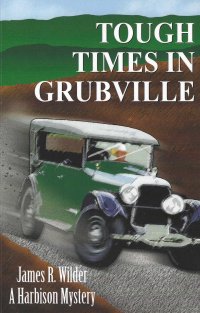
This book takes place almost twenty years after Terror Near Town. Set in the Great Depression, Chet Harbison, the Spanish-American War veteran from the first book, is 51 years old and has lost a bundle in a St. Louis bank’s failure. He and his family, including his brother and his family, economize and handle different business ventures to keep themselves and their farms afloat. The Jefferson County sheriff gets Chet to agree to be a deputy to earn a little money and to mostly keep him on a short leash and to take credit for Chet’s successes.
Although there is a bit of “mystery”–organized crime is moving in on local bootleggers–the book is not a mystery–it’s a western in the vein of Louis L’Amour (which, of course, I have cottoned to after reading A Trail of Memories: The Quotations of Louis L’Amour and Bendigo Shafter last year). The crime part of the story is a small part of it, almost an afterthought. But I suppose it’s better to be in the mystery section of the book store than the Western section–although in ABC Books, I’m pretty sure he’s still in the Local Authors section regardless of where the author actually lives.
I flagged a number of things in the book, gentle reader, that were errors and oversights, such as talking about the county alderman from High Ridge (the county has a council, but I’ve never heard of them called aldermen–but, to be honest, most of my time living in Jefferson County when I was too young to pay attention to such things) or a character telling another to bring in half a cord of wood for a stove–half a cord of wood is 8 feet by 4 feet by 2 feet (64 cubic feet) which is a pretty big ask to bring inside at one time or how onerous an eighth of a mile walk is (it’s 660 feet or two football fields which is not that far). But never mind those.
I will mention one thing: One of the events in the book is a raid on the Biltmore Club which straddles the St. Louis/Jefferson County Line. Apparently, the trick was if one county raided the club, they would all run to the other side of the club in the other county. As you have often heard, gentle reader, I lived in a trailer park down Delores Drive, and I often mention going up to the flea market on the hill. The hill was overlooked by a ridge, and atop that ridge was Biltmore. It wasn’t a club in the 1980s, but they did have a little business center up there with a couple offices (and a dump). Now, I believe it’s a real retail development. But the locations in the book came very close to where I lived indeed.
A good enough read that I look forward to the two others I have in the series. Apparently, I picked up the fourth in the series last August, which means I might only be missing one in the series if one came out this year. Note how this note indicates I’m writing these book reports in stream-of-consciousness–I just now searched again for the author on the blog and only now, four paragraphs later, I discovered I had actually bought the fourth book in the series. Of course, time goes all a-wonky again since I’ll be scheduling this post, so now is several days ago. Ay. And it might well be another year and a half before I pick up another in the series, by which I might well be further behind in the series.




 At Rob K.’s
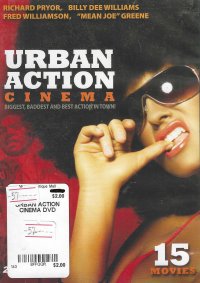 I don’t know where I bought this collection, but it looks to be fifteen films from the Blaxploitation era of the 1970s. And, to be honest, they’re not the best of them–one bets you could sell Shaft, Across 110th Street, Foxy Brown, Superfly, and a handful of other films singly–heck, I bought Get Christie Love! on a dollar DVD close to twenty years ago. But, you know, as I got into them, I discovered that they’re not so much Blaxploitation films as films with black casts.
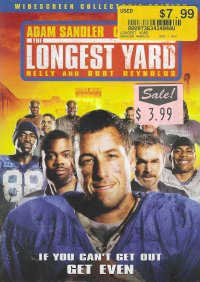 This is the Adam Sandler remake of the Burt Reynolds film
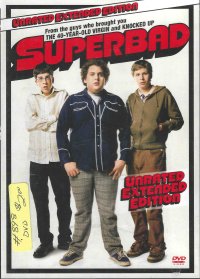 I picked this film up
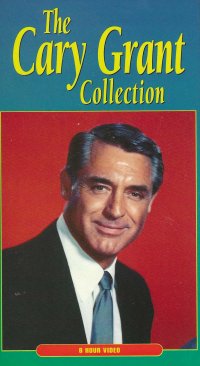 Gentle reader, over Memorial Day weekend (that long ago, sadly–I am far behind on my movie reports and not so much my book reports), I watched this single videocassette with three Cary Grant films which I bought
 I bought this film at the Friends of the Springfield-Greene County Library book sale
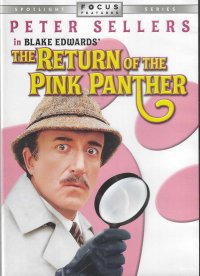 I kind of remember the Pink Panther movies from my younger years. I’d like to say that I saw one of them at the drive-in with my parents. We went a couple of times when I was younger, sometimes my parents, my brother, and I, and at least once with my mother and her friend the country singer and her two boys. Enough to think we went all the time, kind of like how a handful of Christmases and holidays from my very younger years set the pattern. But going to the drive-in in the late 1970s was already trending toward an anachronism. I’ve thought about taking my boys down to Aurora for the drive-in there (and mentioned it to my beautiful wife while talking about this film, triggering Facebook ads for that very drive-in). But I am sure my boys would find the experience underwhelming. I also think that I saw parts of a Pink Panther film when we later at the home of the country singer, her husband the wedding singer, and their two boys, either on a sleepover or in the interim month between exiting the projects and decamping for Missouri at the end of the school year–I remember the bit about Inspector Clouseau’s butler attacking him. I also remember that Inspector Clouseau was a bit of a, what, trope? when I was younger. You’d say someone was a Clouseau who was stating the obvious or was making a bad deduction. And look at his attire on the cover: He was the inspiration for Inspector Gadget, ainna?