Please, gentle reader, click the ads in the sidebar a million times so I can have bookshelves like one finds in the the Morgan Library.
Thank you, that is all.
To be able to say "Noggle," you first must be able to say "Nah."
Please, gentle reader, click the ads in the sidebar a million times so I can have bookshelves like one finds in the the Morgan Library.
Thank you, that is all.
Buy My Books!
In Springfield, the voters have voted the wrong way:
As the votes were being counted, a group of opponents of the controversial E-Verify ordinance waited anxiously at a downtown bar.
Marla Marantz, an organizer with Citizens for a United Springfield, watched the results trickle in on a laptop computer on a table near the east wall of Ophelia’s Tapas & Wine Bar.
Mayor Jim O’Neal, who on Friday called the initiative “misguided,” checked his iPhone periodically for the latest results as he mingled with others gathered for the watch party.
And:
Marantz acknowledged she was emotional about the results.
“I care deeply about it,” she said. “I think people were misled about what the ordinance is really about.”
O’Neal acknowledged disappointment.
“How close this vote was demonstrates a great division in the community.”
“But the people have spoken,” he said.
O’Neal said he and city council are now in a “precarious position” – mandated to defend inevitable legal challenges.
O’Neal said taxpayers could now have to pay for “hundreds of thousands of dollars” to defend the measure in court. He cited parts of the ordinance believed to be problematic.
The measure would require employers in city of Springfield to check employee eligibility with a Federal program:
A petition-based ordinance requiring local employers to screen employees using the online E-Verify program passed by a narrow margin Tuesday, although how and when it will be enforced remains unclear.
“We’re pleased that the citizens of Springfield heard our message and agreed with us, but we temper the celebration with the knowledge that this is a contentious issue and people of good conscience can disagree,” said Jerry Wilson, a spokesman for the Ozarks Minutemen.
He said the group hopes both sides now will “put aside their differences and support the rule of law.”
“This has always been about one thing,” Wilson said. “You’re either eligible to work in the United States or you are not.”
Opponents conceded the loss Tuesday but said the fight against the ordinance isn’t over.
The 221 vote difference — less than 1.4 percent of the vote — is outside the 1 percent threshold for a recount. But Mayor Jim O’Neal, who came out strongly against the measure in the days before the election, said he expects the ordinance to be challenged in court.
Not so that you could tell in the radio advertisements that Citizens for United Springfield were running on election day, where the nature of the question was not discussed, but only the impact of the check on local businesses leading to fewer jobs in Springfield.
The election was close:
                                             VOTES PERCENT

City of Springfield Question 1
 YES  .  .  .  .  .  .  .  .  .  .  .  .     8,247   50.68
 NO.  .  .  .  .  .  .  .  .  .  .  .  .     8,026   49.32
How different that was from an election a year ago:
                                             VOTES PERCENT

City of Springfield Question 2
 YES  .  .  .  .  .  .  .  .  .  .  .  .    11,201   53.35
 NO.  .  .  .  .  .  .  .  .  .  .  .  .     9,795   46.65
Where was the mayor lamenting the lawsuits then? The concerns by the right-thinking crowd about the adverse impact on business? Not here:
Clean air won out over living free Tuesday in an election battle that had been defined as a showdown between public health and business rights.
Springfield voters approved a sweeping indoor smoking ban by a margin of 53 percent to 47 percent, setting the stage for all businesses in Springfield to be smoke-free by June 6.
“We’re glad to see people decided in favor of the health of the community,” said Carrie Reynolds, spokeswoman for the group, Clean Air Springfield, that had lobbied on behalf of the ordinance.
Opponents, meanwhile, said they intend to support businesses impacted by the ban and remain active through an inevitable legal challenge.
“We’ll basically be a lobbying group for them,” said Live Free Springfield Chairman David Myers.
In both cases, a tiny fraction of voters won a ballot-initiated election, but the reactions from the members of the city government itself are very different.
Buy My Books!
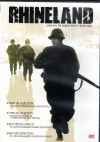 Full disclosure: This is a small independent film from a production company in St. Louis. I’ve worked with some members of the team on an Internet video that depicted me in bed with another man (I was young and needed the money). So take it for what it’s worth. I bought the film and did not receive it as a free gift.
</fulldisclosure>
The film depicts some raw recruits trained in anti-armor as they’re thrown into combat and a mine squad at the tail end of World War II. There’s a young idealistic sort of n00b, a grizzled, disdainful sergeant, a world-weary lieutenant, and some other guys, and they get various infantry assignments as the army presses onto the Rhine.
Technically speaking, it’s a very adept film. They used a lot of vintage vehicles from World War II that they gathered from collectors in the St. Louis area, including a half-track that I saw driving around Old Trees once in a while. They rely on shaky cam a couple times for verite, which I could have done without. But you don’t think you’re watching some kids playing soldier in Illinois.
The story, though, is a little thin. The incidents and scenes run a bit long, the n00b changes into a veteran in a matter of moments, and even as the n00b is changing, the sergeant remains disdainful until the end.
So it’s a good looking piece of work that could have benefitted from a better story.
DVDs mentioned in this review:
Buy My Books!
Because the government cannot legislate safety, it continues to ban things citizens can use unsafely. To whit, the St. Louis suburb of Chesterfield has banned the use of air guns:
Chesterfield City Council voted 6-2 Monday night in favor of a tighter weapons ban after two hours of testimony from the public both for and against the measure.
Councilmen Bob Nation and Barry Flachsbart voted against the heightened ban, saying it restricted rights provided by the Missouri Constitution.
Chesterfield’s Mayor Bruce Geiger said the modification of the existing weapons ban was really a public safety issue.
City Attorney Robert Heggie said the city felt “confident” about its new ordinance, since neighboring cities have much the same bans.
“It’s a common sense approach,” Heggie said.
Before the vote, Geiger and Police Chief Ray Johnson showed a piece of wood and a bulletproof vest they shot earlier with guns and darts, to apparently show the dangers, and need for an ordinance that would ban shooting small animals in subdivision yards.
When a government official says “common sense” it generally means they’re about to ban something and they don’t want to have to build a logical case for it.
In this case, Chesterfield has banned people from firing air guns and dart guns at varmints on their property because of the threat to public safety danger posed by a pellet gun. Bear in mind that shooting someone with a pellet gun, using a pellet gun to hold up a Quik Trip, or damaging property is against the law: no, that’s beside the point. Common sense demands further restrictions. A ban would not pass Congressional muster, but fortunately a common sense restriction will.
Buy My Books!
Glenn Reynolds’s column “It’s takers versus makers and these days the takers are winning” appeared on the Washington Examiner site on Sunday, and it discusses Charlie Sykes’s new book A Nation Of Moochers: America?s Addiction To Getting Something For Nothing.
As some of you probably know, the term moochers is prevalent in Ayn Rand’s Atlas Shrugged.
At any rate, Reynolds says:
In today’s America, government benefits flow to large numbers of people who are encouraged to vote for politicians who’ll keep them coming. The benefits are paid for by other people who, being less numerous, can’t muster enough votes to put this to a stop.
Over time, this causes the economy to do worse, pushing more people into the moocher class and further strengthening the politicians whose position depends on robbing Peter to pay Paul. Because, as they say, if you rob Peter to pay Paul, you can be pretty sure of getting Paul’s vote.
But the damage goes deeper. Sykes writes, “In contemporary America, we now have two parallel cultures: An anachronistic culture of independence and responsibility, and the emerging moocher culture.”
“We continually draw on the reserves of that older culture, with the unspoken assumption that it will always be there to mooch from and that responsibility and hard work are simply givens. But to sustain deadbeats, others have to pay their bills on time.”
I think they’re spot-on with that bit of epistemology that some people, particularly legislators, demonstrate: People who work hard and succeed will always work hard and succeed, regardless of the obstacles, because they like the struggle. The profits and benefits they receive from that struggle are secondary. They produce because they have the ability to produce. And the rest of society can simply, indeed has some moral right, to tap into those benefits.
But instead of takers and makers, I think we’ve got a different paradigm here: Fraggles and Doozers:
Within Fraggle Rock lives a second species of small humanoid creatures, the pudgy, green, ant-like Doozers. Standing only 6 inches (150 mm) tall (knee-high to a Fraggle), Doozers in a sense represent anti-Fraggles; their lives are dedicated to work and industry. Doozers spend much of their time busily constructing all manner of scaffolding throughout Fraggle Rock using miniature construction equipment and wearing hard-hats and work boots. No one but the Doozers themselves seem to understand the actual purpose of their intricate and beautiful constructions.
Often they accompany their building with marching songs and various Doozer chants. To ensure that they always have a steady stream of work to do, Doozers build their constructions out of an edible candy-like substance (manufactured from radishes) which is greatly enjoyed by Fraggles. They actually want the Fraggles to eat their constructions because “architecture’s supposed to be enjoyed” and also so they can go on to build again. This is essentially the only interaction between Doozers and Fraggles; Doozers spend most of their time building, and Fraggles spend much of their time eating Doozer buildings. They thus form an odd sort of symbiosis. In one episode, the flavor of the Doozer sticks is augmented by adding other flavors, such as tomato and mustard.
This symbiosis becomes integral to the episode “The Preachification of Convincing John” where Mokey calls upon the Fraggles to stop eating the Doozers’ constructions—because they spend so much time making them. Fraggle Rock quickly fills with constructions and the Doozers have no space left in which to build. After running out of space, the Doozers finally decide to move on to a new area because the Fraggles won’t eat their constructions, and there is even a tragic scene with a mother explaining to her daughter that Doozers must build or they will die, and so they must find a new place to live where they can build and hopefully find Fraggles who will eat their constructions. Overhearing this, Mokey realizes that she has inadvertently disrupted a vital symbiotic relationship through ignorant good intentions. As a result, Mokey frantically rescinds her prohibition and encourages the Fraggles to gorge on the structures — just in time to persuade the Doozers to stay.
If making money, doing business, and hiring people were some psychological compulsion, wouldn’t we see it continuing in the face of the modern mixed economy system? Wouldn’t those capitalists, like Boxer in Animal Farm, just work harder, more compulsively?
I’m not sure how someone would square the circle that Doozers have to build, I mean, Capitalists have to entrepreneu and exploit the working man with the decline of the economy in the face of too much government Fraggling, but I think a lot of people are just fine with round quadrilaterals in the right circumstances.
UPDATE: Welcome, Instapundit readers. Hey, take a minute to check out my other blogs about Missouri people, places, and politics (Missouri Insight) and software quality assurance (QA Hates You). And check out my novel John Donnelly’s Gold and my plays The Courtship of Barbara Holt, both available for Kindle for .99.
Buy My Books!
 I browsed through this book during the Super Bowl. Not that that matters, but you know that’s what I do.
The book was published in 1959 to draw tourists to the German city (West German city in those days, only a decade after the Berlin AirLift). The photography, aside from the dust jacket, is in black and white, and the text appears side-by-side in English and French. Apparently, 20 years later, the Germans wanted the French tourists to invade. But that’s neither here nor there.
Cologne is a beautiful city circa 1959: the old parts of it that survived the war, including its cathedral and some of the gates that remain from the walls that surrounded the old city are spectacular. However, the book spends a bunch of pages on the more modern buildings in the city, built after the war, and they all look like 20th century architecture, which is to say rather unimaginative compared to the old stuff.
I don’t imagine I’ll ever see Cologne firsthand–I’m not eager to travel abroad, as I get the sense Americans are pretty unpopular over in Europe in the 21st century. In my imagination, the 1950s and the 1960s were the time to visit Europe, when the gratitude for America’s intervention in WWII was still high. Maybe it wasn’t. Maybe I’m inflating my concerns to cover my own parochialism. Maybe I’ll travel on one of Jay Weber’s annual tours, or go a group with Victor Davis Hanson some time. Until then, I have these books between football plays.
Bonus: This book was a gift in 1960 from either schoolmates, coworkers, or something. Check out the inscription below, ignoring the $1.00 that Book Castle priced it: Continue reading “Book Report: Cologne published by Greven Verlag Koln (1959)”
Buy My Books!
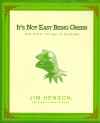 This book is a collection of philosophical quotes about Jim Henson and his work. Well, somewhat. The quotes by Jim Henson are philosophical about the nature of work, collaboration with coworkers and underlings, and the balance of life vis-a-vis work. He’s almost like a cuddly Ayn Rand character when he talks about doing what one loves, working hard, and things falling into place if you do that. I suppose you can get that out of a lot of entertainers, but Henson was more than that: he was also a businessman marketing his product, puppets, and managing crews of people making his product. He sounds like a good boss.
The other quotes in the book range from songs from Sesame Street, The Muppet Show, and other Muppet productions, which are all about following your bliss and being true to your nonconformist self to quotes from Jim Henson’s family and underlings who mostly talk about what an awesome guy Jim Henson was.
So it’s a little less than I hoped for. I wanted more quotability, something to tweet from within the book, but all I got was a quote from Cantus Fraggle. I can’t even remember which one he was. And the book does quote the theme song from Fraggle Rock, which is:
Dance your cares away, worry’s for another day.
Let the music play down at Fraggle Rock.
Work your cares away, dancing’s for another day.
Let the Fraggles play….
The thing is, the first couplet is sung by the Fraggles, and the second is by the Doozers, so the discordant philosophy in the lines makes sense.
Strangely enough, the book presents Henson as both a Fraggle and a Doozer. Wrap your minds around that if this sort of thing is your bag. At 185 pages including contributor bios with one quote per page, we end up with a short read. Once could blow through it in a couple of nights, even when sick like I was when I read it.
Books mentioned in this review:
Buy My Books!
In my cabinet in the kitchen where we store our pharmaceuticals and supplements, I recently uncovered this curiosity when I tried to find a child’s liquid medicine syringe among the cat pill guns and out-of-date vitamins:

Continue reading “What Is in Brian’s Cabinets, Part 1 in a Continuing Series”
Buy My Books!
My desk is relatively clean these days, as I’m trying to keep ahead of things, but I do still have some strange things on my desk lingering from aeons past. To whit:
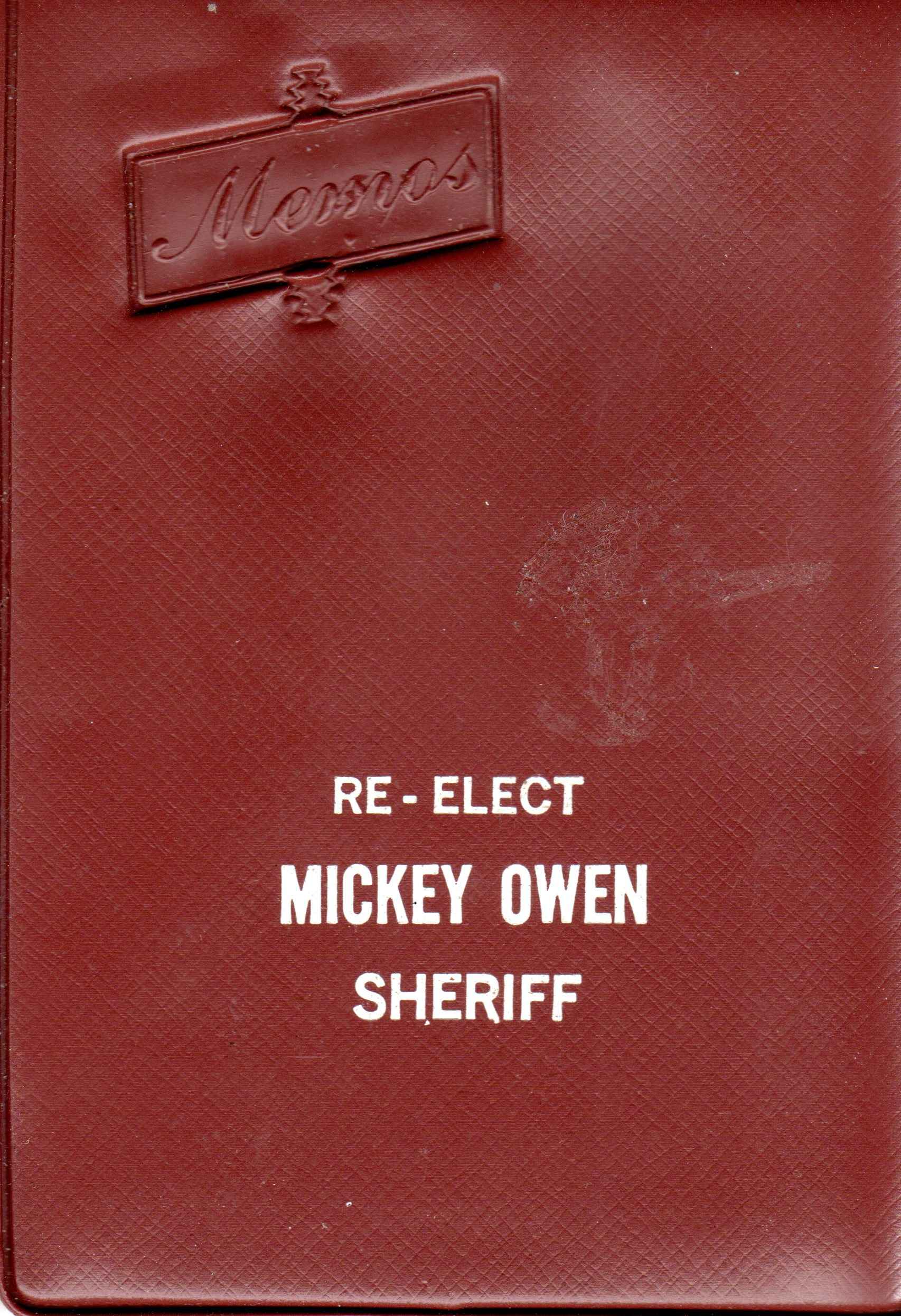
By naming these things on the blog, I do tend to handle them in short order, which is why I’m bothering you with them.
Buy My Books!
From the February 6, 2012, Ozarks Farm and Neighbor (registration and subscription required):
With the release of the fourth quarter fundraising report, the Your Vote Counts Committee disclosed that the vast majority of their funding comes from the extremist animal-rights groups and donors from outside Missouri. The report, found on the Missouri Ethics Commission’s website, shows that Your Vote Counts Committee received a total of $164,863.92 in monetary and in-kind contributions from out-of-state individuals and special interest groups. Animal-rights groups ASPCA and HSUS contributed $50,000 and $87,305.39 respectively. Only two donors accounting for $150 were from the state of Missouri. In total, 99.91 percent of the Your Vote Counts Committee’s funding came from outside of Missouri in the fourth quarter of 2011.
Here’s that report if you’re interested.
So many ballot initiatives are driven by organizations and committees that have some idea of controlling something that displeases the committeemembers’ sense of aesthetics, and those committees are either directed or helped greatly by out-of-jurisdiction, centralized organizations dedicated to promoting those very laws. The committee forms, gets a couple sawbucks from actual residents, and then the bulk of its money from national organizations.
Another example: The Citizens for Clean Air Springfield, who successfully initiated a local ballot measure and banned smoking in Springfield, Missouri, got the vast majority of its monies from the American Heart Association and the American Cancer Society (PDF report). A couple dollars from Springfield residents, a couple dollars from other local residents who do not live in Springfield itself, and tens of thousands of dollars from national organizations.
Did you know if you’re giving money to the American Cancer Society or the American Heart Association, you’re giving money to drive local bars out of business? Of course not. You thought you were giving money to research treatments for these things, but it’s all a big slush fund with national charities.
(Related: Springfield smoking ban targeted by group hoping for repeal)
Does this mean the ballot initiative process is flawed? Well, sort of. It presupposes an informed populace who respects individual freedom and understands that most issues can’t be adequately explored in a bumper sticker or a calendar full of puppies.
Does this mean the organizations should not spend their moneys influencing politics? Well, no, those organizations have the same rights as individuals, corporations, and other organizations in political speech. However, donors and voters need to know where their donations are going and whether the fundraising and political speech on the radio or television actually represents the feelings of their fellow citizens or whether it’s the views of a couple of local citizens and a couple of wealthy citizens from somewhere else.
Buy My Books!
Note the description of the man who robbed the bank:
Police say a man wearing a bandana and dirty white gloves robbed a bank in south St. Louis County this afternoon.
Why, oh why, in the 21st century are we remarking upon the gender of this alleged assailant? Just because males make up the vast majority of bank robbers in this country, why should gender be mentioned in the description other than to perpetuate the stereotype that only men rob banks?
(Satire aside, FBI statistics from 2010 show that blacks and whites commit very similar numbers of bank crimes. But what would a descriptor like race do in aiding the police in looking for a bank robber?).
Buy My Books!
James Lileks on bootscrapes:
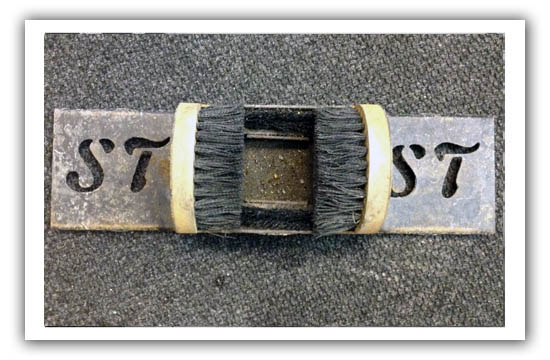
I’m tired of walking across the lot to beep my ID and walk in the building and see the sign that asks me to stomp my feet to remove the snow. It comes out every year, along with a brush for scraping your boots. It has the company logo. It’s got to be more than half a century old.
I AM TIRED OF THE SHOE THING
Well, maybe in the big city, they only bring the bootscrapes out in the winter, but one of the first things I noticed when I moved to the Springfield area is that you’ll find bootscrapes outside many local businesses and whatnot.
Like outside the Republic branch of the Springfield-Greene County Library:
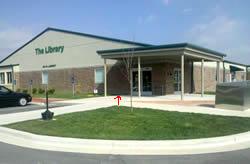
You’ll have to squint to see it in that picture.
Note that that esoteric branch of the library opened in 2009.
We have bootscrapes out here because we have ranchers out here. Not city slickers with their exotic footcoverings for the snow.
Buy My Books!
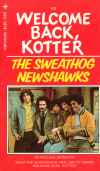 How long have I owned this book? Here’s a photoshopped cover of it I did in July 2005. Oftentimes, I’ve picked it up when looking for something quick to read between weightier things, but Robert Hegyes, who played Esposito in Welcome Back, Kotter died, and I heard “Welcome Back” by John Sebastian on the radio (in tribute to the aforementioned Hegyes). So now seemed the time.
You know what? This is a pretty good book for such as it is.
I’ve read books based on hourlong dramas before (Adam-12 here and here, Murder, She Wrote here), but this might be the first book I’ve read based on a half hour sitcom. And it was pretty witty and true to the characters. While I didn’t laugh out loud at any of it, I was amused enough to want to watch some of the old programs and maybe come up with other books in the series.
As with any 70s paperback, the order forms in the back are always a treat. The books available in paperback immediately preceding this book include several in the Get Smart book series and other pulp. I’ve never, to my recollection, seen a book where the order forms are clipped, indicating someone has actually used them to order books. I wonder if the sort of people who did that were the sort of people to throw books out when they were done, or whether there never really was that sort of people.
UPDATE: How soon they forget. While cataloging this book, I learned I’d already read something by this author. That would be a Happy Days book, Ready to Go Steady, which I read in 2009. This book is far better than that Happy Days book.
Books mentioned in this review:
Buy My Books!
A History Channel Club bookmark has an interesting bit of inconsistency. Can you spot it?
Continue reading “Eh, They’re Republicans, So They’re All The Same Anyway”
Buy My Books!
The St. Louis Post-Dispatch editorial board puts words into Ed Martin’s mouth:
“See brown people. Round up brown people. Ed Martin. Tough on crime.” That’s quite a slogan.
Next, of course, we’ll see those words scroll across the screen in one of Chris Koster’s ads or one of the other entities out there putting out anti-Martin ads in advance of the election.
Paper prints crap, advertisements use crap as evidence that a legitimate news source agrees with advertiser, and hopefully, viewers will ignore the context.
I miss the days when St. Louis had two dailies. The Globe-Democrat, the Sun, whatever.
Buy My Books!
Headline: Keep supporting fight against child abuse in the Ozarks
Yeah! Let’s beat child abuse like a red-haired stepchild!
Buy My Books!
 This film is based on the book by Robert B. Parker which I read in 2005. Since I was to read the fourth book in the series, I ordered the DVD so I could watch it after I finished the last book.
And you know what? The film is better than the book.
The latter 2/3 of Parker’s books were heavily influenced by his years in Hollywood in the 1980s, so they translate very well to the screen. But Parker didn’t write the screenplay–Ed Harris, who plays Cole, did along with a co-writer. As such, he takes the ideal Parkerian hero, the fast draw dead shot who loves a fallen woman character and diminishes him compared to Hitch, the sidekick and narrator. Harris emphasizes that Cole is not book-learned like Hitch when he (Cole) struggles with words. The screenplay also contrasts Cole with Bragg, the bad guy, as being undereducated. He’s not so much an ideal man as a fast man who is simple.
Maybe that’s the way that Parker intended it. Maybe too much interior thinking on Hitch’s park shaped the narrative wrong for it to carry off. Maybe I too much read Parker’s biography into all of his books. But it’s a good enough Western film, and I enjoyed it more than I enjoyed the recent Hitch and Cole books.
DVDs mentioned in this review:
Buy My Books!
I’ve started a new blog called Missouri Insight to cover Missouri people, places, books, politics, and government.
Go check it out if you’re so inclined.
Buy My Books!
As some of you know, Ed Martin has left the 2nd District race. This leaves Ann Wagner and former Webster Groves city councilman Randy Jotte.
Just so you know there is an alternative to the high-ranking Republican Party animal.
Buy My Books!
I was concerned when Bill Hennessy posted about Ed Martin changing races for the second time this election cycle. First, he was running for the Senate. Then, he was running for the 2nd District Congressional seat. Now, he’s running for Missouri State Attorney General.
I’ve supported Ed Martin in his race for the Missouri 3rd Congressional District race in 2010, and I’ve supported him in his quest for both legislative positions this year. I’ll probably pull the lever for him in November for the Attorney General. But the continuing changes give me pause. Continue reading “Ed Martin Changes Races, Again”
Buy My Books!