Someone’s Trying To Be A Chuck Norris Superfan

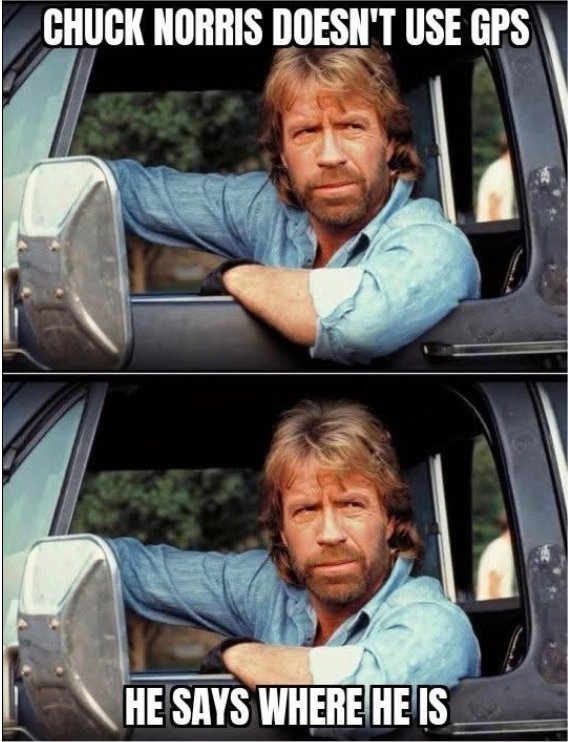
Powerline’s Week in Pictures presents a meme with Chuck Norris in it:

I’m pretty sure that’s a still from Invasion USA. Jean jacket and black truck.

Is that the mark of an Internet TrueFan™? Or just the fact that I “just” watched Invasion USA two years ago, and it’s the most recent thing I’ve seen Chuck Norris in?

You know, I’m kind of looking forward to watching a movie or two when I’m not grinding through the 2026 Winter Reading Challenge. Given that I finished my twelfth book and started my thirteenth or fourteenth (I have started two in the categories but am not sure which of these I will finish first–probably the one I started last night), I might not be far from watching some television or movies. Not as close to eating pizza (today is the last day of the Whole 30 for me, so tomorrow I will look like White Goodman at the end of Dodgeball), but soon.

Buy My Books!
Buy John Donnelly's Gold Buy The Courtship of Barbara Holt Buy Coffee House Memories

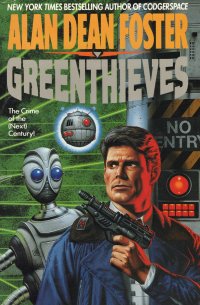
Book Report: Greenthieves by Alan Dean Foster (1994)

Book coverFor the 2026 Winter Reading Challenge‘s “Science Fiction/Nonfiction” category, I just grabbed this relatively thin hardback. I picked it up with the great haul at the Fairfield Bay, Arkansas, Library in 2023 (almost three years ago? Already?). I thought it might be a Pip and Flinx book, like Mid-Flinx since I bought a lot of them at that time, but like Slipt, it is a stand-alone novel. Again, I am going to pause to admire the career of Alan Dean Foster: Multiple series, movie and television adaptations, and many standalone novels. He definitely got into the writing racket at the right time.

So: An insurance adjuster with a particular set of skills, his sexy, semi-alien counterpart, his “Minder” (a self-propelled mobile computing device), and a sort-of humanoid robot go to Juarez El Paso’s space port to find out who is stealing very expensive pharmaceuticals from the ultra-secure storage facility where they are stored before being lifted into orbit on their way to ports across the, I dunno, galaxy. Much of the book is their investigation, including some attempts on their lives by the unknown thieves–and they eventually discover who’s behind it, saving the reputation of the company and the sanity of the police in JeP.

It’s a bit of a loose narrative. It features monospaced commentary by the “Minder” who is constantly slagging on humanity along with some humor from the robot who the adjuster has “reprogrammed” to be a little more human-like. But the investigative episodes and other set pieces don’t lead anywhere, and when we get to the climax, in kind of drags on an extra scene or two–I mean, I kind of get why, but it still drags on for that little pat payoff at the ultimate end.

But for its slight flaws, it’s not a bad bid of midlist/semi-pulp science fiction. Its 216 pages move along fairly quickly, and fortunately the Minder’s intrusions, which start pretty early in the book, taper off to traditional narrative as it goes on. And at 32 years young, it’s not dated–as a mater of fact because they book talks about the Minder and various robots as powered by AI, so it seems timely (and although not on a Segway, the humanoid robot is on a ball or wheel which limits some of its mobility–no stairs, for example). Also, Foster uses different terms for things like computer workstations, so he’s not dating the material that way, but he does use physical media more than we do now–WiFi is computer telepathy, ainna? But, again, not bad.

So it’s my 11th book for the year. I am in progress on two other books, which means I just have to find an inspiring book and a book set in two time periods to hit the Whole 15. If this book had any time travel whatsoever (like, say, Time & Again), I would have used it in that category instead like I put The Pride of Chanur in the non-human character category. Could I have put this book in that category as well, making this a two-fer? I guess. But, fortunately, I’ve read enough science fiction this year to cover all these bases separately.

Buy My Books!
Buy John Donnelly's Gold Buy The Courtship of Barbara Holt Buy Coffee House Memories

Book Report: Into the Smoke of the World and Other Poems by Gerard van Der Leun (2025)

Book coverI bought this book not long after Neo announced it, but it didn’t arrive until the last week of the year. So it wouldn’t count for 2025. And if I started it before January 2, I wouldn’t be able to count it toward the 2026 Winter Reading Challenge which has a “Short Story / Poetry” category (ah, gentle reader, you knew this category would not be an issue for me). As a matter of fact, it’s not the first book of poetry I’ve completed this year–Native American Songs & Poems was–and it might not be the last–a little poetry collection with “Inspire” in the subtitle is my fallback for the “Inspiring” category unless I get, erm, excited about another book (that is, I find an inspirational book of some sort in the stacks).

This book was not a particularly quick zip-through; van Der Leun’s poetry features some longer lines that I favor and some longer, multi-page poems that I had to slow down for, and some probably would get better with a re-read or dwelling on. However, the poet often layers descriptions upon descriptions (with prepositional phrase-based rhythms, so I cannot fault that) into poems. And, thematically, some of the poems explore the impermanence of individual life and, indeed, all human life and civilization, and they seem almost Lovecraftian in their descriptions of primitive/pre-human and post-human life. Also, since I’m airing grievances, the poet says in many different poems that water “plash”es instead of splashes–which honestly might be a better word for strict onomatopoeia purposes, but it is atypical–so one instance of it would be novel, but repeated in numerous poems in the course of a short collection, it was distracting.

It’s probably a sampling of his work over many years, some that he selected and some that Neo selected. So he might have only used “plash” every decade, but they’re all in this book.

Ultimately, the poems overall are pretty good–certainly better than a lot of the grandma poetry I read and more engaging than, say, Pindar. He’s not Robert Frost or Edna St. Vincent Millay, and, to be honest, he probably suffers by comparison because I’m reading the complete works of one of America’s finest poets (of whom you’ve probably never heard, name to be revealed within the next decade when I finish the 600 pages).

And it’s one more book down in the reading challenge; I shall (probably) have 11 complete by the beginning of February, which will put me in pretty good shape. If only I could find something “Inspiring” and “In Two Time Periods”.

Oh, yeah, and, as a reminder, I read van Der Leun’s book of essays, The Name in the Stone, last month.

Buy My Books!
Buy John Donnelly's Gold Buy The Courtship of Barbara Holt Buy Coffee House Memories

You Know What Would Make It Betterer?

Jeff at Coffee and Covid today quotes an enthusiastic Tesla supporter:

“Two Sundays ago, I went to Tesla with Elon and visited the Optimus lab,” Calicanis said. “There were a large number of people working on a Sunday,” he continued, “and I saw Optimus. I can tell you now, nobody will remember that Tesla ever made a car. They will only remember the Optimus.”

At the time, most folks dismissed Jason’s remarks as overheated investor hype. But now that Elon put Tesla’s money where its robots are, the comments seem strangely prescient. “He is going to make a billion of those robots,” Calicanis told the hosts. “And it is going to be the most transformative technology product ever made in the history of humanity.”

You know what would make that even better? Put the robots on the Segway Human Transporter.

Remember those? Not long after the turn of the century, luminaries in the tech field and tech press told us that cities would be designed around them (little did we know that a quarter century later, the “fifteen minute cities” would be designed, but not around the SHT, but around controlling the population) and that everyone would have them and blah blah blah.

In reality: In 2026, you can hardly even find them in tourist attractions for “Segway Tours” because they’ve been eclipsed by the far simpler electric bikes and, heaven help up, rentable electric scooters.

But the people who got paid got paid. And whether the humanoid robots transform the world or are a flashy toy replaced by simpler machines later, the people who will get paid will get paid.

Buy My Books!
Buy John Donnelly's Gold Buy The Courtship of Barbara Holt Buy Coffee House Memories

Reminder: Your Phone Is Not Listening To You

All the phones (and “smart” devices) are listening to you:

Google has agreed to pay $68m (£51m) to settle a lawsuit claiming it secretly listened to people’s private conversations through their phones.

Users accused Google Assistant – a virtual assistant present on many Android devices – of recording private conversations after it was inadvertently triggered on their devices.

They claimed the recordings were then shared with advertisers in order to send them targeted advertising.

Among other things. The recordings were probably parsed and scored in various ways and were used to train various LLMs as well.

(Link via Pixy’s Daily Tech News today.

Buy My Books!
Buy John Donnelly's Gold Buy The Courtship of Barbara Holt Buy Coffee House Memories

I Know Where That Is

Jeff at Coffee and Covid mentions Fort Snelling today:

War Secretary Hegseth approved ICE’s use of Fort Snelling (near Minneapolis) as a forward operating base for ICE agents. This means protesters can no longer torture ICE agents at their hotels— and that Trump isn’t backing down. The Chronicle called it, “a sign of President Donald Trump’s Minnesota immigration siege digging in.”

Ed Lund served there.

Buy My Books!
Buy John Donnelly's Gold Buy The Courtship of Barbara Holt Buy Coffee House Memories

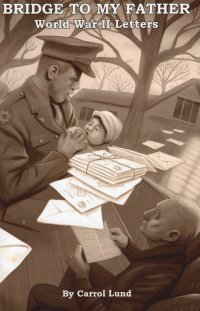
Book Report: Bridge to My Father by Carrol Lund (2022)

Book coverWell. I’m not sure when I got this book; the ABC Books signing event was on November 5, 2022, and the book is inscribed to me, so that was probably it, but I did not buy enough for a Good Book Hunting post, apparently. I think I remember talking to the author, but I’ve been to so many book signings over the last decade…. I had to go to ABC Books’ Facebook posts to find the date, anyway. Since the 2026 Winter Reading Challenge has an “About Family” category, now was the time to read it.

So: The named author is the wife of the person who’s, uh, telling the story. Basically, the man’s father was inducted/drafted into the Army during World War II right before the man was born, and he died in World War II when the boy was about two. So the father only saw his son two or three times whilst on liberty stateside, and then he got sent to Europe in March 1945 and died a month later, a month before Germany surrendered. After spending a year and a half stateside and going through basic training twice, mechanic’s school, and M.P. school once or twice.

The man’s mother remarried a year or so later to a man who was not kind to the boy, who spent as much time as possible with his other relations. Around the turn of the century, the mother sent the father’s effects, including his military records, medals, and these letters to him.

So the book is largely a collection of excerpts from the letters that the father sent to the mother during his service with a little bit of commentary or explanation. The book includes some family and service photos and records as well. Apparently, the father was interred in Germany, moved to Holland, and then repatriated to Nebraska, his home, at the behest of his parents, not his widow.

So, what to make of it? Well, I am not impressed by the wife much–many of the letters include reminders and eventually admonishment and threats that she should go to the dentist as she had one or more problems with her teeth who needed correcting; she’s always going out with her sister-in-law/roommate whose husband is also away at war, and sometimes it seems like it bothers him; and she often buys new shoes and stuff, including a fur coat whose price he asks about many times over the course of many months (apparently, it cost $96 in 1940s money–the author says it would be over a thousand dollars today, in 2022 dollars–which might not be today today’s money). Of course, the hero of the story is the father, so the excerpts of the letters might craft a certain point of view and clean up some of his rough edges. The daily letters, though, declare his undying love (with a little impatience) and fidelity and include details of camp life, the training he’s going through, and whatnot. The book footnotes some of the military jargon and anachronisms, but as a child of military parents and a reader of pulp, I didn’t need them. The book also takes a moment to explain that the father might prefer that a white man win in a boxing competition over a Negro, might mention when people are Jews or Japs (and Polish, and anything besides Nebraskan-American), if the father had lived, his thinking would likely have evolved to match modern sensibilities–maybe, or maybe this is just something the actual author, a former teacher, had to insert as a matter of course. Odds are that someone reading letters sent by a relatively unimportant soldier in a war eighty years ago might already have known he was a product of his time.

At any rate, an interesting book for its look at Army life in the time period from a private (later PFC) perspective.

I hope the man got some solace from this exposure to his father whom he never knew. He, the man whose wife wrote the book, went into the Marine Corps early in the Vietnam era, and he mentions going through El Toro MCAS (although it’s misspelled in the text) and visiting Okinawa. He might have been a couple years ahead of my folks, but maybe not. Also, I couldn’t help but note that the father was stationed one or more times with a fellow named Lum; I just read a book by a woman named Lum. Probably no relation, but who knows.

This is the ninth book from the Winter Reading Challenge; I have 6 more to go in February, and I’ve started a science fiction book and a translated quality textbook, and I will likely finish a collection of poetry tonight. So I am in good shape for the Whole 15, but the “In Two Time Periods” category might be tricky unless I stumble a time-traveling science fiction story. Which I probably will.

Buy My Books!
Buy John Donnelly's Gold Buy The Courtship of Barbara Holt Buy Coffee House Memories

The Noggle Library, 2026 Edition

Ah, gentle reader. I mentioned the other day that I moved a pair of bookshelves from one of my boys’ bedrooms to the lower level of our house, and it got me to thinking that I have not done a proper Noggle Library update in quite some time. As we’ve moved from Honormoor in Casinoport to our home in Old Trees and then on to Nogglestead, I’ve posted photos so you (and by you, I mean “Me in a couple of years”) can review the evolution. This blog has compilations from Honormoor in 2003; Old Trees in 2007 and in 2008; and right after we moved to Nogglestead in 2010.

What has changed since then? Not a lot if you compare to 2010, but definitely more volume. Continue reading “The Noggle Library, 2026 Edition”

Buy My Books!
Buy John Donnelly's Gold Buy The Courtship of Barbara Holt Buy Coffee House Memories

Book Report: Thousand Pieces of Gold by Ruthanne Lum McCunn (1981)

Book coverFor the “Based on a Real Person / Event” category in the 2026 Winter Reading Challenge, I selected this book. Actually, I first picked it for the “Money” category since the title was an amount of currency, but I wasn’t sure that even I could stretch that to fit, and I was a little concerned that Unbroken, Lauren Hillenbrand’s take on Louis Zamperini’s life story (his own was Devil at My Heels which is also around here somewhere), would be another near 500-page book. Since the cover of this book says it’s a biographical novel, I thought it would fit its category and almost count as a two-fer.

At any rate, this novel recounts elements from the life of Polly Bemis who was a Chinese-born woman who came to America as cargo and was sold to a saloon owner in Idaho (maybe–this is a novel and it takes liberties, and the Wikipedia entry highlights some of the confirmed details and places which are in dispute). She ends up owned/freed by a neighboring saloon owner, with whom she lives for almost two decades before she marries him, and they move to a valley seventeen miles away from the town where they’d lived and operated a saloon and boarding house. They live there for a number of decades until their deaths, Charles, her husband, first and then her some years later.

The book does not have a particular overarching narrative, no book-long antagonist. The first part, when she is owned by the first saloon keeper, gets presented with her unhappiness in dealing with that and her love for first, the Chinese packer who brought her to Idaho as part of his cargo after she was bought by the saloon owner, and second, the white saloon owner next door who protected her and then wins her in a poker game (which probably did not happen but was part of her legend). Then we have a bit of, I dunno, story arc as anti-Chinese sentiment rises and falls a couple of times offstage (for the most part) until they get married and move to the ranch. And then some incidents and vignettes about ranching, Charlie getting sick, the fire at their ranch which destroyed it, Polly’s trips to larger towns and cities (in the roaring 1920s) and finallt her settling back into her ranch when friends rebuilt her a small cottage. She then dies there ten years later. The last several decades of her life are just a hop-and-skip approach, but I guess the quiet part of her life was less of a legend and probably less remembered than the later parts. Kind of like my life, too–most of my stories are from 20+ years ago because I’ve been a house tabby since then.

At any rate, it was a quick read–at 308 pages, it only took me parts of two nights to read it. Partially its the slightly wider than normal margins, but the prose is plain and readable. The author says she based the story on previous writings about Polly’s life and on interviews with people who knew Polly or people who knew people who knew Polly–Dr. Elizabeth Vandiver mentions a technical-sounding term for that, having a source that is in the third generation up (someone who knew someone who knew or saw something) in a lecture on Herodotus, but I have forgotten it by now (like most things I read or hear these days). But it is not nonfiction; it is a novel.

It looks like this novel got made into a movie in 1991, ten years after its publication–I presume they truncate and tart up the first part of the book for the film. And, apparently, that spawned a couple other books about her life–the ones I see on eBay date from after this book, so you’d have to look more closely to find the source material books.

And, apparently, the ranch on the Salmon River where she and Charlie lived is not only a historical site, but a place where you can “own” part of it and stay in guest cabins on property. It’s called, appropriately enough, The Polly Bemis Ranch, and it might prove cheaper than a Viking River cruise up the Mississippi, but maybe not–it’s a long way from civilization and reachable only by jet boat even today.

So a pleasant and interesting read about someone of local or regional importance in a place far away from here. The copy I have is a remaindered library book from the Polk County Library which I picked up on one of our only and maybe only only trip to the Friends of the Polk County library book sale in 2011. We joined the Friends of the Polk County Library based on that excursion, but so many of the friends groups I’ve joined (Webster Groves Library, Webster Groves Historical Society, Polk County Library) did not send out reminders when my memberships ended. Perhaps the Lawrence County Historical Society will be the same way, but when I visited them in 2012, I sent them an exhorbitant amount of money, and instead of giving me an annual membership at Deity-Level, they gave me the $10 annual membership into forever. I hope it’s heritable, because when my children ask, “Daddy, why is our roof made of 2 mil plastic sheeting that you stapled up there?” I will be able to point to this membership, expired membership cards from across the state, and lapsed subscriptions to newspapers from here to St. Louis on I44 and to Cape Girardeau on US60.

Buy My Books!
Buy John Donnelly's Gold Buy The Courtship of Barbara Holt Buy Coffee House Memories

I Know You’re Wondering

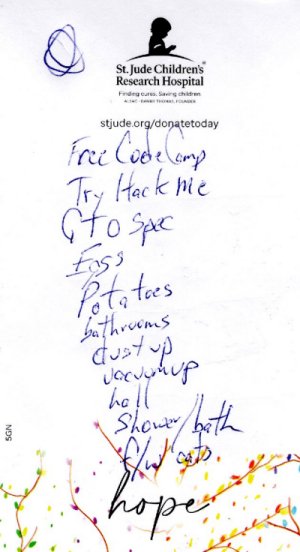
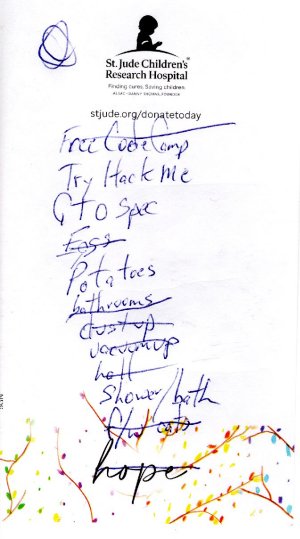
To Do List: Updated“What, Brian J., does your to-do list look like at the end of the day?”

Ah, gentle reader, incomplete. Incomplete. As you can see, “Potatoes” is on the list for what might be the 25th consecutive day, but it is getting more likely that I will complete it. Some months (in multiples of twelve, maybe) ago, I found a recipe for oven roasted potatoes on the Internet, and I liked it, so I did it a couple of times. When I fell away from it, my beautiful wife cut the recipe to fit to a 3×5 card and put it into one of her recipe boxes. I tend to fold the recipes I want to use again and tuck them into the Better Homes and Gardens Cookbook. So for a while, I didn’t have access to the recipe I liked, and Find it again on the Internet was a prerequisite for the task. But! Sometime in the middle of the month, she found it for me and set it atop her recipe boxes in the kitchen. Then! It disappeared; I don’t know if it went back into the recipe boxes or something more sinister. Now! She has rediscovered the recipe and put it on my desk (where it has a greater chance to be lost or something more sinister. But the oblong spheriods are back in my court. And if I don’t cook some today, I will have to write Famous for Potatoes on my list for January 26th.

I have not done a “room” on TryHackMe. In a while. But I’ve added it to the list recently in case I need to pivot to cybersecurity from quality assurance to find a job (spoiler alert: probably). I did, however, figure out that the “AttackBox” option doesn’t actually work these days, and to do a room, I’ll have to spin up a virtual (on the Web) Kali Linux device. Which means I can pick up where I left off now when I left off… What, two years ago? I will need some review. I think I took some notes, but in the interim, I might have discarded them.

FreeCodeCamp.org offers online courses in basic (not BASIC) programming in a variety of languages. I completed the HTML/CSS one and got a little certificate for it…. five years ago? Ah, in the interim before my last full-time position. I also started the JavaScript one as it was the language I was noodling in at the time, but I abandoned it because it was very time consuming. These five (apparently) years later, it remembers where I was in the course, but it cleared all previous work I had done, so I have to start over. Which, okay, I can speedrun it, but: Now it has “workshops” where you do a little program going line-by-line, where you have to write a variable declaration and then a console log using whatever concept/method the lesson covered, and now it’s very time consuming. I am closing in on 10% done after a week, so speedrun is not the word to use. I thought I’d plough through JavaScript, TypeScript, and Python fast because a lot of “job postings” indicate they prefer “experts” in a language, and I have a hard time considering myself an expert in any of these languages, even though I’ve used them a bunch. But time will tell how long my patience holds out on these things.

GTO Spec refers to writing a data model and identifying a set of screens for a new project I’m thinking about so I can prompt an LLM to scaffold it up for me. It should be easy. Why am I procastinating?

A number of the chores are part of the Choose Your Own Grind protocol; I clean the upstairs and the bathrooms weekly and the downstairs every two weeks (generally). Cleaning the bathtubs and the shower was on the two-week schedule but has fallen to a once-in-a-while schedule. As this is week two, today’s list includes dusting and vacuuming downstairs, but….

Not depicted on the list: Since my boys have given up reading now that they have phones and computers (hold out as long as you can, young parents), I decided we would cull their bookshelves and move the two full-sized bookshelves from the youngest’s bedroom, formerly their shared bedroom, to the downstairs. For years, I’ve been stacking oversized art monographs and coffee table books haphazardly on bookshelves in the main living area, and my wife had mentioned it looked cluttered. So I thought sometime in January, after the Christmas decorations were up, we would tackle that. So, yesterday, we did. I gathered five boxes of children’s books for donation (the bookshelves were still stocked with, well, not board books, but with books written for elementary and middle school students); a bedful of adult books which he wanted to keep or I, in sorting them, decided he would keep; a half bin full of old school workbooks, old magazines, and torn up books for recycling; and three boxes of books I wanted to keep, which includes books of mine that ended up on their bookshelves, comic books that they’d bought or I bought for them when we went to the Comic Cave, and books they owned which I wanted to keep, maybe for grandchildren. We moved the bookshelves downstairs, and I got the art books/monographs/binders we have instead of scrapbooks onto one set of bookshelves. Today, I will tackle the audio courses; I will sort the books in the boxes in my office; I will move the donation pile from the living room (where my wife went through them to see what she wants to keep) to the garage and will restack/repack the donation boxes in the garage; and I will use my week’s allotment of semicolons even though it’s not Sunday.

And! I will do these things before I dust and vacuum downstairs as the not-depicted-on-the-to-do-list project, which I did after cleaning the upstairs, left detritus on the floors upstairs so they had to be swept and vacuumed again.

Also, not depicted: Writing long blog posts about the whole effort. Sometimes I do add blog posts to the list when I have an idea but not the immediate drive to write a post (I started this one before breakfast, but that was an hour ago–I should get to the things on the list). Also, the normal chores of daily life including laundry, dishes, some cooking, et cetera. And the shoveling which I might undertake (and which will take four to six hours should I choose to partake in the joy of being outside in the snow–six inches instead of the 20 they predicted, but enough to leave southwest Missouri snowbound for three or four days, except for delivery drivers (my oldest ordered pizza last night, but from the shop in Battlefield, so not a long drive for the poor rascal) and people with, you know, real jobs.

So: Will I update you tomorrow? Eh, probably not.
Buy My Books!
Buy John Donnelly's Gold Buy The Courtship of Barbara Holt Buy Coffee House Memories

Book Report: Native American Songs & Poems edited by Brian Swann (1996)

Book coverThe 2006 Winter Reading Challenge includes a category “Native American Author” again (it did in 2021 which doesn’t seem like so long ago, but it’s been half a decade?). Instead of doing what Dave Ramsey would have approved, which is to say get a book from the library, I ordered this book on Amazon (also buying it on a credit card, Dave). But, in my defense, it was only $3, and I needed to pad my order to $35 to get free shipping on a heating element (since returned as it was damaged in transit, and I’ve since returned the other book that I bought at the same time because someone spilled something on the pages in the bindery, which meant the first 50 pages of the book were unreadable but the cover was pristine–hey, Amazon, one out of three is bad). At any rate, after finishing Different Seasons, I tore into other books to get back on track in my quest for the full 15 (reading a book in all categories in the Winter Reading Challenge), which is more fun than the Whole 30, that’s for sure.

At any rate, this book is half traditional Native American songs, with preference given to plains and southwest Indian tribes, and the other half is contemporary Native American poets, and although many of the names do not sound especially Native American, one presumes they have more tribal ancestry than many United States senators.

The songs are often presented in concrete form, with the words making shapes on the pages, which led me a couple of times to have to re-read the poems when I figured out that the words were going in a different direction that I thought. I mean, they make sense, the songs, in their simple ways, and I guess the concrete form made it so they filled pages where they would not otherwise.

The poetry is okay in spots. A little much about being Native American in places, and as you know, I prefer poetry which I can relate to, not something that’s affixed to explains something separate from me (and with the subtext, culturally if not textually, that I could never understand). Is Joy Harjo, whose collection I read for the Winter Reading Challenge in 2021, represented? You betcha! And as this book is copyright 1996, it’s even before she became Poet Laureate.

I’ve mused before on Dover Thrift Editions: For a long time, they were cheap paperbacks with classics that have fallen out of favor, and here I got one in 2026 “new.” Although I have to wonder if this was printed recently or is if it’s part of someone’s dwindling 30-year-old stock. The cover price is $4, and I did pay less for it. But they are still a thing, on Dover’s Web site and everything. Good on ’em.

I didn’t flag anything to mention in particular, so nothing will really stick with me. But that’s so much of poetry in general and, increasingly, in things I read. Ah, well, I have this collection of book reports to remind me.

Buy My Books!
Buy John Donnelly's Gold Buy The Courtship of Barbara Holt Buy Coffee House Memories

Don’t Go Adding To My List

Book coverThe last couple of weeks, I have been diligent in creating a to-do list to guide my days since my contracts have gotten a little thin or gone into remission, and if left to my own devices, I’ll doomscroll and refresh job boards (professional doomscrolling) and end up with nothing done.
So I’ve started making lists of discrete tasks to accomplish throughout the day. Sometimes, they’re chores. Sometimes, they’re repeated tasks.

I’ve been using the free giveaway notepads that various charities send me as part of fundraising pitches. For the most part, the charities get nothing because 1) If they’re big enough to buy my name on a list and send me monthly come-ons with little printed gifts, they’re too big and 2) Runnin’ on a lean mixture, man.

So I end up with a list, and I cross out some things (but too often carry them over to the next list). Currently, in heavy rotation, I have St. Jude’s Research Hospital, who has me on their Whale list either because 1) I ran a (less than) 5K supporting them in, what, 2021? It was the weekend I then drove over to Poplar Bluff to help my brother remove the shingles from his roof–pretty sure it was after his first wife died or 2) because my sainted mother supported them (she met Danny Thomas once and interviewed him, perhaps at a fundraiser for St. Jude’s). Or 3) Because my name is out there as a Whale from the before times.

So, the current notepad has something extra in the footer. The word hope.

Yeah, thanks, no, that is not on my to-do list, thanks. Please do not add things, generic tablet designer.

Also, note: Since beginning this a couple weeks ago, I have actually used up one of these notepads. Which is amazing, honestly, as in the past, I’ve jotted later-inscrutable words and phrases on them before they get pushed under a printer or pile and get exhumed later with little comprehensibility, only to have the top sheet removed and the pad put back in the set of recent unused arrivals.

My goodness, if I keep this up and can use up one every week before a new one arrives, perhaps I can start making way on the backlog or even the drawerful that contain my sainted mother’s name on them (and maybe some with my long-departed aunt’s) which I inherited almost seventeen years ago and could not discard then and cannot discard yet (because if I open that filing drawer, I might not be able to close it again.

Oh, and if you’re keeping track, the number of to-do lists I’ve actually completed? One or two. Maybe more, but I would not take the over on that bet. Potatoes, that is, roasting a double batch of oven-roasted potatoes, has been on the list for most of January, the Whole 30 era. Fortunately, the more perishable eggs has been on the list a couple of times and has been removed as I’ve actually cooked them.

Buy My Books!
Buy John Donnelly's Gold Buy The Courtship of Barbara Holt Buy Coffee House Memories

Wouldn’t That Be Nice

Alex Berenson, on Substack, talks about the current health system payment model and sez:

But paying $15,000 a year for care that feels worse than nothing simply seems wrong. At this point, I’m likely to opt out. And I am not alone.

Jeez, I miss paying that little for health insurance for our family of four. I paid more than that five years ago, my last go-round with paying the whole bill myself. Which doubled, effectively, after the passage of the “Affordable” Care Act. And has doubled again since 2025.

Berenson talks about the money sloshing to the top of the industry, but does not specifically call out the increase in premiums which coinkidinkally just about matched the government subsidies sloshed out of the ACA bucket. Nor does he call out the specific things which are mandatory by law that must be included in insurance coverage, which also drives the price of insurance up for everyone. Here in the state of Missouri, everyone pays for autism treatments because our senator, Eric Schmitt, wrote/sponsored a bill to make it mandatory in Missouri. Yay! Increased costs! This was before the ACA, by the way, and before he became a national legislator.

Buy My Books!
Buy John Donnelly's Gold Buy The Courtship of Barbara Holt Buy Coffee House Memories

Book Report: Priceless by Dave Ramsey (2002)

Book coverFor the 2006 Winter Reading Challenge‘s “Money” category, I was a little conflicted. I mean, I don’t have many books on investing–not enough so that they’re seeded for quick discovery of the genre in the stacks of Nogglestead. So, instead, I bought this book at ABC Books last weekend, putting a Dave Ramsey book on a credit card, and I expect he felt that in the Financial Force.

This is a short book, 134 pages (perfect for the Winter Reading Challenge!). Even more perfect is that it’s designed to be a quick intro, a gift book (with “To / From” lines on the frontpiece). So its contents are basic: Cut up your credit cards. Pay in cash. Pay down your debt. Tithe. Negotiate. Buy secondhand. That sort of thing. Don’t try to keep up with the Joneses, especially if it puts you into debt.

And the “chapters,” such as they are, are really three or four paragraph summaries–maybe a page, maybe two–about the topic followed by a couple of pages of quotes/bible verses/proverbs sort of related to the topic. And we get one or two pages, which is three or four, short testimonials about the Ramsey program and how he helped people of various stripes get back onto track. And the book includes a number of worksheets you can use to begin your journey to freedom from debt and whatnot. So lightweight even for its light size, but designed as I said to be a giveaway and maybe gateway to the program.

A couple who got into this and, probably, the MLM component of it ran workshops at church for the program, but I didn’t participate, and they’ve since left the church. Which is probably why some of the people who did are out of debt now (having gone to Ramsey’s radio station to do the whole scream thing and everything) and now have multiple income streams and rental properties and drive Porsches a decade later whilst I’m wondering how I’m going to tackle major repairs at Nogglestead with thin income but too much for health care marketplace subsidies.

Oh, but don’t worry about me, gentle reader. Like the other Philosopher says, grant me financial austerity, but not yet. I am not yet eager to downsize my home (with its mortgage payment less than modern rents), sell my valuable possessions and collections, or, heaven forbid, work on a government contract (this last the more likely of the three). Also, this book is now 25 years old; one wonders what the modern equivalent numbers would look like (a $1000 emergency fund? That covers an appliance or single car repair these days).

But I do take some solace in some of the things I do right:

  • Shopping secondhand, at least for gifts and sometimes clothes.
  • Not buying a lot on the spur of the moment these days, heating elements and sundries aside.
  • We’ve been a little light on the tithing after a decade of being heavy on the donations, but I’m trying to work some more into our spending.
  • I’m resisting taking on another car payment, and our main drivers are 20 and 18 years old and hopefully will last a couple more years.

Dollars-a-day habits remain, though, and the Whole 30 diet is not a cheap one; we’re eating probably $10 a day in grapes, maybe $10 in other varied produce and nuts for snacks. Which is not bad, but they’re not the meals. And rice and canned beans are right out.

It does make me think I should pick up another source of income. Looks like blogging, writing books, hawking cute kitten t-shirts, and writing twee little apps (including some based on cute kittens) is not doing it for me.

Dave Ramsey. He tells a bit about his story in the book (one section is “Dave’s Story”), but man, this guy has been around a long time. When I was working at my first startup around the time this book came out, my office mate listened to him on the radio. And he’s still around. And even this week, you can find stories talking about his strategies (Couple eliminates $43,000 of debt in under a year — here’s how, which does not mention Ramsey by name). He’s certainly made a lasting mark, although maybe just for some people. Too bad. The whole of society could use some of his common sense.

Buy My Books!
Buy John Donnelly's Gold Buy The Courtship of Barbara Holt Buy Coffee House Memories

With A Name Like “Quad Cities,” You Have To Be More Specific

From a piece in St. Louis Magazine entitled A guide to taking a Viking river cruise along the Mississippi from St. Louis:

Day 4: Stop in the Quad Cities, Iowa, the “Breadbasket” of the United States. Visitors will begin their day with a visit to the John Deere Pavilion and Deere family homes. Afterward, guests can choose between an optional tour of local farms or stroll through the city itself, visiting the Figge Art Museum or the Quad City Botanical Center.

Technically, the Quad Cities are, get this, four cities. The list of attractions includes stops in three of the four: The Deere things are in Moline; the art museum is in Davenport; the Botanical Gardens are in Rock Island. Only Bettendorf is omitted. I wonder if residents of the area think of the whole region as “the city.” I presume not since there is a river to cross to get from Davenport/Bettendorf to Moline/Rock Island.

Aren’t I Mr. Knowledge from having been to Davenport twice in the last two years? And I haven’t even read the history book of the area that I picked up in 2024. But that and the final Ben Wolf novel are definitely in the short queue before October this year.

And I looked at this article with some interest. Mrs. Noggle would like to go on another cruise after 27 years, but I’ve been a bit reluctant. So I kinda priced this one out and… Holy Huck Finn: $30,000 and 30 days for a round trip. I guess the Caribbean it is. Someday.

Buy My Books!
Buy John Donnelly's Gold Buy The Courtship of Barbara Holt Buy Coffee House Memories

Not Mentioned: Irvine, California

Bill Glahn, the new guy at Powerline, posts California Forever:

I’ve been fascinated by this story since stumbling upon it a few years ago. From SFGate,

A new Bay Area city backed by a secretive group of billionaires will be built “non-stop” for 40 years, the project’s CEO said in a news release Wednesday. The announcement further reveals the long-term commitment of California Forever’s backers to creating a new city of 400,000 people, even after polling overwhelmingly indicated locals weren’t interested in the idea.

Wasn’t this a plot device in one of those Roger Moore-era James Bond movies?

Building a brand-new city in California in 2026 would seem to be the ultimate triumph of hope over experience.

* * * *

It’s like the story behind central Florida’s The Villages, but with tech bros instead of old people.

Actually, it sounds more like Irvine, California to me, but I just read Honeymoon with My Brother, whose author was a lobbyist for the Irvine Corporation, which owned the land and built he city.

Also, I cannot help but wonder if he is confusing The Villages which grew out of some real-estate-by-mail lots in the 1960s with Celebration, Florida, which was laid out, built, and sold by Disney.

Buy My Books!
Buy John Donnelly's Gold Buy The Courtship of Barbara Holt Buy Coffee House Memories

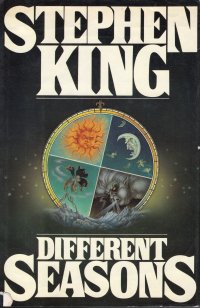
Book Report: Different Seasons by Stephen King (1982)

Book coverThe 2006 Winter Reading Challenge has a category “500+ Pages,” and, to be honest, I had a little trepidation about what I would find to fill that category. And here I had just been talking about my shelf of Stephen King which I might never get to. As it turns out, not only did I get to it, but we had a second copy of the book which had been in my son’s room for a time and then moved to the parlor when he cleaned his room a couple weeks or months ago. It was my mother-in-law’s copy, sans dust jacket, which she had loaned to my youngest when he was grounded from electronics, and he managed to make it through the first story and onto the second, but that’s when his grounding ended, and I’m not sure he has opened a book since.

So, the combinations of those factors, thinking recently about the Stephen King shelf, and talking about 11/23/63, which my mother-in-law enjoyed as a book and, as she has started watching the miniseries and is not enjoying it, and encountering a copy of this book led me to think of Stephen King for this category, and I checked some of the books. Early novels are not 500 pages; later novels are too much so. But, it turns out, this book weighs in at 527 including the self-indulgent afterward that some authors tack on.

As you might know, gentle reader, this book is a collection of three novellas and a short story which King had written in the gaps between his early successful novels Carrie, Salem’s Lot, Cujo, and The Shining (he’s about to write Christine according to the afterword, although the title is not given, but 44 years later, we know). Three of the four, all the novellas, were made into major motion pictures. This guy was a juggernaut in the late 1970s and 1980s, as hard as it might be to imagine now that he’s been around forever.

The book contains:

  • “Rita Hayworth and the Shawshank Redemption” (made into The Shawshank Redemption, the biggest of the films or at least the one most fondly recollected) is about a banker, Andy Dufresne, who is convicted of murdering his wife even though he proclaims his innocence (he is, in fact, innocent). The story is told by Red, who is a long-time inmate at Shawshank Prison and is known for “getting things.” He gets Andy a rock hammer so he can continue his geology hobby, and the story covers decades of the lives of the inmates at Shawshank. One morning, they cannot find Andy and discover he has been tunneling from his cell to a wet wall for decades and has escaped to a new life with an alias he had set up before he went into the can. The coda finds Red paroled and on his way to meet Andy in Mexico. Haven’t you seen the film?
     
  • “Apt Pupil” (made into Apt Pupil, appropriately enough) is set in the early 1970s. A middle school aged boy recognizes his neighbor as a superintendant of a concentration camp and wants to hear all about it. They end up mutually dependent and mutually blackmailing each other to keep the secret. I really didn’t like the story because the first half of it, 100 pages or so, is two evil people doing evil things. Finally, it starts to move in the second half, but King introduces sympathetic characters, but you know he’s going to slaughter them. Well, it turns out, not all of them, but for much of the book you really don’t have anyone to really sympathize with. Not the boy, not the war criminal, not even the boys’ self-involved and self-indulgent parents. The book ends with more implied bloodshed, not a real climax, really. Looks like the film changed it in significant ways–setting the story in the 1980s instead of the 1970s, but it should definitely have the macramé-decorated feel to it. The boy is changed to a high schooler in the film, and the end is apparently ambiguous and not as final. I haven’t seen the film; I haven’t had the urge to see it; and the written story has not made me want to.
     
  • “The Body” (which became Stand By Me) tells about a group of boys who learn of a dead body and then hike and camp several days to see it. It’s sold as a coming of age story, but the double-effect narrator is a wealthy horror writer who is dissatisfied with his current state of writing by rote for money and who longs for those days again. I haven’t seen the movie in probably 30 years, but I wonder what they might have changed from it.
     
  • “The Breathing Control Method” (not made into a movie) is a double story of sorts. A midling employee of a law firm is invited by a partner to a nondescript club with no obvious dues where the “members” tell stories. One Christmas Eve, a retired doctor tells of a case where a single mother carried her baby to term, but has an accident arriving at the hospital and she delivers the baby after her death.

So: I mean, the prose moves along, for sure. King wrote very frankly for the time about things that might have been shocking then, but then were not shocking, but now are prohibited. The stories are all set in the past, although I guess “Apt Pupil” was fairly recent past. He uses the word nigger and the word Republican both as perjoratives–I am pretty sure that all the stories have that, the baddest word, in them, although maybe “Apt Pupil” only uses the German equivalent. I don’t remember him using the word Democrat for anything, so I guess that was just normal to him even then. So the guy didn’t just start slagging on those who disagreed with him in the George W. Bush administration.

As I might have mentioned, I have a shelf full of King, and I’m not sure when I’ll be inclined to get to them. Maybe I’ll read one or two this year. Although if I get a hankering for thick tomes, maybe I should finish the second volume of The Story of Civilization (it’s been three years since I read the first, and at that pace it will take me almost as long to read it as it took the Durants to write it) or the Summa Theologiae which I received as a gift in 2021 and which I have not started, but it looks nice on my shelves. More likely, though, I might pick up Herodotus or Thucydides (he says, having just heard lectures on them, but the lecture series is long and I’ll likely want to read other books as well when I hear about them).

First, though, the Winter Reading Challenge. With this book, I have hit five, which is what you need to read to get the mug. But I must press onward in my quest for filling all fifteen categories.

Buy My Books!
Buy John Donnelly's Gold Buy The Courtship of Barbara Holt Buy Coffee House Memories

Too Soon

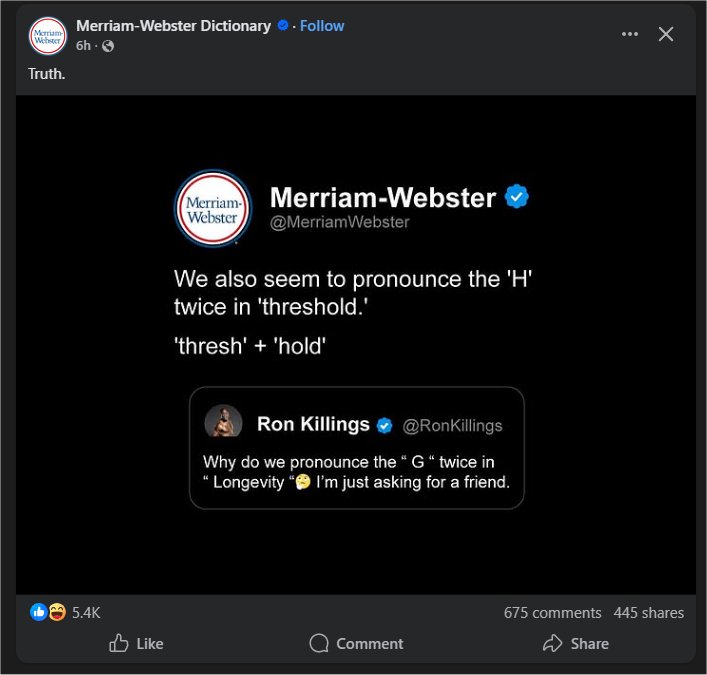
Facebook must know this story already to have presented this to me:

I lost on that word in 8th grade in the spelling bee, the feeder that could have taken me to Washington, D.C., although probably not–the words the kids win on these days are crazy. Maybe they were easier forty years ago, but I would have topped out maybe in districts at best. Maybe state, but probably not.

But I lost very early on threshold when Mr. Biedenstein, my 8th grade teacher and later (but still in the 1900s) became mayor of the new town of Byrnes Mill (old town, but newly chartered or whatever), when Mr. Biedenstein pronounced threshold with three Hs.

Not that I am bitter or anything.

Actually, no. Although I dominated the class-based fun-and-games from 8th grade Speech and Drama class games Alphabetics (not unlike Password) and Show-Offs (not unlike charades) and on to Honors Western Civ’s Jeopardy! my senior year of high school, when it came time to do actual competitions with other schools, I did not do so well. I did not study, so I got bounced out of the Civics/History trivia competition my senior year of high school very early.

I am pleased to note, however, that when I attended my sons’ Scholar Bowl tournament at their high school, I found I would have cleaned up on most but the fast-calculating math questions.

So I have that going for me, which is nice.

Buy My Books!
Buy John Donnelly's Gold Buy The Courtship of Barbara Holt Buy Coffee House Memories

Vice Doesn’t Pay The State What It Used To

:

JEFFERSON CITY, Mo. (KCTV) – A new report found Missouri schools lost $35 million in lottery funding, despite a $5 million advertising boost.

State Auditor Scott Fitzpatrick said the findings raise questions about whether increased advertising actually boosts lottery sales and education funding.

The audit found that lottery transfers to education remained relatively consistent in years with reduced advertising spending. However, in that dropped in Fiscal Year 2024 when advertising appropriations were partially restored.

By the Numbers
The audit found that in Fiscal Year 2024:

  • Advertising spending jumped to $5.4 million, up from about $400,000 in the previous year
  • Total lottery revenue dropped by $49 million
  • Transfers to education fell by $35.3 million to $389.8 million

It’s because the newer national lotteries, Mega Millions and Powerball, get the splash in the news when their regular high payouts draw attention, and although (I think) Missouri gets a cut of the ticket sales, it’s lower than the MO Millions (the new $2 ticket which replaced the Missouri Lotto) generates.

And I think they’re about to get worse news once the impact of the sportsbook gambling is felt/tallied/appears in the monthly or annual reports. They probably have already seen something of it.

Buy My Books!
Buy John Donnelly's Gold Buy The Courtship of Barbara Holt Buy Coffee House Memories