Now this book is what I’d hoped for out of this book (although, to be honest, I read this book before I browsed the other one watching football).
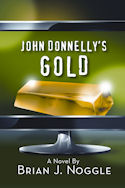
This book collects stories, legends, and perhaps a bit of history regarding old mines, hidden caches, and buried dollars throughout the Ozarks. Grouped by state (Arkansas, Missouri, and Oklahoma), the stories within this book run the gamut from old Spanish mines from the days of De Soto’s explorations to late 19th century outlaw money hidden hereabouts.
The Missouri section of this book talks about the nearby region, including a snippet that talks about an old mine hidden near the creek running southwest out of Missouri. That could be Wilson Creek, which is not that far off. So I have those neat things to think about, and I have ideas for not only articles, but also about fiction. So this book was quick and enjoyable to read and it might earn back its $4.50 price tag at Redeemed Music and Books.
It was written by a professor of geography and is part of a series of similar books. I might look for the others.
I must have read this book, as I assume that I’ve read all the Travis McGee series, but it hasn’t been recently, so I picked it up as a palate cleanser after the last Robert B. Parker effort. Within this book, McGee reunites with a former acquaintance he had known when she was a teenager. Now she’s a well-to-do heiress to a comfortable living from her treasure-hunter father, and she’s sailing around the world with her new husband. She thinks her husband is trying to kill her, so McGee flies out to Hawaii. He decides she’s just unnerved and not in love with her husband and that, hey, she’s all grown up now and they’re perfect together. So she’s going to sell the boat the newlyweds have been sailing on and live with McGee.
So McGee returns to Florida, but other events lead him to wonder. An intermediary tries to get an expedition going based on the lost research of the treasure-hunting father, which leads to the realization that maybe the husband is trying to kill her. Or make her think she’s going mad.
Also, it leads to a lot of soul-searching, reminiscing, and good old fashioned screw-them-in-power ruminating from McGee. The book is talkier than action-laden. I don’t remember if that’s the general McGee schtick, but it’s not badly done.
I recommend McGee and MacDonald, or vice versa, of course. I am re-reading the book, after all.
I have this Q&A frequently with my four-year-old. I tell him about various monsters, stories about monsters, and fictional monsters and add a great depth of complexity to his world that he does not understand. The end result, though, is I assure him that monsters do not exist.
But I’m lying to him.
It saves me from having to try to explain this:
I haven’t written anything about the Women’s Medical Society atrocities in Philadelphia because abortion isn’t one of the hot buttons for me. I’ve been historically reluctantly pro-choice governmentally while pro-life morally (fun fact: I belonged to the Students for Choice group at the University, which confused my sisters-in-arms who knew me as an arch-conservative from my student paper column).
But I’ve read some of the “abortions” performed there (as recounted on Pundit and Pundette), and it becomes harder to remain governmentally pro-choice. It’s clear that, to some people, that lump of tissue remains nothing but a lump of tissue even after it’s viable, even after it’s born because abortion is okay.
Sadly, monsters are real, and most of the time they think they’re doing the right thing.
You know what makes me feel left behind? When I encounter a set of signals, sigils, or glyphs that I don’t recognize nor understand. I’m a pretty smart guy. I have a college degree, although perhaps in the 21st century having a college degree is a symbol of not being very smart at all, particularly when it’s a B.A. with majors in English and Philosophy. But, still, I feel like a stranger in a strange land when I come upon something like this:
That’s the bottom of our dust mop cover. I took it off to launder it. I think the package might have said it was washable. Something I own is washable, so maybe this is it. So I looked for the tag that explains what one can do with it, but all I had was this.
Uh.
The first one looks like a tub, so maybe that means it’s washable. But what does the 40 mean? I should use a tallboy can of beer? I should wash it just above freezing? I have no idea. It goes into the white load with the rest of my formerly whites.
The second symbol: A triangle, prohibited or eliminated. Do not listen to The Dark Side Of The Moon while washing?
The third symbol: A tank? This garment will not protect you from authority when you’re at a protest?
The fourth symbol: A circle, x-ed out. A cryptic reference to The Rolling Stones’ “Paint It Black”?
“I want to see the sun blotted out from the sky.”
The fifth symbol: A circle in a square, x-ed out? Wait a minute, maybe the circle does not represent the sun, but rather an elder god or demon of some sort. And this is some sort of warning about containing that eldritch feotid beast from beyond the laundry room. Like an Elder Sign, if only I could decipher it.
Ah, the hell with it. I threw it in the laundry with some malt liquor and then the dryer. I have no idea how many of these important Chinese tenets I violated, but I have a mostly clean dust mop head. The point was not to clean it correctly; the point was to invest enough time ranting about it while seated at the computer with a cup of coffee that I would not have time to actually use the dust mop. Mission: Accomplished.
(And in the course of researching the post, I encountered this list of the symbols and what they mean. In addition to a rant post, I have also learned something that will impress my wife when I someday dramatically interpret a set of glyphs for her. “How do you know that?” she will ask, and I will just shrug. But you and I know, gentle reader.)
I know, you’re thinking to yourself, “Are there only 30 pages of dialog between a major character in the Parkerverse speaking with his/her therapist in this book, or are there 40? Well, to tell you the truth, in all the excitement, I lost track myself. So the question is, does it matter, punk? Well, does it?”
It’s ostensibly a Jesse Stone book, but there’s a Sunny Randall thread going through it that includes a separate, unrelated case, so you get two bits of the Parkerverse in it. Additionally, Sunny is still seeing Dr. Silverman, so it has a touch of all three series. Maybe more, since I haven’t bothered with the Young Adult novels.
Okay, strip out the bad parts of Parkerania, and you’ve got a decent story. Jesse Stone investigates the deaths of a small gangster disciple (not theG.D.s, Packer fans). He discovers(?) two gangsters living side-by-side in Paradise in twin houses, and get this, they’re married to twin sisters. When one of the gangsters is killed, Stone has to find out who amongst the gangster world is doing this. Strangely enough, it’s….
Well, it’s a quick night’s read and it’s not a bad book once you strip the Parkerverse from it. Good news, though, Parkerversians: In this book, a male figure realizes he drove his wife to infidelity!. Jeez, Louise, I swear, I suffered through an English degree and attempting to do some biographical scat studies to explain books that have been studied for centuries. But Parker’s books really haven’t had much difference thematically since the middle to late 1980s. Make of that what you will.
Recommend it? Eh, it won’t do you major psychological damage, but it’s not as good as Parker’s books ca 1980 nor anything a whole host of authors, such as John D. MacDonald, wrote.
Police have seized a “large amount” of weapons and ammunition from an Arlington businessman while investigating if comments he allegedly made online were intended as a threat to U.S. Congressmen and members of the U.S. Senate.
Arlington Police Chief Frederick Ryan has also suspended the firearms license of Travis Corcoran, 39, who runs the online comic book business HeavyInk.com in Arlington.
What did he say? Well, he posted about armed insurrection. In two separate posts, he mused about at what point good citizens would revolt against an overbearing government. Want to read what he wrote? Here’s his blog: TJICistan.
Woops, there would be his blog if the powers that be had not removed it. So you can’t see what he said, you have to take the word of the authorities or what I remember from them (I have him on my personal blogroll and saw the posts in question, but I did not feel compelled to react by summoning the authorities).
So the authorities in Massachusetts have seized his guns, but:
Corcoran, who has no criminal history, has not been arrested and does not face any charges.
Without charges, the authorities have taken his guns away.
Now, which action do you think will play more into the fears of the lunatic fringe? Corcoran’s words, or the authorities’ actions in this case?
Just think: if Corcoran had actively built bombs to blow up government officials instead of writing political musings on the Internet, he would just be a guy from the President’s neighborhood.
I first read this book in high school. Back then, the television program had only been off the air for about 10 years, and cable had not advanced to the point where the program aired anywhere. As with the Star Trek books, this book and other novelizations were the only reusable relic you had unless you could score some grainy videocassettes taped from the television and recopied. But this book held me out in those years between watching the program on TV as a boy with my father and the whole family together in our apartment in Berryland. There were so few things that we all did together. And watching Battlestar Galactica was one of them. A decade after reading the book, the series aired on SciFi, and I taped my own copies to review the series. A couple years later, they were available on DVD. And then SciFi remade it with modern hectoring lessons baked right in.
So this book is not only a book, but it’s an artifact with pointers to many discrete memories in my youth.
At any rate, it’s not a bad casting of the first three episodes of the television program, although when they flesh out the details, they make some stuff up that seems in odds with the actual edited television episodes. The biggest issue I have is that they made the Cylons into a lizardoid race in armor; however, I seem to recall Apollo telling Boxey in one episode that the Cylons were just the machine remnants of the actual Cylon race, which always gave the premise an extra twist for me. But I guess that was not Larson’s original intent and it carries through here.
Of course, Larson didn’t mean for it to be an anti-technology, anti-American parable, either, as the reboot came to be. Which is one of the reasons I’m an originalist. The other, of course, is the memories bound into the series.
This is a sixty-year-old book holds up pretty well. Frankly, if you remember the days before the Internet and before cell phones, you’ll only find one jarring dated note in the book: an evening postal delivery? Come on!
Mike Shayne, the red-haired and rangy Miami detective, is called to the hotel room of an investigative syndicate reporter who fears for her life. When he gets there, she’s murdered–and has half of a torn $500 bill in her hand. Since she’d already sent the other half as a retainer, Mike Shayne takes it upon himself to find out who killed her. Was it her ex-husband? The crime boss whose gambling halls she was shuttering? Or someone else.
If you’re like me, you know it’s someone else and you know who way early. But the final plot twist didn’t twist exactly like I expected. And it’s good late pulp crime fiction. This is a Red Badge Mystery, which means there’s another set out there I could accidentally start to collect.
Strangely enough, I read the same percentage (10%) of TJIC’s list, and they’re different books. Also, I have not identified the books I already own but have not yet read because, frankly, there are so many that I can never be sure.
This book was written in 1978, back when one could try to write a general political humor book without vitriol toward either side. So it’s amusing in spots, imagining Washington buzzwords as actual animals illustrated by Jeff McNelly of “Shoe” fame.
More than its actual humor content, though, the book provides a sort of insight as a time capsule into 1970s political thought. At the base, not much has changed except that perhaps the underlying tenets of liberal thought have been seriously challenged, leading to the aforementioned vitriol.
The more the differences change, though, the more they remain the same.
With a title like this, I’d hoped for a collection of thought-provoking and perhaps article-launching anecdotes. Instead, I got a young adult book self-published in a very rudimentary style circa 1990. How rudimentary? The pages are only printed on one side, the dust jacket is a stock dust jacket with the title pasted on, possibly from work-at-home-in-your-spare-time people, and the pages were designed with DOS-based, if that, desktop publishing not far above the old Print Shop software. And the author liked to make things fun by putting wingdings in words. I kid you not.
Revel in that glory.
And for all that, the pieces in the book aren’t that specific to Missouri. There are some things about Ma Barker and whatnot, but then they get into President Lincoln’s ghost in the White House, word finds with synonyms for Thief, jokes, and urban legends set elsewhere in the Midwest. All the better for the recycling of the material.
Hey, apparently Carole Marsh made a go of this judging by the sheer number of titles associate with her. Good for her. However, I cannot recommend anything from this book.
Back when I lived in the projects, the other children and I would often declare That’s my (blank) whenever we saw something really nice. By stating that, we were declaring how awesome something was. And probably how unlike it was to anything we really have.
So in that vein (or vain, as the case may be), I’d like to declare about the 2010 417 Homes Homes of the Year winner in the $1,000,000 Plus category: That’s my house:
Some of the home’s unique features include a 60-foot corkscrew water slide that leads into a heated indoor pool. There is a diving rock above the pool, and a hot tub is located nearby. These luxurious features extend far beyond the pool room into the basement with a bistro area, a wine cellar and a walk-in cooler. The finished basement also features a bar made of an antique reclaimed wood beam with a three-tap bar system. And the fun doesn’t stop there, either. There is also an underground shooting range, where the homeowners can polish their pistol and archery skills.
The person for whom the house was built said:
The homeowners stressed to the builder, Doug Pitts of Doug Pitts Construction, that they wanted this home to have a lot of space for their three children to run around in.
Sounds like Daddy took care of Daddy, too. Since <LeonidasVoice>This…. Is… Springfield!</LeonidasVoice>, perhaps the underground shooting gallery was Mommy’s idea. You never can tell down here.
There can be no doubt of this: All America is divided into two classes,–the quality and the equality.
The latter will always recognize the former when mistaken for it. Both will be with us until our women bear nothing but hangs.
It was through the Declaration of Independence that we Americans acknowledged the ETERNAL INEQUALITY of man. For by it we abolished a cut-and-dried aristocracy. We had seen little mere artificially held up in high places, and great men artificially held down in low places, and our own justice-loving hearts abhorred this violence to human nature. Therefore, we decreed that every man should thenceforth have equal liberty to find his own level. By this very decree we aknowledged and gave freedom to true aristocracy, saying, “Let the best man win, whoever he is.” Let the best man win! That is America’s word. That is true democracy. And true democracy and true aristocracy are one and the same thing. If anybody cannot see this, so much the worse for his eyesight.
Of course, that was popular literature when America was on the ascent.