You know the first thing that runs through my head when I read something like “Uncommon white deer seen near Murphysboro“?
That makes it easier for the Murphysboro Monster to see.
To be able to say "Noggle," you first must be able to say "Nah."
You know the first thing that runs through my head when I read something like “Uncommon white deer seen near Murphysboro“?
That makes it easier for the Murphysboro Monster to see.
Buy My Books!
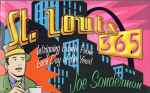 First of all, let’s log the defect. The book is called St. Louis 365, but it includes February 29, so it should be St. Louis 366.
That said, it take each day of the year and relates a set of things that happened on it in St. Louis history. Sonderman and his assistants scoured newspaper archives, apparently, to come up with this list. It includes a lot of one-off tidbits that give you neat little origins for street names and whatnot throughout the city and county, but also provide some narrative in identifying events in a series for larger stories, such as the Greenlease kidnapping and the World’s Fair in 1904.
It took me a while to get through it, since it’s not a book that drags you along. It is, however, a good book for stop and start, pick it up for a couple minutes in a doctor’s waiting room, sort of reading. I started reading it last year when I was going through browseable books during ballgames and only finished it in January.
But a good idea book and something that will give me odd bits of trivia to throw out randomly in conversations where the trivia don’t exactly fit and will meet a sort of stunned silence as people puzzle out the irrelevance. But that’s why I read.
Buy My Books!
I’ve got a package I’m going to mail, so I’m preparing myself for the inevitable question from the postal clerk:
– (BOOL)textFieldShouldReturn:(UITextField *)theTextField {
if (theTextField == self.textField) {
[theTextField resignFirstResponder];
}
return YES;
}
Oops, sorry, wrong thing on the clipboard. Silly Macintosh! CTRL+C means copy that text.
Nadine, the postal clerk in the little cinderblock post office that serves my zip code, will actually ask:
Does this parcel contain anything fragile, liquid, perishable, or potentially hazardous?
Of course, I spend mental clock cycles coming up with smart alec responses:
I’m lucky that Nadine has a good sense of humor. I’m also smart enough to never, ever joke with a government employee I’m not related to through blood and am on very good terms with. Because one quip could get you on a no-fly list or put on the ground, brotha.
Buy My Books!
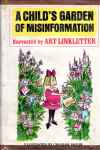 This book collects the same sort of thing that Art Linkletter made a living on: children saying or writing funny things. In the 1960s, he made a living pitching these things to our grandparents and great-grandparents. And they must have eaten it up. How wholesome were they? Very.
By now, of course, this sort of thing has been eclipsed, sadly, by some of us making light of the stupid, silly, and uninformed things teenagers and adults say. It was sort of cute when children said it. But a couple episodes of the Tonight Show’s Jaywalking segments, and suddenly it’s not funny any more.
I think the book made me smile once. So why did I read it? Because I finish books I start, mostly, and because it hearkens back to a more innocent time.
Books mentioned in this review:
Buy My Books!
For a decade, from 1938 to 1948, the United States Secret Service conducted one of its most intensive searches for a counterfeiter. The elusive fraudster’s funny money appeared throughout New York City and across the United States but was concentrated on the Upper West Side of Manhattan, in a small area centered on Broadway and 96th Street. Although the counterfeiter passed off thousands of bills in a relatively small area over a long time frame, the authorities could not catch the unknown subject. To make matters more embarrassing for the feds, the secretive mastermind who kept them at bay—the man they called Old 880 after his case file number—was counterfeiting one dollar bills. Poorly. Continue reading “Old 880”
Buy My Books!
 This book is a collection of poems by a religious housewife written in 1959 and 1960 in the Ozarks. It’s a regional book with probably no national distribution, but the woman (or her family) thought enough of them to publish them in hardback. The book includes some penciled or penned corrections and some poems cut and pasted onto blank pages at the end. It’s signed by the author, of course, but not inscribed, which means she might have given the book to someone she didn’t know. How odd.
At any rate, the poems are of the quality you might expect. Maclay had a good sense of rhythm, but she forced twee end rhymes where another poet would have been more subtle.
Still, I admire the chutzpah involved in self-publishing a hardback collection of one’s poems. In 1960 or 1961, no less. So I’m not sorry I read the book.
Buy My Books!
Last night, I watched Metropolis, Fritz Lang’s 1920 silent film about a dystopian society. I’ve not soaked in the moisturizing dish liquid of Cinema, but I have watched a couple of silent films in my time, which puts me ahead of most people. These films include:
So that’s three British silent films and two German ones. I don’t know if I’ve seen an American one. I suppose I should sit down and watch some Charlie Chaplin or something to round out my silent film bona fides, but I’m a modern man, and I really need to be in the right mood for a silent film. I don’t get that many film-length stretches of time, and when I do, I’m inclined to watch something I’ve seen a million times before and love or a comedy or action flick I own and have yet to watch before I’m inclined to broaden my mind.
But if I happen upon one at a garage sale, I’ll pick it up and have it on hand in case the mood strikes me again sometime in 2015.
Buy My Books!
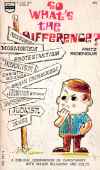 This book is a basic survey of religions other than Protestant Christianity and how their tenets relate to the Bible and Christianity. As a Protestant-centered book, each chapter gives a brief overview of the other religion and identifies where the other religion differs from the Protestant Christian worldview and with the Bible. It’s written for a Christian audience to give them insight into why the other religions fall short.
Strangely enough (or maybe not), the book spends three chapters on Catholicism, probably because the similarity to Protestantism is so much relative to the other religions that the inquiring Protestant might not think the differences are a big deal. Au contraire, this book argues. The book includes a history of the church, a bit of the divergent beliefs that led to Martin Luther’s theses, and a whole chapter on why you would not want to marry a Catholic (basically because there used to be a contract at some point that practicing Catholics had to present to non-Catholics ensuring that all religious training in the house had to be Catholic under the penalty of excommunication and worse). I think the book focuses a little too much on this and tying American Catholics to the yoke of Rome, but it takes its faith more seriously than most churchgoers and Catholics.
It’s by no means a collection of Christian apologetics, but instead operates a priori from there to provide a summary and comparison. Interesting and educational in the sense both of an overview of what the other religions think and what evangelical Christians are to make of them according to Fritz Ridenour.
I understand the later edition has 20 different religions, cults, or chapters in it. The world of religion in the United States has diversified quite a bit since 1967.
Books mentioned in this review:
Buy My Books!
Two men are arrested, but the police do not possess enough information for a conviction. Following the separation of the two men, the police offer both a similar deal—if one testifies against his partner (defects/betrays), and the other remains silent (cooperates/assists), the betrayer goes free and the cooperator receives the full one-year sentence. If both remain silent, both are sentenced to only one month in jail for a minor charge. If each ‘rats out’ the other, each receives a three-month sentence. Each prisoner must choose either to betray or remain silent; the decision of each is kept quiet. What should they do?
Their solution after the fold.
Continue reading “The Eric Clapton / Bob Marley Answer to the Prisoner’s Dilemma”
Buy My Books!
In the frontier days, before the American Civil War engulfed the entire nation and after the Revolutionary War turned Tories against Patriots, a smaller conflict erupted into violence between settlements in southeastern Wisconsin. Riots burned bridges that connected Kilborntown and Juneautown, two rivals on separated from one another by a single river. Tensions rose over the course of several years, culminating in the mustering of a cannon prepared to fire upon the enemy. Only a cool speaker with convincing eloquence prevented the neighbors from firing artillery upon fellow Americans.
The land at the meeting place of the three rivers had been visited by the white man for centuries, but by the early 1830s, the remaining Native American tribes had signed treaties to cede the lands. In 1835, these lands sold at an auction in Green Bay to land speculators. Two of the men, Byron Kilbourn and Solomon Juneau, created settlements on opposite banks of the river.
From the start, the two men and their towns were at odds as each tried to promote his settlement and land holdings at the expense of the other. No bridges connected the two towns, and Byron Kilbourn owned a number of vessels that brought trade and settlers to his side of the river—but nothing to Juneautown. The residents east of the river rankled as they were isolated. The founders of the towns even laid their settlements out such that the streets didn’t align to make bridge building easy.
In 1840, the territorial legislature decreed that the ferry system wasn’t adequate, and that bridges should be constructed to join the settlements. The settlements, though, didn’t want to join nor to spend their own money to make travel and trade easier for the enemy. Tensions rose even as the frameworks for the bridges did. By 1845, the simmering rose to a boil called the Great Bridge War.
In early May, a vessel on the river destroyed the Spring Street Bridge. In retaliation, residents of Kilbourntown destroyed the west end of the Chestnut Street bridge. An angry mob in Juneautown brought out the cannon, loaded it, and aimed it for Byron Kilbourn’s house on the other side of the river. As the ruffians were to light the fuse, a level-headed orator amongst them prevented them from striking the tinder, as Kilbourn’s recently-dead daughter lie in state in the home at the time. He prevented the firing, but not further violence. Other riots ensued, and the cannon made another appearance on May 28, 1845, as the Juneautown irregulars destroyed a bridge over the Menomonee River. Again, the east siders didn’t fire, but their efforts continued to impede the bridge builders.
For much of 1845, the two settlements and their ruffians used riots and skirmishes to make points. One crossing the river in either direction needed to be wary and often carry a white flag to pass safely. But the currents of progress carried the settlements downstream, to eventual agreement. In 1846, a greater city charter was ratified. The city of Milwaukee arose from the two warring settlements that had come but one impassioned plea from firing artillery at each other.
The effects of this dispute remain visible today. Bridges and drawbridges cross the Milwaukee River at odd angles to link streets built by two warring settlements in the middle of the nineteenth century, and the people from the West Side think the people from the East Side are crazy (and vice versa).
Further reading:
Buy My Books!
The depackratification continues. I’ve got a small testing lab here in my office, but the KVM only holds four machines at a time, so when I get a new box, often one gets shunted off to the storeroom or closet. Just last year, I took a stack of them to the local computer shop for recycling, but as I get around to cleaning things out, I’ve still got a couple of old PCs to go and one special guest star from the store room going to the garage sale.
Buy My Books!
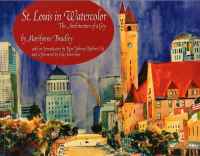 This book is a collection of watercolors by local artist Marilynne Bradley. Each depicts a notable landmark in the St. Louis area, most of which remain. Additionally, each watercolor comes with a bit of the history of the depicted location; Ms. Bradley is also active in the local historical society, so she brings that bit of knowledge to bear.
I paid full price for it in the local bookshop; if I’d planned better, I probably could have gotten an autographed copy from Bradley. I’d originally thought I’d bought the book as a gift for my mother-in-law, but I’d only had the notion to do so, so I got it for me instead and will share it.
Do I recommend it? I guess, if you’re into looking at watercolors or want a little trip through some history vignettes.
Buy My Books!
The headline seems to indicate a volunteering opportunity:

But it doesn’t appear like we’re going to storm a castle after all.
The subhead confuses me a little: “Postal carriers ask the city for assistance with aggressive dogs”.
What does that mean? Would I be helping the postal carriers, the dogs, or the city in a double-cross of the postal carriers?
I suppose I could read the article, but headlines are much more fun without the stories, where I fill in the gaps myself. Kind of like politics and governance.
Buy My Books!
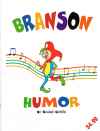 I saw this book on the shelf at the local Price Cutter and was intrigued. A small press book, local, and it was a collection of jokes and cartoons. What was not to love?
Well, it’s a collection of common jokes, not particularly Branson-y or Ozark-y. Additionally, they are old jokes, coming from the days before Orben’s Current Comedy. I recognized many of them, thought maybe one was worthy of tweeting, and generally was disappointed with the collection.
Still, I admire the pluck and the drive to get the book out there.
Buy My Books!
Forget zombie kitsch; that’s been covered ad nauseum on the Internet. What weapons to use on them, what specialty kitsch rounds to buy for your gun to shoot them, zombie targets for the shooting range, et cetera and et cetera. Have you reached nauseum yet? I have.
One important bit of useful information remains unexplored, however. I have not seen anyone cover on the Internet how to shoot a reanimated evil skeleton, and believe me, I have researched uncountable hours for the answer (uncountable, in this case, because the number is zero, and anyone who tells you you can count to zero is either a higher mathematician or someone about to pitch you zombie and/or bacon-related products. In a word: insane).
So I’ve done some musing, as one would expect I do given the name of this blog, and I’ve decided the following.
Continue reading “A Brief Dissertation On Where To Shoot An Evil Reanimated Skeleton”
Buy My Books!
As some of you might know, from time to time I like to try my hand at reading books to the children, who come up with some strange assortment of new books that I don’t recognize due to birthdays, Christmas, other gifting events, book fairs, and garage sales where they follow in their father’s footsteps and acquire a bunch of them.
So somehow this book turned up, this Miss Poppy and the Honey Cake.
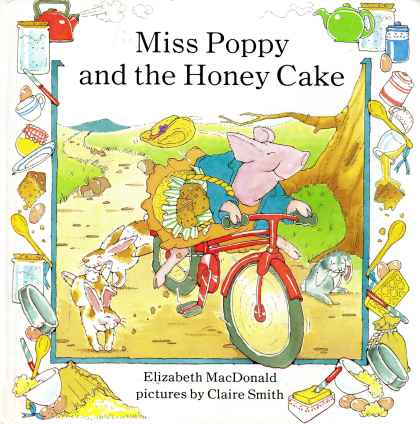
It’s a little book about a little English mouse who bakes a honey cake and encounters all sorts of travails as she does so, the travails of which include not having specific ingredients and having to borrow them from neighbors, each of whom says that she’ll need something that no one else has. The titter-worthy, if you’re British, joke is that she ultimately needs salt and can’t think of anyone else to borrow it from but, fortunately, she has some! Then they all eat honey cake.
Inside the endpapers of the book, the actual recipe for honey cake appears, and it is a simple little recipe made from things we have around the house. So I thought I’d give it a try, since although I’m no fictional English mouse, I do try my hand at baking from time-to-time. Are the results worthy of a children’s book? I’ll leave that for you to decide.
Continue reading “Mr. Noggle and the Honey Cake from Miss Poppy and the Honey Cake“
Buy My Books!
As a part of my recent depackratification of my office, I’ve decided to get rid of some old computer driver CDs.
True, they were not actually taking up that much space, as I’ve stored them within CD binders whenever I got a new piece of equipment. In the olden days, I even built my own machines, so I got a CD for each part.
But if I get rid of these, I can put into those CD binders other CDs, thus freeing a little more space where I stored those CDs in jewel cases.
But it’s not without some trepidation. Over drivers, of all things. Continue reading “Drivers Down”
Buy My Books!
I really didn’t know my paternal grandfather well. Well, at all. He died when I was four or five years old (cancer, natch). But I have a record of marches that once belonged to him that’s a personal relic. Not so much because it was his, but because of when we got it.
Continue reading “Personal Relics: My Grandfather’s Marches”
Buy My Books!
Over the course of a decade and a half, I’ve acquired a number of pieces of software from a variety of sources. In a lot of cases, I’ve bought games because I wanted to like video games. When I was in college and had abundant free time amid working 50 hours a week, going to school for 18 hours a week (and 10 hours, roughly, in travel time to college per week), extracurricular activities, and a social life (note that sleep does not appear much on this list), I bought a number of games and played them through to completion, including the SSI Gold Box D&D games and Mean Streets, the first Tex Murphy game.
So I bought a number of games in my twenties and thirties because I wanted to recapture a little of that. I’ve played the Civilization series (up until IV; when V came out and challenged my then-PC, I shelved it and haven’t installed it in the year I’ve had a more powerful PC). I installed a number of them, watched the demos, maybe noodled in it for a couple hours, but none of them captured my attention long enough to finish them.
I also tried to recapture my youth a bit by buying a pile of flight simulators. In 1986 or thereabouts, I got a copy of Microprose’s Gunship and played that for hours. Again, with that expendable time of youth. So I bought a bunch of games, installed them and forgot about them.
It became unseemly, really, that I carried this on even after I had children. I did stop from buying them for $20 or $30 at computer stores or Best Buy, but I did occasionally drop $9.99 on them. Mostly, though, I got them from book fairs and garage sales, and in a whole lot of cases, I put them on the shelf for a time in which I had more free time.
All right, that’s not happening, and already some of them are incompatible with the machines I have running. So out they go. Below is a picture and some notes about the games in my fashion. If you’re interested in a title, let me know and we can work something out. Continue reading “The Great Software Purge of 2012”
Buy My Books!
(Another old essay, but not as old as some in the pile.)
——————————
I came across an old Polaroid in a box of photos and had to pause. I was scanning the pictures so that I could store the obviously comprehensible images in a format that only a machine can interpret. That’s just what one does with photographs in the twenty-first century, but it does give the more sepia-minded amongst us an opportunity to go through our old boxes of snapshots. Although each box holds hundreds of memories, a similar nature—here’s my brother and I here, here’s the front of the house there—makes the photos blur together. After all, my brother and I went everywhere together as kids, and I saw the house the same way thousands of times I drove up to it when we lived there. Once in a while, though, a single picture can trigger a cascade of unrelated memories. Continue reading “A Picture Holds 1000 Memories”
Buy My Books!