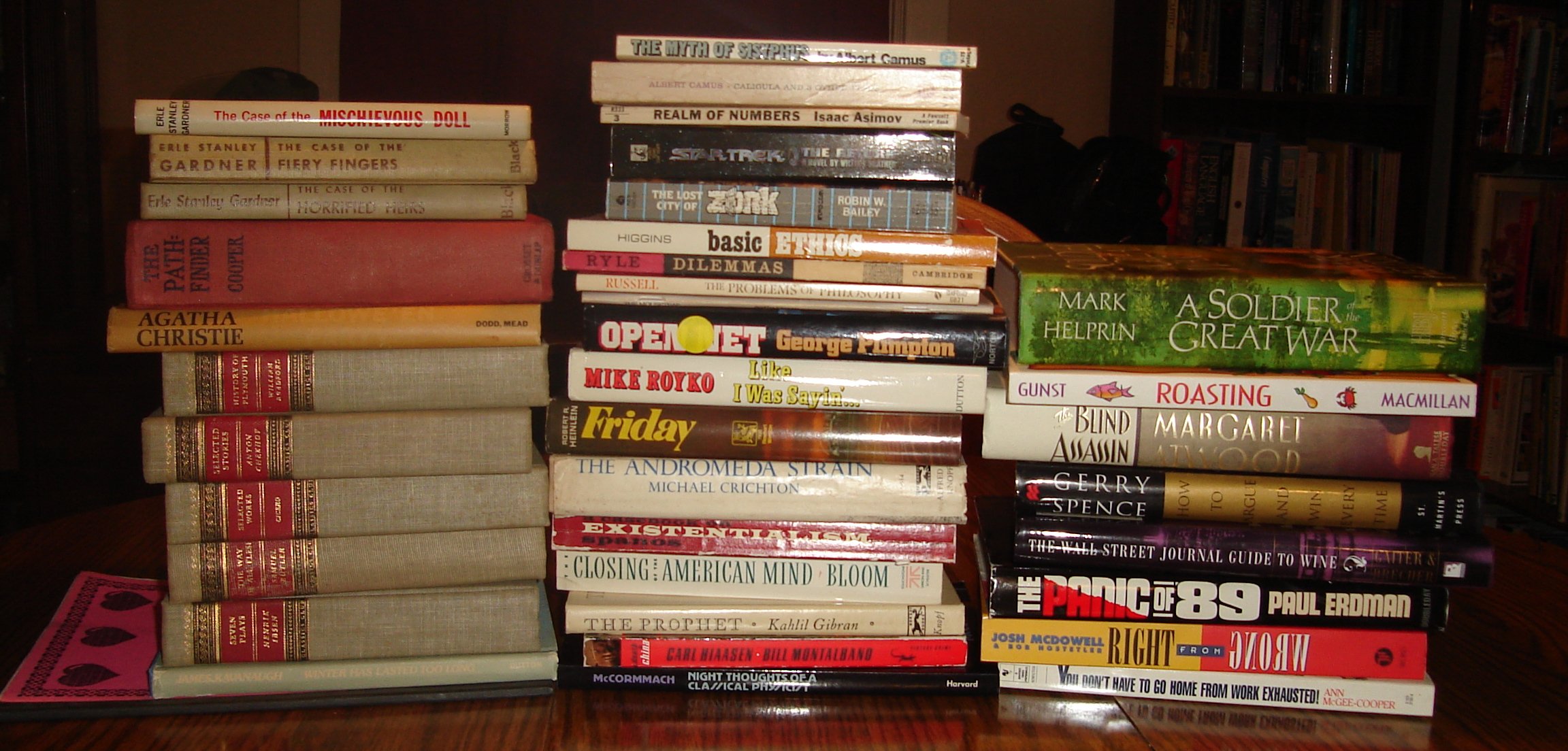
Developers Lose Some, Lose Some

The St. Louis Post-Dispatch is beside itself as land developers lose some in Centene’s giving up its attempt to build a new company headquarters by condemning properties in that slum of Clayton. In this case, the Post-Dispatch quotes those who worry about the impact the rule of law and right to private property will have on the region:

Jim Koman, president of Koman Properties, a Clayton-based development company, said developers are watching the situation closely “to figure out if Centene was still interested in Clayton or would pursue other markets.

“My personal hope and wish is that Centene stays within the metro area so at least the region will retain the jobs,” Koman said. “All businesses and developers look towards pro-development communities and municipalities, no matter where they are located.”

That implies that the region might lose jobs because the government wouldn’t let the company strongarm other property owners out of their rightful property at Centene’s behest.

On the other hand, the Post-Dispatch highlights a development setback for a property owner that acquired properties by buying them from their owners:

Only one developer would have qualified for the tax credit: Paul McKee, who has amassed large parcels of vacant property in north St. Louis.

Remember McKee? The Post-Dispatch apparently decided it couldn’t abide this Republican land accumulator in the city. Hey, I think Blunt did the right thing in vetoing tax credits for developers who probably have good enough cash flow and credit to start with (or they should be in another business).

But the St. Louis Post-Dispatch doesn’t have a consistent opinion on land development companies in their quest for government handouts; it seems as though it prefers those developers who forcibly seize lands through eminent domain “for the public good” over those developers who buy lands secretively for their own profit.

And that makes me see red, if you know what I’m saying.

Buy My Books!
Buy John Donnelly's Gold Buy The Courtship of Barbara Holt Buy Coffee House Memories

Bringing Back Memories, Therapy Sessions

A short video from Summerfest shows people dancing; my goodness, I remember cutting a picnic table or two in my time. My friend Doug and I were unabashed in our appreciation of the music, much to the amusement of passersby and chagrin of those with whom we came. It probably also explains why we were unable to impress women we saw at Summerfest.

Why, I once went to Summerfest alone and danced on a table by myself. That shows the depths of….well, something.

I haven’t been to Summerfest in a decade, but watching the video takes me there again.

Buy My Books!
Buy John Donnelly's Gold Buy The Courtship of Barbara Holt Buy Coffee House Memories

Prosecutors Decide Alleged Murdered Didn’t Kill Victims Twice

Good news of a sort for this fellow; prosecutors are dropping half of the charges:

Prosecutors on Thursday dropped four of eight first-degree murder counts against a suburban Chicago man accused of killing his wife and three children, saying they were focusing their case.

So now the first degree murder counts line up with the actual number of victims. Some common sense prevails at the D.A.’s office.

Buy My Books!
Buy John Donnelly's Gold Buy The Courtship of Barbara Holt Buy Coffee House Memories

Book Report: Candyland by Evan Hunter/Ed McBain (2001)

Okay, it’s a gimmick book; the first half is written by Evan Hunter in a more literary, explore the character style, and the second half is a police procedural in the Ed McBain style. That’s the most notable thing about this book’s universe; the second most notable thing is that the book is set in New York in late July, 1999 (the death of John F. Kennedy, Jr., places the dates exactly), so the book makes no reference to the events of two years later (and books set since make reference surely). Thirdly, the book is told in the present tense, a bit of a departure. There, the gimmicks and unusual things are noted duly early.

Of course, I don’t have to explain the first gimmick to you, gentle reader, because you know that Evan Hunter and Ed McBain are the same fellow. Regardless of the authors’ photograph on the back that depicts the two fellows standing side by side.

The first half of the book depicts a rather randy architect in New York who’s scheduled to return to a drab, sexless life with his long-term wife in Los Angeles in the morning. On his last night in New York, the, hem, gentleman tries to call an architecture student with whom he’s dallied and has had phone sex, tries to pick up a woman (an attempted recovering rape victim) in the hotel bar, tries to call a phone sex line, and then tries to achieve satisfaction at a “massage parlor” to ill results. Brothers and sisters, although certain people (my mother-in-law particularly, whom I impressed upon first meeting by reciting Eliot and not McBain) have called this author “smutty,” but I’ve disagreed–but after reading the Evan Hunter part of the book, I felt like I needed a shower. The only other Evan Hunter book I’ve read is Last Summer, which had me feeling for the protagonist until such time as I said, “Ew.”

But then the second half of the book starts with detectives in NYC investigating the homicide of a hooker, and I hoped it wouldn’t be the sad sack from the first half of the book. The second half follows a trio of detectives from Homicide, Vice, and the Special Victims unit looking into the murder. The main character is a woman on the Special Victims unit (the Rape squad), and the section follows her one day crusade to find this perp while she handles her divorce and relates to her co-workers. McBain takes a leap in using a female point-of-view, but he does well as far as I can tell (after all, I’m a male).

An interesting exercise; of course, we all bought it because it’s McBain. And not a bad departure from his norm (like Another Part of the City). McBain is like John D. MacDonald on my pantheon of writers; regardless of what they wrote, I will read it, for I expect it to be good.

Books mentioned in this review:


Buy My Books!
Buy John Donnelly's Gold Buy The Courtship of Barbara Holt Buy Coffee House Memories

If I’d Known the Lieutenant Governor Was Coming, I Would Have Straightened Up

MfBJN is on the blogroll at Team Kinder, named for the Missouri Lieutenant Governor.

To be frank, I’ve never heard of him, which I assume means he’s a more efficient version of Dick Cheney, the older statesman who controls the diminutive, younger figurehead in the executive office.

Because modern commentary would have me know that government works in the hands of Republicans.

Buy My Books!
Buy John Donnelly's Gold Buy The Courtship of Barbara Holt Buy Coffee House Memories

Book Report: Spare Change by Robert B. Parker (2007)

Robert B. Parker phones in another Sunny Randall novel. I can’t say it any better, especially after this:


    Quirk, Belson, my father, and I all looked slowly around the still-sealed-off park. Nobody said anything. Nothing presented itself. After a long moment, Quirk squatted on his haunches and studied the gun.

    “Smith and Wesson,” he said, “revolver…” He bent over to look at the barrel opening. “Thirty-eight.”

    He leaned forward onto his hands and straightened his legs and did a kind of pushup so he could smell the gun.

    “Been fired recently.”

    He eased out of the pushup and got his feet under him and resumed his squat.

    “But not in this flower patch,” he said, “unless he bothered to clean up the brass.

    “I’d look over there,” Belson said, and nodded at the swan boat dock.

    Quirk continued to sit on his haunches, looking at the flower bed.

    “Stay with this, Frank,” Quirk said. “I’ll get some crime-scene techs over here, but I want you to be the only one touches the gun, okay?”

    Belson nodded.

    “You bag it, label it, take it to the lab, stay with it, wait for it.”

    “Okay, Marty,” Belson said.

    “Nobody but you and the lab guy touches it.”

    “Okay, Marty.”

    “I’ll get some divers to look in the water for the shell casing,” Quirk said.

Friends, that’s a very basic misrepresentation of the difference between a revolver and a semi-automatic pistol. I would expect by now Dr. Parker know the difference. That this very basic mistake makes it into print doesn’t bode well.

“It’s good,” my beautiful wife said after she read the book first because I was mired in Anna Karenina. “It’s focus is on the crime and not Sunny Randall’s life.”

Oh, but no. We have the extraneous chapters on Sunny meeting with Dr. Silverman, her therapist; chapters on Sunny reconciling with her ex-husband; chapters on Sunny interacting with her dysfunctional adult family and recognizing the dynamic about how it revolves around her father; and chapters on a sideplot about what a mess her friend Julie is.

Oh, and the crime. A serial killer returns after 20 years. Sunny knows immediately who it is and then has to prove it. The case turns on a discovery that, when thought about after the end of the book, is quite poorly handled as a means of moving the plot along, and we get the same sort of ending as in Shrink Rap: Sunny puts herself in danger with one of the father figures in the background ready to save her, but she saves herself in a redemption of you-go-girl violence.

Sadly, I’m reading the Sunny Randall series (and probably the Jessie Stone series) out of habit now. I look slightly more forward to the Spenser books and the Westerns, but.

But.

Books mentioned in this review:


Buy My Books!
Buy John Donnelly's Gold Buy The Courtship of Barbara Holt Buy Coffee House Memories

Book Report: Lake Shore Journal: Jim Marshall’s View from the Bridge by James R. Marshall (1999)

I bought this book as part of the “Everything you can fit into the bag is $1” sale at Christ the King church earlier this year. Since I only found five things I wanted, size of the bag be condemned, I paid $.20 for it. It’s signed by the author and inscribed, and it came with a flyer from a Lake Superior nursery (the plant kind) as a bookmark, so it’s quite a deal, especially since I liked the book.

The book collects a number of Jim Marshall’s columns from the Lake Superior Journal in the 1990s. The columns touch on the history of the lake and area quite a bit with a number of stories about friends and running his boat, the Skipper Sam II, on that inland sea. The book offered me a number of ideas for essays and whatnot about the region and a strong urge to visit. I mean, I’m from Wisconsin and all, but I’m from southern Wisconsin.

The book also reminded me that we don’t have white birch trees in Missouri. Might not have red squirrels, either. I swear, there are red squirrels in the northern part of Wisconsin and the Upper Penninsula of Michigan. Those previously forgotten and almost fantastic memories of my youth.

So pick it up if you’re interested in the region or if you just want to do a little exploring from your chair. I liked the book so much, I’m considering subscribing to Lake Superior Magazine, although Jim Marshall died last year, so I won’t enjoy more of his stories. It looks like there are another six or seven years of the column online, though.

What an excellent ambassador for the region. This book, too.

Books mentioned in this review:


Buy My Books!
Buy John Donnelly's Gold Buy The Courtship of Barbara Holt Buy Coffee House Memories

That’s Not What I Call A Slam Dunk

As some of you St. Louis hockey fans might know, the St. Louis Blues "traded" for exclusive rights to negotiate with Keith Tkachuk:

The Blues made a trade with the Atlanta Thrashers that gives them exclusive negotiating rights with Tkachuk, an unrestricted free agent, until the free-agency period begins Sunday. If the two sides do not come to an agreement, Tkachuk will hit the open market.

Tkachuk might have many reasons for wanting to return to St. Louis, including the fact that his family lives here and they’re in their formative years. Maybe he’d even take a pay cut.

This morning, the St. Louis Post-Dispatch runs a story fed to it by sources that the Blues have made a contract offer:

The Blues have offered veteran center Keith Tkachuk a two-year contract worth $3.5 million per season, a source has told the Post-Dispatch.

Sports columnists Jeff Gordon and Bernie Miklasz step up to the plate with columns praising Tkachuk.

Friends, I’d hardly say this is a slam dunk. Releasing the story and turning up the huzzahs as a negotiating tactic indicate Tkachuk isn’t jumping at the deal.

Buy My Books!
Buy John Donnelly's Gold Buy The Courtship of Barbara Holt Buy Coffee House Memories

Book Report: Anna Karenina by Leo Tolstoy (1877, 1992)

Well, in my book report for From the Corner of His Eye, I said:

I could have almost read Anna Karenina by the time I was done with this book.

As you might know, gentle reader, I have a special term that I use when reading long books to refer to that instant where you realize that you could have read a whole other book by now. That is the Anna Karenina moment. I coined the term after the first time I tried to read Anna Karenina, back in the late middle 1990s (1996? 1997?). I was working in a print shop at the time, operating a Didde-Glaser 175 two color offset web printing press. Every day, I had a 30 minute lunch break, and I brought in a book to read over those lunch breaks. I once brought in Anna Karenina and made it to about page 287 (still bookmarked, a decade later). There, I had my first Anna Karenina moment, and I put the book aside for shorter books.

Well, after making that crack about the Koontz book, I decided to pick up the Tolstoy again to see how it compared. Well, it was certainly longer than the Koontz, and it took me three weeks of almost nightly reading to complete it. But it was still time better spent than From the Corner of His Eye. Where Koontz drops in a chapter for nothing more than melodramatic foreshadowing, Tolstoy adds a theme. So it’s better than the Koontz book, not that anyone had any doubt.

And in case you’re wondering, pages 287-600 are a string of Anna Karenina moments, but I have more patience and discipline now.

For those of you who haven’t read it or its attendant summary documents, the story revolves around several threads in the Russian aristocracy circa 1870. Mr. Oblonsky has a dalliance with the help, and his wife Dolly is put off by it and wonders what she’ll do. Anna Karenina, Mr. Oblonsky’s sister, talks to her. Meanwhile, Mr. Oblonsky’s friend Levin, a country gentleman, has come to ask Dolly’s sister Kitty to marry him. She, though, is flirting with Vronsky, who’s a flirt and has no intent to marry her. But when he meets Anna Karenina, he’s smitten and leads her into an adulterous relationship that will last hundreds of pages.

The book follows two main story arcs: the illicit love of Anna and Vronsky and Levin’s search for happiness and faith. The subthemes, of course, deal with the relationships of the aristocrats to each other and to the peasants and their children. There’s something for everyone, someone to whom everyone can relate, and plenty of heft in case you need the hardback for self-defense.

An interesting bit about the translation: It was translated by an English person who often threw in British coinage to make the denominations more relevant to the English reader. So when you’re talking whole bills, you hear about roubles, but when it switches to kopecks, suddenly you’re talking about shillings or farthings. Which is really weird to an American reader. Or even an English reader some years from now when they’re using Euros or Rials in Britain.

It’s a book that provokes some thought because it’s classical literature, and it makes me want to write a paper on it. Does Levin really become a Christian? How would I match these heroes up to The Fountainhead characters? That sort of thing.

But, although I own War and Peace, I’m not diving right into it. I have a pile of books to read, and knocking down to a 17 per year pace won’t clear my to-read shelves.

Books mentioned in this review:


Buy My Books!
Buy John Donnelly's Gold Buy The Courtship of Barbara Holt Buy Coffee House Memories

Central Planner For Rent: Cheap

Here’s a fellow who thinks suburban development is over and that the American public doesn’t know it yet:

I get lots of letters from people in various corners of the nation who are hysterically disturbed by the continuing spectacle of suburban development. But instead of joining in their hand-wringing, I reply by stating my serene conviction that we are at the end of the cycle — and by that I mean the grand meta-cycle of the suburban project as a whole. It’s over. Whatever you see out there now is pretty much what we’re going to be stuck with. The remaining things under construction are the last twitchings of a dying organism.

The remainder of his screed and, from what I can tell from a quick glance, his blog go on about the unwashed masses and their desire for space, and he attributes all that growth, all misguided (by someone other than a smart fellow like him or his correspondents) public policy, and foreign policy to OIIIIIIL.

American expansion, of which suburban expansion is the latest and most myopically pooh-poohed by those who look down upon single family homes, starts before even Manifest Destiny. People who came to America came here to escape crowding or busybodies telling them how to live their lives. Most of America still doesn’t like those things. Those who do are welcome to the decaying urban cores and the artificial mixed use developments in the suburbs.

Instead of recentralization into urban cores, I expect we’ll find alternate means of transportation to and from our strip malls with their excessive retail space (more retail space = more choice for consumers, but some people don’t think average people need choices; those elites think the average person needs diktats). With the Internet and technology serving to decentralize workplaces (and even provide decentralized shopping), I think the trend toward stretching out and thinning population density will continue.

But don’t tell those elites who want to live in crime-ridden, mismanaged urban centers that. They need their pipe dreams.

Buy My Books!
Buy John Donnelly's Gold Buy The Courtship of Barbara Holt Buy Coffee House Memories

Would You, As A Friend, Tell Me?

Am I bruchleidend?

Bruchleidend?

I saw this ad inside the back cover of the Milwaukee America Kalendar 1924 I bought this weekend, and it asked a question we all must ask ourselves daily: Bruchleidend?

Because if I am, I definitely need to send off to a far away city to get a set of four suction cups I can wear around my waist to help with my bruchleidend condition.

Heather informs me that I cannot suffer bruchleidend, as those are obviously a woman’s hips in it. Google’s translator tells me that bruchleidend means “break-suffering,” which I sometimes have been known to feel (if bruchleidend means “Dreading the last minutes before you have to punch back in after scarfing a submarine sandwich and a quart of orange juice in 7 minutes”).

Given the language barrier in addition to the archaic nature of the advertisement, I cannot be clear whether this was an actual, outdated, treatment for something, snake oil of some sort, or some mechanism to part German immigrants from their American dollars. As a matter of fact, given that it appeared in the back of a magazine and has a tarty line drawing, perhaps I’ve blown my PG-13 rating on my blog by including it.

Buy My Books!
Buy John Donnelly's Gold Buy The Courtship of Barbara Holt Buy Coffee House Memories

My Kind of Legislator

Democratic Party attacks on Fred Thompson identify a feature:

Working to influence news coverage, the DNC also recently began circulating a “research document” with the headline, “MAJOR LEGISLATIVE ACCOMPLISHMENTS OF SEN. FRED DALTON THOMPSON (1994-2002).” Then the page is blank until the line, “Paid for by the Democratic National Committee.”

That sounds about right. If only we had more legislators with fewer “major legislative accomplishments.”

Buy My Books!
Buy John Donnelly's Gold Buy The Courtship of Barbara Holt Buy Coffee House Memories

Apple Growers Fear "China," A Euphemism For Loss Of Federal Money

Apple growers fear China: Lower wages make it difficult for U.S. to compete:

Farmers have been growing apples here since before the Civil War, and as times have changed, they have changed with them, planting smaller trees to speed up harvests and growing popular new varieties to satisfy changing tastes.

But the growers who have made this mountainous region the core of apple-growing in Pennsylvania worry that they face a new challenge that may be too big to overcome and could change their way of life.

Like farmers in the bigger apple-producing states, they are becoming increasingly anxious about the prospect of China flooding the U.S. market with their fresh apples – an event many believe is inevitable, even if it could be years away.

They saw what happened in the 1990s when Chinese apple juice concentrate made it into the United States. Prices got so low, some U.S. juice companies were forced out of the U.S. market. Growers could no longer afford to grow apples just for making juice.

Meanwhile, someday, China might outpace the United States in apple production. Assuming, of course, apple buyers don’t fear that Chinese apples, like Chinese wheat gluten and toothpast, will actually kill you.

No, let’s identify what the apple growers fear today:

With the Farm Bill up for renewal this year for the first time since 2002, apple growers are pressing for an unprecedented amount of federal funding to develop technologies to make harvesting less costly, and aid to develop overseas markets.

They fear not getting their fair share of that amount withheld from your paycheck, citizen. Even if you prefer pears, the apple growers of America still want your business.

UPDATE: Jay Tea isn’t afraid of Chinese apples.

Buy My Books!
Buy John Donnelly's Gold Buy The Courtship of Barbara Holt Buy Coffee House Memories

Good Book Hunting: June 23, 2007

How far will we drive for a book fair? Well, friends and readers, that answer now stands at 65 miles one way, as Saturday we travelled to Greenville, Illinois, home of FCI Greenville and a small contingent of housing on the Illinois prairie. Heather found a book fair listing on BookSaleFinder.com, the only nearby book fair for any number of weeks, so we packed up the baby for his first long car trip and went. Heather printed out a set of directions from MapQuest and failed to actually retain names of the location of the book fair or the name of the group hosting the book fair. Still, I won’t knock her navigational abilities nor the wisdom of working from MapQuest directions too much since we did actually get there alive.

We got there about 30 minutes after the starting time, and no one was in the gymnasium of the church. Apparently, the ad said the fair would include 40,000 books, and perhaps it did; however, nothing really tempted me, and for the first time, Heather bought more books than I did:


Greenville book fair results

Among my choice purchases:

  • Milwaukee America Kalendar 1924, a 1924 almanac/calendar in German printed by George Brunder. It contains a number of tables, days with lines where you can write in whatever you need to remember for that day, and advertisements. It was printed in Milwaukee, so even though I cannot read it, I had to have it.
  • Beggars in Spain, a novel by Nancy Kress. She writes a column on fiction for Writer’s Digest (or did when I took the magazine), so I want to see what she writes.
  • How to Play Blues Harmonica, a videocassette. I already have the hat and several harmonicas.
  • Solved!, a collection of true crime pieces by mystery authors.
  • Dave Barry’s Guide to End All Gift Guides.

And a couple other things. Books and cassettes were only 65 cents, and I couldn’t find much to tempt me. Heather, on the other hand, raided the religious books section and carried off a number of Dr. James Dobson titles. Hmm, one of those is Love Must Be Tough: New Hope for Marriage in Crisis. I wonder if we’re going to have a talk soon.

Probably about my commentary on her navigational abilities.

Buy My Books!
Buy John Donnelly's Gold Buy The Courtship of Barbara Holt Buy Coffee House Memories

Nancy Pelosi Fails QA

Well, not Nancy Pelosi herself, but her Web site has gotten the wrong sort of attention on the blogs recently (here and here and so on). It’s a simple Macromedia Flash presentation embedded within a Web site, but it has a number of problems that a trained eye would have caught.

First and foremost, whomever created the presentation used stock imagery in the most sloppy manner; they chose, to represent a story on American military medical care, a stock image of someone with a uniform featuring an epaulet talking to a doctor. Unfortunately, that epaulet said “CANADA”:


The erroneous epaulet

Her political opponents (of which I am one, don’t get me left) were quick to seize upon this as something more than a failure (or lack) of quality assurance, but they’re just looking for something to make noise about anyway. Still, someone who reviewed this with any degree of exactitude would read all text and identify any extraneous logos within stock photography. And someone would have read “Canada” and said, “Uh, no…..”

This particular failure has been remedied, as the slide that offended the bloggers no longer appears. However, the site still fails QA in the following manners.

At the change of each slide, the text from the first slide (“Green the Capitol”) displays during the transition. Now, unless you’re actually trying subliminal advertising, perhaps you don’t want this to occur. Perhaps you want a smooth fade of the words and the fade in of the new slide. Still, unrelated text shouldn’t appear:

The phantom text

Next, the embedding of the Flash object is faulty. It gives the user too much control over the behavior of the object, including the ability to zoom so that the images appear pixellated or the text displays outsized. Since the Flash object has a certain set size, only a portion is visible, like this:

The outsizing

Finally, as you should know if you build Web sites for a living (or pretend to), Macromedia Flash Player is a plugin whose presence should not be taken for granted on the user’s Web browser. Any time you provide animation or other documents through plugins, you should provide a handy mechanism so that those users without the plugin can get them if needed. Does Nancy Pelosi? No:

The missing plugin

Instead of a static graphic or a link to Macromedia Flash Player, we get empty space. That Other America that I’m always hearing about, the one without Flash, gets left behind.

I am tempted to go into metaphors about legislators whose Web sites aren’t checked before they’re put up and the implications for legislation, but I’ll save that for another blog post and will point out that a couple of hours’ worth of time of a trained Quality Assurance professional would have ferreted these issues out before releasing it to the public, sparing embarrassment and also sparing someone the “emergency” of fixing it.

But, hey, if you don’t want to spend that money or budget on quality assurance, you roll the dice. Sometimes they don’t come up snake eyes, but when they do, you’ll pay for it.

Buy My Books!
Buy John Donnelly's Gold Buy The Courtship of Barbara Holt Buy Coffee House Memories