The Great Dojo Double Up

As I have mentioned over and over again, like a crossfitting Vegan and was all like, “Emilio! Emilio!”, I’ve been studying martial arts for–the statistician in the household told me fourteen years now. We got started with the school when my oldest went to a birthday party hosted at the school at four years old, and we got him registered for the Dragons class. A couple years later, the younger was so excited to start they let him begin his classes at 3 and 359/365. My beautiful wife and I started classes. The oldest, my wife, and I got black belts in the tae kwon do which turned into tae kwon do/American boxing/muy thai/whatever kyoshi thought looked cool at the time. As the boys got older and into middle school, they resisted more going to classes two or three nights a week. In 2020, after having dropped for a couple of years, my wife returned briefly but thinks she broke someone’s nose, and she stopped going, and the boys stopped going as well. I’ve still attended, more sporadically than before, because it wasn’t a family thing any more. But the instructors convinced me I was ready to test for a third-degree black belt in January 2025, but my attendance dwindled to once a week…. Once every two weeks…. No actual visits in last September? Wow.

At any rate, my boys have been watching UFC fights for a while now, and they expressed interest in starting classes in Brazilian Jiu Jitsu. The school we attended had a BJJ program for a couple of years, but when I was looking, it disappeared.

So I signed them up for a school that one of my oldest’s friends attends, and I signed up, too.

Holy cats, is that a different animal from the explosiveness and cardio-intensiveness of the tae kwon do school. Or weightlifting. A lot of the instruction, especially in the n00bs classes I’ve been taking, involves resistance and holding that resistance for a couple of minutes while the instructor explains something or corrects something. Jeez, Louise, I was left walking like a cowboy after putting opponents in closed guard for long periods of time.

It’s been three weeks, and I’ve been to the most classes out of all of us. The school has n00b classes at 9am on Mondays and Fridays which I attend, and I went to a striking (American boxing) class. I’m not eager to get into a real rolling/sparring match until I can get a better sense of not only how to work in the martial art but also what’s cricket and what’s not.

AND I have tried to be more diligent about attending my other martial arts school as well. I am hoping for five or six classes a week between them, weighted more toward the tae kwon do for as long as I can. I may not learn to play guitar with my more-open current schedule, but I can spend the time better than refreshing job boards anyway.

As the Philosopher says, “I’ll never be this young again.”

ACKSHUALLY, Shinedown in their new song talk about being young and not knowing it.

Both Shinedown and Three Days Grace have released songs about getting older (see also Don’t Wanna Go Home Tonight). C’mon, guys. I don’t listen to you because I want to feel reflective on my accruing years. I want to listen to you loudly whilst I fight against it.

Buy My Books!
Buy John Donnelly's Gold Buy The Courtship of Barbara Holt Buy Coffee House Memories

Dammit, And I Just Mastered Tai Chi Walking

Well, maybe not mastered, but I did just read a book on it.

Now, courtesy Instapundit, we learn Nordic walking significantly reduces depression symptoms in as little as five weeks, trial finds.

Nordic walking: You know, walking with poles, like you’re cross-country skiing, not like you’re a wizard leading a party on a quest. Which would probably also help with depression unless your scrying indicated your quest was doomed to failure, but you have to try anyway.

Remember NordicTracks? They were a staple of television advertising at one point. They’re still around, part of a fitness conglomerate which has rejected my applications several times. But NordicTracking in your hovel is probably not the part that fights depression. One wonders if being part of a supervised study, thinking that you’re part of something greater than yourself even for a brief time, is enough to lift a bit of depression. But I’m not a researcher, just a blogger.

Buy My Books!
Buy John Donnelly's Gold Buy The Courtship of Barbara Holt Buy Coffee House Memories

Book Report: Discover Your Gifts by Don Everts (2022)

Book coverThis book marks the fifth and completing one of the Summer Reading Challenge. I picked it up from the free book cart at church which again has some books on it–the powers that be emptied and closed the library at the satellite church campus and had a mega-free-book giveaway a couple months ago, and that emptied the free book cart as well when the remainder got donated to whereever they went after the tables in the narthex. After I picked it up, it lay on my desk for a couple of weeks because I couldn’t be arsed to shelve it. Which made it easy to pick up.

I called this book a Christian self-help whitepaper, and that’s not far off. The author is a pastor of 13 years, and he has led some research in how congregants characterize their “gifts” from God. So the book is equal parts generic self-help Bible quoting, not far off of what you would get from Joyce Meyer followed by a set of charts and text explaining what the surveys said when the researchers asked churchgoers about their gifts.

The book has a couple of personal anecdotes: One is about how he misjudged the man his mother would marry; about a man who was important as a liason for students on mission trips in Argentina, a large guy with a neck tumor; and a Russian who has been a gangster, but turned his life around (and somehow ended up “running” his Russian town). The anecdotes are pretty high-level and impersonal and don’t necessarily reflect well on the author. And they’re just not that punchy or real like you would get from, say, Norman Vincent Peale whose little personal narrative asides and examples were far more effective.

I mean, I did get some good ideas from the book. He distinguishes “spiritual” gifts from “common” gifts and says that churches tend to over-emphasize and target the former rather than celebrate and share the latter. So I thought about some ways that our church could do some fellowship and neighborhood outreach by focusing on skills-based seminars and knowledge sharing.

But this book, ah, this book, is a pointer to a complete non-profit sales funnel, and wants you to complete its EveryGift survey itself (even before the author whipped out the first chart, I could tell where we were going because it talked about “research” and came up with a copyrightablemanteau for its program). And here’s the Christianeagram where you’ll find yourself:

You have one category for “technical” gifts which, presumably, would cover a hella lotta gifts from woodworking, carpentry, good with animals, gardening, understanding motors and mechanical things, and so on. But most of them are white collar or academic-style gifts, and most of the time when he talks about using your gifts, he talks about art and making music, and going to conferences. Not so much about serving at the food bank or vacuuming the sanctuary.

I dunno. Seems a little upper middle class consultant comfortable to me.

So I got a couple things from it, I guess, but probably not what the author wanted. I did pass it on to my beautiful wife who is more into this sort of thing than I am. AND! I get to take my completed Summer Reading Challenge form to the library to see what my free gift is. I wonder what it will be?

Buy My Books!
Buy John Donnelly's Gold Buy The Courtship of Barbara Holt Buy Coffee House Memories

2026 Summer Reading Program: Complete

I have been mischaracterizing this as the Summer Reading Challenge, but it really was the Summer Reading Program. Why is it more of a challenge in the winter? Because you have to pick five books from predetermined categories? Don’t know. But this involved activities as well, which is why I have not participated in the past (as I mentioned when I started the program).

Well, five books and five activities are not a lot for me given 1) I read a lot of books anyway and 2) I’ve got a lot of time on my hands these days.

So, without further ado, here is my completed board. Instead of just Xing off the activities, I used Microsoft Publisher to paste selfies and the covers of the books on the board.

I might consider doing all the activities as I try to read books in all fifteen categories in the Winter Reading Challenge, but many of the activities are not destinations but instead are doing things like downloading the library app, attending a book discussion, and so on. Things I’m not interested in doing.

I will, however, continue to look for things to do whilst my youngest son and I have free time this summer.

Oh, and the prize for the summer reading program? A window decal saying you love the library and a pen. So: Not exactly worth $70 in mulch and phlox. Fortunately, though, they look decent yet.

Buy My Books!
Buy John Donnelly's Gold Buy The Courtship of Barbara Holt Buy Coffee House Memories

Another Fan Heard From

Jack Baruth, in a review for a novel called Fish Tales, which I likely never will read, says:

It takes no great skill to scribble nonsense and expect your reader to imbue the required meaning. That’s how you get the “poetry” of Rupi Kaur or Maya Angelou.

Me-ow! says a poet who is also not a fan, having read Milk and Honey a couple of years ago, and I Know Why The Caged Bird Sings in college (not a lot of Angelou’s poetry, though, and not running out to get some).

Of course, this same poet (that is, moi, he said, somehow mispronouncing the word by putting a consonant on the end) banged out a ten line poem yesterday based on a first and last line that came pretty easily to him yesterday at the coffee shop (total cost of poem: $0 because someone “paid it forward” and bought me a cuppa and a pastry, a gesture I did not myself carry on–wait, the poet is using the third person here, so he meant he did not himself carry on). Where was he? He got lost in the parentheses and hand-coded HTML tags. Oh, yes.

A poem which kinda looks like a TL;DR version of my longer “Estate Sale Stases” poem. Must be just that I’m banging on a single theme lately. Might have to name the eventual chapbook Droughts and Stases or something. More catchy than Coffee House Memories which is only 8,966,530 spots behind Milk and Honey in the Amazon’s Best Sellers list. But: ABC Books might have sold the three copies I left up there last year. So I’ve got that going for me, which is nice.

Buy My Books!
Buy John Donnelly's Gold Buy The Courtship of Barbara Holt Buy Coffee House Memories

Brian J.: Benefactor Of Mankind, Or At Least His Heirs To Several Generations

From time to time, a quote swirls around the Internet that goes like this:

These trees which he plants, and under whose shade he shall never sit, he loves them for themselves, and for the sake of his children and his children’s children, who are to sit beneath the shadow of their spreading boughs.

From a French sermon? Greek proverb? Regardless, one sign that I am ever an optimist and benefactor to the world is that I have often (annually) I plant a garden and don’t expect to get anything from it.

But that’s not what I’m talking about. This is: Last week, I bought a box of 500 #10 envelopes.

Ah, gentle reader. My favorite aunt died in, what, 2004? 2005? Not only did her death spur me to have a conversation with my beautiful wife about starting a family, but from her we inherited a set of #10 envelopes which lasted us for fifteen or eighteen years. When we ran out a couple years ago, my beautiful wife picked up a box of 40, and, several years later, we have again run low. So when shopping, I looked at the various options, and I selected the large box because it had the lowest per unit cost.

But the number of things we mail in #10 envelopes is diminishing.

I mean, I use 12 a year for credit card receipts. I mail out remittances for one or two bills every quarter that do not provide their own envelopes. My letters to my grandmother are generally too long to fit in anything but 6″ by 9″ envelopes.

So, likely, my heirs will inherit some, if not most, of these envelopes.

When I’ve gone to estate sales, the most depressing sight is always the partial cans of WD-40, the spice jars, the half-used cleaning products. No one ever wants to think that one might not use up and discard this retail commodity. But it will happen.

Buy My Books!
Buy John Donnelly's Gold Buy The Courtship of Barbara Holt Buy Coffee House Memories

Wherein Brian J. Scores Better Than On Heinlein’s List

Hilarious Bookbinder writes on male competence and enumerates examples:

Competence is when you can do things like this, without much effort or fanfare:

  • Change a car tire
  • Change your car’s oil
  • Perform minor bicycle repairs, including fixing a flat in the middle of a ride
  • Install a new flapper valve in the toilet
  • Replace a sink that is not built-in
  • Rewire a lamp
  • Install new lawnmower blades and replace the serpentine belt on a riding mower
  • Assemble flat-pack furniture
  • Drive a stick shift
  • Cook a restaurant-quality meal beyond merely grilling burgers (although that too)
  • Navigate by reading a map

Metacompetence is when you can do those things never having done them before. When you think, “this lamp needs rewiring. How hard can it be? I’ll figure it out.” Then you do, and it is no big deal. When you arrive at an unfamiliar foreign city with only a tourist map in your pocket and get around just fine. When you follow a recipe to make beef Wellington for the first time and it comes out like the picture. Life’s not a video game, and this isn’t about gaining skills to “level up.”

I nailed most of them. I’m not sure what “a sink that is not built in” means–I replaced the kitchen sink at Nogglestead not long after we moved in. Although everyone knows I cannot rewire a lamp without Nico’s help. I haven’t done the blades on my lawnmower, but I did replace the deck belt this year (again). And as far as restaurant quality meals, I don’t order steak out because I generally grill it better. And! I once made manicotti from scratch to impress a girl, including the pasta–which, to be honest, confused me–what is this eggs and flour and oil bit? Oh!

Although, again, to be honest, when assembling flat-packed furniture, I often install one thing upside down and have to redo it the right way. And on trips to New York and San Francisco, I’ve also gone in exactly the opposite direction of my intention. So maybe “metacompetence” is not my core competence after all.

The only thing I don’t actually know I can do is to fix a flat on a bike. I haven’t had a flat on a ride yet, but that’s probably because I haven’t ridden as much as I could have.

Still, I’m better by his reckoning than Robert Heinlein’s:

A human being should be able to change a diaper, plan an invasion, butcher a hog, conn a ship, design a building, write a sonnet, balance accounts, build a wall, set a bone, comfort the dying, take orders, give orders, cooperate, act alone, solve equations, analyze a new problem, pitch manure, program a computer, cook a tasty meal, fight efficiently, die gallantly. Specialization is for insects.

Buy My Books!
Buy John Donnelly's Gold Buy The Courtship of Barbara Holt Buy Coffee House Memories

As So Often Happens At Nogglestead

Last night, after reading a chapter of the Christian self-help whitepaper book I’m reading, I thought I might want to read instead of another chapter of the book and instead of another short story in the collection I’m kind of slogging through (which I am reading because I’m taking a break in the middle of the the volumes of Shakespeare, C.S. Lewis, Will and Ariel Durant, and the other books stacking up on the chairside table).

So I headed into my office and found myself looking through the double-stacked collection of Classics Club editions that I have because maybe I wanted to read Thomas More or Horace as a quick in-betweener (or, more likely, I was just seeing what I had that aligned with entries in the Great Authors of the Western Reading Tradition lecture series I just completed.

And… I found another copy of The Rape of the Lock by Alexander Pope (which I just read after listening to the lecture on Pope) and A Tale of Two Cities which I just read last year.

I cannot put them on the library’s free book cart because the Dickens is part of the Walter J. Black Dickens collection (which look a lot like the Classics Club but the title background on the spine is green) and the Pope is part of the MacMillan’s Pocket American and English Classics series (which is different but similar to the Riverside Literature Series and the Maynard’s English-Classic Series). How many of them do I have in my collection? At least one.

But! Although I can log and move the Dickens to the read shelves without re-reading it (thankfully!), it looks like the Pope collection is not only “The Rape of the Lock”, “An Essay on Man”, and “Epistle to Dr. Arbuthnot” but also several other shorter poems. So I cannot count this as read, but I shall put it onto my chairside table, knock off the shorter poems, and count it as a whole other book. Although not for the Summer Reading Challenge.

After discovering this, I enumerated for my beautiful wife all the known Pope editions we have in house: The three little pocket hardbacks, a large (old) hardback (covered in mylar in 2021), and a paperback copy with a museum mask on the front cover (around here somewhere).

Proving, once again, that Nogglestead’s library beats most branches of the Springfield-Greene County Library these days.

Buy My Books!
Buy John Donnelly's Gold Buy The Courtship of Barbara Holt Buy Coffee House Memories

Movie Report: Paris Holiday (1958)

Book coverThis is a Bob Hope film (which I picked up in Berryville, Arkansas, in 2024, but it’s also a Fernandel film, which it does not indicate on the cover–the cover says it stars Bob Hope, Anita Ekberg, and Preston Sturges. So I was a little confused when the main titles repeated Bob Hope Fernandel and then Fernandel Bob Hope. The gag, which played out whilst the tracking on the videocassette automatically adjusted with its crackle, buzz, and blur, was that the two comedians’ names were arguing over top billing in the film.

In it, Bob Hope plays a comedian/movie star on his way to Paris to buy a play from a famous playwright to use for a new movie. On the ship, he meets a beautiful State Department employee (played by Martha Hyer) and a famous French comedian (Fernandel). A beautiful woman (Ekberg) bumps into him and pockets his room key. She searches his luggage but cannot find what she is looking for. Hope’s character, Bob Hunter, macks on the embassy employee and hijinks ensue. When Hunter gets to Paris, he hangs with his new friend and makes headway on the macking, but “authorities” want him out of the country, and when he does not go, he narrowly avoids accidents that could kill him. He meets with the playwright, who explains (in not so many words), that the play is the MacGuffin, and Hunter can pick it up the next day at such and such place. So it’s a race to get the MacGuffin before the bad guys find it, and Hunter eventually does although sidetracked by being picked up for the murder of the playwright and then committed to an asylum because of his “delusions.”

So it’s a pleasant, lightweight movie. If you like Bob Hope–you’re old, man–you’ll like the film. It reminded me a lot of Charade, but this film came out five years earlier, so it’s not influenced by or taking on the Cary Grant film.

I said it’s also a Fernandel film because some of the film is in French, and although some spots have subtitles, many do not. So I’ll bet that the French got to see additional jokes fitting with Fernandel’s line than the Americans did.

But: The real controversy is Anita Ekberg or Martha Hyer?

Continue reading “Movie Report: Paris Holiday (1958)”

Buy My Books!
Buy John Donnelly's Gold Buy The Courtship of Barbara Holt Buy Coffee House Memories

Book Report: Everyday Stoicism by Gareth Southwell (2024)

Book coverI got this book from the diminished (in more ways than one, apparently) philosophy stack (not plural, and not much of a stack) at the Midtown Carnegie branch of the library recently. Oh, my. I am not sure if it’s a step up or a step down from the British Marxist comic book biographies I’ve read (Einstein for Beginners and Sartre for Beginners). Maybe a step up because it has quotations from the original sources, but maybe a step down because it–I was going to say “just misses,” but it misses on the side of Marxism and embrace of contemporary policies of a certain idealogical (and culturally suicidal) persuasion.

The book has chapters on a variety of topical matters, including life, money, work, happiness, beliefs, you, health, feelings, love, education, politics, and death. Each chapter is mostly the author’s summation of Stoic thought on the topic along with some compare/contrasts with other philosophies and/or religions, but without any actual quotes or citations to back up the assertions. The chapters are leavened by a couple of quotes from Stoic sources, almost exclusively Marcus Aurelius, Epictetus, and Seneca, with several paragraphs of the author explaining what the quote means. The chapters conclude with “Think About” thought exercises and “Going Further” which are ways to put (the author’s view on the) Stoics’ insights into practice.

I considered doing a thoughtful response to it, but I can’t be arsed, so here are some of the quibbles I have.

Ancient Athens was an intellectual melting pot, a Mecca for those who sought to imbibe philosophy at its source, and so drew students from far and wide.

Using Mecca as a metaphor for melting pot where all students are welcome seems, erm, dumb because in reality, Mecca is not those things. Only in common, uninformed idiom is (was) it viewed as a good thing, and generally as a point to aim for, like a North Star.

In her book The Life-Changing Magic of Tidying Up, Japanese author Marie Kondo askes that we apply the simple criterion (the KoriMari method) to each thing we own: is it either useful or does it ‘spark joy’? If neither, then we should discard it.

This is probably a useful exercise for us all, especially book hoarders (yes, I’m looking at you! Ahem…)….

Ah, the Marx/Kondo connection. Prepare your mind for having less. Not what he meant here, but, no, my books remain until a tragic fire or my estate sale, mate.

One of the benefits of wealth is that it allows us to help others. In 2009, the philosopher Peter Singer (1946-) published The Life You Can Save, which argued that people living in affluent Western countries have a moral duty to help those living in poverty around the world.

Again, the Stoic direction to non-attachment means send your money to nonprofits, have less, and Elon Musk should not be a trillionaire (implied, and probably on his Twitter feed even now). Citing Peter Singer is a nice touch.

Utilitarianism (at least, in its original form) is mainly concerned with happiness in terms of how certain outcomes make us feel.

Okay, cog. Serve others and die when your utility is spent. That should make you happy.

We should try to treat others fairly and live within established legal codes (justice).

Legal codes != justice. C’mon, man.

I don’t want to presume as to what views you currently hold as to the nature of life, the universe, and everything, and nor do I want to prescribe what those should be.

42, of course. But I’m pretty sure if he doesn’t want to prescribe justice via legal codes, he’d be happy to nudge you in a behavoral economics way to his preferred viewpoint.

But what do we do when we feel overwhelmed, or sense the creep of unwelcome anger, lust or depression [sic–he is so egalitarian that he doesn’t use the Oxford comma because it’s elitist, one presumes]? Aside from false judgements [sic–have an extra E in that word since there’s no room for a U], we should do our best to avoid, prevent or suppress the growth of the harmful passion. Your partner has left the toilet seat up (again) or done a shoddy jb with the dishes; your boss continues to ignore your worthwhile contributions while favoring the pretty new recruit; your racist auntie has again outlined her views on asylum seekers… you get the idea.

Strangely enough, like Marx, asylum seekers are mentioned more than once in a positive light. Stoics should love them!

The problems most of us face in the matters of love is that they often stir up negative emotions. Drawing upon and developing existing Greek concepts, Christianity divided love into four main types: érōs (sexual love), storgē (parental and familial love), philía (love for one’s friends), and agápē (unconditional love for God and one’s fellow humans). As you can see, apart from agápē, all the other forms involve potential conflict. Sexual desire can lead to lust, deviancy, jealousy and envy; familial relations between children and parents can lead to grief, betrayal, coercion, resentment; even friendship or a feeling of communal belonging can create rifts and internal disputes or animosity towards those we consider ‘other’ or outside our group or tribe. It is only selfless universal love that avoids these issues.

So, basically, a good Stoic is a liberal who prefers asylum seekers to his auntie.

What fooking balderdash, mate. Also, someone press him on what he defines as deviancy, and we’ll see whom he offends.

Applying this in more practical terms, we may break it down into two main concerns: conmtrolling the passions and eradicating prejudice. We must guard against the power of erotic love to overwhelm our reason and will, and we must try to extend our concern beyond the borders of our own family, tribe and nation.

You see, he meant it.

This wonderful quote reminds me of a Zen Buddhist parable, where the teacher is pouring a cup of tea for his student. When the tea reaches the top of the cup, the teacher continues to pour, causing the student to point this out. “It’s a bit like you, isn’t it?” says the teacher.

I came not to say “What an intellectual yob,” but to point out this is the third book this year that has included this parable. The other two were Be Water, My Friend and The Secret Power Within: Zen Solutions to Real Problems.

There are countless small ways in which a citizen might do this [help out in the polis]. Neighborliness is a good one–offering to mow the lawn of the old coule who live nextdoor, or pick up their prescriptions, helping someone mend a fence or move furniture. The same obviously applies to colleagues, friends, and family. You might write a letter of recommendation for your boss’s niece to help with her application to university, or volunteer to help an asylum seeker deail with intimidating government bureaucracy.

No, seriously, fook you auntie, mate.

All these incidents [Stoics falling on their swords] emphasize not only the Stoic belief that death is nothing to be feared, but also the idea that, if done at your own time and choosing, it is possible to have a ‘good death’ (which is the actual meaning of the modern term ‘euthanasia’).

All righty, then. Stoics thing Canada’s MAID idea is a good idea (perhaps especially for your auntie to make room for some asylum seekers).

Ah, gentle reader. This book almost let my passions rule me in my, erm, disagreement with the author (but, as he does not know me, he loves me more than I love him, I must acknowledge).

This book is unnecessary and probably counterproductive, seeking to introduce people who are curious about Stoicism into Stoicism as Liberal political thought. The original sources, at least in good translations, are easily accessible and don’t need exegesis, especially of this sort.

On the other hand, it did make me want to go back to the primary sources. My oldest and my mother-in-law have started working their ways through the Marcus Aurelius. And I did “just” (three years ago) score a paperback copy of Seneca’s Letters from a Stoic. I should definitely look for that once I get my current chairside accumulation of in-progress books under control.

And it did make “Taylor-Swift-Loving British Pseudo-Stoic” into my new go-to insult, and when I use it here in the United States, I fully expect it to be fighting words.

Buy My Books!
Buy John Donnelly's Gold Buy The Courtship of Barbara Holt Buy Coffee House Memories

In Springtime, A Thousand Warnings Bloom

Ah, spring. The time of the year when the weather alert radio goes off, or not, when severe weather threatens.

This month, we’ve had several rounds of severe weather in southwest Missouri, which is normal. Last year, severe storms knocked down a hella lotta trees up north in one storm and then down south here in another, leaving broad swaths of the region without power for days or weeks (our turn came at the end of June). This year, we had a round of heavy hail which devastated the north part of the city, and recently we had a round of storms that included an EF0 tornado that touched down briefly on the eastern end of Battlefield, the town that begins across the farm road from me.

On that occasion, my weather radio did not alert, but my beautiful wife was upstairs and heard the sirens instead. Nothing but heavy rain here, enough to keep the swimming pool kinda full (the fact that we need heavy rain to keep the pool full is a worry for another day).

Then, on Saturday night, the weather radio went off just before midnight. In the dark, I button-mashed the top of the radio, hoping to get the voice messages, but I didn’t hit the right combo in the darkness and opted for rousing my family and getting them downstairs where I could check the Internet, maybe.

But the Internet indicated the tornado warning was for Barry County, south of here. I went back upstairs to check the radio, and I had button-mashed the text of the alert away so all I could see was the red light and the incorrect date and time. A red light could be anything–flood warning, severe thunderstorm warning, nuclear attack–I’ve squelched the klaxon for all of these, leaving only the tornado warning to alarum and awaken us. We remained downstairs for a while–everyone else ended up sleeping down there. When I came upstairs, the amber light was on, indicating a watch of some sort.

As I was getting to sleep, my phone blared:

Jiminy crickets! I de-bleared my eyes to read it, and it’s an IMMINENT THREAT ALERT that the James River was flooding and fast.

Ah, but gentle reader. I am not close to the James River, and this was not an immediate threat to me trying to sleep in my dry bed at 2:00 in the morning.

So the warnings for Nogglestead have been off-kilter this year. I’ll check the radio to see if it’s somehow gotten set so that we’re in Barry County or something. My wife wondered if it was because our Starlink internet jumps around IPs so that location detection picks us up elsewhere, but this is a radio, the old-timey device. So it’s either a bad setting in the radio or the trainees at the weather service are hitting the wrong buttons.

Meanwhile, I’ll keep watching the skies. Except at night, when most of our tornado warnings happen.

And note this is the only time I really miss “cutting the cord.” When we had tornado warnings in the past, we could go downstairs and flip on the television and watch the KY3 wall-to-wall coverage with immediate updates. I’ve got the weather app and the news apps on my phone, but they’re pretty useless in these instances–and they rely on the Internet, which gets hinky in storms because it’s trying to beam to the satellites through the clouds. Still, I don’t miss it a couple thousand dollars a year’s worth.

Buy My Books!
Buy John Donnelly's Gold Buy The Courtship of Barbara Holt Buy Coffee House Memories

Checkov (Not Depicted)’s Post

I mentioned yesterday when I finished Great Authors of the Western Literary Tradition that I would do a roll-up post of the authors/works in the lecture series as a quiz style list to highlight which authors/works I’ve read (in bold) and whose works are in my stacks to read (underlined).

I will throw the list under the fold because it’s an 80+ bulleted list with some comment. Continue reading “Checkov (Not Depicted)’s Post”

Buy My Books!
Buy John Donnelly's Gold Buy The Courtship of Barbara Holt Buy Coffee House Memories

On Great Authors of the Western Literary Tradition Part VII with Professor James A. W. Hefferman (2004)

Book coverIt’s been a month weeks since I finished Part VI, and, with the completion of this binder, I have completed the whole series–84 lectures in all, gentle reader, started–well, I reported on the first two parts in February, so–earlier this year? Late last year? It seems like a long time.

This set is entitled “Modern Literature” and covers mostly early 20th century authors. Individual lectures include:

  1. Henry James
  2. Joseph Conrad
  3. William Butler Yeats
  4. Marcel Proust
  5. James Joyce
  6. Franz Kafka
  7. Virgina Woolf
  8. William Faulkner
  9. Bertholt Brecht
  10. Albert Camus
  11. Samuel Beckett
  12. Conclusion

As with Part VI, I would have expected to have not read many of the authors, but I’ve read Conrad, a poem or two of Yeats, Kafka, Woolf, Camus, and Beckett, and I have books by Faulkner, Joyce, and James which I might get to someday.

Professor Hefferman focuses on single works, for the most part, but gives biographical sketches and, across lectures, explains the development, particularly in the novels but also in the dramas and poetry, the evolution of modernism from what came before. It does tail off mid-century, but if it went much further, I would definitely not be able to report that I’d read the authors–Roth, Updike, and whatnot.

I cannot help but notice that Faulkner is the only American on the list, so no love for Fitzgerald or Hemingway here.

So: The conclusion talks more about themes that are constant in Western literature (love, the relationship with God or gods, and war) more than tracing the evolution of the forms, but I guess 82 of the lectures covered that.

Does it make me want to read the authors? Some of them, the ones I have/own, I suppose. Other, particularly French authors and playwrights, eh, probably not (although who knows what I might find for a dollar in the wild).

I think I’ll do a proper quiz-style post to brag about which ones I’ve read and which ones I have in the stacks to read on another day. Perhaps a day after I remove the CDs from the player in the vehicle (yes, gentle reader, the completion is that fresh: yesterday).

Buy My Books!
Buy John Donnelly's Gold Buy The Courtship of Barbara Holt Buy Coffee House Memories

At Least The Machines Are Reading Me

Ah, Rick and Friar, I don’t mean to demean your patronage here, but my primary “readers” (that is, data ingesters) continue to be clankers of one variety or another. Chinese LLMs consuming the blog hundreds of pages at a time or Facebook trying to “engage” me more.

Another data point for the hypothesis: yesterday, I post about a local Carnegie library. Today, Facebook shares a post about Carnegie branches all around the state:

Instead of showing me posts from, you know, people I’m connected to on Facebook. Because the machine is not making money showing me their posts.

Buy My Books!
Buy John Donnelly's Gold Buy The Courtship of Barbara Holt Buy Coffee House Memories

Book Report: Childhood by Bill Cosby (1991, 1992)

Book coverAh, gentle reader. As you know, I am a fan of Bill Cosby even now. I’ve read his books (Time Flies in 2004; Love and Marriage in 2004 and in 2011; Cosbyology in 2010; Fatherhood in 2010) and ‘ve watched his videos (including :49 last year, which indicates that the copy of Himself which I purchased in 2024 awaits viewing). And I know it is contemporinternetguache to still appreciate Cosby’s work, but I have expressed my concern about decades-later accusations of sexual impropriety in an post on Brett Kavanaugh when he was a nominee–therefore but for the grace of God go I, and you, too, gentle male reader.

So: This book tackles some stories from Cosby’s youth in the projects of North Philadelphia, when he ran with a group that those of us of a certain age would recognize as the models for the characters in Fat Albert and the Cosby Kids. The book was written after the long run of the cartoon series and after some of the stories likely appeared on Bill Cosby’s comedy records, so I guess in 1991, it might have seemed like recycled material. The anecdotes and their lessons deal with family, siblings, kids playing on the street and amusing themselves, and growing up. Cosby compares his youth to that of the contemporaneous kids (of the 1980s) who get bored and play a lot of Nintendo instead of roaming the streets, inventing their own games with their friends, and improvising amusements. His parents might have said it, but I am sure every generation since has said it, and it’s probably truer now than even in Cosby’s curmudgeonly parenting days.

One chapter, though, is a little, erm, poignant given his 21st century woes: It’s about the pubertyish proto-Junkyard Gang trying to score some Spanish Fly and to dose some of the young ladies of the neighborhood with it. It turns out they’ve bought cornstarch from a Navy sentry, so no hanky-panky occurs, but although in the 20th century, this bit would have been a boys-being-boys story, especially as the ploy did not work, in the 21st century it’s doubleplus ungood wrongthink–and, probably, such spirited hijinks have been trained out of our youth. But, Brian J., they could have poisoned and/or sexually assaulted those girls! Yeah, but they did not. And their failure to do so and the fact that they were taken advantage of makes it funny. Well, amusing.

Ah, never mind. If you’re offended, you’re probably not reading this anyway.

So I’ll watch Himself someday, and I’ll pick up his other books if I see them–it looks like I’m halfway through his written oeuvre, and the 21st century books might be lesser sellers and harder to come by. This particular book is a paperback, but it’s a Deluxe paperback, which means it has a stiffer cover. I thought it had flaps simulating dustjacket flaps for extra copy (as did Hour of Lead), but I was mistaken. Also, note the cover: Emmanuel Lewis, another 1980s sitcom star (Webster, which was an Alex Karras vehicle re-written and re-titled to focus on the adopted son, clearly to piggyback on the success of Gary Coleman’s similar show Diff’rent Strokes). He’s still alive, by the way, but his height and young looks have limited his options in acting, so he has become an entrepreneur over the years.

Buy My Books!
Buy John Donnelly's Gold Buy The Courtship of Barbara Holt Buy Coffee House Memories

Libraries: Little Convention Centers?

When we first moved to southwest Missouri, the branch library in the next town over was in a storefront just over from the Walmart. They were building a new branch, and it opened not long after we settled. I took my young boys to several story time activities there, and it was our home branch for a couple of years before their schooling and other activities took us into Springfield every day. Fifteen years on, the library system decided the town needed a new branch, so they built a new one to replace the still newish (fifteen years old for a library? C’mon, man, like a church building, that’s a pup that has not yet developed character–not that either is built with character any more). Whilst it was being built, I applied for a part-time job as a shelver at that branch, thinking maybe librarian might make a good second career choice for me–probably not, given what modern librarianing is. I was actually called in for an interview, but I demurred–a friend’s daughter also applied for the position, and I didn’t want to take it from her.

So after the grand opening of the new building, my beautiful wife had an (overdue) book to return, so we stopped by the new building which features an auditorium, a computer lab, meeting rooms, and…. One room with books, a small set of shelves which looked like it had fewer books than the previous small branch had.

Last week, as part of the Summer Reading Program, one of the activities was to go to a different branch of the library. I don’t know whether to count the small town (but growing rapidly town, he added to keep the Chamber of Commerce people happy) or the Springfield-Greene County mothership branch as my home branch–I generally choose the mothership as my “home branch” when I fill out the Winter Reading Challenge forms, but over the last couple of years, I’ve only gone into the library to either pick up or return a reading challenge form.

Our travels took us through the middle part of the city (as we went to ABC Books and a street mural, another activity for the summer reading challenge), and we stopped by the Midtown Carnegie Branch. Ah, Carnegie. So you know what you’re in for: An older branch with character. We visited this branch in the summer of 2017, when the boys and I visited all the library branches as part of our own summer challenge (including far-flung branches in the northern part of the county in Ash Grove and Fair Grove, which is in a room at the fire station). This branch has also had an expansion, a modern graft onto the brick and mortar front of the building. When we entered from the rear, we had options to go up or to go down, and I said to the employee/volunteer (?) at the desk inside the door that I wanted to go up to the books, and I went up to find…. Again, fewer books than previously. I went to the philosophy section which was a single shelf, about 20 inches of books–in my previous visit, I picked up Daniel Klein’s Every Time I Find The Meaning Of Life, They Change It (which I just listened to as an audio book in December, so you might have recognized the title). The section was mostly pop-philosophy (not that the Klein was any different), but the total stacks, again, were, what, 12 or 20 sets of shelves? Not a hella lot for a middle-of-the-city branch, and not a lot of primary sources in the mix (I think I’ve written a screed on this before, but I couldn’t find it quickly).

Ah, general reader. I am not a library scientist, but my understanding of history is that, back in the olden days of centuries past, when books became more available, people put together private groups that would trade books amongst them, or private lending libraries made them available, or you could subscribe to lending libraries for cash, and public libraries were designed to democratize access to books for the public.

Ah, but nobody reads now–not many people–and libraries seem to have cast around for new missions to keep, you know, their employees employed. Which is now budget-intensive things like computer labs, maker spaces, and larger and larger meeting rooms and auditoriums (as well as training programs and, let’s be honest, a capex hit on providing me with mugs I rarely use). I should note here that the mothership branch has a decent set of stacks, but it, too, recently underwent an expansion. Not for more room for books, of course, but rather a larger auditorium for programs and, I suppose, to let.

Which is why I draw the comparison to convention centers, at least in terms of the need to refresh (technology, at least) every couple of years. To keep up with modern needs. Which, I reiterate, does not seem to be books.

Is the public library really, really necessary in the 21st century if it is not there to have stately buildings, safe spaces, and books?

You know, I am a fan of privately run community libraries who, run by volunteers and stocked by donations, made books available to the public. However, the ones that I have supported over the years have become public libraries–eager for the certainty of funding and access to, well, funding. I haven’t been to them lately, but I wonder if they have fewer books now that they’re public libraries? To be honest, I think that the Community Library in High Ridge, which I frequented when I was in high school, might have had stacks on par with the branches I visited this month.

So perhaps librarian is not the new career I am looking for. Maybe Library Board would be a better fit, where I could say, Are you serious? and No a lot. Which I’ve already trained for in a long career in software quality assurance.

Buy My Books!
Buy John Donnelly's Gold Buy The Courtship of Barbara Holt Buy Coffee House Memories

Book Report: Hour of Lead by Anne Morrow Lindbergh (1973, 1986)

Book coverI got this book two years ago in a bundle for a buck at the Friends of the Springfield-Greene County Library book sale. So I didn’t pick it specifically, but the book was facing out, so I did not ignore the bundle on account of it.

As such, it is a 32-page gifting excerpt from an earlier, full-length book called Hour of Gold, Hour of Lead. This excerpt deals with handling grief; the title comes from an Emily Dickinson poem, one of the ones in my repetoire when I was doing open mic nights. I presume it is–this excerpt never mentions it, but Anne Morrow Lindbergh is a poet. A poignant story behind this particular book is that the space for gift-giving inscription is to Mom for Mother’s Day from Tracy in 1987, which might indicate a loss in the family in the spring or a little earlier.

Lindbergh, in addition to being a poet, was Mrs. Charles Lindbergh, and her 1973-ish musing on grief is based on the kidnapping of their child and discovery of its body. Hope, then dashed, and then the aftermath. The author find her journals from those days decades later and produced Hour of Gold, Hour of Lead from it.

A quick read, a bit helpful if you’re dealing with someone’s death. Better than A Very Easy Death by Simone de Beauvoir, maybe not as good as Love’s Legacy by Stephanie Dalla Rosa–but this book is but an excerpt, so maybe the whole thing is better or more broadly focused than these two.

But as a gift. On Mother’s Day. Man, I feel that.

Buy My Books!
Buy John Donnelly's Gold Buy The Courtship of Barbara Holt Buy Coffee House Memories

Don’t Tell Me I’ve Nothing To Do

My brother just “retired” with veteran’s benefits and disability, so I asked him on the third day of his retirement if he was making tick marks on his wall.

He mentioned counting flowers on the wall, and I asked him “Gatlin brothers or that other guy who is twenty or thirty years ago now?”

I was thinking of Eric Heatherly.

Ah, gentle reader: Before you ACKSHUALLY me (the semi-modern PDWL!), I have remembered via researching this post that it was the Statler Brothers who did it first.

Ai, they were both old when I was young (Eric Heatherly notwithstanding).

But when Sue F. came to visit us in our trailer in 1985…. I am pretty sure she said the bass Statler brother looked like an alcoholic, and I said he just looked fat. And then I swallowed the echo of my words, because she was overweight. Forty years later, I might be one, I might be both, or I might be neither.

But, no, the Gatlin brothers did not do that song.

Also, if you’re keeping track: Note that in 2000, I was listening to country and oldies. It would be decades before I got into metal, but a little less before I got into jazz.

Buy My Books!
Buy John Donnelly's Gold Buy The Courtship of Barbara Holt Buy Coffee House Memories

There’s Your Residual Benefit Of The AI Bubble

Some people comment that even if AI tech spending is a bubble, it will have the same benefit of leaving behind infrastructure like the dot-com bubble did. However, other critics indicate that LLM-hosting data centers will leave infrastructure designed pretty narrowly for LLM-hosting.

But here is what might be the lasting positive, should there be one–Meta is launching a $115 million training program for blue-collar workers to build AI data centers.

Those skills will be transferrable.

(Link via the Springfield Business Journal.)

Buy My Books!
Buy John Donnelly's Gold Buy The Courtship of Barbara Holt Buy Coffee House Memories

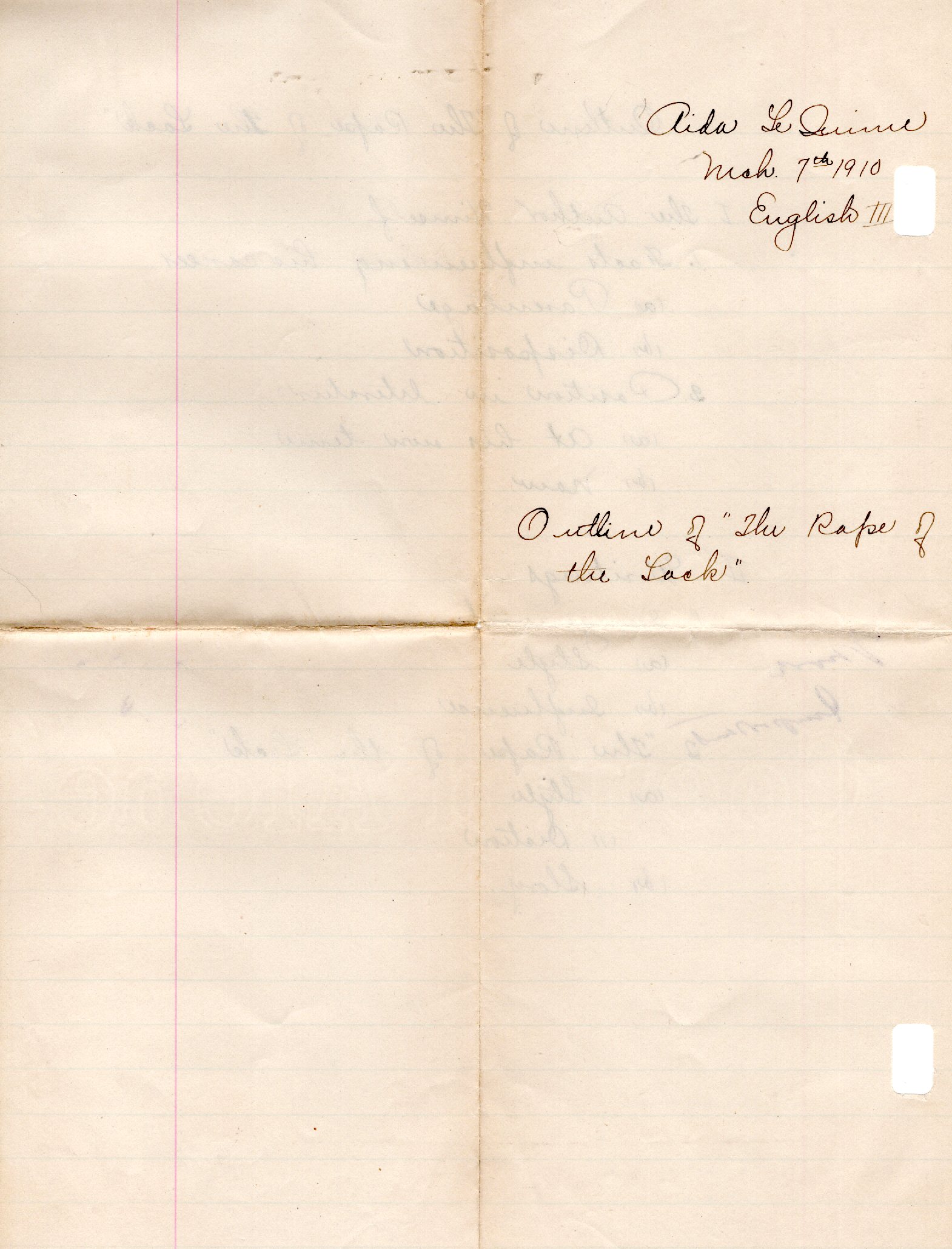
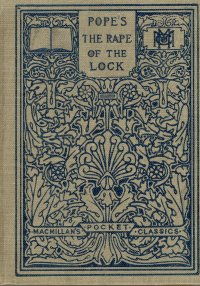
Book Report: The Rape of the Lock and Other Poems by Alexander Pope (1901?)

Book coverAfter listening to the fifth part of the Great Authors of the Western Literary Tradition lecture series, which included a lecture on Pope, and specifically on “The Rape of the Lock”. And, brother, did that come in handy.

Ah, Pope. The man is more the parts than his sum.

This collection has three poems: “The Rape of the Lock”, which is a poem in five cantos totaling almost 800 lines that depicts an aristocrat who takes a lock of hair from a young woman for his collection, but the poem seems given over to a very detailed description of a card game which is not a game I’m familiar with; “An Essay on Man” which is written to a Henry Bolingbroke (not the Shakespearean Henry Bolingbrokes, though, as Pope was writing in the first part of the 1700s which was 100 years after Shakespeare who himself was writing 200 years after the Henrys in question) and comprises about 1500 lines in four “epistles” which describe man’s nature, nature, and God and the interrelationships and proper places of each, including reason and instinct/passion/what have you; and “Epistle to Dr. Arbuthnot” is a shorter piece, 419 lines, and covers some of the same themes.

Pope writes in couplets, and many of them are eminently quotable. But the individual poems themselves are long, and you might wonder where it’s going–which is why the lecture helped. Pope helps himself by including a summary of the contents of each epistle in “An Essay on Man”, and footnotes by Pope himself and editors of various editions (the original and this edition, presumably) tell us the names of the contemporaneous people Pope is talking about, but that’s not exactly a help or driver into reading large stretches at a time. I exercised some discipline in reading sections, cantos, or epistles completely, much of the time, but this is mostly drawing room poetry to amuse or irritate aristocrats of the time. So while one might want to and actually quote Pope on occasion, it’s not something that many in the 21st century will read for pleasure (see also the complete works of Percy Bysshe Shelley, the second and longer part of The Complete Works of Keats and Shelley, set in a holding pattern behind a stack of literary magazines and Ideals).

At any rate, let’s see what I flagged during my slog.

  • Trough worlds unnumber’d though the God be known,
    ‘Tis ours to trace him only in our own.
    He, who through vast immensity can pierce,
    See worlds on worlds compose one universe.

    From “An Essay On Man”, early in Epistle I. Given all the headlines about UFOs in government files recently, one question is how religion would adopt. In the 18th century, Pope was nonplussed by it. I imagine the Judeo-Christian religions would adapt.

  • Who wickedly is wise, or madly brave,
    Is but the more a fool, the more a knave.

    I think I will put this on my business cards. If I ever order any again. The last batch has lasted almost 17 years, and the box is still half full, which is how a pessimist describes his box of business cards.

  • One from Grubstreet will my fame defend,
    And more abusive, calls himself my friend.
    This prints my Letters, that expects a bribe,
    And others roar aloud, “Subscribe, subscribe!”

    Shades of the modern Internet culture in penny publishing in the 1700s.

I had a couple other things flagged, but I didn’t remember what I wanted to say about them.

As you can see, the couplets are generally a little epigramatic, flow together, and as I was reading along, I was following; however, at the end of a piece, I was like, “What’s that all about” even though at a high level I knew what and I enjoyed a couple of couplets along the way, the whole did not strike me as greater than the sum of some of the couplets.

Ah, well, I am a product of my times, prefering short, punchy, and pointed poems.

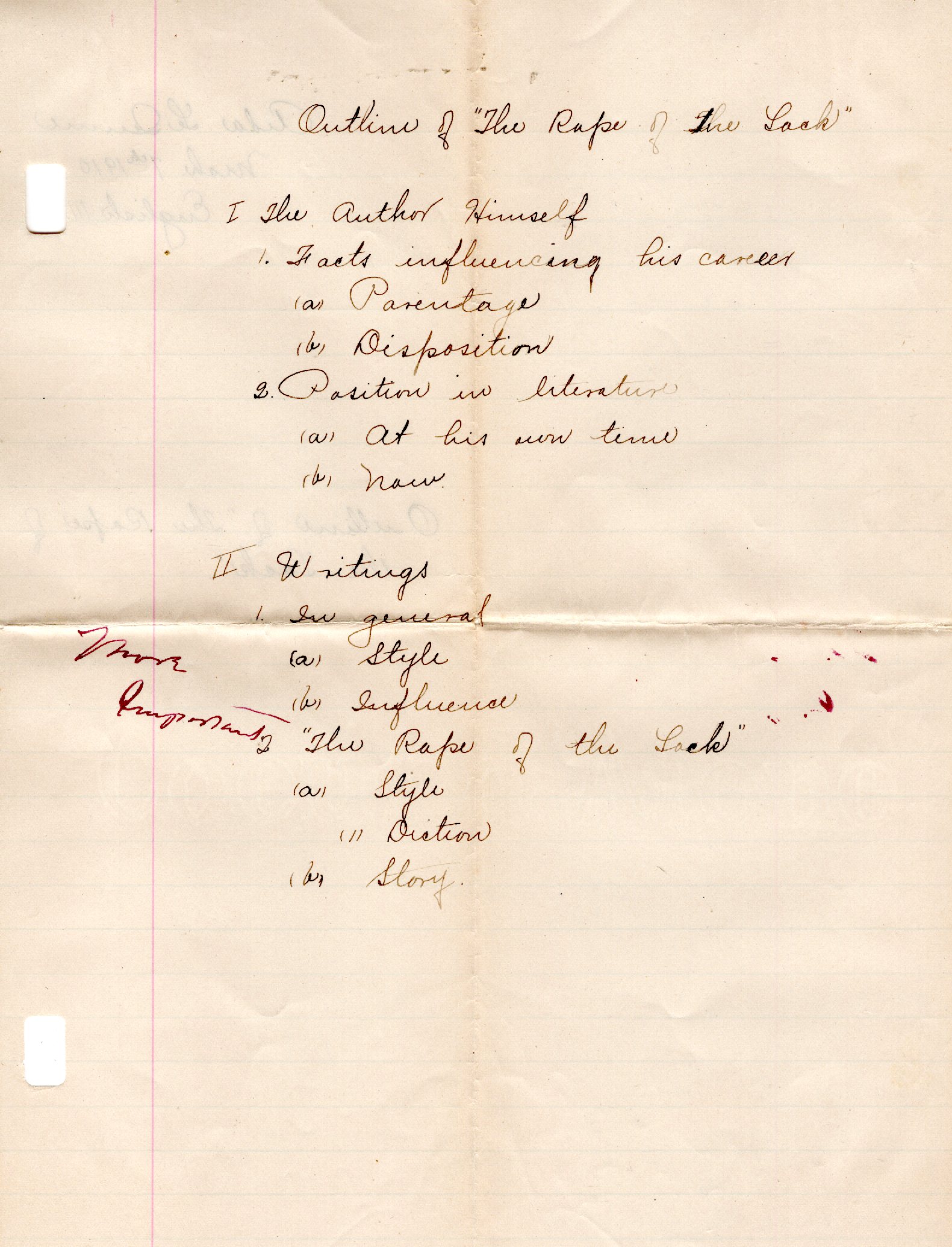
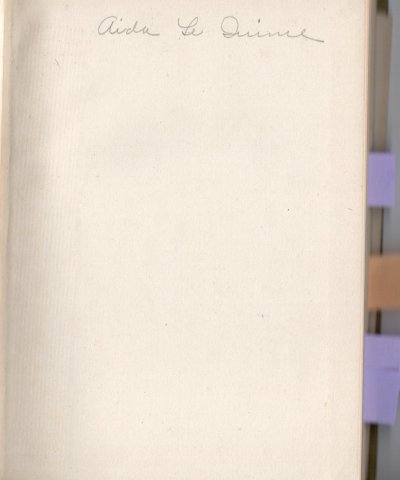
Book coverAfter I read this book, I came upon, shelved just a couple of similar Riverside Literature Series down, “An Essay on Man” in a similar Maynard’s English-Classic Series edition. Unlike the Walter J. Black Classics Club editions, which were marketed to middle class adults, these editions were college textbooks, and it shows. The book I read has faded pencil notes on the front flyleaf, and “Rape of the Lock” has underlining and margin notes. Which, gentle reader, probably means that more than one student used this as I’m pretty sure “dialoging with the text” was not an early 20th century thing. An LLM indicates it was mentioned in an influential 1940 volume called How to Read a Book and became widespread in the 1960s, and this tracks with my experience–editions of classics I have starting in the 1960s start showing this juvenalia marginalia about then. Essay on Man, this other edition, does not indicate such.

I will just move this second book to the read poetry shelves with the one I read, and I’ll put it in by the old and mylar-wrapped complete works of Pope. I have a paperback copy of the complete works of Pope as well around here somewhere, but I won’t be in a real rush to read the rest now.

Buy My Books!
Buy John Donnelly's Gold Buy The Courtship of Barbara Holt Buy Coffee House Memories