Book Report: The Adventures of Oliver Twist by Charles Dickens (1841, ?)

This is actually the first of the Walter J. Black Classics Club/Classic Editions books I have completed; not bad for a fellow who’s been accummulating them for a couple of years now. However, the Dickens Classic Editions volumes (with the green stripe on the spine instead of the red for the Classics Club books) are fiction, and I’ve been tearing through it this year, particularly “classic” literature, so I nabbed this bit.

First, a word on the editions. The printing’s cheap, as it’s rife with printing mistakes like double impressions, some lightly washed out inks, and whatnot. But these editions aren’t fine leatherbound things; they’re designed to sell cheaply to the masses from magazine ads, mail order. So why am I collecting them? Because I inherited four from a grandfather, that’s why! Not Classic Editions, though; the Dickens works I have are just gravy. Perhaps I’ll evolve a rationale for collecting these instead of fine leatherbound editions that centers around defense of the middlebrow and the middle class. Give me some time.

Now, onto the story, which I did not particularly care for.

In his defense, this was Dickens’ second work (or so Wikipedia tells me). But the title character is a passive spectator in his own life. In his defense, Oliver is a child; however, if you’re going to title the book after someone, it might be more interesting if that character plays a role instead of plays the prop.

A poor orphan falls in with a bad crowd and participates, unwillingly and sometimes unknowingly, in a couple of crimes in between bouts of highbrow people being taken with him and helping him out, keeping him like a pet. Then all the loose threads are tied up. 541 pages later, the end.

Like many of the classical literature things I’ve read this year, the book really begins to move about 60% of the way through it; in this case, that’s somewhere in the 300s. Modern audiences don’t tend to have that attention span, I expect; if you’re going to have a lot of pages, a clown demon better rip a boy’s arms off in the first chapter.

Additionally, I have to wonder about what reading all this classical literature does with my sense of the past. Of the four big ones I’ve read (Anna Karenina, The Three Musketeers, The Hunchback of Notre Dame, and this) all take place in the past, but the actual centries vary widely. However, as far as I am concerned, the time periods aren’t that different; horse and buggy days, the aristocracy and the poor extremely different, and so on and so forth. Has the last century been that radical that its very decades were different epochs akin to the centuries or millenia of old? Or am I just confused by my own life experience, where I can tell the differences easily because I lived them?

That’s a bit heavy for a simple book report, but I’d like to see those who hit this post for a Google search for oliver twist book report defend that unread and pasted assertion.


Books mentioned in this review:


Buy My Books!
Buy John Donnelly's Gold Buy The Courtship of Barbara Holt Buy Coffee House Memories

Verizon Agrees To Have Its Customers Pay Tax

That’s not what the headline says; it says Verizon agrees to pay utility tax. However, we know that’s the result; apparently, it began collecting the tax, under protest, on bills a year ago.

But here’s the howler of the article:

Municipal officials contend the companies don’t have to make the customer pay.

“I do think it is confusing,” said Tim Fischesser, executive director of the St. Louis County Municipal League. “We would prefer if the companies paid it.”

Haw haw! And you know what, municipal officials? You don’t have to collect the tax money and blow on silly schemes, either. But you do.

Buy My Books!
Buy John Donnelly's Gold Buy The Courtship of Barbara Holt Buy Coffee House Memories

Tip of the Ice Cube

Newly released documents indicate WIDESPREAD TROOP ABUSES!!1!! according to the ACLU and its PR firm, AP:

Newly released documents regarding crimes committed by U.S. soldiers against civilians in Iraq and Afghanistan detail a troubling pattern of troops failing to understand and follow the rules that govern interrogations and deadly actions.

A troubling pattern of bajillions millions hundreds of thousands tens of thousands thousands hundreds almost dozens of incidents:

The documents, to be released today by the American Civil Liberties Union ahead of a lawsuit, total nearly 10,000 pages of courts-martial summaries, transcripts and military investigative reports about 22 incidents.

The system is at fault because it made the soldiers do it:

They show repeated examples of soldiers believing they were within the law when they killed local residents.

Believing/insisting. Ah, how the truth is merely felt:

In the suffocation, soldiers covered the man’s head with a sleeping bag, then wrapped his neck with an electrical cord for a “stress position” they insisted was an approved technique.

Defense is gospel, unless of course, it’s the military defending itself from a lawsuit designed to….I dunno, make the military look defensive? As a defendant?

I’m glad we live under a system where this sort of thing is possible. I wish we lived in a culture where it was not so pervasive.

Buy My Books!
Buy John Donnelly's Gold Buy The Courtship of Barbara Holt Buy Coffee House Memories

The First Mandatory

Jonathan Edwards identifies the first government diktat he would issue with a government-run health plan:

Democratic presidential hopeful John Edwards said on Sunday that his universal health care proposal would require that Americans go to the doctor for preventive care.

“It requires that everybody be covered. It requires that everybody get preventive care,” he told a crowd sitting in lawn chairs in front of the Cedar County Courthouse. “If you are going to be in the system, you can’t choose not to go to the doctor for 20 years. You have to go in and be checked and make sure that you are OK.”

Prepare yourselves to submit yourself to an annual review by a government bureaucrat of some sort, whether it’s a government-paid “doctor” or some paper pusher at the bureau.

Better yet, prepare yourself for the unstated list of government prohibitions that will come when “public health” is funded from the government leaders’ pool of available pork money. Probable prohibitions will include:

  • Tobacco.
  • Alcohol.
  • Junk food.
  • Dangerous hobbies.
  • Places in the home where you can fall.

Trending toward the absurd? What is absurd in contemporary American public policy? Certainly not building sports facilities while bridges collapse or school districts are taken over by the state; certainly not people rallying for “single payer health care” or nationalization schemes who have thought out what it means other than fewer health care checks written in their handwriting.

Buy My Books!
Buy John Donnelly's Gold Buy The Courtship of Barbara Holt Buy Coffee House Memories

Beckham Tries To Make It Look Like Hockey

Perhaps David Beckham is building interest in Soccer in America the old-fashioned way: He’s making it look dangerous:

So much for David Beckham’s debut season in America. It’s all but over now that the 32-year-old English midfielder is out six weeks with a sprained right knee, to go along with his famously injured left ankle.

Wow, he plays like one game and comes out of it with an injury? Here, I thought soccer was a sissy sport, just a bunch of Europeans in shorts slapping at each other and maybe making dour and superior faces at the other team. Apparently not. Beckham hurt his knee in tackle:

The 32-year-old midfielder sprained his medial collateral ligament in a tackle during the Galaxy’s loss to Mexican team Pachuca on Wednesday night. He was expected to be out about six weeks while he rehabilitates behind the scenes.

Maybe I’m mixing my European hooligan sports up. Is soccer the one where they have the one where they give a football-like ball to one guy, and then everyone jumps on him and starts gouging him and whatnot? In that case, I am with Bernie Miklasz: Damn the fiscal responsibility, build a whole new complex in the middle of nowhere, funded with tax dollars, for a soccer team that will fold in a couple months. Because all the soccer teams in St. Louis that have failed in the last decade or so (the Steamers, the Storm, the Ambush, the Steamers again) made one critical mistake: they played their games in population centers, where both fans who wanted to go could easily come to see a game. A publicly-funded soccer stadium deep in Illinois, at the very edges of the St. Louis “Metropolitan” area (which covers pretty much from Indianapolis to Columbia, Missouri, according to boards that want to extend their unelected taxing power over the same). Hell, Bernie, if you build it, they will come. Both St. Louis soccer fans. Me, I’ll watch the eye-gouging highlights on the television’s promotions for its highlights program when they interrupt a hockey game.

Wait, this just in: Apparently, tackling in soccer is just stealing the ball from another European in shorts who’s making dour and superior faces. Jeez, Beckham. Stealing a ball in soccer? How dangerous is that, unless you’re using a handgun to do it? Given that you’re British, I don’t think you know what those two words–hand and gun–mean together.

Rub some dirt on it, Becks.

Buy My Books!
Buy John Donnelly's Gold Buy The Courtship of Barbara Holt Buy Coffee House Memories

Dan O’Neill Offers News Analysis In Sports Column

Hey, coach, let’s play, too:

The Rick Ankiel story has put a little life into this otherwise lackluster baseball summer in St. Louis.

Where the latter topic is concerned, the Cardinals lost Chris Carpenter on opening day and things never have gotten a whole lot better. While the recent “surge” may have been slightly more encouraging than the surge in Iraq, it may not be any more effective.

Considering that the eighteen remaining subscribers to the St. Louis Post-Dispatch only get it for the sports pages, maybe writing the sports pages like the rest of the paper isn’t a good idea.

Buy My Books!
Buy John Donnelly's Gold Buy The Courtship of Barbara Holt Buy Coffee House Memories

Good Book Hunting: September 1, 2007

No book sales this weekend, but what do you know? One of the garage sales proclaiming that it had books had some books. And some videos. And some records. So for $16.25, I got:


Garage Sale books
Click for full size

  • The Pride of Chanur by C.J. Cherryh. I read this book in college after discovering it was the source of Leslie Fish’s song “The Pride of Chanur”, it’s about a cat race who have a naked man hide out on their ship after being captured by a trading partner. Heather has since heard the song, but has not read the book. Now she can, after I reread it.
  • 2010: Odyssey Two and 2061: Odyssey Three by Arthur C. Clarke. I saw the movies out of order; I saw 2010 several times while it was in heavy Showtime rotation and I was a poor young man confined to a trailer in rural Missouri. I saw 2001 a couple of years ago when Heather got it on Netflix. Now, with only the last two books, I can finally figure out what the monoliths meant. I hope it’s not screwed up like Rama was.
  • After Worlds Collide by Philip Wylie and Edwin Balmer. I read the first book, When Worlds Collide, in middle school or high school.
  • Songmaster by Orson Scott Card. Because he’s supposed to be good or something.
  • Slapstick by Kurt Vonnegut. Now that he’s dead, I see a lot of his old hardbacks for sale. Perhaps with the master dead, the spell is broken? I haven’t yet read one, so I wouldn’t know.
  • All of the Star Trek movies on videocassette except Star Trek II: The Wrath of Khan.
  • Clue on videocassette.
  • To Our Children’s Children’s Children and On the Threshold of a Dream by the Moody Blues on vinyl.
  • Softly, As I Leave You by Frank Sinatra on vinyl.
  • Chariots of Fire on vinyl.

I thought it was going to be a greater deal, as I’d heard the little old lady running the sale that videocassettes were fifty cents, which meant I could not pass up the almost complete set of Star Trek films; when I got to the checkout, though, she charged me a buck each. I am a weak man; I cannot quibble over $4.50 to a sweet old lady who was probably selling off stuff her grandchildren played with and read, ungrateful grandchildren who never call or visit and leave her to eke out a living selling junk to afford the tomato sauce she can cut with water and call soup for dinner every night. So I bucked up and paid the nine bucks for the lot. Come to think of it, she must have charged me a dollar a piece for the albums, too, instead of the fifty cents they were marked. I’m an easy mark, apparently.

Still, one does what one can to keep the library growing to keep up.

Buy My Books!
Buy John Donnelly's Gold Buy The Courtship of Barbara Holt Buy Coffee House Memories

Fool, Money Reunited

Waukesha man loses pants, but not his shirt:

The worst part wasn’t that Mark Stahnke woke up Monday morning in the patio chair of some neighbor he didn’t know.

Or that his pants were missing.

The worst part was the contents of his missing pants: a cashier’s check for $41,093, which he meant to give to his son, and several hundred dollars in cash that he had gotten from the bank.

Stahnke still doesn’t know what happened between the time he left a bar Sunday night and the time he woke up in some stranger’s backyard Monday morning, but thanks to an honest citizen who found the missing pants and returned all the contents to the local authorities, Stahnke retrieved his valuables Friday from the Waukesha Police Department.

He got the pants back, too.

Buy My Books!
Buy John Donnelly's Gold Buy The Courtship of Barbara Holt Buy Coffee House Memories

Book Report: Be Happy! selected by Ann Danner (1972)

This book collects a bunch of quotations and a couple of poems about happiness. Eh. But the best part is the photos ca. 1972 of people in various states of happiness and 1970s dress. I highlighted some of them when I bought the book, but let me share a few others. They always bring a smile to my face, announcing happiness. Or perhaps it’s merely a smirk identifying wry superiority; maybe that’s the best I’ve got.

She's feeding the ducks marijuana!

Ah, feeding marijuana to the ducks. Obviously, this is some weird LSD trip; I’d rather have seen an image from about two minutes further into the trip, where the ducks’ bills turn into little aligator snouts with six inch teeth and the hippie girl flees screaming from them, only to jump from a bridge into the dark safety of the water below.

I'm not giving you the flower, lady!

“I’m not giving you the flower, lady; I’m trying to sell these weeds I stole out of Mrs. Busby’s garden so I can afford to buy a shirt or a bottle of Mogen David.”

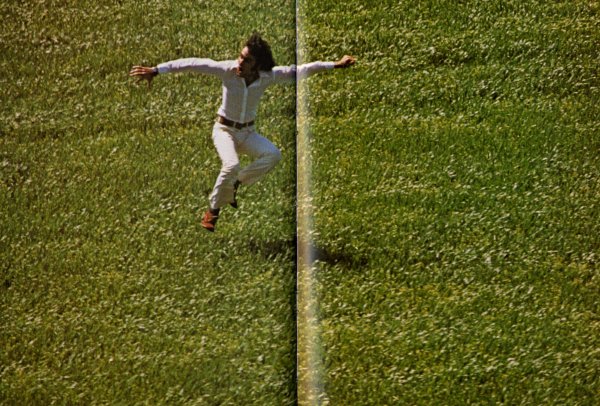
I've had nightmares like this.

I’ve had nightmares like this. I am a small child, falling, falling. Instead of hitting the ground, a strange man in a leather vest appears out of nowhere to catch me. It’s my father, and this is the genetical line which I perpetrate through my very existence! AHHHHHHHH!

The discosaurs are coming!

No, that’s not a fifty yard line or something that would make sense; instead, it’s the gutter of the book because an image this astonishing needs to be spread across two pages.

The prophet ran from the mountains and crossed the fields to warn the villagers that the discosaurs were coming. The villiagers thought he was mad. Only four years later, unheeding of the warning, the villiagers bought velvet suits and silk shirts with the top half of the buttons missing.

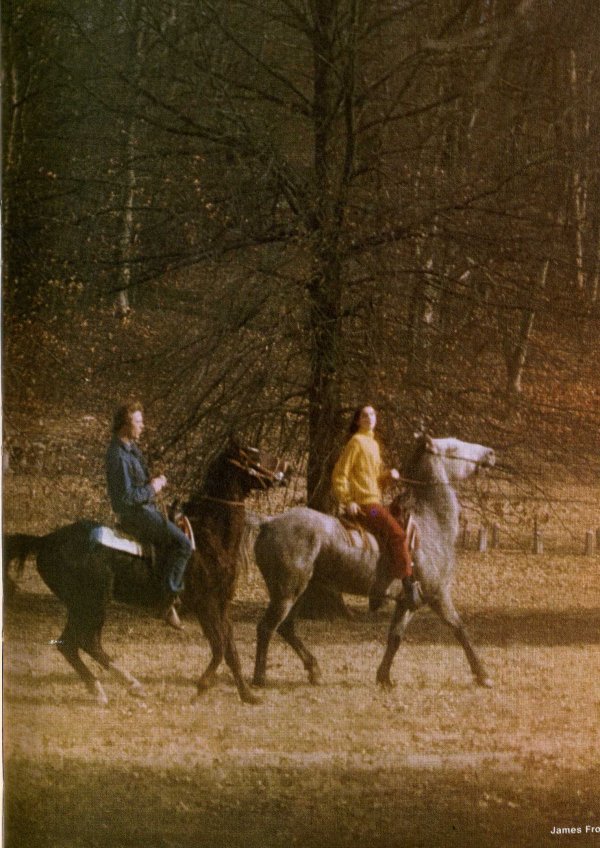
How the West was almost lost

This is how the West was almost lost. I’d pay extra for a DVD that features these people in a deleted scene which depicts Clint Eastwood on his walking horse coming into the scene, getting told he was harshing their mellow, man, and shooting the man in the leg and freeing the Indian woman to go back to her tribe.

I think I paid a dollar for this book. I mean, the text is meh (which is about what one expects for a book that collects inspirational junk for review; it’s a hardcover Ideals magazine without the topical relevance). But the pictures are awesome.

Books mentioned in this review:


Buy My Books!
Buy John Donnelly's Gold Buy The Courtship of Barbara Holt Buy Coffee House Memories

Book Report: Poems of Friendship edited by Gail Harvey (1990)

I read another book in this series, Poems of Flowers, earlier this month. Like that book, I enjoyed the accessibility of these poems. One could read them aloud and follow the images and the syntax and the stanzas to the ultimate point of the poet (unlike some poetry).

This book collects a similar cast of poems about friendship, including work by Wordsworth, Coleridge, Longfellow, and a suspicious number of “author unknown” (read: modern poems not in public domain but for which we didn’t want to pay).

The quality of imagery and profundity is uneven, but the cadences and sound of the poems are not; you can sit down or stand and read these aloud and not stumble over the way the words fit together or bluster through enjambment that only seemed to indicate the maximum number of characters that would have fit on one line.

So the book was middlebrow and almost fun. Worth a buck.

Books mentioned in this review:

Poems of Friendship

Buy My Books!
Buy John Donnelly's Gold Buy The Courtship of Barbara Holt Buy Coffee House Memories

Book Report: Ariel by Sylvia Plath (1965)

Somewhere in the 20th century, the academics killed poetry. Sylvia Plath served as one of the weapons, although it’s not clear she intentionally participated.

That is, poetry used to be accessible to the masses. Good poetry was accessible and profound. You could read a poem and get its point, enjoy its language if applicable, and reflect upon its meaning. Sometimes, if a poem was good, people could memorize them to recite for pleasure. No fooling. I’ve done it myself. Bad poetry that was accessible and not profound sort of went in one ear and out the other, but many had cadence (iambic pentameter, forced if needed be) and rhymes (forced, if needed be) that sounded good aloud and end-stopped and everything. Good poems, though, that had both that accessibility and brought profundity–a deeper meaning that resonated–along with provocative and evocative imagery, those poems lasted and brought pleasure for hundreds of years of readers.

But somewhere along the line, academics grabbed a hold of poetry and said, “We’ll tell you what’s good poetry.” Perhaps the markets were already drying up for middlebrow poetry consumers. But the academics started liking and promoting poems that were inaccessible and profound, which became the new Good. If they couldn’t be profound, they could still be inaccessible. The more inaccessible, the more academics with time on their hands, whole days of life unbroken by actual life except for the accursed office hours where they had to face impertinent and unteachable students of the bourgeoisie, could determine the beauty and meaning of the chaotic clapping of syllables and characters.

Sylivia Plath is slightly better than that, but not much. She’s slightly better with imagery than Rod McKuen, but tied for last with him (and much of the Poet race) in cadence and earsound. Her jumpcut imagery, though, really doesn’t serve to keep the reader in the moment of the poem and obscures her meaning. Except for the default men suck and I want to die which we can infer from her continued relevance to modern academics and her eventual success in the latter.

This book represented the second book of Plath’s poetry I’ve read; the first was Colossus, which I read in college for no apparent reason (that is, not because it was a class assignment, but instead because I liked to read poetry). So I recognize the relevance and can sometimes get something from a couple lines of her poems, but never a complete poem.

I think I have The Bell Jar still on my to-read shelves. Fortunately, I have plenty on them to keep me occupied for the next decade until I work myself into it.

Books mentioned in this review:


Buy My Books!
Buy John Donnelly's Gold Buy The Courtship of Barbara Holt Buy Coffee House Memories

Book Report: All Summer Long by Bob Greene (1993)

At worst, this book is nothing more than a set of Bob Greene’s columnesque riffs surrounded by a narrative gimmick and some wish fulfillment (43 year old network correspondent finds true love, sex with 25 year old grad student). As the book begins, that’s about the best I hoped for.

The book follows three friends from high school who, after their 25th high school reunion, take the summer off to relive some of their youth. They travel randomly, whimsically across the country. Ben, the network correspondent, lives alone after his divorce and dotes on his 8 year old daughter from a distance. Ronnie married into money and ended up chairman of a large public company by accident. Michael stayed in their small Ohio suburban town and taught school. Their adult life roles cause some friction for them, as do situations they find along the way. But friendship wins out for some reason.

The story moves along with incidents and asides that don’t add to a larger movement and don’t resolve anything. Ronnie’s father goes into the hospital; Michael meets his first high school love and seems in danger of sacrificing his happy home life to it; and Ben finds out his ex-wife is going to remarry. Then they move on to somewhere else. Ronnie picks up a woman who’s not his wife and she travels with them a bit. They sleep in the Elvis Suite in Las Vegas. Then they come toward the end of the summer and encounter some life-changing events.

I suppose I wanted to see this book as something more than the “at worst.” Perhaps it played to my proclivity toward Bob Greene’s work (see review for He Was A Midwestern Boy On His Own from earlier this month). Perhaps it played to my proclivity to undertaking life-altering lifestyle changes in the summer (or in the spring, as it were). But I enjoyed the book slightly more than I thought I would, and the book was maybe slightly better than the worst case.

But it’s not a good book, and Greene has been wise to stick to nonfiction since.

So it’s worth it if you like Greene’s work; you can find a used copy easily at a garage sale or book fair. Take my word for it; I’ve bought more than one first edition for a buck or two each.

Books mentioned in this review:


Buy My Books!
Buy John Donnelly's Gold Buy The Courtship of Barbara Holt Buy Coffee House Memories

Obeying Tax Laws Not Fair, Say Tax Money Spenders

In Wisconsin, the state is going after Wal-Mart for using legal techniques to lower its tax obligations: Wal-Mart owes back taxes, state says: Paying rent to itself cuts millions off retailer’s tax bill:

Wal-Mart Stores Inc. has avoided millions of dollars in state taxes by paying rent on 87 Wisconsin properties in a way that the state Department of Revenue calls an “abuse and distortion of income.”

As a result, state tax auditors say, Wal-Mart owes more than $17.7 million in back corporate income taxes, interest and penalties for 1998, 1999 and 2000. More could be due for later years.

The cause for this? The state is imposing its own standard:

Revenue Department lawyer Mark Zimmer argues that the world’s largest retailer is not paying its fair share of taxes that support public schools, local police and fire departments and the highways it uses to transport what it sells in Wisconsin. [Emphasis added]

Essentially, Wal-Mart is setting up its own entity to own the land that it uses for its stores; Corporate Wal-Mart gets to deduct the rent from its gross income so that its taxable income subject to taxation is less. Then, Landlord Wal-Mart pays Corporate Wal-Mart the profits as dividends, which are taxed less than the same amount as straight income would have been taxed.

Two distinct companies with different ownership wouldn’t draw the ire of the tax seekers; that it is, and it’s Wal-Mart, makes it look like easy pickings for the state of Wisconsin.

Hopefully, Wal-Mart and its REIT will prevail. A fie upon “creative” unelected officials who think their position gives them license to determine when “legal” isn’t “fair” and to use the people’s resources to extract more resources from the people.

Buy My Books!
Buy John Donnelly's Gold Buy The Courtship of Barbara Holt Buy Coffee House Memories

Perhaps It Just Wasn’t A Good Idea

Municipal Wi-Fi – wherein the city pays to have wireless infrastructure installed because the hipsters love it and because city coffers are overflowing and all existing infrastructure is shining and schools are accredited, amen.

But there’s trouble in hipsta paradise in:

  • Houston: EarthLink pays $5 million to delay Houston Wi-Fi buildout:

    A day after EarthLink said it would lay off nearly half its workforce, the company has agreed to pay the city of Houston a $5 million penalty fee for missing its first deadline in building the city’s municipal Wi-Fi network.

    First of many happy returns, I bet.

  • San Francisco: S.F. citywide Wi-Fi plan fizzles as provider backs off:

    Mayor Gavin Newsom’s high-profile effort to blanket San Francisco with a free wireless Internet network died Wednesday when provider EarthLink backed out of a proposed contract with the city.

    The contract, which was three years in the making, had run into snags with the Board of Supervisors, but ultimately it was undone when Atlanta-based EarthLink announced Tuesday that it no longer believed providing citywide Wi-Fi was economically viable for the company.

    Not economically viable? Dammit, the city will do it anyway!

  • St. Louis: Light poles create delay in rollout of city’s Wi-Fi network:

    Still waiting for citywide Wi-Fi in St. Louis?

    It might be awhile.

    Technical delays continue to dog AT&T’s plans to blanket downtown, and eventually the whole city, with a wireless Internet network. Mostly, the problems stem from an unexpected obstacle: the humble city streetlight.

    Hey, where did all those light-up lollipops come from all of a sudden? They weren’t there yesterday!

Behind schedule, over budget, and ill-conceived: the headlong rush to municipal wi-fi whose useful shelf life will probably be less than the time taken to roll it out proves that public/private projects built around the “Wouldn’t It Be Cool” imperative (see also light rail) combine the worst of both spheres. The only thing they do efficiently is to continue to spend taxpayer money at an ever-increasing rate.

Buy My Books!
Buy John Donnelly's Gold Buy The Courtship of Barbara Holt Buy Coffee House Memories

Security of Online Storage and Online Software, Part II

I went on a little rant here about trusting a company and its online business plan as a mechanism for storing your data. As a follow up, we have these two stories:

  • Don’t Trust the Servers: The danger of putting your data at the mercy of a company’s servers was made apparent when Microsoft’s own WGA servers crashed over the weekend.

    The Windows Genuine Advantage plan became a genuine disadvantage over the weekend when the server that verified users went down and began to disable operating systems around the world. At least, it disabled the operating systems of computers that checked into the home base to affirm their legitimacy.

    The WGA server outage hit on Friday evening and was finally repaired on Saturday. It was down for 19 long hours.

  • The Content in Google Apps Belongs to Google:

    An alert reader, SentryWatch, commented per my last blog that the Terms of Service posted on the Google Docs and Spreadsheets site assigns content rights of anything saved on Doc and Spreadsheets to Google. It’s almost too incredible to believe, so here’s the wording from the mighty Google maw itself:

    “… you grant Google a worldwide, non-exclusive, royalty-free license to reproduce, adapt, modify, publish and distribute such Content on Google services for the purpose of displaying, distributing and promoting Google services….”

Although to be fair to Google, kids these days are to young to remember when a similar clause appeared in the Microsoft Office EULA and caused a similar reaction, albeit one not magnified by the ease with which people discuss it on the Internet.

But both stories do highlight the dangers in trusting things in the Internet cloud with core data or core functionality. And it highlights how the “good enough” standard of quality, when multiplied hundreds of times in the number of core users, will leave a large number of users affected by “minor glitches” that will render their services useless to them. Hopefully, before they’re too invested in the online software/data storage vendor.

Buy My Books!
Buy John Donnelly's Gold Buy The Courtship of Barbara Holt Buy Coffee House Memories

Government Could Learn Something From Major League Sports

Since governments are spending so much money building/financing venues for sports teams, shouldn’t they at least learn a lesson from the experience? Apparently, the risks of a long-term, high-dollar contract elude our elected “leaders”:

A month after the deadly Minneapolis bridge collapse, Missouri lawmakers are poised to approve a massive bridge repair project that could serve as a national roadmap for renovating aging infrastructure.

Missouri plans to quadruple the pace of its bridge repairs by awarding a single, 30-year contract to fix and maintain 802 of its worst bridges.

The sheer scope and duration of the project is so unusual that Missouri lawmakers are meeting in a special session to waive conventional contractor requirements. The House passed the plan overwhelmingly. The Senate is expected to give its final approval this week.

The key to good service is to guarantee a lot of money for a really long time.

Buy My Books!
Buy John Donnelly's Gold Buy The Courtship of Barbara Holt Buy Coffee House Memories

So Much Snark From One Story

City leaders pitch local control of Arch grounds:

Mayor Francis Slay and former Sen. John Danforth, hoping to revamp the city’s riverfront, want to convince the public and the federal government there is only one way to do it: obtain part of the Arch grounds.

Taking land from the National Park Service would be rare, if not unprecedented. It would require not only an act of Congress, but also broad political and public support.

Because Mayor Francis Slay and the “city” of St. Louis cannot give away land that it does not own to a land developer whose no-risk loan the “city” has co-signed.

Maybe I am being too hard on Mayor Francis Slay and the “city” of St. Louis; perhaps they want that land to solve its Lucas Park problem; after all, if the homeless are sleeping under the Arch, they’re only bothering tourists, not voters. Think of it as a sort of non-monetary tax upon visitors to the city; I know municipalities like to stick it to the middle class transients.

Buy My Books!
Buy John Donnelly's Gold Buy The Courtship of Barbara Holt Buy Coffee House Memories

The Security of Online Storage

Ever since the first Internet boom, people have been excited about the prospect of storing your photos or other files online using things like I-drive. Me, I’ve never understood why you would trust that third party to keep your stuff safe and available. Never mind that I-drive collapsed in the first boom. The recent decision by Google to end its video thing, including terminating some people’s rights to videos they “bought,” combined with a Yahoo! decision to close one of its photo sharing sites,where your photos will be lost unless you act promptly, reinforce my notion. I mean, Google and Yahoo! are the big guys in the space. If they’re so eager to jettison your data (more likely your access to your data), what of the little guys and companies that come along with the service offering?

Oh, yeah, like I-drive.

Never mind. I am going to continue backing up to 3.5 disks and hoarding old 3.5 disk drives.

Buy My Books!
Buy John Donnelly's Gold Buy The Courtship of Barbara Holt Buy Coffee House Memories