Book Report: Branson Humor by Richard Gunter (2008)

Book coverI saw this book on the shelf at the local Price Cutter and was intrigued. A small press book, local, and it was a collection of jokes and cartoons. What was not to love?

Well, it’s a collection of common jokes, not particularly Branson-y or Ozark-y. Additionally, they are old jokes, coming from the days before Orben’s Current Comedy. I recognized many of them, thought maybe one was worthy of tweeting, and generally was disappointed with the collection.

Still, I admire the pluck and the drive to get the book out there.

Books mentioned in this review:
Buy My Books!
Buy John Donnelly's Gold Buy The Courtship of Barbara Holt Buy Coffee House Memories

Mr. Noggle and the Honey Cake from Miss Poppy and the Honey Cake

As some of you might know, from time to time I like to try my hand at reading books to the children, who come up with some strange assortment of new books that I don’t recognize due to birthdays, Christmas, other gifting events, book fairs, and garage sales where they follow in their father’s footsteps and acquire a bunch of them.

So somehow this book turned up, this Miss Poppy and the Honey Cake.

The book that started it all

It’s a little book about a little English mouse who bakes a honey cake and encounters all sorts of travails as she does so, the travails of which include not having specific ingredients and having to borrow them from neighbors, each of whom says that she’ll need something that no one else has. The titter-worthy, if you’re British, joke is that she ultimately needs salt and can’t think of anyone else to borrow it from but, fortunately, she has some! Then they all eat honey cake.

Inside the endpapers of the book, the actual recipe for honey cake appears, and it is a simple little recipe made from things we have around the house. So I thought I’d give it a try, since although I’m no fictional English mouse, I do try my hand at baking from time-to-time. Are the results worthy of a children’s book? I’ll leave that for you to decide.
Continue reading “Mr. Noggle and the Honey Cake from Miss Poppy and the Honey Cake

Buy My Books!
Buy John Donnelly's Gold Buy The Courtship of Barbara Holt Buy Coffee House Memories

Book Report: I’m Glad I’m Not Young Anymore by Clarissa Start (1990)

Book coverThis is the book you wished your grandmother had written.

Part memoir, part musing, Clarissa Start talks about her youth and living on the South Side of St. Louis, and sometimes Florida, as her parents eked out an existence in the 1920s. Those years and her attendance at University of Missouri during the depression were made adventurous by a father with a predilection for the ponies. Then, Clarissa deals with her husband’s getting called up for World War II after they buy their first house (just down the road a piece from where I lived in Webster Groves; I went looking for it since there was a picture in the book). She details a bit about her job search and finally her placement with the St. Louis Post-Dispatch.

The book then muses on aging a bit; her first husband dies, she moves out to the country (she lived in High Ridge while I was in House Springs, so we were almost neighbors). It has a wise, even tone to it.

Even retrospectively, Start doesn’t apply contemporary standards to history. She mentions internment in WW2 and explains it seemed like a good idea at the time. So that was noteable.

I liked the book enough that I bought another copy to send to my mother-in-law, another UMC graduate. On purpose. So, you know, I liked it.

Books mentioned in this review:

Buy My Books!
Buy John Donnelly's Gold Buy The Courtship of Barbara Holt Buy Coffee House Memories

Book Report: A Century of Enterprise: St. Louis 1894-1994 by Rockwell Gray (1994)

Book coverThis book represents another picture book I inherited from my aunt, and if the used price on Amazon is any guide, it might have been her biggest eBay score. But she lacked a certain follow through on the whole online auction thing. So I’ve got it now, and I thumbed through it, looking at the historical photos of business in St. Louis and reading the flattering paragraphs accompanying the photos. The book was, as a matter of fact, underwritten by one of the enterprises whose start is depicted in the book. Of course that company and all others in St. Louis are praised. Lavishly.

So the book provides interesting photographs, and some trivia and insights, including:

  • The smile was invented in 1948.
  • It’s a wonder turn of the century families were so large considering how ugly the women were.
  • The years since 1994 have been harsh for St. Louis business, since most of the grand corporations lauded in the book–Edison Brothers, May Company, McDonnell Douglas, Pet, Inc., Sherwood Medical, and so on have been bought out or have otherwise left the area.
  • Those who have the juice now in the city of St. Louis have always had the juice in St. Louis.

Still, an enjoyable experience, once again a short one since it was mostly photos, and something I’ll share with the more historical members of my family. And, dear readers, if you offer me what they’re asking for it on Amazon, I’ll share it with you, too.

Book mentioned in this report:

Buy My Books!
Buy John Donnelly's Gold Buy The Courtship of Barbara Holt Buy Coffee House Memories

The Novel As Security Training

In an article entitled “22 Things A Burglar Would Never Tell You” which looks like it was ripped off right from Readers Digest, we get the following nugget:

6. If decorative glass is part of your front entrance, don’t let your alarm company install the control pad where I can see if it’s set. That makes it too easy.

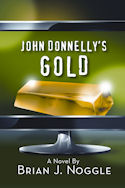
That, or a corollary, you would learn if you’d buy and read John Donnelly’s Gold.

I mean, it’s no Patriots: Surviving the Coming Collapse, but it’s chock full of interesting things o’ that nature, and it puts a couple grubzits in my pocket.

(Link seen on Ace of Spades HQ.)

Buy My Books!
Buy John Donnelly's Gold Buy The Courtship of Barbara Holt Buy Coffee House Memories

Book Report: Dear Valued Customer, You Are A Loser by Rick Broadhead (2004)

Book coverThis book collects a number of stories about technology problems from the 1980s onto its publication date, but most of the problems occur in the high tide of the Internet in the late 1990s and early part of the 21st century.

I remember some of them, but certainly not all. Most of them stem from mistakes on the technical end and not on security breaches, which do not allow for a wry commentary.

An amusing read. It reads like a series of blog posts, with each individual story only a couple hundred words, which makes it perfect for a nightstand book you want to pick up and put down quickly. The end of it includes a “Mail me your stories” bit which indicates the author might eventually have or might eventually release a sequel that I wouldn’t mind reading.

Books mentioned in this review:

Buy My Books!
Buy John Donnelly's Gold Buy The Courtship of Barbara Holt Buy Coffee House Memories

Book Report: The Brookline Shoot-Out: America’s Bloodiest Peace Officer Massacre by Shirley Walker Garton as told to Bradley Allen Garton (1996)

Book coverThis is an interesting book. It details the Young Brothers’ Massacre/Brookline Shootout that took place right down the road from where I live in the year 1932. A couple local ne’er-do-wells were wanted for shooting the marshal over in Republic (which is where our Walmart and Walgreens are). Word got around to law enforcement that they returned to their mother’s house for the holidays, and when a couple of their sisters show up in Springfield trying to sell a car with Texas plates, the sheriff of Greene County, nine other law enforcement officers, and a civilian observer rode out to the Young farmhouse. As they tried to get into the building, occupants opened fire. By the time the firing stopped, six of the officers were dead. The Young brothers escaped, only to be captured in Texas shortly thereafter.

This book is interesting because it is written by the daughter of an undercover deputy of Greene County who was not at the massacre itself but who served as part of the large group that secured the scene immediately afterward, and it’s “told to” her son. The author and the son remember her father, Roy Walker, talking about it some, and the author gives some of her family history that prompted her to write the book and then talks about the people in the shootout. She relies heavily on a contemporary source, The Young Brothers Massacre by John R. Woodside, for the actual account of the event itself, but she supplements this account with various interviews with people who remembered the event almost sixty years before (most of the interviews are from the mid to late 1980s).

She also throws in a number of photostats of newspapers, original photos, and some poetry. It’s an eclectic blend, part historical account and part story of the investigation. It’s pretty engaging, although it might help that the book is pretty short and she’s not carrying on so for 300 pages.

I’d recommend it.

As I mentioned, this did take place just down the road from me. Some accounts say the house still stands, but it’s at the outside edge of Springfield now, so it might not last for long. Strange, though, that I’ve moved from historical Old Trees to this little house and I’m suddenly abutted on all sides by history.

Books mentioned in this review:
Buy My Books!
Buy John Donnelly's Gold Buy The Courtship of Barbara Holt Buy Coffee House Memories

Book Report: Wilson’s Creek by William Garrett Piston and Richard W. Hatcher III (2000)

Book coverI got this book for Christmas a few years ago. As I have moved to the Springfield area and actually live within walking distance of the Wilson’s Creek National Battlefield and along the old Wire Road where the troops marched, I figured I ought to read up on it, you know? Heaven knows I read enough history books about the suburb of St. Louis where I used to live.

This is a full on history book, researched meticulously from the records of the time, including correspondence from participants as well as news accounts in the participants’ home towns. And the home towns there were; both sides of the battle featured a large number of volunteer companies from places such as Kansas, Illinois, Iowa, Missouri, Louisiana, Texas, and so on, most of the companies representing individual towns. But when the call to arms came, many able men joined either to punish the traitors or to defend themselves from the treasonous. Note that unlike some of the history books I’ve read in the past centering on a historical person and making that person somewhat heroic (see Scipio Africanus and Hannibal), this book is very evenhanded in treatment of both sides.

Now, for those of you unversed in your Civil War history, Wilson’s Creek was a very early battle. The second of the war, as a matter of fact, following the first Battle of Bull Run. In August 1861, west of the Mississippi, the two armies marched quite a ways from their logistical bases, kinda felt each other out for a while, and then had a battle. General Lyons of the Union side marched down from St. Louis, essentially, and General McCulloch marched up from Arkansas and hooked up with the Missouri State Guard headed by former governor Price. Both sides lacked in intelligence and constantly acted on rumors of major enemy concentrations and both sides had serious trouble keeping their armies fed and shod (see my post about selling shoes to the armies in the Civil War).

At any rate, one August morning, the Union army snuck out to catch the rebs by surprise and attacked from two sides. They might have wanted to forestall an attack on Springfield until the Union Army had a chance to retreat to Rolla or they might have thought they could beat the superior forces of Price and McCulloch. The battle started well for the Union side, but a couple twists of fate and they ended up retreating not only from the battlefield but also from Springfield. So, to make a short story long, the Federals lost.

But it’s a fascinating look at this battle and will probably be a gateway for me into the large collection of Civil War history books I inherited from my uncle-in-law.

It’s a real shame that a lot of people don’t read history any more. It really gives one perspective. And a lot of interesting stories to tell, particularly if the history occurred near where you live.

Books mentioned in this review:
Buy My Books!
Buy John Donnelly's Gold Buy The Courtship of Barbara Holt Buy Coffee House Memories

Book Report: Redneck Classic by Jeff Foxworthy (1995)

Book coverThis book is an early collection of Foxworthy’s “You might be a redneck” one-liners coupled with some drawings of his with captions and some material about how you know you’re getting old. It’s on par with You Might Be A Redneck If… (obviously), which means it’s not a very compelling read. A couple of bright spots, some chuckles, but lacking because Jeff Foxworthy is not delivering the jokes.

Books mentioned in this review:
Buy My Books!
Buy John Donnelly's Gold Buy The Courtship of Barbara Holt Buy Coffee House Memories

Book Report: Missouri Trivia by Ernie Couch (1992)

Book coverThis book is a collection of questions and answers loosely grouped into categories where the questions are about people, places, and things in the state of Missouri. I browsed it during a couple of football games and in advance of our recent trivia night triumph. The book didn’t help in that regard, however, as there were no Missouri-centric questions at the trivia night.

Unfortunately, the format of the book as questions and answers grouped loosely at the chapter level means this book is better for, say, quizzing someone during a long drive rather than reading it straight through to pick up knowledge about the state of Missouri. I might retain a couple of nuggets, but the loose grouping and the format make for poor retention. For retention, organization by title, region, or something might have helped.

Although for the sheer quizzing of a companion, some of the answers are going to be marvelously trivial. What was the corn production in 1870? I don’t remember if that actual question is in there, but there are some looking for particularly specific numbers that you’d get from an old almanac and nowhere else.

Oh, and the final little asterisk? The answer given in this book to the question Who won the 1981 World Series? is The St. Louis Cardinals. So any answer you don’t know for sure is suspect anyway. Maybe it’s better if you not retain them.

Books mentioned in this review:
Buy My Books!
Buy John Donnelly's Gold Buy The Courtship of Barbara Holt Buy Coffee House Memories

Book Report: Penny Candy by Jean Kerr (1970)

Book coverThis book is Jean Kerr’s follow-up to Please Don’t Eat The Daisies–thirteen years later.

The book is a slightly less eclectic mix, with most of the essays dealing with managing a household. By this time, her five children are spaced out in ages so that she’s had milk in sippy cups for years. That resonated with me, although I only have two children, raising the second one seems a bit like a repeat at times. Haven’t we covered this already?

Kerr makes allusions, again, to Kipling, which I can appreciate having read Kipling recently. Remind me sometime to write a piece about the loss of allusion in modern writing, replaced with political sucker punches which serve a similar role for a different subset of the reading public.

Recommended. I’m just sad that there are so few Jean Kerr titles available. Looks like a couple more collections and a couple of plays. Not that I see any of them in the seedy book fairs I hang out in. I’ll have to go to Amazon to get them if I get that hankering.

Books mentioned in this review:
Buy My Books!
Buy John Donnelly's Gold Buy The Courtship of Barbara Holt Buy Coffee House Memories

Book Report: Shock Wave by John Sandford (2011)

Book coverThis book will probably be the last of the Sandford novels I read for a while. I’m tired of them. To recap, the progression kind of followed that of Robert B. Parker’s later work: I bought them new until I couldn’t take the thematic material stretching between the books, then I got them from the library not too long after their release, and then I got to getting them from the library sometime, maybe.

My disillusionment comes from these factors:

  • The political overtones. These are cops and Republicans books. Let’s recap some of them: In Wicked Prey, the bad guys were conservatives; in Bad Blood, the bad guys are religious; in Shock Wave, the bad guy is an Iraq War I veteran who thinks the president is a clown. You can sort of get away with that since we’re not invoking a President by name (at least not until someone belittles George H.W. Bush), but there are needless exchanges and airing of political opinions through this book where the political opinion is a marker for the character. You know, I don’t have to read books that belittle political opponents or tut-tut reasoned-out philosophical stances. I have enough crime fiction from the middle part of the 20th century, where this crap didn’t happen, to satisfy my reading needs for some time, thanks.
     
  • The weaknesses of the Davenport novels are working their way in. So much of the Davenport novels is all about managing the bureaucracy and spinning the press to take pressure off or to manipulate the media during the investigation. The Virgil Flowers books have featured a lone detective in the hinterlands of Minnesota doing some detecting, but this book has an uptick in the bureaucratic crap. Also, the fixation with the tightness of women’s asses.
     
    Come to think of it, managing bureaucracy, spinning a narrative, and objectifying women tend to be hallmarks of modern liberal Democratic thought, aren’t they?
     
  • The reliance on series tropes. You know what? Flowers dresses casually. He wears rock band t-shirts. I get it. I’ve read the other books. Even if I hadn’t, I might have gotten it the first time it’s mentioned in the book. But on and on, Sandford has to throw shout-outs to bands he likes by plastering them on his main character. I get it. At least he’s only called “that fuckin’ Flowers” a couple of times in the book. I’m awfully tired of that.

But what does my disillusionment matter? I’m not the target audience. I’m not even going to be the audience going forward. Mr. Sandford, you can kill the series characters according to your whim now. Won’t bother me a bit.

The plot? Oh, someone’s trying to keep a Walmart-clone out of a small town. Of course, the right-thinkers in the book agree with the sentiment. Only mad bombers are mad and bombing. And the mad bombers aren’t ELF or ALF or, you know, actual terrorist organizations who commit violent acts when the environment is involved (in this case, the development might cause runoff damage to a local river). Oh, but no. It’s the aforementioned veteran committing the crime out of monetary greed.

Jeez, there are Robert Crais novels I haven’t even read yet. I think I’ll bother with those when I have a hankering for a modern bit of detective fiction.

Books mentioned in this review:
Buy My Books!
Buy John Donnelly's Gold Buy The Courtship of Barbara Holt Buy Coffee House Memories

Book Report: The Dakota Image text by Bill Schneider (1980)

Book coverThis is a picture book about North and South Dakota. There’s an introductory chapter about how awesome the Dakotas and the Dakotans are, a bit about how awesome their history is, and how awesome some of the famous historical people who lived in or visited Dakota are.

Then the photos, which show mostly landscapes more varied than one expects from the upper prairie, but the Dakotas have the Badlands, too. The landscapes are quite impressive, and I wouldn’t mind visiting the Dakotas at some time to see them, and Mount Rushmore, in person. One thing, though, about the photos: Given that they date from the late 1970s, whenever people appear in the majestic landscapes, it’s all brown cords and sideburns. Well, not that bad, but the timelessness of the natural surroundings are juxtaposed with a single moment in fashion time.

The last chapter frets that the book might succeed in drawing too much attention to the Dakotas, and the increased tourism and industry might make the Dakotas less Dakotan. Thirty years later, with the petroleum boom going on, I’d guess certain elements of Dakotans and natural environments partisans would lament that progress and human achievement are occurring, exactly as prophecied here.

Books mentioned in this review:
Buy My Books!
Buy John Donnelly's Gold Buy The Courtship of Barbara Holt Buy Coffee House Memories

Good Book Hunting: April 17, 2012, the Friends of the Christian County Library Book Sale

Last evening, the family and I ventured down to Ozark for the Friends of the Christian County semi-annual book sale. It’s in a single room attached to the Ozark branch of the library, so it’s not overwhelming in size, and the boys can explore the books on their own in sight of the parents.

Single room or not, it took us almost an hour to stack these babies on the checkout table:

The proceeds from the Spring 2012 Friends of the Christian County Library book sale

I got:

  • Another copy of The Elements of Style to give to someone who might benefit from it.
     
  • Mr. Parker Pyne, Private Eye by Agatha Christie. When I see Parker on the spine of an old paperback, I think about the old Richard Stark novels about the Parker character. Not so much Robert B. Parker, but in the olden days, spines were white, and Robert B. Parker’s paperbacks did not have white spines. This book is neither, but it’s a Christie book, which I read from time to time.
     
  • The Official Polish Joke Book/The Official Italian Joke Book, a politically incorrect volume if there ever was one.
     
  • M*A*S*H in paperback. I have a couple of the follow up M*A*S*H paperbacks, so why not start at the beginning?
     
  • A three-in-one collection of Ed McBain novels, one of which is Doll, which I am not in a particular hurry to re-read.
     
  • Two volumes of tales about the Great Lakes by Dwight Boyer.
     
  • A couple old issues of Missouri Historical Review.
     
  • A number of reference guides headed for the workshop, including Machinists Library Basic Machine Shop and How to Repair Briggs and Stratton Engines 2nd Edition.
     
  • A list of picture books and art books to flip through while watching ball games, including The Dakota Image, Monuments, and St. Louis Visitor 1974 Edition (this is a copy of the visitor info book they’d have stuck in a hotel in the Nixon administration).
     
  • Ernest Borgnine’s autobiography.
     
  • A couple of gardening books, including Plant Propogation in Pictures and Vegetable Gardening Guide.
     
  • A collection of things kids say by Art Linkletter. Also good for browsing during ball games.
     
  • A three-in-one volume, The Starchild Trilogy, by Frederick Pohl and someone.
     
  • Et cetera.

My beautiful wife got a stack of old and newer magazines she can review for recipe purposes and some books of a theological bent. The lads got some reading books and a strategy guide to Mario Kart Wii that they will probably review for picture purposes mostly, but which Daddy will use to learn some tricks to trump the urchins in coin battles.

All in all, that’s 31 volumes and 2 films to clutter my shelves and my nights plus the stuff for the others in my family. The total cost: $40.

The cost of the new addition to our house we’re going to need to house the library: TBD.

Buy My Books!
Buy John Donnelly's Gold Buy The Courtship of Barbara Holt Buy Coffee House Memories

Book Report: Gil Elvgren by Charles G. Martignette and Louis K. Meisel (2008)

Book coverThis book collects the works of Gil Elvgren, commercial and calendar artist from the late 1930s through the 1970s. He did a large number of advertising calendar illustrations, the kind that the calendar company would put your company’s logo on and your company could send it out to automotive shops or whomever your client served. The industry still exists in some fashion, as I’ve gotten a promotional calendar from the local Chinese restaurant, but I don’t think they do pinups any more.

And he made a good living at it, too. He bought himself a nice house in the Chicago suburbs and built himself a studio in it and then moved down to Florida in the 1960s. He became successful right out of the gate and was so in demand that he had to turn away work. His basic contract was something like 24 paintings a year for the calendar company at good money, and then commercial illustrations on the side of that. He was a prolific painter, and one of the paintings in the book he did in a mere two hours.

The works are remarkably consistent in subject matter. Well, they are pin-ups from the middle part of the 20th century, which means they’re young women in playful poses. In many cases, some action has caused the young lady’s skirt or dress to come up, exposing the top of her stockings and a bit of thigh. Strangely enough, although it was risqué for the time, women in the 21st century wear more revealing clothing daily, but without the aplomb.

The women in Elvgren’s work also share certain traits that mark them as Elvgren Girls, and the traits are put into stark relief when the authors of this book put photos of the models used for the paintings beside the actual paintings. Many times the model’s face doesn’t match the painting, which has that Elvgren Girl look to it. There’s enough variation in the hair color and expression that, if you’re not looking for it, you won’t see the commonality, but if it’s drawn to your attention, you’ll see it. It was probably a trademark.

The authors of the text compare his work fittingly to that of Alberto Vargas. Vargas’s work looks more watercolorish, with lighter colors and more focus merely on the woman. Elvgren’s paintings are more complete, catching a moment in time within a setting. The authors are partisans who denigrate Vargas, but the artists are different and should be not compared completely directly.

That said, I enjoy the Vargas, but the Elvgren stuff has more depth, and Elvgren’s working for the calendar companies and advertising firms strikes me as more entrepreneural than Vargas’s work for the magazines.

A pretty cool book. Multilingual, too: The introductory chapters about why a monograph about Elvgren’s work was necessary and about Elvgren’s life are replicated after the art work in German and French, so this book could be marketed internationally.

Books mentioned in this review:
Buy My Books!
Buy John Donnelly's Gold Buy The Courtship of Barbara Holt Buy Coffee House Memories

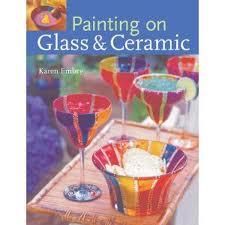
Book Report: Working with Oils by Norman Battershill (1982, 1991)

Book coverThis book is a short British painting project book that shows some quick things you can do to get started painting with oil paints. I believe it’s distributed by an art supply company. I remember back counting these out of boxes when I was a shipping receiving clerk at an art supply store. I read the book because I read anything, not because I’m taking up painting.

The book presents five paintings to try from a variety of painting types. There are a couple landscapes, an interior painting, and a still life. There are also samples for sketches made before drawing and basic information about equipment that you use and whatnot, which is typical for a hobby book like this.

The individual projects include five steps and then five pictures to illustrate the step, but for some reason, the book was laid out so that the steps are together and the pictures are together, but on different, often non-facing pages, so if you want to see the result of each step after you read the text, you’re going to do a lot of page flipping.

The artist’s style is somewhere between impressionism and realism, with blocky shape outlines. He works from the back to the front, which I guess is standard. It’s been a long time since I took an art class, but I watch a lot of Bob Ross’s The Joy of Painting, which I prefer and is much closer to inspiring me than this book is. I wonder how The Joy of Painting translated to print, as there are undoubtedly many books in the line.

Come to think of it, when I was in high school, The Joy of Painting did inspire me to try some painting using cheap watercolors from the department store and the cut-out tops of fresh doughnut boxes as canvases. It wasn’t half bad. It was more bad than that. Which is why I continued on my path to becoming a not half bad writer on the Internet.

At any rate, the book is a short primer on the art, so it shouldn’t be a major investment like a $30, 200 page hardback craft book would be. Especially if you buy it at a book fair bag day like I undoubtedly did.

Books mentioned in this review:
Buy My Books!
Buy John Donnelly's Gold Buy The Courtship of Barbara Holt Buy Coffee House Memories

Book Report: Doll by Ed McBain (1965, 1981)

Book coverI’ve probably read this book before, but it’s been twenty years since I ran through most of the old, pre-90s 87th Precinct series. They’re getting kind of hard to come by, the old ones, although you can generally find the 21st century hardbacks at book fairs. I found this one somewhere in a 1981 paperback.

The book only has one central mystery, unlike the later volumes. A model is murdered in her apartment while her five-year-old daughter in an adjoining bedroom reassures her dolly that everything will be all right. There’s some pre-existing friction on the squad, and the lieutenant is going to transfer Kling, but Carella speaks up for him and partners with him on the case. Carella goes missing and a body turns up in a fiery wreck in his automobile, and Kling gets suspended but continues to pursue the case. They find the model has a secret, and only when the detectives from the 87th can figure that out can they find the killer and rescue Carella.

It’s a hard-hitting plot, maybe, for the 1960s, but in the 21st century, it’s as deep as the episode of a television crime drama. Then again, one of the joys of the mass market paperback is that they really were fast moving, singular sorts of plots with good prose attached. Well, sometimes with good prose. McBain’s, though, is some of the best.

Books mentioned in this review:
Buy My Books!
Buy John Donnelly's Gold Buy The Courtship of Barbara Holt Buy Coffee House Memories

Book Report: We Love You, Snoopy by Charles M. Schulz (1962)

Book coverI know what you’re thinking: He’s really following up a book of jokes with a book of cartoons? No, even better: this book is actually a subset of Snoopy cartoons from a larger volume, Snoopy Come Home. So it’s like a Readers Digest Condensed Book of cartoons.

These Peanuts cartoons come from the late 1950s and 1960s and center on Snoopy, of course. They deal with his love for dinner and his relationships with Charlie and whatnot. No Red Baron at this time, and Woodstock does not look fully formed within the cartoons themselves (although he looks like we know him on the cover).

The Peanuts cartoons are timeless if you’re of a certain age who grew up with new ones in the paper and television specials frequently. But I can’t think what a younger crowd would think of them.

Worth it for a certain nostalgic value and some amusement, but no real laugh out loud things.

Books mentioned in this review:
Buy My Books!
Buy John Donnelly's Gold Buy The Courtship of Barbara Holt Buy Coffee House Memories

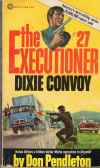
Book Report: Cosa Nostra / The Hit by Peter McCurtin (1971)

Book coverThis book is a little pulp bit from the era of the early Don Pendleton “The Executioner” series. It’s not published by Gold Eagle or Pinnacle, though: it’s some off-brand called Modern Promotions/Unibook.

And it’s a pleasant surprise.

The main character of the book is a former NYPD detective now serving as a deputy in a small town in Maine after leaving New York in disgrace for having taken some money from some non-Mafia bookmakers. When the chief of police is in a coma and the main character acts as chief, a known mobster moves into town. The incapacitated chief of police, a good man by all accounts, looks to have taken some money. The chief’s wife, a sexpot, has designs on everyone in town, including the main character. As Maine becomes an open territory for mob homesteading, with the New York outfit hoping to beat the Montreal outfit to the new rackets, can one tarnished hero keep the mob out of his town at least?

A short pulp read, pretty dark and noir, but it moves well and keeps you rooting for the main character even as he admits some mistakes, pays for them in his own ways, and tries to do somewhat right.

Recommended.

Books mentioned in this review:

Buy My Books!
Buy John Donnelly's Gold Buy The Courtship of Barbara Holt Buy Coffee House Memories