CNN Headline: Seeing love in green and gold
Is it some article about new women’s lingerie with the Packers logo, like these H-O-T-T! Packer panties?
No, it’s some dumb writer or something.
Man, my heart started racing for a moment there.
To be able to say "Noggle," you first must be able to say "Nah."
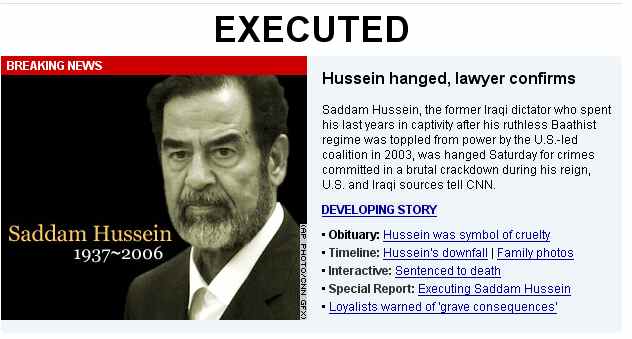
CNN Headline: Seeing love in green and gold
Is it some article about new women’s lingerie with the Packers logo, like these H-O-T-T! Packer panties?
No, it’s some dumb writer or something.
Man, my heart started racing for a moment there.
Poll results that promote the point-of-view of the commissioning group as news? Sure, if the poll knocks America:
Rude immigration officials and visa delays keep millions of foreign visitors away from the United States, hurt the country’s already battered image, and cost the U.S. billions of dollars in lost revenue, according to an advocacy group formed to push for a better system.
To drive home the point, the Discover America Partnership released the result of a global survey on Monday which showed that international travelers see the United States as the world’s worst country in terms of getting a visa and, once you have it, making your way past rude immigration officials.
Unfriendly ain’t the worst that can happen to travellers to a foreign country, but it’s awfully important to the make-feel-nice industries.
UPDATE: Once again, someone else discovers that I am dumb as a stump:
– Musings from Brian J. Noggle, who misses the point. The poll isn’t news because it “knocks America,” it is news because how people around the world view America impacts America in a variety of very important ways.
Well, I didn’t review the actual survey because I was not so inclined to delve into the material; instead, I wanted to point out, in my glib minimalist way:
Still, I missed the point, which is changes to our immigration and visa policy to suit the needs of the study producers is good. No, I got that. Simple changes would benefit you. I got it.
But let’s look at the study’s other details (summary PDF) which can be spun otherwise than “U.S. is most unfriendly country to visitors.”
For example, once you get past the unfriendly, apparently they’re not afraid of the things that frighten Americans:
Immigration officials far outpace the threat of crime or terrorism as something international travelers worry about when considering coming to the US.
In spite of the raging unfriendliness, the visitors like the United States:
- 63% of travelers feel more favorable towards the U.S. as a result of their visit.
- 61% agree that, once a person visits the U.S., they become friendlier towards the country and its policies.
- 72% report that once they get past government officials at the airport, the U.S. travel experience is “great.”
- Nearly 9 in 10 travelers tell their friends, relatives about their travel experiences most or all of the time.
And:
- In every travel category but the point of entry experience, America ranks in the top three: travelers want to come to the U.S.
- Travelers are willing to wait an average of 46.5 days to get a visa to visit the U.S.
- More than 7 out of 10 travelers say that U.S. policies in the world would not stop them from visiting the U.S.
Yeah, it sounds a hell of a lot like the tourist street is rising up at our unfriendliness.
Meanwhile, since I am feeling minimalistly glib, allow me to mock some of the survey itself (survey results PDF).
For starters, 100% of the survey respondents had travelled off of their continent in the preceding year and a half, so we’re not talking about first time travellers. 65% are college graduates, compared to a thumbnail where college graduation rates by country top out at 40% (gathered here). The survey was taken on the Internet (or so I assume based on this question: “What regions have you traveled to? Just click on a region to indicate you have traveled there in the past 18 months.”
So the survey looks at well-travelled, well-educated, well-connected people. The sort who might easily look down on stupid foreign government officials, maybe. But that’s only what I assume based on my firsthand knowledge with frequent travellers abroad. Maybe I need to hang out with more down-to-earth jetsetters.
Now, here is our respondents’ breakdown by country:
What is your country of citizenship—that is, what country are you a citizen of?
| United Kingdom | 10 |
| China | 8 |
| Russia | 8 |
| Venezuela | 7 |
| Brazil | 7 |
| Japan | 6 |
| Argentina | 6 |
| Korea | 6 |
| India | 6 |
| France | 6 |
| Germany | 6 |
| Australia | 6 |
| Colombia | 6 |
| Italy | 5 |
| Turkey | 5 |
| United Arab Emirates | – |
| Other | 4 |
| Refused/not sure | – |
Now, let’s look at the questions:
Let’s look again at that list, broken out differently:
| Respondents from Europe | 35 |
| Respondents from Asia/Australia | 35 |
| Respondents from South America | 26 |
To put that in perspective:
| Respondents from a different hemisphere | 96 (minimum) |
So tell me again how any of the responses about the US being a good value or being reachable in a “reasonable” amount of travel time might be hampered by the fact that we’re a large ocean, a small ocean, or a pretty good sea away from the respondents? What, aren’t the Canadians, the Mexicans, and the Caribbean people not worthy of an opinion?
I mean, heck’s pecs, I think Illinois is a heckuva bargain for the travel dollar and is very convenient for travelling to. Because I can freaking walk there.
But I am belaboring my point when I could berecreate some other point which probably won’t be blogged.
So let me make sure I am missing the point completely, because I rather hate to nick the point, or rather to merely backboard-rim the point instead of a complete air ball:
A study commissioned by a group representing the tourism industry (neverminding projections that international travel to the United States will grow this year by 5.5% (source) has discovered that a number of well-travelled, well-educated, Internet-survey-taking foreign travellers think that U.S. immigration and customs officials are rude, and Reuters ran the story because of its ability to cast ill on America.
Because frankly, that is my point.
Regardless of whether the travel procedures are onerous, which I have no doubt they are, the proper way to encourage a meaningful reflection on the process is not to shout from the rooftops FOREIGNERS SAY AMERICA IS UNFRIENDLY, but particularly if you’re trying to sell a solution to Americans.
Instead, perhaps an appeal to the generosity of Americans who want to share the experience of this beautiful nation and its myriad landscapes and culturescapes with other people who obviously view America favorably.
Oh, but no, I miss the point of a public policy initiative coming from a trade group based in Washington, D.C., who thinks the best mechanism to initiate American public policy reflection is the reproach of foreign opinion. Because I am a dumb, ugly, and unfriendly American, no doubt.
You know why the Bush administration has chosen to provide a ludicrously self-confident front on its approach to the war on terror, when any reasonable person recognizes mistakes and setbacks that the president and his team seem loath to admit?
Because any crack in the unity plays like this: White House scrambles for exit strategy:
A “stay-the-course” U.S. policy in Iraq has suddenly veered toward a “change-the-course” posture, but with little certainty about what it will be changed to.
After three years of repeated insistences by President George W. Bush that he would accept nothing short of victory in Iraq and that the proper policy was in place to achieve that end, everything appears up in the air amid an intense flurry of new studies and proposals about the war.
Which of the recommendations the White House will adopt is unclear, but rising public anger over the war reflected in the congressional elections has most observers believing the administration has little choice but to shift gears.
“They’re looking for a way out,” Rep. Ike Skelton, D-Mo., said of the administration.
To its opponents in the other party and to the press, any reflection or re-evaluation is weakness.
Were this a less-than-family blog, I would express through creative invective my immediate, visceral reactions to this article, laden with a vocabulary designed to present through a funhouse mirror any thought of change into a desire to cut-and-run, hypocritically, from a fight we can win.
Personally, I regret that I have but one subscription to cancel to the St. Louis Post-Dispatch and that I did that long ago.
Well. I bought this book cheaply at a book fair because I was already buying dozens of other books, so what could this one hurt? My pride, my friends, my pride.
For this book offers a hundred some pages of quizzes that cover the field of crime fiction mostly of the twentieth century, and as a trivia-lover, I fell very, very short.
I thought I was doing all right on the authors I know well. A couple of questions touched on the 87th Precinct series by Ed McBain. A couple on the Lew Archer books by Ross MacDonald. I even answered correctly a number of questions about Rex Stout’s Nero Wolfe series, some of which I read in high school. But there’s a great number of books, authors, and series in classical and frankly just 20th century fiction that I didn’t get around to reading yet, although there’s plenty of it to be read in the Noggle Library.
My final humbling came at the hands of a simple quiz that just wanted me to get the colors right in the titles of John D. MacDonald’s Travis McGee series. It’s been a year since I last touched one of these books, and some many more for most. I got a couple right–I can even see the cover for Free Fall in Crimson in my mind’s eye since I just organized some of the read shelves this year, but ultimately, I fell very short. For an author whose books I really enjoyed and have, in several instances, read more than once.
Forget it, the Northside Mind Flayers trivia night team is no more, for I cannot even respect myself for my performance with this book.
But it was a quick browse, like a phone book. Only occasionally did my eyes fall upon a familiar name. The rest of the time I was turning pages without comprehension.
When you’ve got a self-help sex book with the dedication TO MY FATHER – Who taught me the meaning of tenderness with his soft cheeks and gentle hands, you know you’re getting into some downright creepy psychoanalysis territory. To help women of the baby boom generation cope with their sexual hang-ups, Dr. Irene Kassorla has devised the PLEASURE PROCESS, a set of steps not actually recognized by ANSI or ISO. This process involves the usual good advice about sex:
However, it’s wrapped in psychoanalysis that obviously traces all sexual hangups to interaction with the parents as a baby. Ergo, Dr. Kassorla invites you to free-associate while going at it, particularly if you’re able to free-associate yourself to a repressed memory and its attendant guilt of a moment where your daddy was changing you and you were gloriously naked in the bassinet. If you’re able to talk about that with your partner while you’re both, um, busy, you’ll get over the guilt that’s held you back and will finally achieve orgasm.
I mean, ew. Please. No. That’s not a test of whether your partner loves you, ladies; that’s a test of whether your partner is listening to you. For his sake and for the sake of your relationship, I hope he’s not.
Frankly, Irene Kassorla is no Marabel Morgan, and I’m glad Ruth Westheimer had Dr. Kassorla “disappeared” in the great sex therapist turf battles of the end of the disco era. Because frankly, I’m more hung up than when I started the book.
Error message from Hotmail:

Please note the steps to remedy the situation:
Microsoft: It’s some language for placebo.
At least the Bears game wasn’t the most lopsided Packers loss this season.
Schools look for ways to dispose of radioactive materials:
School labs have used low-level radioactive materials safely for decades; experts say they’re critical in teaching physics and chemistry. Sealed samples — often leftovers from past experiments — frequently are saved in closets and storerooms.
But as teachers retire and containers get shoved aside to make way for new samples, it’s easy for schools to lose track of what they’ve got, or to store them incorrectly, said Dr. Sandra West, an associate biology professor at Southwest Texas State University in San Marcos.
No doubt this story has put our high schools at risk, once Al-Qaeda gets finished ransacking antiques stores for lumeniscient clock faces, dumps for old smoke detectors, and garage sales for twenty year old microwave ovens.
Google hit of the day: dangerous emus.
From the U.S. Department of Justice, no less.
State Senate passes $7.50 hourly rate:
Amid warnings that it could cost jobs in border areas such as the Metro East, the Illinois Senate on Wednesday approved a $1 minimum wage increase that would keep the state’s pay scale above Missouri’s and ahead of a proposed federal increase.
Rate freeze plan clears committee:
A proposal meant to spare consumers from double-digit electricity rate hikes next year easily cleared an Illinois House committee Tuesday, but its prospects of becoming law are uncertain.
Now that the Illinois state government has helped raise costs and hold prices down, making businesses’ decisions easy by removing them, the only question the legislators are leaving to its entrepreneur class is: To what state should I move?
Remember, if your employer offers free coffee, you should drink as much as possible. Otherwise, you’re just leaving money on the table.
Stem cell injections fight muscular dystrophy in dogs:
Stem cell injections worked remarkably well at easing symptoms of muscular dystrophy in a group of golden retrievers, a result that experts call a significant step toward treating people.
Fortunately, with the passage of Amendment 2 in Missouri, our canines will have access to these treatments and our biotech companies will have access to the sweet, sweet taxpayer cash to solve dogs’ problems.
But note:
The study was published online Wednesday by the journal Nature. It used stem cells taken from the affected dogs or other dogs, rather than from embryos. For human use, the idea of using such “adult” stem cells from humans would avoid the controversial method of destroying human embryos to obtain stem cells.
So another lifesaving cure for an animal that doesn’t require embryonic stem cells? Good thing we spent so much time and government effort in embryonic stem cell research!
Sportswriters around the country have discovered their disdain for having to prepay merely for the right to pay for something.
Oh, wait, it’s not PSLs; it’s paying for the privilege of negotiating with a player:
The Boston Red Sox can afford to and made the choice to pay $51 million just for the right to negotiate with a Japanese ballplayer. Sickening.
When the sports teams do it to loyal fans, it’s a creative revenue strategy. When agents do it to sports teams, it’s sickening.
I do see the subtle differences that make the moral equation opposite.
Maybe I am reading too much into unrelated events, but these two things could indicate the beginning of an escalating arms race and tensions between two non-governmental entities.
1: Dam plans jeopardize Amazon, experts say.
2: Private Texas spaceport launches test rocket:
A remote West Texas spaceport being built and bankrolled by Amazon.com founder Jeff Bezos launched a test rocket Monday for the first time.
So you have a dam threatening Amazon, and Amazon’s founder bankrolling a rocket program. Only a fool would miss the obvious.
Tobacco tax defeat smacks hospitals:
Missouri’s hospitals weren’t running for office last week, but they ended up among the losers.
Voters rejected a proposed constitutional amendment that would have increased cigarette taxes by 80 cents a pack.
Most of the money raised — about $289 million of the forecast $350 million — would have gone to Missouri’s hospitals to help pay for the care of the state’s lowest-income patients.
The Missouri Hospital Association, the major supporter of the failed amendment, says it’s not giving up.
That’s the spirit, Missouri Hospital Association, you continue finding ways to have the taxpayers chip in to bolster your and your members’ bottom lines. Don’t give up.
Oh, I know, you’re saying, “There goes MfBJN, attacking the poor again,” but note, fellows, that any wide-ranging industry serves the poor. Just because it’s health care doesn’t mean it’s exempt from my free market-loving scorn.
I mean, how many poor people could be served with the money spent in the Missouri Hospital Association’s budget? Plenty, I would guess, but no doubt that capital is doing more good paying salaries and expenses for lobbyists who are self-selected to do the work for the poor.
As the price of scrap metal has risen, bad men have begun stealing or destroying working and expensive equipment to get at the copper or aluminum within. The City of St. Louis will do something to help deter the thieves. No, not rigorous enforcement of existing laws nor increased patrols and police presence on the street. Perish the thought.
The city will introduce new regulations that deputize (and burden) private industry and inconvenience law-abiding citizens:
Alderman Lyda Krewson has an idea of what to do. She’s proposing a law requiring scrap buyers to pay only by check and to photograph, fingerprint and even take the license plate number of every seller.
Police say the paper trail would help stop the scourge of thefts from businesses and homes that has risen with the price of recycled metals.
Because it’s easier to catch businesses in breaking the law because they don’t run as fast nor do they shoot back at law enforcement.
Red tape: It’s like duct tape for the government.
The St. Louis Post-Dispatch profiles a veteran for Veterans’ Day. Lest we think the paper might lavish some attention on an American veteran or, hell, even an ally who fought with the Americans in some war or another, don’t worry: the Post-Dispatch sepia-tones an opposing soldier from World War I:
On this Veterans Day, consider that rarest of veterans, Walter Heiman of University City.
First, he’s 105 years old and a World War I veteran.
Second, in WWI, he wore the field-gray uniform of the German army.
Funny, I don’t think the paper would have profiled a Confederate soldier or a Nazi soldier with the same affection, but World War I is just forgotten enough that the paper hopes we can help celebrate all sides and all veterans the same. Or maybe it hopes we can celebrate our opponents and keep them close to our hearts at all times.
Now I remember where I got these books; I bought them at Patten Books for a couple dollars each after I discovered how well they sold on eBay. Unfortunately, I would also later discover that the books available in bookstores tended toward the later, less salable editions. In a final stroke of ill luck, I started reading the ones I couldn’t sell and found they were okay. So now I go into bookstores looking to buy them and might, someday, float ludicrous sums of money to buy back the very books I once bought for fifty cents and sold at great profit.
But I digress. This, the fifth book in the series, finds Tarl Cabot disguised as an assassin hunting someone who wanted to kill him in his rebuilding home city of Ko-Ro-Ba. He travels to Ar and enters the employ of a slaver to find out what he can about his adversaries. In the course of having his vengeance, he aids a plot to overthrow the leaders of that city.
Again, the main character is strong, assertive, and still a pawn of things he only half-understands. The book continues some of the serial story alluding to a bigger payoff and bigger plots to come in the series.
I remembered where I got these books because I returned to Patten Books to fill in the gaps in my set. I picked up 1, 2, 6, 7, and 10, which means I now only lack 9 of the first 10. Although Patten had a number of the later books, I held off on spending the sums to which I alluded (over $20 for at least one of the paperbacks) until I get a better sense of whether I’ll enjoy the books that late in the series. The earlier books remained in print for a long time, making them cheap and plentiful, whereas the later books are expensive because they had fewer printings. Whether this is due to quality drop-off or the backlash against the books that arose in the 1980s, I’m unsure, but I’m certainly not spending good liquor money on those books yet.
But all signs indicate that I’ll buy 11 sometime in the next year or so.
I bought this book this year at the Carondolet Y Book Fair, I think. It’s back when I thought I might write for Damn Interesting, so I purposefully sought out compendia like this that would give me inspiration for stories I could write. I never got the gig, but I do have a number of interesting books to read.
It’s only after I cracked this book open that the brevity coupled with the large print size indicated that this might be a juvenile book. That’s okay, though, as I am often juvenile.
The book contains a number of short chapters on famous spies through history, including Mata Hari, Nathaniel Hale, Gary Powers, and Rudolf Abel. Aside from these well-known figures, the book also covers Major William Martin (see, it is Damn Interesting sort of material); Velvalee Dickinson, spy for Japan in World War II; Peter Ortiz, Marine reserve and leader of the French resistance in WWII; and others. The brief chapters and simple language make it a very quick read and serves as trivia fodder or a source for further investigation.
So it was worth my time, even if I’m three times the age of its target audience. Plus, it’s the 76th book I read this year. So there.
Hey, it’s opening weekend for Harsh Times, a movie about a violent ex-Army Ranger shooting the hell out of Los Angeles because he likes killing.
Thank you for your disservice, Hollywood.