A Short List
Buy My Books!

To be able to say "Noggle," you first must be able to say "Nah."
Buy My Books!
After enough time has passed that the Virginia Tech shooting is fading from collective memory, Marquette University President Robert J. Wild, S.J., pens a column for Marquette magazine just in time to frighten the incoming freshmen (except the psycho ones packing heat, of course). In it, he details Marquette’s ineffective plan to handle a similar situation, broken down (literally) into phases.
When pandemonium erupts, Marquette will respond thusly:
Phase 1: Meetings:
At the highest level of response, a crisis team with representatives from offices throughout campus would immediately assemble and work with local law enforcement and emergency management agencies. At every level our crisis plan calls for utilizing all available means of communication, including e-mail, the university Web site, university voice mail, Access TV message boards, postings in buildings and other tools as needed.
Well, I guess he only enumerates the highest level of response, which is meetings and communication. But don’t worry. Marquette offers other nuggets of safety. I’ll tick off a few for you here:
>We also have an outstanding Department of Public Safety. Not only do these men and women patrol around the clock our campus and surrounding neighborhood, they also through their daily interactions work to develop a relationship of trust with our students, faculty and staff.
In addition, Public Safety commanders have at their disposal in a crisis situation first-rate technology that includes an electronic system to lockdown instantaneously most academic buildings. Furthermore, this summer we will unveil a new command center equipped with cameras that allow us to monitor the campus area for suspicious activities.
However, the Jesuit tradition of cura personalis or “care for the individual” provides us with greater freedom to build a campus environment that nurtures students in a holistic manner, intellectually, physically, emotionally and spiritually.
Nothing about arming up or allowing legal weapons on campus.
So I guess the hide behind the fat guy is just implied, because once you start inserting the phrase “a suicidal man with a gun” into many of the sentences in his letter to the Marquette community, you realize how silly and, ultimately, ineffective the measures will prove if a Virginia Tech sort of incident erupts in Cudahy Hall.
But the survivors will have access to a crack team of grief counselors, no doubt. Try to live through any rampage if only for that.
Buy My Books!
Buy My Books!
Ross MacDonald was writing Raymond Chandler novels into my lifetime. How odd.
This book tracks Lew Archer as he looks for a missing woman whom he’d given a ride. He finds a twisted set of intertwined well-to-do families still living under the shadow of crimes committed during the World War II years.
So the reader comes along, sometimes picking up insights because it’s a twisted hard-boiled detective mystery that put him ahead of Archer, but the book and the crimes are labyrinth enough that you still won’t figure it completely out until the end.
I enjoyed it. I’ve probably read it before, and might read it again if it’s in one of the Archer omnibuses still on my to-read shelves. Hopefully, though, I’ll wise up and not buy another copy, but when I’m in a book fair berserker frenzy, I cannot be sure.
Buy My Books!
Israeli security firm reports huge spike in PDF spam:
Israeli security firm Commtouch Software Ltd. is warning of a massive surge in Portable Document Format spam over the past 24 hours.
According to estimates by the company, about 10% to 15% of all spam over the past day or so has been in the form of PDF messages. “Given the fact that these messages are nearly four times bigger than standard spam messages, this increases overall global spam traffic by 30% to 40%,” said Rebecca Herson, senior director of marketing at the Israel-based company.
So far, the outbreak has involved 14 billion to 21 billion PDF unsolicited messages and shows no signs of slowing, Herson said. >
Lucky me, I must have been on the beta test list, since I’ve been getting this crap for over a week.
On the other hand, if I am on the spammers’ friendlies list, maybe there’s time for me to make a killing in Vision Airships before it goes from 1.9 cents a share to 2.8 cents a share.
Buy My Books!
Ladies and gentlemen, I guess I have become a cat person after all.
It didn’t start to be this way. In the old days, I was a normal guy, favoring dogs over cats as pets. Of course, for a very long time, we didn’t have pets except for Oscar, the snake my mother wussified by watching soap operas while petting it on her lap, and a stream of soon to be dead goldfish. But I related more to my aunt’s dogs than her cats in her menagerie. Then, when we ended up outside of an apartment in the projects (Berryland, in Milwaukee, thank you), we got a dog. And then a couple more.
At that time, I appreciated some anti-cat humor.
But then, I moved into my own apartment and got one of those maintenance-free pets (the cat), and she grew on me. Suddenly, we had many in our house by the time we had a house. And the transitory dog, but we got him from the recycling facility unhealthy, and he didn’t make it long.
So I seem to have run out of poetry books of short works to read at the boy, so I picked up All I Need To Know I Learned From My Cat since its little bon chats would be easy to put down and pick back up when the boy wandered into and out of the room (or vice versa; when chasing him, I don’t know whether I’m coming or going). Well, its simple prose took about 10 minutes to read, and then I was done. I own a cat, so I sympathize with the sentiments. Since I ran out of things to read aloud, I grabbed 101 Uses for a Dead Cat on the next pass of the to-read shelves.
I bought it at the St. Charles Book Fair this year towards the end of the trip, as I wearied from carrying my books and as the boy began to fuss. I grabbed it because I thought it was an early, cheap paperback edition. I later realized its actual paperback cover was missing. How disappointing.
I remember the hubbub in the early 1980s about this book. Animal lovers’ organizations (this was before animal rights organizations supplanted them) thought it cruel. I remember my mother owned a yellow shirt no doubt depicting one of the uses from the book or its successors, so Simon Bond had quite a cottage industry going for a time.
However, I didn’t find the book funny. I didn’t read it at my son, so don’t worry about its warping him. It only depicts in cartoons, wordlessly, cat corpses used in a variety of ways. Cruel? I don’t know, the books does not indicate how the cats died. So it might just represent judicious uses of an available resource–cats who died naturally. However, the book isn’t, you know, funny. It must have been a dark time for humor, coming out of the 1970s.
So I related to the first book and didn’t care much for the second book. But I think it took me about 20 minutes total to clear two books from my to-read shelves, so it was time well spent.
But I’ll pass on the other books in the Uses for a Dead Cat series, including the Complete and the Omnibus editions which came out in this century.
Buy My Books!
This was the second collection of poetry from Rod McKuen. It’s better than Suspension Bridge, too, but right now I am hard pressed to think of what wouldn’t be.
The book comes in three parts; “Listen to the Warm” collects numerous poems relating to the fear of losing one’s love and then the actual loss of one’s love, so its narrative made the total fair enough even though many of the individual poems don’t stand alone well. The second part lapses into what would later delegate McKuen to his low position in my esteem–that is, obscurity, reliance upon locations and “you had to be there” to make sense, and dedication to people I don’t know. The third section, a collection of song lyrics, actually holds up very well, as McKuen demonstrates a sense of rhythm and some rhyming that elevate the simple images.
Still, he’s no Carl Sandburg or Edna St. Vincent Millay.
Buy My Books!
But thanks to a creative “funding proposal,” some people in communities not served by libraries will get the chance to do so:
A politically charged proposal to create a new funding source for public libraries in Waukesha County is coming back for a new debate.
Aimed at capital costs in the countywide network of 16 libraries, the proposal would raise property taxes in non-library communities to provide tax relief in communities with libraries.
While the county already collects taxes to offset each municipality’s cost to operate a library, no such funding mechanism exists to alleviate the costs of building and maintaining the facilities.
Advocates of the new arrangement contend that residents of non-library communities are not paying their fair share for having unrestricted access to any library in the county.
But opponents say the new proposal represents taxation without representation because it would affect people who have no influence over how a municipality spends its capital funding.
Those Wisconsin politicos are awfully clever at creating unaccountable authorities for extracting money from their marks citizens, aren’t they?
I was home in Wisconsin this month, and I remembered why I love the state; it’s cooler, it’s greener, and the air is cleaner.
But any news from Wisconsin government reminds me why I’m not moving back any time soon.
Buy My Books!
This month’s Business 2.0 (read it here if you have Adobe Flash Player) has a big story about Burning Man, the annual Woodstock for Generation X-Y. Page 16 has The Big Idea, a quote from Tom Price, the environmental manager for Burning Man, on why companies are eager to promote their wares at Burning Man:
Here’s the value proposition: 40,000 of the smartest most socially networked content-generationg people on the planet, whose tolerance for B.S. is negative point-five, all checking out your product.
Yeah, hyping your “hype-free” consumers, among whom the rest of us expect to already find the most smarmy and self-absorbed of the sweet demographic.
However, I don’t have to mock it. Actual attendees and devotees of the highly-hyped festival are on it:
I for one am still in shock. To say I feel betrayed would be more accurate. The one thing that’s drilled into your head from day one is that there is no branding, no marketing, no commercialism, no money at Burning Man. The image of the Man with a suit on is in poor taste, in my opinion. I can’t believe the writer (rightly so) describes us as a “tangible business asset.” I guess I have until now, refused to admit that the CEO of Burning Man would ever think of me as just a consumer worth only $250. I attend Burning Man for the people, the creativity and the fact that the life on the playa, for me, is far divorced from my daily routine. When I’m there, I feel like I am part of something big. The people I meet and the enthusiasm I throw into the event is what brings me back year after year. But to hear that my efforts, opinions, and education simply makes me a member of some marketing department’s dream demographic is disappointing. This new development saddens me.
Sometimes you just have to throw a little water on effigies when they turn into pinatas. Or something.
Buy My Books!
Missouri has a budget surplus:
Missouri could be sitting on a $320 million budget surplus because of higher-than-expected tax revenues and lower-than-expected spending during the recently concluded fiscal year.
Lawmakers had intended to leave about $200 million unspent when passing the state’s $21.5 billion operating budget for the 2008 fiscal year, which started July 1.
Funny, it’s the heartless Matt Blunt and the Republicans in the legislature that cut the budget, but it’s Missouri that has the surplus.
Never fear, though, our elected troughhogs are working to change that:
Unless lawmakers take additional action, that money will remain unspent. But politicians already are proposing ways to use part of that surplus.
I call racism. What do lawmakers have against being in the black?
Buy My Books!
Helena Bonham Carter shows her range and sexes up a role as a witch:
Bonham Carter says she had a big say in creating her character’s voluptuous-but-disheveled look.
“At first they thought, ‘Oh, we’ll just put her in a sack,'” Bonham Carter said. “But I said, ‘There’s no way I’m going to wear a sack. I’ve got to be a sexy witch.'”
Well, color me shocked. After all, she did the same thing to a monkey, for crying out loud. If you’re looking for a non-sexy sort of character, you probably don’t select Helena Bonham Carter for the role.
Buy My Books!
Worked all night, but it won’t last:
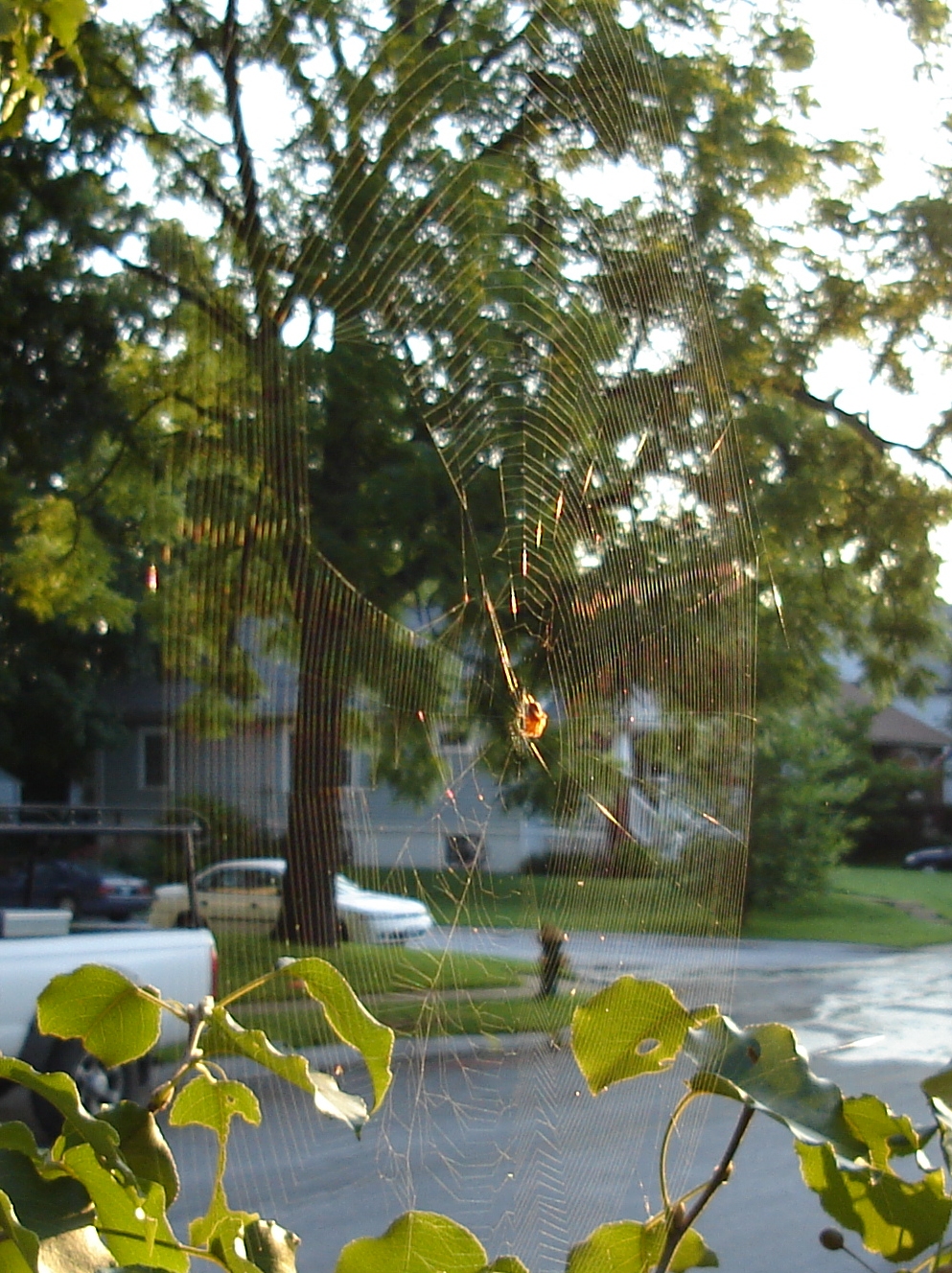
Hey, buddy? You missed a spot.
Buy My Books!
St. Louis Post-Dispatch columnist Sylvester Brown weighs in on the Scooter Libby thing by finding a racial angle:
I wonder how Kimberly Denise Jones reacted when she heard about President George W. Bush’s recent decision to wipe away the prison sentence of I. Lewis “Scooter” Libby.
Jones, better known as the diminutive rapper “Lil’ Kim,” and Libby, Vice President Dick Cheney’s former chief of staff, have something in common. The 4-foot-11 rap star was convicted in 2005 on three counts of perjury and one count of conspiracy. In March, Libby was convicted of four felony counts — perjury, obstruction of justice and making false statements to FBI agents.
Let’s compare the whiteys to oranges. Scooter Libby was convicted of perjury for remembering a conversation differently than someone else did, and the testimony was in an investigation that revealed no crime occurred. Li’l Kim, on the other hand:
Lil’ Kim was convicted of lying about a shootout between her entourage and a rival rap group outside a Manhattan radio station. Security photos and witnesses contradicted Lil’ Kim’s claim that she saw nothing.
So the color of the convicted is the only difference in the cases?
I lack nuance, I guess.
Buy My Books!
Congress looks to boost US tourism:
The United States has lost billions of dollars and an immeasurable amount of good will since Sept. 11, 2001, terrorism attacks nearly six years ago because of a decline in foreign tourists. Several senators are now trying to get the government involved in bringing those visitors back.
The solution: DisneyNation!
Prepare yourselves for SB 555, which mandates that all attractive women wear short skirts and wings and carry fairy wands and all other women wear villainous stepmother/stepsister/witch apparel. All attractive men must wear pirate garbs (open vests only; no shirts allowed!) All other men will be issued Goofy, Mickey, Minnie, or other character costumes. It will be the happiest place on Earth; violation subject to up to fifteen years in prison and/or $250,000 fines.
Doubt it, gentle reader? I have three words for you: interstate commerce clause. There’s nothing that Congress cannot do once it sets its mindlessness to it.
Buy My Books!
Wow, you know, I never thought to myself, “Why isn’t there any Objectivist pulp fiction?” Even if I had asked that or thought perhaps maybe I should write some, I probably would not equal the achievement of Andrew Sugar’s THE ENFORCER series.
I mean, imagine Atlas Shrugged if, instead of a cipher for Ayn Rand’s fantasies of the perfect man, John Galt was an author who died somehow and was now living in a series of cloned bodies that deteriorate in 90 days while he works for the John Anryn Institute using his wits, his special power over his own life force (ki), and judo to take on all the Tooheys of the world (sorry, wrong book). But it’s pulp fiction with a definite Objectivist theme.
In between bursts of violent action, we have Penthouse letters sex scenes, the most graphic I’ve seen depicted in any paperbacks I assume were sold at drug stores. I mean, in some pulp, you get the “they’re going to have sex” paragraph, “they’re having sex” paragraph, and then the “it was good” paragraph. In this book, you get the he did that and she did this to his that and it was good thing. It starts graphic to the N-degree and then goes into the metaphorical several paragraphs later. Conforming with Ayn Rand’s theory of sex, I reckon.
Also, we get the speechifying, but in small doses, where the protagonist and his Institute compatriots go on about the power mongers who would rule over men. Nothing comparable to Galt’s Speech, though, so the narrative is not impaired too badly.
It’s cheap, it’s tawdry, and it’s definitely a suspense/science fiction pot boiler worthy of its tawdry cover. However, the Objectivist slant adds a touch of camp to it. Maybe real Objectivists wouldn’t think so, but they have no sense of humor.
I might have to go find the rest of the series.
Buy My Books!
In the book review for Sonnets of Eve, I mention being a fan of the sonnet series. Here’s one I wrote in the early 1990s when I was a laddie who fancied himself a poet:
O air, o sweetest air, why flee you so?
My tightened lungs can scarcely keep with you!
A thief, she steals my breath and doesn’t know,
this goddess sweet and yet a mortal too.
O words, my wondrous words, where are you now?
The longing songs, the wit I hope I own?
What will I say, what voice, what face, and how?
I must, or find myself again alone.
O voice, my treacherous voice, o fail me not!
Command you I to speak a flowered verse,
or make a jest, I could, I ought!
But what were she to laugh or something worse?
Yet I resolve with steeled heart to try,
I open up my mouth but walk on by.
My thundering youthful heart, beat not so hard,
for volume’s strength can never measure love.
Your maddening thuds may put her on her guard,
and now she looks this way, o Lord above!
My reddening cheeks, how dare you color so?
The blood is needed somewhere else, I’m sure,
so cheeks to normal hue, for no winds blow,
and any tint is but a sign to her.
My whitened hands, you tremble with no cause.
No beasts with snarling fangs or bloody cries
are here to threaten me, to give me pause:
no thing to fear, except those sapphire eyes.
To rest, I need to shirk or take the task;
that means to flee, or worse, to simply ask.
But am I not a somewhat virtued man?
No god, tis true, but somewhat more than beast.
No Hercules, no Titan but I can,
with passioned might, hold tightly her, at least.
No Apollo I, but Phoebus has his chore.
Around the earth he daily makes his way,
and I, the mortal one, have less but more,
for she would be the center of my day.
No Zeus am I, no thunderbolts or such,
no power or the wish to take a life,
but then, I lust for but one woman’s touch,
remaining true to she, my dreamed wife.
No perfect god could I e’er try to be,
perhaps there’s good within my modesty.
No god, but something more than beast am I
and virtues must I have to make me so.
Not swine that roots about his muddy sty,
but I exhume my heart that way, I know.
No sloth who loafs about his treetop bed
and never ventures far from places known.
I am a vigored youth with love unfed,
I must then go the way my heart has shown.
No mouse am I who fears to softly tread
on ground too near to any human frame.
I am a man of couraged heart and head,
who’ll call, with hopes and fears aside, her name.
And with a braced heart and hopeful eye
and steady voice shall speak to her, and try.
“O sweetest light that ever graced my eyes,
that made complete the painting of my world
as does the sun when warming bluest skies
or oysters when they’re found as lightly pearled,
will you consent to let me warm your nights
when you are cold of chill or cold of heart
and let me salve with care your deepest frights
with healing words which are my only art
and sit with me before the snapping flames
throughout the harsh and snowy winter days
with cider and our talk and loving names
to keep the tender fires within ablaze
–oh, I digress, my question is but this:
will you be mine and share in loving bliss?”
“You silly boy, you talk with dumb big words
that make no sense to human ears like mine
and tangle up your sentences like other nerds
who think they’re talking smart and looking fine.
Are words like that supposed to win my heart?
An oyster with a pearl? A sunny sky?
How strange you speak of me! It’s hardly art.
I think you are a little out there, guy.
And to propose a ‘loving bliss’ with you,
well, bliss is not the word that comes to mind.
I’d say a dreadful hell, eternal too,
were I to think of it and be unkind.
So boy, you go and build your cloudy castles,
but I don’t need those silly poet hassles.”
In my defense, I wrote that when I was 21 years old and was under the influence of Millay, Spenser, Shakespeare, and whatnot. I got better, but not much.
Also, note that the preceding is copyright 1993 Brian J. Noggle and cannot be reproduced without the expressed written consent of the author. This means you, Harvey.
I remember in like January 1994 performing the piece at MoKaBe’s coffee house back when it was in Kirkwood, Missouri. I had spent the time before the poetry reading playing chess with Michael O’Brian, local poetry slam superstar, and he was falling prey to the Noggle blitz. That is, he thought perhaps there was method in my propensity for putting pieces in danger chasing his pieces; maybe that simple harvesting of my rooks and bishops was an intentional sacrifice in my long term plan. However, he became bored with the game when he probably suspected I didn’t know what I was doing and wandered off. That’s right, he RESIGNED in the face of the OVERWHELMING Noggle blitz.
At any rate, it was one of my first open mic nights, so I read the pieces from printed sheets of paper. I did, however, enlist a young lady named Amy to perform the final piece in response to the first five sonnets, and she probably did better than I did.
I would later write my first piece geared specifically for performance, “Visions and Revisions: A Prelude for Amy”, for the young lady. I performed it for her while sitting in the lobby of the local theatre while we awaited Dancing at Lughnasa. She was so impressed she used me to get the attention of my best friend at the time. Ah, youth.
But I digress. That’s what I have to offer for a series of sonnets as a means of comparison to Flora May Johnson Pierce.
Buy My Books!
As you may recall, gentle reader, I bought this book earlier this year at the Friends of the Webster Groves Library book fair.
It’s a collection of 82 sonnets that tell the arc of the Eve story. You know, Adam and Eve, but not limited to the Genesis account of it. Using that myth as a framework, the sonnets explore the archetypal experience of womanhood as each woman discovers good and evil, relates to her husband, and raises her children. All in the pursuit of knowledge and godliness after the fall.
It’s definitely a labor of love; the book was probably a short run and misspells the author’s name either on the dust jacket (Mae) or on the title page (May). Author has signed the book twice, once with an inscription, and has added some hand-written corrections to the credits on the dustjacket. A note tucked inside the book indicated that its going price on the Internet was $28.00, and that wasn’t even signed. Since that book is apparently still on the Internet for the same price, it’s probably best that the Friends of Webster Groves Library only priced it $5.00.
Now, what of the sonnets themselves? They were okay; author was certainly familiar with the form. However, I didn’t think that most of them stood alone nor offered individual quality that impressed me. As a fan of the sonnet and the sonnet series myself, I appreciate the effort, but not everyone can do Fatal Interview like Millay.
But the book was better than Suspension Bridge.
Buy My Books!
Aiken apparently questioned after airplane incident:
Former “American Idol” singer Clay Aiken was apparently involved in a disturbance with another passenger Saturday while on an airplane headed to Tulsa International Airport.
Congratulations to Aiken for fleshing out the “rock bottom” portion of his episode of Behind the Music.
Buy My Books!
Apple issues battery program for iPhone: Replacements cost $79, $6.95 shipping, three business days:
The iPhone’s battery is apparently soldered on inside the device and cannot be swapped out by the owner like most other cell phones.
Apple spokeswoman Jennifer Hakes said Thursday the company posted the battery replacement details on its Web site last Friday after the product went on sale.
Users would have to submit their iPhone to Apple for battery service. The service will cost users $79, plus $6.95 for shipping, and will take three business days.
That’s rich. Kinda like their overlord, come to think of it.
Don’t people gather with pitchforks and torches and DoJ attorneys outside the walls of Castle Redmond for this sort of thing?
(More on Kim du Toit and Tamara K.)
Buy My Books!
If pro-life advocates assert that life begins at conception, how come they never include that period when discussing someone’s age?
Buy My Books!