I’m a GoDaddy.com customer, and I see that there’s a boycott on:
Maxwell sez, “Following GoDaddy’s announcement backing the controversial Stop Online Piracy Act and Protect IP Act, many customers have started to move their domains to other hosts.
I’ve seen people on my technical Twitter feed chirping about the same thing. But you know what? They’re boycotting Go Daddy in part because they don’t like the television commercials.
I’ve got 60 domains (I am consistent: I hoard in the physical world, I hoard in the digital world), 8 hosting accounts, and a couple WordPress and Joomla installations. I’m too lazy to move them all to make a point.
Also, I’m consistent. I’m not going to Make A Stand and boycott one unpopular-to-the-cool-people company supporting SOPA but continue to support dozens of other companies that do (Official list of SOPA supporters includes the X-Men, bible publishers & country music). For your convenience, I’ve posted the complete list from the House Judiciary in text below the fold.
This book is a brief biography of General Patton written not long after he died and with input from his family. So it’s completely laudatory, a homer bio, but, hey, it’s Patton. What’s not to like?
The book, as I mentioned, is very short (like 150 pages), but if you don’t know anything about the man, you’ll learn the basics. He came from a well-to-do Western family from the old West. He chased Pancho Villa. He rightly equated the tank with cavalry. And he beat a soldier who said he just couldn’t handle it, when the soldier was also stricken with malaria instead of just shell shock. He held his men to a high standard, and they ended up loving him for it. You know those signs in foreign lands saying, “George Bush, help us”? In the 1940s in Europe, they chanted for Patton to free them.
The book is too thin for a Management Lessons from George Patton piece (sorry, Jim), but worth reading just for the overview of an American icon.
A too-facile comparison, but the technical people, including the technical industry liberals, that I read often are united with some of the small-government conservatives in opposing the Stop Online Piracy Act, which is a bipartisan but ill-conceived piece of legislation that will give the government the ability to throttle technology companies, Web sites, and Internet businesses for the mere crime of linking to someone who might be infringing on someone’s copyright.
Welcome to the party, pals.
In September, a fellow I know shared a post from an “author, speaker, and entrepreneur” said:
On NPR I heard a Republican candidate (I can’t even remember which one–does it really matter?) say that the reason entrepreneurs aren’t starting companies is excessive regulation and corporate taxes.
Come again? I’ve never met an entrepreneur say that she would start a company if it weren’t for either of these two factors. In fact, if someone said that to me, I’d respond, “Then you’re not an entrepreneur, so stay on the porch.”
My acquaintance works in the software industry, and a lot of techies think like this: It’s not hard to start a business, you just go into your basement or to your Starbucks, open your laptop, and start coding; ergo, anyone who thinks regulation is killing businesses is wrong.
Well, except I’ve heard people who’ve recently hung out their shingles as technical consultants commenting on the number of government filings that they have to fill out. It’s giving them some pause.
But when technical, social media, author entrepreneurs look at starting a business, they’re not running into a lot of regulatory headwind. Yet. But that’s unlike other entrepreneurs who run into all sort of regulations layered on from the Federal government on down to the rent-seekers at the state or local level. Here’s one of my comments on the thread:
Take a shade tree mechanic. He’s doing brake jobs for people he knows for cash, taking his waste to the auto parts store. He’s not going to quit his day job because he knows the minute he hangs out a shingle on a rented garage, he’s subject to all kinds of OSHA regulations, EPA regulations, zoning regulations, increased paperwork to comply with city, state, and possibly local taxes and licensing.
Seriously, software businesses are very low footprint. You can do it from your dorm room and write some program that makes it big and then you’re set or whatnot. Other service businesses are not, and these are the entrepreneurs discouraged from opening businesses.
Oh, sorry, that’s just the 300 hours of schooling you need to merely paint and file nails in Wisconsin. To open a shop, you need a Manicuring Establishment license. Of course, the nail technician license (techinically, the Manucurist license) does not apply to putting makeup on the face or rubbing oils on the body. That’s the Aesthetician’s license. So, if you want to paint someone’s nails at a profit, you need to get your professional license, your local business license, which might just be a home business license but you’re subject to sign restrictions and parking considerations and all that.
My point is that there are entrepreneurs out there who are not creating official businesses, who are not paying taxes and hiring employees, because the burdens of government compliance are onerous. They’re not going to grow their businesses, they’re not going to hire employees. They’re just going to do some work on the side for friends, for cash or barter, because they can’t be bothered. The government is keeping us very safe from these non-entrepreneurs.
The unspecified Republican candidate spoke about these people, not some eighteen-year-old sitting in a coffeeshop trying to combine Groupon with Foursquare.
The governments are starting to put their regulatory impediments in place for Internet and technology businesses, from this SOPA monstrosity to compelling etailers to collect sales taxes (resulting in Amazon dropping its affiliates in affected areas, for example). Now the governments are starting to do to technology companies and, yes, technology entrepreneurs, what they have been doing with increasing fervor and frequency to other industries for decades.
If only someone could make the compelling case that SOPA and whatnot are directly equivalent to the EPA or the FCC just making rules that directly impact businesses or legislatures passing laws based on their incomplete knowledge and overweening expertise of the lobbyists called to testify on the laws’ behalves.
That a government that can make ill-considered laws and rules that impact business will make ill-considered laws and rules that impact businesses. All businesses. Eventually.
In the holiday spirit of Electric Venom, I must offer a gloss on a “Christmas” carol.
I hate this song. If I hear this song on the radio, I turn it at once, and sometimes I even turn the radio off for a half hour to punish the radio station that played it.
I mean, not only is it a bunch of wealthy secularists trying to shame the less fortunate into pouring money into the coffers of large organizations with large overhead to send pink jeeps and swag with cool logos to Africa, but it has fundamental flaws.
It’s Christmas time, there’s no need to be afraid
At christmas time, we let in light and we banish shade
Christmas comes on one of the shortest days of the year in the northern hemisphere, you pinheads.
it’s hard, but when you’re having fun
There’s a world outside your window
And it’s a world of dreaded fear
Where the only water flowing is a bitter sting of tears
This just in: It can’t be the only water, since if you’re dehydrated, your tears don’t flow.
And the christmas bells that ring there are the clanging chimes of doom
Well tonight thank God it’s them instead of you
Oh, really, now. Who expresses this sentiment at Christmas time except for Bono?
And there won’t be snow in Africa this Christmas time
Any fool knows that Africa is all jungle or desert, and this particular fool songwriter fails to account for the fact that Africa is a big continent with varied topography and, yes, snow.
But most of the continent lies in the southern hemisphere, where Christmas falls in the summertime. So the lack of snow is not because of the lack of giving by first world peoples.
Where nothing ever grows
No rain or rivers flow
That’s a pretty hasty generalization of Africa. They probably only mean the hungry parts of Africa, where nothing ever grows and it lacks water. You know what you should send peoples who live in those regions? Not food, U-Haul trucks.
Do they know it’s Christmas time at all?
Given the fact that 40% of Africans are Christian, I would expect they do. Come on, remember this guy?
That’s Archbishop Desmond Tutu. You know?
Here’s to you
Raise your glass for everyone
Here’s to them
Underneath that burning sun
Let’s raise a toast to the starving? Really? We salute you!
Then they go into that idiotic Feed the world chant.
Now, I’m a giving guy, maybe even a little more giving around Christmas. But I’m not into feeding the world; I am not like the gods nor am I full of hubris. I contribute food to the local food bank, support the church, drop a couple bucks into the red kettles, and participate in various YMCA fundraisers and charitable programs. I don’t remember if I’ve done my charitable giving manifesto or not, but I can tell you right now that doing what Bono tells me or having my consciousness briefly raised for a sawbuck’s worth of Western guilt-assauging when stimulated by a celebrity stunt ain’t one of them. I’m not trying to feed the world. I’m trying to make life a little better for my neighbors.
I can’t stand this hectoring song that somehow warrants heavy radio rotation amid the secular winter holiday classics that play when they go to all “Christmas” music. I mean, seriously, the radio stations go to Wilson Phillips singing “Hey, Santa”, Eartha Kitt mewling about being Santa’s kept woman, Band Aid hectoring, hippopotamus-wishing, and plying-reluctant-women-with-liquor-while-it’s-cold-outside. What’s the matter with a little Bing Crosby?
Is it any wonder I go to the record player and the vinyl still bearing my mother’s MCAS El Toro address label in December?
I had hoped that this book would be something like Genghis Khan and the Making of the Modern World, but alas and alack, this was not to be the case. Where the book on the Mongols was dymanic and narrative, this book was rather academic and stretched out what little we know about Attila the Hun, mostly anecdotal, into chapters.
Attila the Hun ruled the Huns for eight years, which means basically eight campaigns (although he shared rule with a brother for some time before that). Since he ruled in the 5th century, in the Dark Ages, in an illiterate tribe, there are no Hun records themselves, and all accounts–such as those spare ones are–come from exterior sources. So the elements of the book that are about Attila are sparse anecdotes stretched into chapters. Kind of like how this report is stretched by repeating itself.
The author throws in a goodly number of name-checks of the other rulers of the era, which is after the split of the Roman Empire and before the final collapse of the Western Empire, so you get a summary history of the era, but the book lacks flavor.
I dunno; this book is subtitled The Man and the Myth, and I get the sense that Attila really punches above his weight in historic notoriety based on a couple things: he came along at a time when both remnants of the Roman Empire were weakening, the papacy was strengthening, and they needed a scapegoat or common enemy. He appears more in fictional accounts of his life or other lives than in actual history accounts, for hundreds of years after his death. Face it, he was the early middle ages equivalent of Hitler: if you needed someone in your opera who was archetypically evil, you threw in Attila. For millenia. Why, George Patton called the Germans Huns in the 20th century. If we didn’t have Hitler and Nazis these days, movies would have asiatic horsemen detonating nukes at the Super Bowl.
I mean, he couldn’t conquer France for crying out loud. A couple kickball teams allied together could conquer France, and I don’t mean the children’s gym class kickball teams; I mean the real sissies: the adult kickball league kickball teams.
It’s a pretty short book (187 pages of text), though, and it is a good primer on fifth century southern Europe. And, apparently, it gives one enough confidence to spout off on the relative weight of the Hunnic “Empire.” I mean, with an Empire, you sort of expect that it will last over a couple decades and maybe a couple generations of successful leaders.
According to a police report Newsradio 620 WTMJ obtained, Darrell and Michelle Jaskulski walked in to Rollie’s Tap Tavern on South Packard Avenue in Cudahy late Saturday night.
…
The Jaskulskis claim that Eder started yelling at them and called them scum of the earth before ordering them to leave the bar.
Eder, however, claims the Jaskulskis became belligerent when they were asked to sign the recall petition and said they wouldn’t leave. Eder then asked the other people in the bar if they wanted the Jaskulskis to leave, and they said they did.
At some point another man, Brian Wachowiak, who was sitting nearby, told the couple that they needed to leave. Darrell Jaskulski approached Wachowiak and a fight started.
Michelle Jaskulski ran over and got into a fight with Wachowiak’s girlfriend Michelle Wirth. Police arrived a short time later and broke it up.
HotAir links to story about Rick Perry’s prudent participation in his employer’s retirement program:
Rick Perry has done something his opponents have been hoping he’d do for years: retire. But it’s not what the governor’s detractors had in mind.
Perry officially retired in January so he could start collecting his lucrative pension benefits early, but he still gets to collect his salary — and has in turn dramatically boosted his take-home pay.
Perry makes a $150,000 annual gross salary as Texas governor. Now, thanks to his early retirement, Perry, 61, gets a monthly retirement annuity of $7,698 before taxes, or $6,588 net. That raises his gross annual salary to more than $240,000.
On a swing through Cherokee, Iowa, Perry was asked why the Employee Retirement System should be paying his retirement while he’s still collecting a salary.
“That’s been in place for decades. … I don’t find that to be out of the ordinary,” Perry said. “ERS called me and said, ‘Listen, you’re eligible to access your retirement now with your military time and your time and service, and I think you would be rather foolish to not access what you’ve earned.’”
Perry spokesman Ray Sullivan said the governor’s early collection of his pension benefits is “consistent with Texas state law and Employee Retirement System rules.”
Allahpundit is displeased:
He “retired” back in January, months before he decided to run for president. Had he known he was going to jump in and take withering fire from Romney on his entitlements rhetoric, I assume he’d have waited to start collecting. But it is what it is, and it’ll be thrown in his face every time the subject of Medicare or Social Security reform comes up. I don’t blame him for his logic: He paid in, he worked hard, he followed the rules, and now he wants his money. Problem is, that’s the same attitude seniors take towards federal entitlements, and if Perry beats Obama, he’ll suddenly be the guy tasked with convincing them to relax that attitude a bit in the name of our common fiscal good. How does he rally them to take one for the team and wait until, say, age 68 to enroll in Medicare if he couldn’t wait until finishing his term as governor to start taking his own pension?
You know what? It does open one up to attack for participating in a system one might eventually want to alter.
But by the same token, “conservatives” are open to–and often suffer–attacks from big government revolutionaries because the conservatives sometimes participate in big government programs. Follow the logic here:
Receive welfare benefits but oppose welfare?Hypocrite! Yes, government checks covered my expenses in the early 1980s when I lived in the housing projects, and I ate the government cheese. In my defense, I was a minor and not responsible for the situation.
Receive retirement or death benefits from the estate of a Federal employee but think they might get too many benefits?Hypocrite! My mother was a long-time Federal employee, and after she passed, I got a couple checks as part of her retirement death benefit.
Take tax credits but oppose the stimulus?HYPOCRITE!!! Although, in my defense, I did not end up taking stimulus money for my washing machine because it seemed a bother to fill out the paperwork.
Go to public schools, but think too much is spent on them?Hypocrite!
Eat agricultural products, but oppose agricultural subsidies?Hypocrite! Actually, I’m not sure how that would follow, but you can bet the charge would follow.
Drive on public roads, but think billions of dollars in Federal spending in omnibus transportation bills is a bad idea?Hypocrite!
Obey the law of gravity, but think space travel is vital?Hypocrite! Okay, I’m tripping into ad absurdum with the list here, but the illogic is very similar.
Frankly, I must be the walkingest hypcrite there is. I believe that the Federal government is large, but welfare fed me, government checks fed me, then Pell Grants educated me, and I claim deductions of any sort on my annual tax returns, I must hate myself or something.
Instead of merely being part of the system I’d like to change for the better.
Sadly, it’s not uncommon for me to accidentally re-read a book I’ve already read if I buy it again, but this book presents a special case. I did not even choose to read it. Well, not exactly.
As is my wont, I keep a book of short pieces, columns, and whatnot at the bed side so I can read in 600- or 1000-word increments until I am ready to sleep. It’s also not uncommon for me to bring a book up, brush my teeth, and determine that I am too tired to read after all, so a book will sit on the headboard until the next such time I want to read in bed, which can be a week or two later.
So, anyway, one night, the book was there, I was there, so I started reading it. Little did I know that it was my beautiful wife who brought it up so she could read it, but in the time between when she brought it up and I discovered it, the headboard book shuffling that occurs during dusting had put it onto my stack of books. So this might be the very first time that I’ve re-read a book accidentally in this fashion, although now that my wife knows I can fall for this sort of trickery, I might start finding other books she wants me to read on the headboard.
So my reflections on the book closely mirror what I said in 2004: the book is bifurcated into a part about adolescent love, which is spot-on and amusing, and the second part is about being married to his wife which focuses on the nitpicky little ways they get on each other’s nerves. Maybe those moments make for the best comic recounting, but as for a book that celebrates marriage, they really give short shrift to the basic daily comfort of having a life partner and the joys that surpass the general contentment of a good marriage. That’s, again, probably just because the comedian has to focus on the disparaties, but it doesn’t serve as encouragment to wed.
Not the best Cosby book, but I still love the man and his work.
Murphy’s Oil is composed of 98% Naturally Derived Ingredients:
If you’re going through the trouble of extracting the “blood” from the fungi of Yuggoth made from a form of matter that does not naturally occur on Earth and infuse it into a solution that imparts a distinct shine on wood, wouldn’t you play that element up in your packaging?
Probably not, if the shine only lasts until the thinly-spread fungi coalesces into a convoluted ellipsoid creature that will put your brain in a bucket and take it to the stars. I mean, you can’t even admit to that possibility without the FDA coming down on you.
Plus, there are a lot of darkly complected cultists out there who would come to your plants to free the Mi-go amid constant sanity check rolls.
So I guess, ultimately, it is best to leave the consumer wondering what eldritch, fetid matter makes up that 2%.
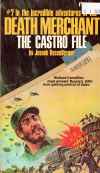
This book is the 25th in The Executioner series. Within it, Mack Bolan finds himself drawn into a net in Colorado, a trap designed to kill him but also to do something else, something bigger. Bolan finds himself encircled by a paramilitary force that has all the earmarks of the United States Army, cut off from support at a ski resort during a blizzard, and the only way to save the President is to attack. Of course.
Hey, it’s a pulp Bolan book. It’s a fun little read. I still like them, which is good, since I still have 20 or so on my bookshelves to read.
I’ve been receiving letters like this from my insurance carrier this autumn:
In effect, Anthem’s vendor Express Scripts is playing contractual hardball with Walgreens over some fiscal aspects of their relationship.
Because Walgreens won’t meet my insurance carrier vendor’s demands, my insurance carrier is coming to me. Ostensibly so I can make other plans, but also so I can complain to Walgreens if I want.
It’s not as blatant as that. Maybe they are trying to keep me informed. But we’re awash in pleas from companies these days to advocate on their behalf when they’re in contract negotiations with another corporation. The classic example is when it comes time for a media company to negotiate with a content delivery company. This fall, Fox Sports channels ran endless commercials about how DirecTV was going to drop the Fox Channels, and maybe Fox Sports channel followers should drop that provider right now and sign up with a DirecTCompetitor.
You know what? To the devil with all of you. I’m your customer, you provide a service to me, I don’t provide one to you. Anthem, you pressure St. Louis-based-and-employer-of-some-my-readers Express Scripts and make them re-sign with Walgreens.
And as for the Fox Sports situation, I knew enough to ignore that because at the last minute they generally sign an agreement (or a day or so after the last minute).
Seriously, I am a consumer. You meet my needs, not the other way around.
ForbesLife caught up with him in his art-stuffed, highfloor pied-à-terre in Manhattan’s Time Warner Center, where the horizon-to-horizon views vie for attention not only with his collections but also with the 56-year-old’s own furniture designs, computer and light sculptures, and wildly pixilated, geometric floor painting, apparently of the cosmos disappearing down a black hole.
Pied-à-terre means, literally, foot on earth. So it would seem that a high-floor foot on earth is a bit of a paradox.
I have this book in the Walter J. Black edition, which is part of the Zane Grey series you find often in book fairs. It’s the second Western I’ve read this year (The Virginian being the first), and I can see the debt that Zane Grey owed to Wilson and to Frederic Remington, the artist. Grey writes a standard western plot and then fills the book with lush, at times too-lush, description of the landscape. It actually detracts from the pacing of the book, but it’s an eighty-year-old narrative, so it has that going against the pacing for a modern reader, too.
Within it, a horse wrangler named Chane meets some horse thieves and whips one of them before being driven from his camp by the gang. The one he whooped shows up at a large, Eastern-based wrangling operation and assumes a position of power, but not before drawing the ire of Chane’s young brother Chess who caught on with the same outfit. The daughter of one of the financial backers is along, and when Chess can’t win her heart, he promises that Chane will.
So you’ve got some romance, some Western violence, and whatnot. It’s not a bad read, but not something I’m going to make a habit of reading. I’ll have to try something from Louis L’Amour to see if that suits me better. As L’Amour wrote his work a little later than Grey and he has a pulp background, I’ll bet it’s more punchy.
And if you want to know what I was talking about when I mentioned reading a book about horse wrangling while watching Krull, there you go.
In an article in Mystery Scene magazine #122 (not available online), Marcia Muller, creator of the Sharon McCone mysteries, explains that when in doubt, have a man come through a door with gun control in his hand:
“Every now and then I like to sneak in a little message about social issues and hope that the readers pick up on it. It’s funny, but readers will pick up on it if it is something they believe in, and if it is not something they believe in, they don’t even see it. So I am not influencing anyone. The current book I am working on is about gun control and I think the gun people will just ignore that part,” said Muller.
Well, no. John Nolte and the crowd at Big Hollywood call this a sucker punch. You’re reading a book and all of a sudden, out of nowhere, a blatant political message that jars you from the story. In most cases, these sucker punches lean to the left, like illuminating readers on the importance of gun control.
Ms. Muller is mistaken when she thinks that people that disagree with the important PSA in the middle of the narrative don’t notice it. They notice it, and they stop buying the books.
Which explains why I personally got recent books from John Sandford and Robert B. Parker from the library when I bother to get the new titles at all: because sometime after 2000, these authors started making sure that the bad guys were conservatives and/or religious characters. Suddenly, the throwaway asides were insulting the president. The general disappointment with the system and the idyllic past that was lost morphed into anger at one party in particular.
I’ve not read any of Ms. Muller’s works to know how subtle her “social messages” are, but I bet they’re received more clearly by the people too unsophisticated to believe as she does than she thinks.
Personally, as a writer, I think it’s foolish to gamble with social messages that might alienate almost 50% of the country. But what do I know? I’m not influencing anyone, either.
Rob Preston of Information Week sounds all Tea Party when he talks like this:
The 11-month-long spectacle that is AT&T’s attempt to acquire T-Mobile is a microcosm of this country’s economic atrophy: billions of dollars set aside and countless man hours consumed to pander to regulators and special interests rather than create anything of value.
Unfortunately, it is producing something of value: pay checks and billable hours to the regulators, special interests, and all the attorneys involved, not to mention column inches to people who decry one side or the other or, in this case, the game, not the playas.
The real question is whether the end product of this dysfunctional system is producing anything of value to the citizen. That answer is no.