Book Review: Video Fever: Entertainment? Education? Or Addiction? by Charles Beamer (1982)

As you all know by now if you’ve been reading these book reviews and haven’t skipped over them to get to the snarky humor, I read a lot of books that are not only sociological studies, but also are artifacts of their time periods. What they say about whatever they’re talking about reflects the time in which they’re written as much as the subject they cover. So I picked this book for under a buck during one of those binges of used book-buying in which my my beautiful wife and I often indulge.

I read it over the course of a couple weeks during my lunches at work. I even pasted a number of Post-It notes into the book with snarky comments so I could do a longer, more reasoned evaluation of the book. However, since it’s been on my desk here, just to the right of the MfBJN mainframe for a couple of weeks now, this is all you get. Sorry.

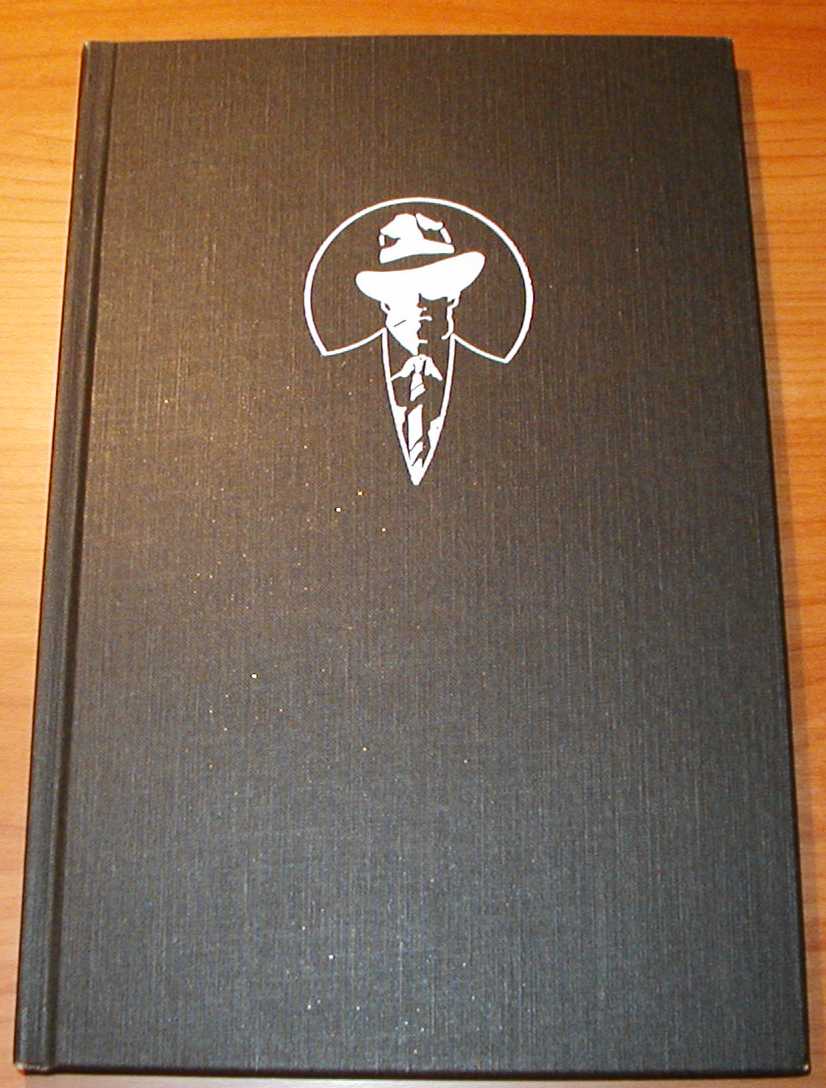
You can pretty much guess how the book’s going to go from the title. Unfortunately, the book’s cover doesn’t have the proper soap opera score to illustrate the way you should read the title. Ideally, it would be Video Fever: Entertainment? [piano tinkle] Education? [tinkle] or Addiction [heavy chord DUM DUM!]

Charles Beamer, high school teacher, examines the video game craze as you would expect a high school teacher might. He goes to video arcades (remember them?), asks questions to which anyone not called “faculty” in a professional capacity would raise an eyebrow, and then extrapolates results from a limited statistical sample.

You know what he found?

Bad elements liked to hang out in arcades, smoke marijuana, and sometimes those bad kids stole a couple bucks from their parents’ purses or wallets to play. Sometimes, games were the “only friend” of the players, and other anthropomorphic mayhem ensued. Beamer “examines” the typical player archetypes, from the preteen misfits to the 20-somethings blowing off steam. He briefly examines the benefits that video games might provide–raising a generation comfortable with that fad “computer” thing.

But he’s just waiting to get into the harm video games provide. Stealing quarters from parking meters. Smoking pot (brother, have we got a surprise for you in a couple years, when people start to smoke crystallized cocaine). Antisocial superpredators–no, wait, sorry, that’s what latchkey crack babies movies or GTA would later provide. As a result, the tail end of Generation X has no hope at all.

Then he examines what can be done, which devolves from a study of good family life into a screed favoring extremely strict Christian discipline. Frankly, that particular turn in an attempted even-handed sociological study couldn’t have been more jarring if the author had written Iä! Iä! Shub-Niggurath! The Black Goat of the Woods with a Thousand Young!

So it’s an amusing tract, almost worth the thirty-three and a third cents I paid for it (if that much). I’m not sure it’s worth the hours I spent reading it, but hey, I’m jumping on that grenade for you, gentle reader, to spare you the horror.


Marginalia:

As I mentioned, I noted some sections for extra snarkage. I’d hate to have wasted all those expensive little yellow slips with adhesive on one end, so I’ve included the best for you below:

  • p11:

    It’s dark inside arcades and video game centers, womblike, comforting, exciting. Lights flash and flicker seductively in many colors from strange and alluring sources. Sounds of battle beckon the players to death-defying heroism, courageous exploits hardly possible in the ordinary worlds of school and home, and hours and hours of fun!

    Jeez, man, I’ll admit my mother smoked cigarettes while I was gestating, so I remember the womb as dark, soft, and warm (or so I remmeber through the recovered memories). What was your mother smoking to make her womb like a freaking video arcade while you were gestating?

  • In a section called “Tricks of the Trade”:

    A distributors’ [sic, and from a TEACHER no less] problem that makers assist in solving is “burn-out” among players who become tired of playing the same games in the same places. One tick the markers use is to provide distributors with decals and pop-in microchips; the decals slide under the tabletop on the front of the machine, making it look like an entirely new machine, and the exchange of microchips changes the way the machine plays in a way so the playes believe it is a new game.

    You heard it here first. JAMMA is a trick! played upon poor, unsuspecting quarter-thieving, ganja-smoking teens. Except swapping the boards (not just the chips, brother) does make a new game. Of course, Beamer’s technical comprehension is limited.

  • p67, introduction to the chapter “Do Video Games Harm Anyone?”

    Perceptions of experiences are more important than the experiences themselves. There are people who can find joy hidden in even the most tragic situation, and there are others who cannot be satisfied or made happy no matter what their experience of joy. We see ourselves and our experiences uniquely, and “real facts” are distorted and shaped and changed by any number of factors–how we feel about ourselves, our memory of past experiences, and our expectations of a situation.

    Just put down the epistemology and back slowly away before you harm yourself and others. “Perceptions of experiences are more important than the experiences themselves”? Jeez, whatever your mother was smoking must have been potent.

  • p135, in “Appendix B: How the Games Work”:

    Home-delivery systems have been heralded as the “coming thing.” Promoters say that soon (even now in some areas) it will be possible for you to shop for groceries or any other product from your home.

    Well, it took a couple years, by Cosmo and Webvan took right care of that. Note to younger readers: In the later part of the last century, two Internet companies called Cosmo and Webvan got lots of venture capital to lose trying to do just that. “Even now in some areas” would take eighteen years from Beamer’s prognostication to be proven unready. Cripes, it’s 2004, and I have to explain Webvan.

  • p136, the real pain sets in when Beamer describes how arcade games are programmed in Basic [sic] where a pyxel [sic] is manipulated and a byte is 1000 [sic] bits and wherein

    Two other terms now come into play, and both refer to program commands in response to a player’s action. The first term is “poke.” Poke is a command meaning “go to” some pyxel or matrix on the screen. When a player fires the cannons or lasers of his spaceship to destroy an asteroid or a space invader, the microprocessor understands only “Poke.” On a microchip, an impulse flashes toward a number of pyxels in a direct line (a line that appears direct on the screen but actually is moving diagonally or slantwise across tiny dots) toward the edge of the screen.
    The second term is “peek.” It is a command meaning “look ahead.” The microprocessor is asking a microchip to look ahead of the “poke” command to see if there is anything along the line of “poke.” If there is, then another subprogram goes into operation: a collision occurs, an invader is blown up, lights flash, sound blares.

    In Beamer’s world, upright arcade games are written in mangled Commodore BASIC 2.0. I’d weep for Babylon, too, if I were projecting the future across these flawed sightlines.

Buy My Books!
Buy John Donnelly's Gold Buy The Courtship of Barbara Holt Buy Coffee House Memories

Book Review: The Art of Deception by Kevin D. Mitnick and William L. Simon

The Holy Tome of Mitnick, describes the various means through which social engineers infiltrate your company to extract sensitive information. Coupled with a bit of technical knowledge, a bit of insight into large corporate community, and two heaping tablespoons of audacity, these fellows play upon the good will of corporate insiders to get into places where they shouldn’t.

Each chapter and section analyzes different techinques used and psychological traits preyed upon, with sample scenarios (often told from real-life hearsay), but you, gentle reader, should buy this book, learn from its contents, and trust no one. Granted, I started out paranoid cautious, but this book reminds you to not trust that friendly voice on the phone and to vet people you meet in person.

Of course I recommend the book. Read it now!

And just so you know how much I value this book, I paid whole paperback book club price for it!

Buy My Books!
Buy John Donnelly's Gold Buy The Courtship of Barbara Holt Buy Coffee House Memories

What A Novel Concept!

Something seems awfully familiar about Anne Taintor’s new book:

Whether becoming your mother thrills you or terrifies you, it’s likely you’ll find something to laugh about in artist Anne Taintor’s new collection of collages in “I’m Becoming My Mother” (Chronicle Books, 112 pages, $12.95). Taintor takes images that promote the domestic ideals of the early 1950s and slaps one-liners – often hilarious, always unexpected – on them.

I just can’t put my finger on it.

Buy My Books!
Buy John Donnelly's Gold Buy The Courtship of Barbara Holt Buy Coffee House Memories

Book Review: Fielder’s Choice by Michael Bowen (1991)

This book is supposed to be a whodunit. It’s more a WTF?

The book is set in 1962. The backdrop: The end of the Mets’ miserable season. During a ballgame in late September, Jerry Fielder, a “businessman” with a shady reputation, is murdered in the pressbox with a number of people nearby. Who could have done it? Who cares?

For starters, the first person narrator is a somewhat minor character, recounting things that happen to other people. It’s kind of jarring to try to keep that bit straight. Second, it takes like 70 pages until the murder is committed. Thirdly, it’s difficult to keep the suspects straight, much less the investigating characters and the partners and whatnot. Some characters call suspects by their first names, others by their last names, and at by the middle of the book, I gave up trying to keep it straight, instead, I just wanted to get through the book.

Someone did it. Or did someone else? Who knows? The Mets didn’t win the pennant that year, and the scorecard for the game in question was the vital clue. A fielder’s choice was marked an error. So you see, the title’s a pun playing on that, not the character’s name! Ha hah! The gimmick got ya!

Ha hah! I paid under a buck for it in hardback, of which the author got what he deserved: nothing!

Excuse me, I am bitter because my own masterpiece has not yet been published, and it only takes fifty pages to get interesting. Where’s the justice, I ask you.

Buy My Books!
Buy John Donnelly's Gold Buy The Courtship of Barbara Holt Buy Coffee House Memories

Who’s Not Their English Major? Say It!

From Crescat Sententia we have a rebuttal of sorts to the list included here. Crescat lists its top 99 books/series of all time.

Here’s how I fared on its enlightened reading, with the books I have read in bold and those I have on my to-read shelf in italics:

    1. Pride and Prejudice, by Jane Austen
    2. The Remains of the Day, by Kazuo Ishigruo
    3. Harry Potter Series, by J.K. Rowling
    4. The End of the Affair, by Graham Greene
    5. All The King’s Men, by Robert Penn Warren
    6. Lolita, by Vladimir Nabokov
    7. The Princess Bride, by William Goldman
    8. Invisible Man, by Ralph Ellison
    9. The Name of the Rose, by Umberto Eco
    10. Syrup, by Max (Maxx) Barry
    11. Emma, by Jane Austen
    12. The Dirk Gently Series, by Douglas Adams
    13. Ada, by Vladimir Nabokov
    14. The Hitchiker’s Guide to the Galaxy, by Douglas Adams
    15. 100 Years of Solitude, by Gabriel Garcia Marquez
    16. Persuasion, by Jane Austen
    17. The Blind Assassin, by Margaret Atwood
    18. The Great Gatsby, by F. Scott Fitzgerald
    19. Pale Fire, by Vladimir Nabokov
    20. Ender’s Game, Speaker for the Dead, &c., by Orson Scott Card
    21. Oryx and Crake, by Margaret Atwood
    22. Survivor, by Chuck Palahniuk
    23. Ana Karenina, by Leo Tolstoy
    24. The Three Musketeers Series, by Alexandre Dumas [The Three Musketeers, anyway.]
    25. The Divine Comedy, by Dante Alighieri
    26. The Unbearable Lightness of Being, by Milan Kundera [“Strip!”]
    27. Tess of D’Urbevilles, by Thomas Hardy
    28. High Fidelity, by Nick Hornby
    29. Howard’s End, by E.M. Forster
    30. Lullaby, by Chuck Palahniuk
    31. The Moon is a Harsh Mistress, by Robert Heinlein
    32. Jane Eyre, by Charlotte Bronte
    33. The Heart of the Matter, by Graham Greene
    34. Cold Comfort Farm, by Stella Gibbon
    35. My Antonia, by Willa Cather
    36. The Big Sleep, by Raymond Chandler
    37. To Kill a Mockingbird, by Harper Lee
    38. Middlemarch, by George Eliot
    39. Song of Fire and Ice, by George R.R. Martin
    40. Love in the Time of Cholera, by Gabriel Garcia Marquez
    41. Crime and Punishment, by Fyodor Doestoevesky
    42. What Maisie Knew, by Henry James
    43. American Pastoral, by Philip Roth
    44. Galveston, by Sean Stewart
    45. If On a Winter’s Night a Traveller, by Italo Calvino
    46. Catcher in the Rye, by J.D. Salinger
    47. Mansfield Park, by Jane Austen
    48. Madame Bovary, by Gustave Flaubert
    49. Youth in Revolt, by C.D. Payne
    50. Moby Dick, by Herman Melville
    51. Sense and Sensibility, by Jane Austen
    52. Big Trouble, by Dave Barry
    53. Cat’s Eye, by Margaret Atwood
    54. Villette, by Charolotte Bronte
    55. The Last Chronicle of Barset, by Anthony Trollope
    56. Phineas Finn, Phineas Finn Redux, by Anthony Trollope
    57. Darlington’s Fall, by Brad Leithauser
    58. This Real Night, by Rebecca West
    59. The Baron in the Trees, by Italo Calvino
    60. Summer, by Edith Wharton
    61. The Unconsoled, by Kazuo Ishiguro
    62. Cecilia, by Frances Burney
    63. The Secret History, by Donna Tartt
    64. Dangerous Liaisons, by Choderlos de Laclos
    65. Mr. Scarborough’s Family, by Anthony Trollope
    66. The Fellowship of the Ring, by J.R.R. Tolkien
    67. A Room with a View, by E.M. Forster
    68. The Duke’s Children, by Anthony Trollope
    69. Breakfast at Tiffany’s, by Truman Capote
    70. Daniel Deronda, by George Eliot
    71. The Dumas Club, by Arturo Perez-Reverte
    72. Baudolino, by Umberto Eco
    73. Brideshead Revisited, by Evelyn Waugh
    74. The Fountainhead, by Ayn Rand
    75. David Copperfield, by Charles Dickens
    76. Catch-22, by Joseph Heller
    77. Great Expectations, by Charles Dickens
    78. The Manticore, by Robertson Davies
    79. The Maltese Falcon, by Dashiell Hammitt
    80. Heart of Darkness, by Joseph Conrad
    81. Good Morning, Midnight, by Jean Rhys
    82. The Series of Unfortunate Events, by Lemony Snicket
    83. Sula, by Toni Morrison
    84. The House in Paris, by Elizabeth Bowen
    85. The Little Friend, by Donna Tartt
    86. The Death of the Heart, by Elizabeth Bowen
    87. Gaudy Night, by Dorothy Sayers
    88. The Discworld Saga, by Terry Pratchett
    89. Gone With the Wind, by Margaret Mitchell
    90. The Fountain Overflows, by Rebecca West
    91. Possession, by A.S. Byatt
    92. The Island of the Day Before, by Umberto Eco
    93. God Knows, by Joseph Heller
    94. The Cat Who Walked Through Walls, by Robert Heinlein
    95. Candide, by Voltaire
    96. The Vagabond, by Colette
    97. Tom Jones, by Henry Fielding
    98. The Fencing Master, by Arturo Perez-Reverte
    99. Portrait of a Lady, by Henry James

Not so good, but it’s not a list of (sniff!) canon.

Buy My Books!
Buy John Donnelly's Gold Buy The Courtship of Barbara Holt Buy Coffee House Memories

Last 20 Books You Have Read

The Gleeful Extremist thinks that the last 20 books you have read say a lot about you. TGE then tries to list the last he’s read.

Come on. You readers know the last 20 books I have read; I find a minute or two to scratch out a paragraph or two about each for you, gentle readers. Let’s recap, shall we, since you skip over the reviews to get to the snarky stuff:

  1. Rainbow Mars by Larry Niven
  2. Naked Beneath My Clothes by Rita Rudner
  3. Of Mice and Men by John Steinbeck
  4. The Book Wars by James Atlas
  5. Rumpelstiltskin by Ed McBain
  6. Years of Minutes by Andy Rooney
  7. All the Trouble in the World by P.J. O’Rourke
  8. The Black Corridor by Michael Moorcock
  9. Make Room for TV by Lynn Spigel
  10. Time Flies by Bill Cosby
  11. Ghost by Piers Anthony
  12. Freefall by William and Marilyn Mona Hoffer
  13. Bad Business by Robert B. Parker
  14. The Magic of Thinking Big by David Schwartz
  15. Basket Case by Carl Hiaasen
  16. Give Me a Break by John Stossel
  17. The Dilbert Future by Scott Adams
  18. Full Court Press by Mike Lupica
  19. Gallery of Regrettable Food by James Lileks
  20. Video Fever by Charles Beamer

What does that say about me? Hecht if I know. Want to know what I am reading now?

  • The Art of Deception by Kevin Mitnick
  • Introduction to Philosophy by Baruch Brody
  • Fielder’s Choice by someone
  • Bob Greene’s America by Bob Greene

I guess I like collections of newspaper columns. There’s one insight for you. Lileks, Green, O’Rourke, and Adams did newspaper things. And comedians. Rudner, Cosby, Rooney, and so on.

Are my fifty minutes up already, Doctor?

(Link seen on this week’s Bonfire of the Vanities.)

Buy My Books!
Buy John Donnelly's Gold Buy The Courtship of Barbara Holt Buy Coffee House Memories

Is That The Best You Could Do?

CNN reports that the Hamlet first edition that I asked for didn’t make the reserve price and was not sold.

Gentle readers, could you not have come up with the extra couple hundred thousand among you needed to add this to my library? I applaud whatever effort you used to generate just over a million dollars in cash, but isn’t MfBJN worth the extra effort?

I implore you to continue in your efforts. Perhaps, once you kind souls have amassed enough money–heaven knows you have not been spending it on my tip jar–the owner of the Hamlet will consider a private offer.

Thank you, and good luck.

Buy My Books!
Buy John Donnelly's Gold Buy The Courtship of Barbara Holt Buy Coffee House Memories

Book Review: The Gallery of Regrettable Food by James Lileks (2001)

Well, I have done my part to help maintain Jasperwood and to keep Lileks in Hummels and cigars. I read The Bleat, his Back Fence column with the Star-Tribune, and even his weekly Newhouse News column. That’s all free, though, and does little for Lileks’ bottom line, which is probably higher than many peoples’ top lines, but still. By reading off the Web, I was not empowering Lileks. Much like you freeloading readers are doing by not sendng me cash or visiting my Amazon wish list and sending me goodies. Not that I am trying to put a guilt trip on you; I know you’re all heartless socialistopaths who think we should be just doing this because we can, and you want it. But I digress, gentle skinflint reader.

So I went out and bought The Gallery of Regrettable Food, at full price no less, to send a couple pennies’ worth of royalties to Minnesota (the poor man’s Wisconsin). Unfortunately, I was disappointed with the work.

As you might know from viewing Lileks’ Web site, the Gallery represents photos and some snarky wit about recipes collected in books released in the years when Baby Boomers’ parents were cooking. Lileks started the project based on a cookbook he found among his mother’s effects. The book’s wit might be spot-on (Heather liked the pages she browsed), but unfortunately, it didn’t rub me the right way for a couple reasons:

  • As a rule, I am deferential to older generations and their wisdom. I don’t mock it, even when it’s goofy. Well, maybe I do sometimes, but this book led me to a high horse, and you can lead a man to a high horse, but you can’t make him drink. If you lead him to Guiness, though….what was my point?
  • I read this book too soon after Make Room for TV, a book which examined old television shows and extrapolated from them to score Marxist/Feminist points. Lileks’ book doesn’t make political points, but it does make light of the knowledge of our forebearers. Or at least the knowledge of those who marketed to our forebearers. Still, I had too much anti-Spigel venom built up to appreciate what Lileks was doing.
  • I have a closet full of these books from when I was doing the eBay thing. I’d pick them up for a dime and list them for a couple of bucks. I sold a couple, too, to people looking for their parents’ recipes, or perhaps to the parents who lost the recipes in a divorce settlement or something. Still, Lileks cuts into the resale value of these treasures I own.

Still, I am glad I bought the book. I’m happy to underwrite Lileks, even though this particular tome is not my bag. I imagine his next volume, Interior Desecrations, will be some of the same. But he’s a good writer, and soon he should have some collection of his other writings coming out which I’ll enjoy more.

Buy My Books!
Buy John Donnelly's Gold Buy The Courtship of Barbara Holt Buy Coffee House Memories

Start Your Christmas Shopping Early

In case you’re wondering what to get me for Christmas, I wouldn’t mind a first edition Hamlet.

Hey, look, one of the 19 copies remains in private hands and is at auction. Since it’s up for auction at Christie’s, you no longer have to plot your university or museum heist. Of course, since it’s expected to go for several million dollars, you’ll need to start working on the Bellagio heist pronto.

Oh, wait, I see you’re already on it. Thanks.

(Link seen on Fark.)

Buy My Books!
Buy John Donnelly's Gold Buy The Courtship of Barbara Holt Buy Coffee House Memories

Book Review: Make Room for TV by Lynn Spigel (1992)

You might wonder why I bothered to read this book, whose full title is Make Room for TV: Television and the Family Ideal in Postwar America. Actually, I wondered a bit myself while wandering through this Marxist/Feminist inquiry into the impact of television on life of the bourgeois in the ten years after World War II. Then I remembered. Because I paid a whole quarter for it at the library. Plus, it just sounds cool if someone asks what you’re reading, and you can answer Marxist/Feminist inquiry into the impact of television on life of the bourgeois in postwar period. Not that anyone asked. But I was ready to answer.

So I sloughed through five chapters and 187 pages of this book, remembering for a brief moment (if you count three weeks’ worth of head-shaking lunches as “a brief moment”) what it was like in college. When I would be assigned something like this, or would be assigned some topic tangentally related to this for a paper whose research would lead me to this book, and I would read some of it because I had to. Let’s face it, this thing wasn’t aimed for the mass paperback market.

My second problem with this book is the author’s faulty methodology. The first, of course, is that she’s a Marxist/Feminist academic, but to bring that up would be ad homenim, and people are allowed to believe stupid things because this is still a free country. When it’s no longer free, we’ll be mandated to believe those stupid things. But I digress.

Spigel builds a history of repression in America in what she calls the Victorian period, willfully or foolishly applying a historical term that denotes a period British history. Calling it the era of the Robber Barons wouldn’t have had the same connotation of repression and need, though, so she calls the last portion of the 18th century through World War II “Victorian” for, I would assume, the whole world, not just Britain. Granted, this is just a quibble over language, but since language is how we communicate concepts, I could tell pretty early how different the author and I conceptualize.

So, about the methodology. Spigel surveys magazines from the immediate post World War II period, examines the advertisements for televisions, and compares them with some prepackaged thought in the form of other academic pabulum which agrees with her basic M/F premises. As a result, she tells us about the repressed suburban bourgeois and how television was a tool of The Man to hold them down.

Brothers and sisters, I cannot tell you how goofy the ultimate intellectual content of this book is. Spurious assertions, laughable on the face, abound. Americans felt ambivalent to television because it was used as a weapon in World War II? Spigel forgot to footnote how commercial broadcasts brought the Axis to its knees. Perhaps she just meant sounds carried invisibly, magically through space. The more intellectually rigorous sections of the book do offer two sides to an issue. For example, if men don’t help the housewives at home, they’re pigs. If they do, it’s because they’re powerless at work and seek to assert their control where they can, in the home. Truly, Spigel has a dizzying intellect.

Sometimes, though, she makes a coherent, almost reasonable argument, such as asserting that television provided a proxy communal neighborhood at a time when suburban sprawl removed people from their traditional, more urban neighborhoods. Unfortunately, Spigel took this argument elsewhere, leaving me with a small idea with which I could agree. I hold tightly to this single idea, because otherwise I wasted a bunch of time and twenty-five cents, which is about a thirty-secondth of a six-pack of Guinness.

Academic textbooks that share this worldview spend a lot of time analyzing existing metaphors, images, and other artificial constructs and magically reveal, through their scrying, that the premise with which the academic began the inquiry is actually the conclusion. Unfortunately, they (like this book) write syllogisms in space.

So there you have it, gentle readers; the missing book. I meant to do a longer, more reasoned review pointing out where Spigel diverges from reality, but then I realized I have better things to do. Were I an academic, teaching three sections a week, perhaps I could have time to fit it into my salaried day. But it’s not worth my leisure time. And this book is not worth yours, unless you’re like me: a book slut.

Buy My Books!
Buy John Donnelly's Gold Buy The Courtship of Barbara Holt Buy Coffee House Memories

Book Review: Full Court Press by Mike Lupica (2001)

I picked this book up in a Barnes and Noble in Springfield last year. Off the remainder rack, for $6.95, so don’t think I am out there buying all sorts of expensive books. However, based on this book, I’d be happy to buy another of Lupica’s novels.

The story revolves around the recruiting of an American ex-pat living in Europe to a struggling NBA team. After seeing D. Gerard play in a charity game, scout Eddie Holtz is determined to bring him back to play for the New York Knights. When D. Gerard removes a cap, Eddie’s shocked to see it’s a woman. He think she’s got enough game to run with the males in the NBA, and he convinces Dee that she ought to take her shot at the big time. He convinces his boss to take a shot on integrating the NBA, and the boss is happy to, if only for the novelty. But when Dee starts to play, she’s got to prove she deserves to be in the NBA.

Seemed to me that the first Lupica book I read was a mystery, so I almost expected a corpse to turn up in this book. Well, one does, sort of; but it’s not a mystery. It’s a mainstream novel, one I could enjoy. I don’t watch basketball as a matter of course, but the book conveyed enough authenticity in digestible form that my rudimentary knowledge of the game didn’t hinder my comprehension.

Most of all, I liked Lupica’s writing style. Easy to read, smooth and comprehensible, kinda like Guinness for the eyes. Of course, I remarked to Heather that Lupica’s style is rather like my own. So perhaps I am prejudiced.

For those of us keeping score at home, this is the 19 book I have read this year, and the 18th review you’ve suffered through. Thanks. And sorry for the review for the missing book, which you’ll suffer through when I get around to it.

Buy My Books!
Buy John Donnelly's Gold Buy The Courtship of Barbara Holt Buy Coffee House Memories

Book Review: The Dilbert Future by Scott Adams (1997)

I don’t know if it was inappropriate or not, but I read The Dilbert Future at work. Unlike most Dilbert books, which lament the workplace environment and the world’s dysfunctional state, this book laments the current state and the state the world was going to be in. So it represents a forward looking bad employee attitude.

Scott Adams took his cartooning insight into trends that were nascent in 1997 (or 1996, which is when I assume he wrote the book) and projected them out into the future. With some wryness, of course, but with some sincerity, too. His futurism is hit or miss, but he did pick up on some interesting things which came true. Some don’t, however. We don’t all have ISDN, but we do have cable modems and DSL, which are gradually supplanting the dial-up lines used in 1997. And this Internet thing has gotten a whole lot bigger. Not as big as the hype which would peak within a couple years of this book’s publication, but bigger. Adams also picked up the trend of blogging:

    Prediction 52: In the future, everyone will be a news reporter.

Jeff Jarvis is so behind Scott Adams.

So Adams takes his best stabs at the future, and the book’s amusing enough with that. However, with the ultimate chapter, “A New View of the Future”, Adams goes careers off into a I’m Not Really Here-style weird Buddhist musing. He talks about how future paradigm shifts will indicate our current perception of the experience of time is inaccurate, and the near past, near future, and present are all the same, or similar, or something. He’s sincere. Hey, I am all for keeping an open mind, but this bit lacks a big enough dose of skepticism for me.

Still, it’s only a chapter, and it’s not the whole book, so I can overlook it and say the book’s amusing enough to read.

Buy My Books!
Buy John Donnelly's Gold Buy The Courtship of Barbara Holt Buy Coffee House Memories

Book Review: Give Me a Break by John Stossel (2004)

When I finished this book last night, Heather asked me if I liked it. I said, “It’s okay.” Was it a good book? she pressed. “It was okay,” I responded.

There you have it: this is a nice book.

It’s about 40% biography, wherein John Stossel tells us about his evolution as a thinker and a commentator, and 60% survey of libertarian positions on issues. It’s an unfortunate mix, because it really didn’t do too much for me.

Stossel tells us anecdotes from times throughout his career when he was working as a consumer advocate reporter for local affiliates up until he became the 20/20 presence and network gadfly. These anecdotes and insights are the strength of the book. It could have used more of Stossel’s personal account of his odyssey. The first four or five chapters describe it.

Unfortunately, the remainder of the book is not much more than a laundry list of what libertarians believe (less government, more personal responsibility). The very chapter titles reflect this: “Welfare for the Rich”, “The Trouble with Lawyers”, “The Left Takes Notice”, “”It’s Not My Fault” and up to “Owning Your Body” and “Free Speech”. Stossel works in a few anecdotes–including the one excerpted in Reason–but mostly he just conducts a survey course.

Perhaps it’s a good primer for the people who’ve seen Stossel on television and don’t know much about libertarianism. If so, he assures them that others share the vision they might find attractive. Heck, he even invokes Ayn Rand a couple of times. But it doesn’t offer a detailed, reasoned argument to sway thinkers–or to offer arguments for the believers who want to them.

Of course, it’s not Bias when it comes to harsh indictment of media, and it’s not Ann Coulter or Michael Moore polemics to rouse the rabble or enrage the heretics. It’s more even-tempered than that, and it does treat the reader fairly, and the opposition sympathetically. Stossel even offers kind words to the police state government and contemporary society, noting that we’re remarkably open and free even while we’re moving towards crackpot nannyism.

That Stossel’s a nice boy.

So that’s what it is; a nice, rational, but ultimately lightweight treatise (if that’s not an oxymoron) on how one man became a libertarian (or small-l liberal) and what it means to him.

Buy My Books!
Buy John Donnelly's Gold Buy The Courtship of Barbara Holt Buy Coffee House Memories

Book Review: Basket Case by Carl Hiaasen (2002)

Ah, a light mystery romp. This is the first book of Carl Hiassen’s that I have read, and it probably won’t be the last.

It’s the story of a newspaperman who’s gone from the front page of his small Florida daily to the obituary beat, punishment for his forthright (and possibly self-destructive) nature. As he grows older, he starts obsessing about the ages of famous people when they died, and whom he’s out lived–without contributing as much.

When an obscure 80s pop star dies, Jack Tagger suspects foul play. He’s right, of course; what kind of mystery would it be without it?

You know, Hiassen might just be the funniest writer to come out of the Miami Herald ever. The voice of the book is light, vulnerable, and humorous. It’s a good light read, and I look forward to my next Hiassen novel.

Yep, that’s all I got for a review.

Buy My Books!
Buy John Donnelly's Gold Buy The Courtship of Barbara Holt Buy Coffee House Memories

Let’s Hear It For Prince

The Prince, that is. By Niccolo Machiavelli. Over at Samizdata, Andy Duncan reviews the book and approves.

I read it in college and have based my view of foreign policy on it. I liked it so much that I was going to name my first cat Niccolo Machiavelli (Mach for short), but I got a girl kitten instead (Dominique Francon, natch).

On a more somber note, Andy calculates the number of books a person can read in a lifetime at 8000. How limiting. Especially since I am not on pace and because I already have 400 of the remainder picked out, purchased, and on my to-read shelves. It’s like staring mortality in the face.

Buy My Books!
Buy John Donnelly's Gold Buy The Courtship of Barbara Holt Buy Coffee House Memories

Book Review: The Magic of Thinking Big by David J. Schwartz (1959, 1967, 1997)

I know, I know. You’re all saying, “Brian, why are you reading a book that goes in the Self-Help / Psychology / Inspiration section?” Easy question.

Because I am a promiscuous book slut. I’ll read anything with two covers. Sometimes two at once even. Good, bad, beautiful, ugly, I just cannot stop. Also, I thought the title indicated this particular work was a mind-over-matter, Zen or Hindu ascetic equivalent of Gainpro. There, I admitted it.

It’s not. What it is, however, is a dose of practical, populist pragmatism for the masses. Of course, since I spent forty-five thousand dollars and interest on a Philosophy degree, everything relates to Pragmatism, Existentialism, Objectivism, Dialectic Materialism, or Rudimentarialistic Sponteneal Constructionism.

The core message is that you have to believe in yourself and your abilities to make the efforts and to take the chances to succeed. Much like William James’s parable of the mountain trail, or Thoreau (a Transcendentalist, not a Pragmatist, don’t you think I know that?) telling you to aim high, for men can hit what they aim at. Schwartz directs much of his energy and the book at being successful in business, particularly succeeding in a corporate environment or as an entrepreneur. As such, he does intimate that you can get by with just the right attitude without bogging down your pretty little head with technical aptitude. I’ve worked for too many project managers who got an MBA from Schwartz’s academic successors to heed that augury. I forgive him, though.

I forgive him because the style of the book is accessible and easy to read. Easier than Charles Sanders Peirce, anyway. And since it deals with everyday problems and situations, it makes pragmatism relevant to everyone. Undoubtedly, it’s helped the two generations preceding mine, as the book was originally published in 1959 and revised in 1967 before being reissued as a paperback in 1997. So while the concepts are applicable, the book’s quaintly dated whenever he mentions salaries, housing prices, or veterans (from World War II and Korea) taking night classes.

So grab the book if you can find it cheaply. It’s inspired me a bit, and I’ve even put a quote from it on my whiteboard:

Persisting in one way is not a guarantee of victory. But persistence blended with experimentation does guarantee success.

That’s better advice than I’ve ever gotten from an underpants gnome, werd.

Buy My Books!
Buy John Donnelly's Gold Buy The Courtship of Barbara Holt Buy Coffee House Memories

Book Review: Ghost by Piers Anthony (1986)

In his characteristic Author’s Note at the end of the book, Anthony admits:

I wrote “Ghost” the story, about 10,000 words long, somewhere back in 1961….

No doubt. This whole volume smacks of a sixties sensibilty. The Author’s Note describes how long and hard it was for Anthony to get this thing published. It’s not that the book is bad, but it is dated with a sixties sensibility.

The plot deals with a time-traveliing ship, the Meg II, sent into the future to search for a source of energy for the starving planet. And maybe some insight into what happened to the Meg I. The world from which the Meg II launches is a slightly dystopian future, where space travel exists but is looked down upon by earthbound residents as a waste of scarce resources. So far, so good.

But the timeship is rooted to its original time by a psychadelic psychic beacon whose connection to its origin time cannot survive strong emotions from crewmembers. So it goes without saying that the free-love rules will lead to strong emotions, and there’s a suicide, and suddenly the ship finds another entity moving through time. A galaxy, or a ghost. Once the ship meets the entity, suddenly it’s a bad acid trip having something to do with the Seven Deadly Sins and when the crew groks understands the nature of the entity, the book ends.

Incarnations of Immortality, it ain’t.

Buy My Books!
Buy John Donnelly's Gold Buy The Courtship of Barbara Holt Buy Coffee House Memories

Book ‘Em, Dano

Courtesy of Jailbait Kelley, I discovered:


You’re The Things They Carried!
by Tim O’Brien

Harsh and bitter, you tell it like it is. This usually comes in short,
dramatic spurts of spilling your guts in various ways. You carry a heavy load, and this
has weighed you down with all the horrors that humanity has to offer. Having seen and
done a great deal that you aren't proud of, you have no choice but to walk forward,
trudging slowly through ongoing mud. In the next life, you will come back as a water
buffalo.


Take the Book Quiz
at the Blue Pyramid.

Buy My Books!
Buy John Donnelly's Gold Buy The Courtship of Barbara Holt Buy Coffee House Memories

Book Review: Freefall by William Hoffer and Marilyn Mona Hoffer (1989)

I brought this book along on my vacation as some light reading for the flight to Florida. The full title of this book is Freefall: From 41,000 Feet to Zero – a True Story. To make a long book short, on July 23, 1983, a 767 bound from Ottawa to Edmonton ran out of fuel in mid-flight. Somewhere east of Winnipeg, the engines just shut off at 41,000 feet. Fuel starvation, it’s called. But hey, without any explosive fuel, the passengers only had to contend with dropping from eight miles in the sky at 400+ miles an hour–no fireball needed!

Yes, I brought it and yes, I read it on the plane–a 757, thank you, not a deathtrap 767 like in the book. Some people read horror books about clown-looking serpent demons who come out of storm drains, but they’re pikers. You want real terror, put something at stake. Like your life aboard one of those damn contraptions while your read about a hideous plane disaster

You want to know why flying a plane is scary? Because a cascading system of simple failures can lead to disaster. Suppose you’ve got a fuel sensor, redundant of course with two channels, but instead of getting 5v to one channel, it’s getting .9v and the whole sensor blanks out instead of switching to the working channel, and then a mechanic discovers a work-around but the mechanic at the next airport disables the work-around, and the visor-wearing Quebecker fuel guy hand calculates the fuel in the tank by multiplying by the specific gravity of pounds (1.44) instead of kilograms (.8), and suddenly you’ve got 61 passengers and 8 crew watching personal in-flight movies of their lives on the backs of their eyelids.

I’ll admit, the book helped take the edge off of the flight. Its pacing is slow and non-suspenseless. It’s as though the authors took a Reader’s Digest Drama in Real Life and stretched it into two hundred plus pages. The authors manage to work in the biography of all of the crew, many of the passengers, some people in an unrelated nearby plane, and the complete history of the town of Gimli, Manitoba. The fluff, while adding depth to the book, really detracts from the suspense.

Without appropriate apprehensiveness from reading this book, I had to turn to Heather’s uncle in Florida, a former engineer for Pratt and Whitney, for tales of terror. Remember Des Moines? He does, and he can tell you in great detail what happens when a stress-fatigue crack sends a turbine blade through the control cables on the wing.

Buy My Books!
Buy John Donnelly's Gold Buy The Courtship of Barbara Holt Buy Coffee House Memories