Smart Apostrophe Pro Tip

Posted in Writing on April 26th, 2012 by Brian

The St. Louis Post-Dispatch today talks about the use of the smart apostrophe, especially when used to start something like an abbreviated year:

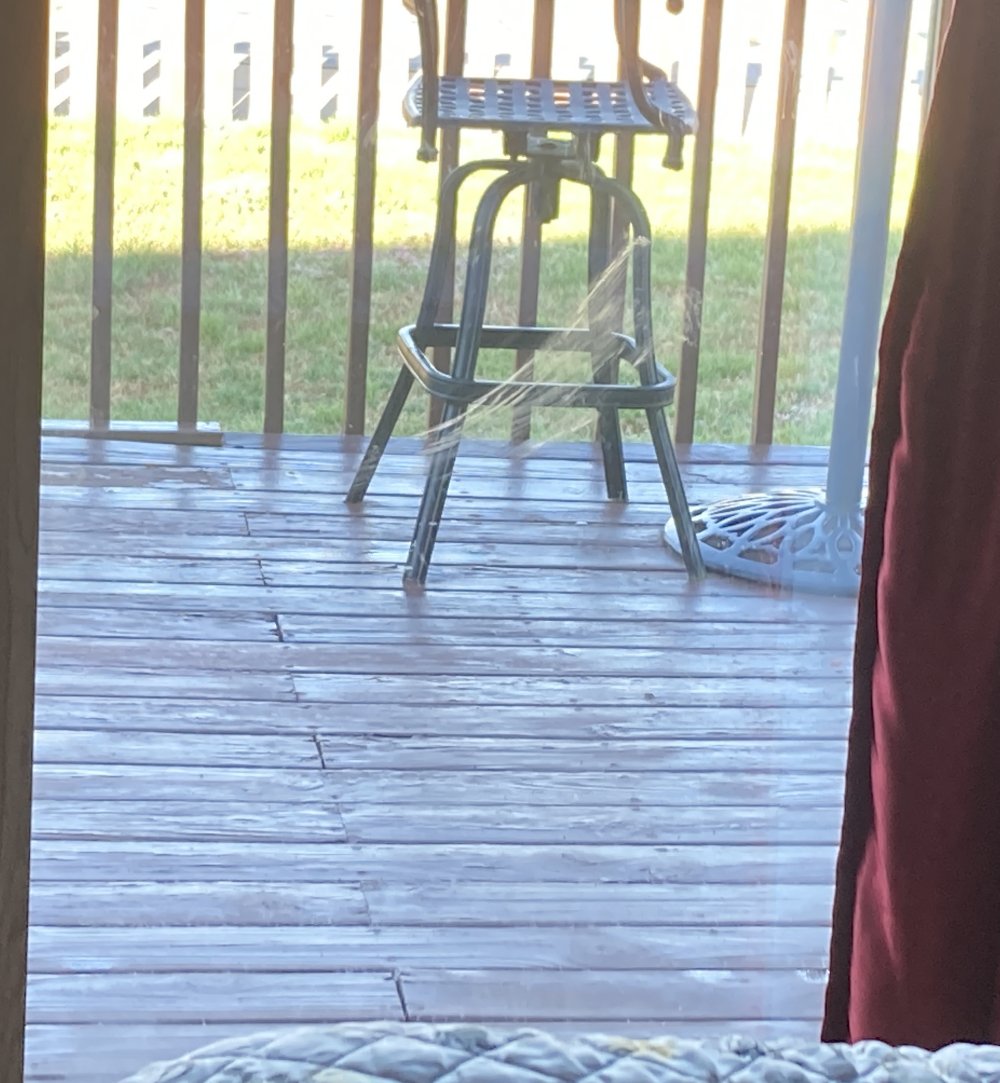
When you shorten 2012 to just ’12, use an apostrophe. That versatile punctuation mark (a robust one being correctly used is pictured at left) fills in for the missing numbers, just like it fills in for missing letters in a contraction. Use it for decades, too! It can do it all, and here’s an example: Don’t forget that the ’80s was the height of fashion and music.

On the other hand, a single opening quotation mark is limited in its abilities. It looks like an apostrophe turned upside down and flipped, or kind of like a tadpole being held by its slimy tail. Use it to introduce quoted material within a quote. Example: “I love it when the Bee Gees sing ‘How Can You Mend a Broken Heart.’ ” Or:”I told those kids, ‘Get off my lawn,’ but they just laughed.”

The problem with a lot of software is the dreaded “smart quotes.” When you type a phrase such as “the ’80s,” you automatically get an opening quotation mark in front of that 8, not the correct apostrophe. Here at the P-D, you hit alt+shift+right bracket or hunt through a panel of special characters to get an apostrophe before the 8.

In Microsoft Word, you press CTRL+Z (shortcut for undo) after typing a quotation mark or apostrophe to turn it from a smart quote back into a straight quote. Additionally, you can cut and paste smart quotes and they won’t reorient themselves, so you can copy a smart apostrophe from within a contraction or possessive, for example, and paste it before your abbreviated year.

My Good Fortune Is Your Recycled, Sort Of, Content

Posted in Life on April 25th, 2012 by Brian

I found a ten dollar bill in a shopping center parking lot today, and it reminded me of an essay I wrote a couple years ago called “A Penny Found Is An Ethical Dilemma”. Since it looks like I’ve never published it here, I guess I’ll do so now. Note that keeping the ten dollar bill did not violate the ethics outlined herein.

A Penny Saved Is An Ethical Dilemma


Some Internet denizens have calculated the second-by-second earnings of billionaire Bill Gates and say that, unless he found a Madison on the ground—that is, the obsolete $5,000 bill—he would lose money stooping to pick it up. I’m not a billionaire, and I was raised with a bit of thrift and appreciation for found money, so I still stoop to pick pennies and the occasional flash of silver on the pavement. Each penny, invested wisely, could well buy me a name brand tin of cat food in retirement instead of the less tasty store brand.

Unfortunately, I also put myself through college and earned a degree in philosophy with an emphasis on ethics. Therefore, I cannot simply rely on the adage, “See a penny, pick it up, and all day long you’ll have good luck” nor my own thriftiness as a guide. Instead, I have built a complete system of morals involving the finding and keeping of pennies and other monies in the world at large.

Let’s face it, a bit of money on the sidewalk represents a piece of someone else’s property. A relatively insignificant piece, perhaps, but conceptually as much the property of someone else as an automobile. When someone cannot remember what row he or she parked in at the mall, we cannot simply take his or her car; that’s stealing, and it’s wrong. Pennies, on the other hand, have relatively low value. If we tried to turn found pennies into the local police for someone to claim, they would hold us for psychological evaluation. Besides, a person dropping a quarter while pulling out a cell phone might not miss the money or probably wouldn’t retrace the steps of the day to find it. Ergo, a single coin falls under the moral equivalent of maritime salvage flotsam. Greater denominations or collections of money—the significant thousands of dollars or whatnot—probably merit turning into the police, but negligent owners, for all intents and rationalizations, have abandoned their pennies when dropping them in public places.

But that blanket rule is too facile. As it merely supports the pick-it-up mantra, I needed something more complicated to guide my actions in other cases, to provide explanations for why I pick up coins in some places and not in others. A complex set of rules is a set of rules, not just arbitrary behavior.

For example, coins that I find on the sidewalk or in the street are fair game to fund my retirement, as these public spaces belong to everyone.

However, when I am in a place of business such as a coffee shop or a store, coins found on the furniture or on the floor are not eligible for extraction; these belong to the business owner in my mind, although I do expect that another customer or some underpaid employee will come along and scoop up the money. I did when I was working my way through college in a grocery store, but I didn’t have a degree in philosophy then. Perhaps, because I was an employee and was in the store every day, the store was not a place-of-business but a public-space or at least a common-space (arbitrary distinctions in philosophical tracts are always in italics), this stripping of a penny from the linoleum surface of someone else’s property was morally acceptable.

The parking lots of private business, though, as well as the sidewalks immediately outside and the foyers between the outer doors and inner doors remain public spaces and good sources for the random coins.

Within residential areas, the sidewalk common spaces give way to the well-manicured lawns. Pennies on the sidewalks are fair game, but coins within the lawns themselves are difficult to spot, so they belong to the homeowner. The rare exception to this rule is a coin that lies on the boundary of the sidewalk and the lawn. By “boundary,” of course, I mean “I can see it.” This boundary area could prove troublesome, but for guidance, I turned to the teachings of the masters more knowledgeable than me. I don’t mean Rand, Hume, Aristotle, or Jesus; I defer to the National Football League: “When any part of the ball, legally in possession of a player inbounds, breaks the plane of the opponent’s goal line, provided it is not a touchback.” If there’s a glimmer of concrete or other paving material underneath any edge of the coin in question, visible from any angle, it’s eligible for retrieval. I have only recently clarified this rule when I encountered a coin in such a state last week.

One wouldn’t expect the choice of whether to pick up a penny to require this much consideration nor to bear upon its choice a moral decision. However, most ones don’t have a philosophy degree like I do. While most people would pick up more pennies with lax internal rule systems, they certainly don’t get as much entertainment or food for thought as I do.

See Also

Posted in Blogging on April 24th, 2012 by Brian

At Missouri Insight: Vistas of the Recently Urban: Rogersville.

For Me, The Hardest Part Is Not Starting

Posted in Life on April 24th, 2012 by Brian

Some people find the hardest part to doing something is starting:

The hardest part is often just starting. I’ve found that it’s especially hard for me to start when a task is difficult or complex. The more importance and weight a certain activity has in my life or business, the more I seem to put off starting.

However, if I can just get moving on it, even for a few minutes, it tends to get easier.

Because I know this about myself, rather than setting the intention to finish something, I resolve myself to start. The more often I start, the easier things get finished. Overcoming that first bit of inertia is the biggest challenge (just like getting started on a run, or the first push of getting a car moving).

Once things are moving, momentum is on your side.

If only starting projects were my problem. (Aside from either using the subjunctive incorrectly or knowing about the existence of the subjunctive to know enough to worry if I’ve used it wrong. But that’s another, lesser, problem.) Read more »

Book Report: Penny Candy by Jean Kerr (1970)

Posted in Book Report, Books on April 23rd, 2012 by Brian

Book coverThis book is Jean Kerr’s follow-up to Please Don’t Eat The Daisies–thirteen years later.

The book is a slightly less eclectic mix, with most of the essays dealing with managing a household. By this time, her five children are spaced out in ages so that she’s had milk in sippy cups for years. That resonated with me, although I only have two children, raising the second one seems a bit like a repeat at times. Haven’t we covered this already?

Kerr makes allusions, again, to Kipling, which I can appreciate having read Kipling recently. Remind me sometime to write a piece about the loss of allusion in modern writing, replaced with political sucker punches which serve a similar role for a different subset of the reading public.

Recommended. I’m just sad that there are so few Jean Kerr titles available. Looks like a couple more collections and a couple of plays. Not that I see any of them in the seedy book fairs I hang out in. I’ll have to go to Amazon to get them if I get that hankering.

Books mentioned in this review:

Words to Live By

Posted in Humor on April 23rd, 2012 by Brian

April is the crewelists’ month, which is why I prefer May. I like crocheteers better.

Words Harry Turtledove Taught Me (I)

Posted in Vocabulary on April 22nd, 2012 by Brian

Majuscular:

adjective
1. (of letters) capital.
2. large, as either capital or uncial letters.
3. written in such letters ( opposed to minuscule).

noun
4. a majuscule letter.

Personally, I am on a quest to introduce this word into the common slang as an adjective meaning superlative or spectacular.

The St. Louis Blues were majuscular in their game against the Sharks.

(From Agent of Byzantium.)

All Is Well; Good Times Are Here Again

Posted in News on April 21st, 2012 by Brian

The price of gas is down four cents after remaining at $3.59 a gallon here in Springfield for weeks.

The Associated Press and some scribe at the St. Louis Post-Dispatch are thrilled with the happy days ahead:

The worst appears to be over. Gasoline prices are going down.

After a four-month surge pushed gasoline to nearly $4 per gallon in early April, drivers, politicians and economists worried that prices might soar past all-time highs, denting wallets, angering voters and dragging down an economy that is struggling to grow.

Instead, pump prices have dropped 6 cents over two weeks to a national average on Friday of $3.88. Experts say gasoline could fall another nickel or more next week.

Drivers might also get to say something they haven’t since October 2009 _ they’re paying less at the pump than they did a year ago.

“It’s nice, much more manageable,” said Mark Timko, who paid less than $4 per gallon Wednesday in the Chicago suburb of Burr Ridge, Ill., for the first time since March. “I wasn’t sure how high they were going to go this year.”

On the other hand, gas prices are still over $3.50 a gallon (locally), which is about double what they were four years ago. Someone who says that $3.99 a gallon is more manageable than $4.05 a gallon is either not very smart or wants to see his name in the paper.

Time to Flog an Oldie

Posted in Politics on April 20th, 2012 by Brian

Powerline takes a peek at a new Democratic Party bumper sticker, which seems to me a good opportunity to flog this clever bumper sticker of my own design:

Had enough bumper sticker

Well, maybe clever might be a stretch, but available for purchase is not.

UPDATE: See also the post at Hot Air.

Book Report: Shock Wave by John Sandford (2011)

Posted in Book Report, Books on April 20th, 2012 by Brian

Book coverThis book will probably be the last of the Sandford novels I read for a while. I’m tired of them. To recap, the progression kind of followed that of Robert B. Parker’s later work: I bought them new until I couldn’t take the thematic material stretching between the books, then I got them from the library not too long after their release, and then I got to getting them from the library sometime, maybe.

My disillusionment comes from these factors:

  • The political overtones. These are cops and Republicans books. Let’s recap some of them: In Wicked Prey, the bad guys were conservatives; in Bad Blood, the bad guys are religious; in Shock Wave, the bad guy is an Iraq War I veteran who thinks the president is a clown. You can sort of get away with that since we’re not invoking a President by name (at least not until someone belittles George H.W. Bush), but there are needless exchanges and airing of political opinions through this book where the political opinion is a marker for the character. You know, I don’t have to read books that belittle political opponents or tut-tut reasoned-out philosophical stances. I have enough crime fiction from the middle part of the 20th century, where this crap didn’t happen, to satisfy my reading needs for some time, thanks.
     
  • The weaknesses of the Davenport novels are working their way in. So much of the Davenport novels is all about managing the bureaucracy and spinning the press to take pressure off or to manipulate the media during the investigation. The Virgil Flowers books have featured a lone detective in the hinterlands of Minnesota doing some detecting, but this book has an uptick in the bureaucratic crap. Also, the fixation with the tightness of women’s asses.
     
    Come to think of it, managing bureaucracy, spinning a narrative, and objectifying women tend to be hallmarks of modern liberal Democratic thought, aren’t they?
     
  • The reliance on series tropes. You know what? Flowers dresses casually. He wears rock band t-shirts. I get it. I’ve read the other books. Even if I hadn’t, I might have gotten it the first time it’s mentioned in the book. But on and on, Sandford has to throw shout-outs to bands he likes by plastering them on his main character. I get it. At least he’s only called “that fuckin’ Flowers” a couple of times in the book. I’m awfully tired of that.

But what does my disillusionment matter? I’m not the target audience. I’m not even going to be the audience going forward. Mr. Sandford, you can kill the series characters according to your whim now. Won’t bother me a bit.

The plot? Oh, someone’s trying to keep a Walmart-clone out of a small town. Of course, the right-thinkers in the book agree with the sentiment. Only mad bombers are mad and bombing. And the mad bombers aren’t ELF or ALF or, you know, actual terrorist organizations who commit violent acts when the environment is involved (in this case, the development might cause runoff damage to a local river). Oh, but no. It’s the aforementioned veteran committing the crime out of monetary greed.

Jeez, there are Robert Crais novels I haven’t even read yet. I think I’ll bother with those when I have a hankering for a modern bit of detective fiction.

Books mentioned in this review:

They All Look Alike To Me

Posted in News on April 20th, 2012 by Brian

The headline sez: Romney Visits Empty Factory to Mock Obama

The lede sez:

Mitt Romney, shadowing President Barack Obama on the campaign trail, went to the battleground state of Ohio to appear at a shuttered industrial warehouse to dramatize his complaints about the incumbent’s economic policies.

A warehouse is not a factory. Maybe those blue collar locations where things are made and stored/shipped all look the same to a professional journalist or editor. To be fair, the story calls it a warehouse. Only the headline says differently.

(Link seen on Instapundit.)

Coincidentally

Posted in Life on April 19th, 2012 by Brian

Here in the country, the word bonfire sounds almost exactly the same as pon farr.

They mean about the same thing, except the country kids suffer from bonfire more frequently than once every seven years.

Book Report: The Dakota Image text by Bill Schneider (1980)

Posted in Book Report, Books on April 19th, 2012 by Brian

Book coverThis is a picture book about North and South Dakota. There’s an introductory chapter about how awesome the Dakotas and the Dakotans are, a bit about how awesome their history is, and how awesome some of the famous historical people who lived in or visited Dakota are.

Then the photos, which show mostly landscapes more varied than one expects from the upper prairie, but the Dakotas have the Badlands, too. The landscapes are quite impressive, and I wouldn’t mind visiting the Dakotas at some time to see them, and Mount Rushmore, in person. One thing, though, about the photos: Given that they date from the late 1970s, whenever people appear in the majestic landscapes, it’s all brown cords and sideburns. Well, not that bad, but the timelessness of the natural surroundings are juxtaposed with a single moment in fashion time.

The last chapter frets that the book might succeed in drawing too much attention to the Dakotas, and the increased tourism and industry might make the Dakotas less Dakotan. Thirty years later, with the petroleum boom going on, I’d guess certain elements of Dakotans and natural environments partisans would lament that progress and human achievement are occurring, exactly as prophecied here.

Books mentioned in this review:

Good Book Hunting: April 17, 2012, the Friends of the Christian County Library Book Sale

Posted in Books on April 18th, 2012 by Brian

Last evening, the family and I ventured down to Ozark for the Friends of the Christian County semi-annual book sale. It’s in a single room attached to the Ozark branch of the library, so it’s not overwhelming in size, and the boys can explore the books on their own in sight of the parents.

Single room or not, it took us almost an hour to stack these babies on the checkout table:

The proceeds from the Spring 2012 Friends of the Christian County Library book sale

I got:

  • Another copy of The Elements of Style to give to someone who might benefit from it.
     
  • Mr. Parker Pyne, Private Eye by Agatha Christie. When I see Parker on the spine of an old paperback, I think about the old Richard Stark novels about the Parker character. Not so much Robert B. Parker, but in the olden days, spines were white, and Robert B. Parker’s paperbacks did not have white spines. This book is neither, but it’s a Christie book, which I read from time to time.
     
  • The Official Polish Joke Book/The Official Italian Joke Book, a politically incorrect volume if there ever was one.
     
  • M*A*S*H in paperback. I have a couple of the follow up M*A*S*H paperbacks, so why not start at the beginning?
     
  • A three-in-one collection of Ed McBain novels, one of which is Doll, which I am not in a particular hurry to re-read.
     
  • Two volumes of tales about the Great Lakes by Dwight Boyer.
     
  • A couple old issues of Missouri Historical Review.
     
  • A number of reference guides headed for the workshop, including Machinists Library Basic Machine Shop and How to Repair Briggs and Stratton Engines 2nd Edition.
     
  • A list of picture books and art books to flip through while watching ball games, including The Dakota Image, Monuments, and St. Louis Visitor 1974 Edition (this is a copy of the visitor info book they’d have stuck in a hotel in the Nixon administration).
     
  • Ernest Borgnine’s autobiography.
     
  • A couple of gardening books, including Plant Propogation in Pictures and Vegetable Gardening Guide.
     
  • A collection of things kids say by Art Linkletter. Also good for browsing during ball games.
     
  • A three-in-one volume, The Starchild Trilogy, by Frederick Pohl and someone.
     
  • Et cetera.

My beautiful wife got a stack of old and newer magazines she can review for recipe purposes and some books of a theological bent. The lads got some reading books and a strategy guide to Mario Kart Wii that they will probably review for picture purposes mostly, but which Daddy will use to learn some tricks to trump the urchins in coin battles.

All in all, that’s 31 volumes and 2 films to clutter my shelves and my nights plus the stuff for the others in my family. The total cost: $40.

The cost of the new addition to our house we’re going to need to house the library: TBD.

Book Report: Gil Elvgren by Charles G. Martignette and Louis K. Meisel (2008)

Posted in Book Report, Books on April 18th, 2012 by Brian

Book coverThis book collects the works of Gil Elvgren, commercial and calendar artist from the late 1930s through the 1970s. He did a large number of advertising calendar illustrations, the kind that the calendar company would put your company’s logo on and your company could send it out to automotive shops or whomever your client served. The industry still exists in some fashion, as I’ve gotten a promotional calendar from the local Chinese restaurant, but I don’t think they do pinups any more.

And he made a good living at it, too. He bought himself a nice house in the Chicago suburbs and built himself a studio in it and then moved down to Florida in the 1960s. He became successful right out of the gate and was so in demand that he had to turn away work. His basic contract was something like 24 paintings a year for the calendar company at good money, and then commercial illustrations on the side of that. He was a prolific painter, and one of the paintings in the book he did in a mere two hours.

The works are remarkably consistent in subject matter. Well, they are pin-ups from the middle part of the 20th century, which means they’re young women in playful poses. In many cases, some action has caused the young lady’s skirt or dress to come up, exposing the top of her stockings and a bit of thigh. Strangely enough, although it was risqué for the time, women in the 21st century wear more revealing clothing daily, but without the aplomb.

The women in Elvgren’s work also share certain traits that mark them as Elvgren Girls, and the traits are put into stark relief when the authors of this book put photos of the models used for the paintings beside the actual paintings. Many times the model’s face doesn’t match the painting, which has that Elvgren Girl look to it. There’s enough variation in the hair color and expression that, if you’re not looking for it, you won’t see the commonality, but if it’s drawn to your attention, you’ll see it. It was probably a trademark.

The authors of the text compare his work fittingly to that of Alberto Vargas. Vargas’s work looks more watercolorish, with lighter colors and more focus merely on the woman. Elvgren’s paintings are more complete, catching a moment in time within a setting. The authors are partisans who denigrate Vargas, but the artists are different and should be not compared completely directly.

That said, I enjoy the Vargas, but the Elvgren stuff has more depth, and Elvgren’s working for the calendar companies and advertising firms strikes me as more entrepreneural than Vargas’s work for the magazines.

A pretty cool book. Multilingual, too: The introductory chapters about why a monograph about Elvgren’s work was necessary and about Elvgren’s life are replicated after the art work in German and French, so this book could be marketed internationally.

Books mentioned in this review:

Some of My Records Are Now Perfect

Posted in News on April 17th, 2012 by Brian

New treatment for prostate cancer gives ‘perfect results’ for nine in ten men: research.

As Brian Fantana reports, sixty percent of the time it works all the time.

(Link via Instapundit.)

Like an SR-71 Blackbird, Above Their Heads

Posted in Humor, Philosophy on April 16th, 2012 by Brian

Overheard at Nogglestead:

Five-year-old, attempting to rally his army of a three-year-old brother: Let’s hustle, boys, let’s hustle!

Father: Let’s Husserl, boys, let’s Husserl! Nothing like a bit of German idealism to perk up the afternoon!

You didn’t think I saved all my esoteric material for adults to not get, did you?

Five Things on My Desk (IV)

Posted in Five Things On My Desk on April 15th, 2012 by Brian

I’ve been cleaning my office again, which means I’ve been dumping things on my desk. Actually, I don’t know what I’ve emptied onto my desk. Apparently, some bin of mementos, because I cleaned some old files off of my desk and found a number of things in the strata below, which includes:

  • A Commodore 128 function key.
     
    A Commodore 128 Function key
     
    When Triticale gave me his old Commodore 128 those many years ago, before he passed away, it was not in pristine condition. Its power supply needed a new fuse, and one of the function keys was detached. It’s still detached, obviously, but for some reason I tucked it into a catch-all box or bin sometime instead of packing it with the Commodore 128. Now that I’ve shamed myself on the Internet, I’ll see about that. Maybe.
     
  • A commemorative name plate recognizing my aunt’s 25 years of service with Ralston Purina / RalCorp.
     
    My Aunt Dale's 25th Anniversary plaque
     
    25 years with the same employer? Who does that any more except government employees? Of course, she didn’t do it now, she did it back then.
     
  • Some Logitech thing.
     
    Something
     
    I don’t know what that is. I’ve got so much Logitech junk around here that’s not plugged in. This has probably come out of a junk box where I threw miscellaneous cords when moving or something. It’s not vital to normal daily computer operations, obviously.
     
  • A DVD of the PBS series Gardens of the World.
     
    Gardens of the World on DVD
     
    I’d used this to test the DVD player of the media station here in the office. It works. I didn’t watch a complete episode, though. I have started the episode on roses, though, since I have that on videocassette, too. In the series, Audrey Hepburn wanders around spouting poetry and quotes about plants, and then they cut to slow moving video of gardens with the type of plants highlighted in the episode. PBS sure does these things slowly, doesn’t it? The pace of the episodes are far slower than similar programs on commercial stations.
     
  • The word CAR in Scrabble tiles and transparent tape.
     
    Scrabble tiles spelling the word CAR
     
    For my 26th birthday, my then-girlfriend Heather got me two bookcases to help store my growing collection of books in my mother’s basement. They marked my second and third bookcases. As they were too small to fit into her Ford Tempo, she (my then-girlfriend Heather, not my mother) ordered them to be delivered the Monday after my birthday. She taped the words, built from Scrabble tiles (we played a lot of Scrabble, that young lady and I), TWO BOOKCASES TOO BIG FOR HEATHER’S CAR onto a piece of cardboard and wrapped it for me. I still have those bookcases and at least one of the words from the wrapped gift. The then-girlfriend I transmogrified into a wife.

Book Report: Working with Oils by Norman Battershill (1982, 1991)

Posted in Book Report, Books on April 15th, 2012 by Brian

Book coverThis book is a short British painting project book that shows some quick things you can do to get started painting with oil paints. I believe it’s distributed by an art supply company. I remember back counting these out of boxes when I was a shipping receiving clerk at an art supply store. I read the book because I read anything, not because I’m taking up painting.

The book presents five paintings to try from a variety of painting types. There are a couple landscapes, an interior painting, and a still life. There are also samples for sketches made before drawing and basic information about equipment that you use and whatnot, which is typical for a hobby book like this.

The individual projects include five steps and then five pictures to illustrate the step, but for some reason, the book was laid out so that the steps are together and the pictures are together, but on different, often non-facing pages, so if you want to see the result of each step after you read the text, you’re going to do a lot of page flipping.

The artist’s style is somewhere between impressionism and realism, with blocky shape outlines. He works from the back to the front, which I guess is standard. It’s been a long time since I took an art class, but I watch a lot of Bob Ross’s The Joy of Painting, which I prefer and is much closer to inspiring me than this book is. I wonder how The Joy of Painting translated to print, as there are undoubtedly many books in the line.

Come to think of it, when I was in high school, The Joy of Painting did inspire me to try some painting using cheap watercolors from the department store and the cut-out tops of fresh doughnut boxes as canvases. It wasn’t half bad. It was more bad than that. Which is why I continued on my path to becoming a not half bad writer on the Internet.

At any rate, the book is a short primer on the art, so it shouldn’t be a major investment like a $30, 200 page hardback craft book would be. Especially if you buy it at a book fair bag day like I undoubtedly did.

Books mentioned in this review:

More Newer Urbanism

Posted in Blogging, Missouri on April 10th, 2012 by Brian

In the second of a series, over at Missouri Insight, I wander around the urban cluster that is Aurora, Missouri.