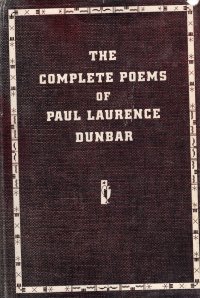
 Ah, gentle reader: As I mentioned when I bought this book in 2020 with a gift card, I had read about Dunbar somewhere and had bookmarked his Wikipedia entry for later use when writing an essay or something. Back when I thought I was an essayist. I guess it’s only been 20 years since I had a piece in History magazine and a couple in Writer’s Journal. Could I have bookmarked it that long ago? Ah, gentle reader, I have exported my then-Firefox and now-Brave bookmarks every time I’ve upgraded computers, so…. Maybe.
As I might have mentioned, I have returned to reading in my bedroom immediately before bed–some time ago, I had a full-sized lamp beside the bed, and I read in bed for a while before sleeping, but we moved a small chair into the bedroom because my beautiful wife has always favored the idea of a “reading nook.” She doesn’t read there frequently, but I’ve taken to having a stack of literary magazines handy there to transition to bedtime. I’ve also read poetry books there, including the first part of The Complete Works of John Keats and Percy Bysshe Shelley, The Complete Odes of Pindar, and some Salesian Missions things. For the last couple of months, I’ve had this 479 page long collection.
I don’t remember where I first came across his name, but I’ll definitely say that (in my opinion), Paul Laurence Dunbar was one of America’s best poets, certainly of his time (the end of the 19th century and the beginning of the 20th). Much of his poem has rhythm and rhyme and is eminently approachable and readable and has actual substance to it, sometimes unexpected but plausible takes and metaphors. But.
But, and this is something that can be used to ding and to dismiss James Whitcomb Riley (Dunbar’s contemporary). Dunbar wrote a lot in the vernacular, and in his case, as his speakers were former slaves and black, the vernacular probably triggers modern readers. But even within the poems in the vernacular have depth and poetic sensitivity. Another thing that separates him from modern poetry, well, a couple of things: One, his poems not in the vernacular are rather formal in structure, so they’re not authentic enough. And the other thing modern professionals might think is a sin is that some of the former slaves who miss their lives as slaves. You know, when they were freed, they lost a lot of social structure, comraderie, and suddenly had to live a completely different life. Which led to some complexity in human emotion, ainna? But that would be doubleplusungood thought expressed in the 21st century. I guess I should add here because it is the 21st century that I am not advocating slavery, but I can imagine some counterintuitive and conflicted emotions on the part of the freed slaves.
So, yeah, I liked this book. Over the months of working through it, I flagged a number of poems. I’m not going to recount them here for you, gentle reader–I’m thinking I might at a later time pull this book from the shelf and re-read what I have flagged. I also bought a later edition of his first work, Lyrics of Lowly Life in 2023. When I bought it, I pointed out to the volunteer counting my books that he was an important black poet and one of the first to achieve fame from it, and she thought it was great that I knew it. I think it a failure of our collective society that nobody else does.
Dunbar died at 33; how unfortunate, but like Keats, he burned brightly. And wrote more poetry by that age than I can have been arsed to write with a couple of extra decades. But I’m working on it.