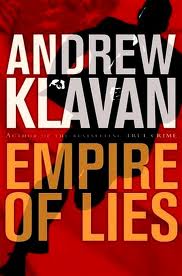
 I think I’ve talked myself into liking the book.
Which wasn’t a slam-dunk, I tell you. Its main character is a Christian formerly into S&M and drugs before his conversion experience. He’s enjoying a nice autumn afternoon with his wife and children in a Midwestern state when his girlfriend from his bad old days calls, and she needs his help. Since he’s got to go to New York City to tend to his mother’s estate, he stops into see the ex-girlfriend some 17 years after their thing and his old life ended. She tells him that his daughter he didn’t know about has run off, and she wants him to find her. When he does, the daughter is whacked out on drugs and bad living and might have seen a murder committed by her terrorist (maybe) boyfriend. And the main character, with much soul-searching, has to get her out and stop a catastrophic attack.
I’ll tell you why I didn’t care for it: For starters, it’s very slow to get rolling. Klavan uses some obvious foreshadowing where the narrator says that this or that particular incident or detail is going to be important. But the beginning of the novel includes an awful lot of navel gazing and exposition before the action takes over. Secondly, the story seems very contrived at the beginning, where the main character feels the need to see his ex-girlfriend after the elapsed time and he wonders why he’s helping her and whether he believes the girl is his daughter and he has to deal with his mother’s death and her descent into schizophrenia at the end and…. Well, it does go on so, and it passes several points where I personally would have abandoned it and the main character continues on only to continue the plot.
Secondly, it gets a little politically polemic at times, and even though it’s politically polemical in ways I agree with, it’s kind of jarring. Almost like an Ayn Rand novel with better dialog. Klavan’s not afraid to pitch this book specifically to the people who by 2008 were reading his blog and watching him on PJTV.
Third, the celebrities depicted within it are too apparently based on actual celebrities. There’s thin representations of Jennifer Aniston, Brad Pitt, and Angelina Jolie, and there’s William Shatner. It’s too obvious that these are the people in the book, thinly veiled, and instead of blending the novel into our world, it breaks up the novel’s internal reality.
However.
The main character is a bit Hamletish in his interior anguish over his decisions (in retrospect, as this double-effect narrator recounts things in the recent past). He’s worried about his descent into schizophrenia like his mother. He bears great, almost debilitating guilt for his former sins and whether his salvation will stick when he’s in his old milieu (and whether he really wants it to). So once I accepted that the narrator might be a little tetched and unreliable (not unlike the narrator of Slaughterhouse Five), I could get over those elements. Eventually, the action rolled and things happened and now the narrator was doing things instead of agonizing over things, and I could understand the interplay of his guilt and the questions of free will, salvation, and redemption presented within the novel.
So it’s okay. I didn’t abandon it like I abandoned the audiobook version of Chasing the Dime by Michael Connelly when I tried that on audiobook (the main character is doing that, why exactly? A phone call to his new number for the person who used to have it? REALLY?), and when I immediately finished it I wasn’t so keen on it, but I thought about it for a bit, and it’s an interesting enough book for me not to pan it.
Books mentioned in this review:
 I didn’t like Odd Hours when I read it last year, so you might have believed, as I did, that I would not rush right out to get one of the Odd Thomas graphic novels. Well, we were both right: I only bought this on a trip to Hooked on Books because I’d already picked up something else that was not quite ten dollars, and I still like to push my credit card purchases over that threshold whenever possible.

 I have an advanced reader’s edition of this book, and, blimey, I wouldn’t send this out for review. It contains misspellings and improperly formated sections. As some of you know, I’m working over another book presently, and I’m gnashing my teeth about every last missing comma and whatnot. But the difference between me and a professional is that this ARC contains those errors, but the pros will weed them out by the time the book has gone to press, whereas I’ll publish something with typos in it. And it drives me crazy.
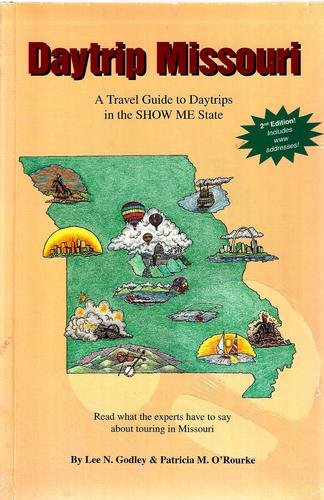 This book essentially collects and standardizes information from the various visitors’ bureaus in a number of cities and towns throughout Missouri to show you what you can find if you hop on a highway for an hour or two in the state.
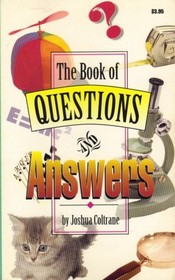 As advertised, this is a book of questions and answers about various things, such as why the sky is blue except at sunset, why the ocean is blue, who Dr. Pepper was, why the mile is 5,280 feet, and whatnot. It runs about 128 pages and is probably geared to a younger audience, so don’t expect that it’s a science textbook. The questions are not so esoteric that Cecil Adams would cover them in The Straight Dope columns nor Slate in
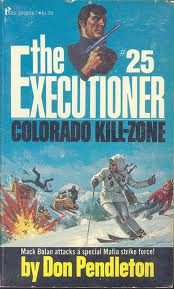
 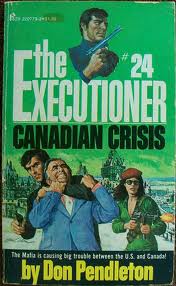 This books finds Bolan hitting a joint in Buffalo to rescue a Canadian undercover policeman who is the brother of a dead compatriot of The Executioner. Bolan catches wind of a plot to take the Mafia international with a meeting in Montreal. While there, Bolan impersonates an Black Ace, again, to infiltrate the hotel taken over by the mafiosos and their crews. Once there, he finds a group of terrorist Free Quebeckers who might be planning something for the 1976 Olympics–or maybe just for Mack Bolan.
 Wow, this is one cynical little book.
 It’s been
  After I read
 This is a short book that collects some outrageous lawsuits and notes their results. They’re grouped by topic, and each features a clever picture of an actor portraying a shady lawyer. Each explanation of the lawsuit is a couple paragraphs. It’s like someone made a book of distilled “That’s Outrageous!” columns from Reader’s Digest and distilled them. It’s like
 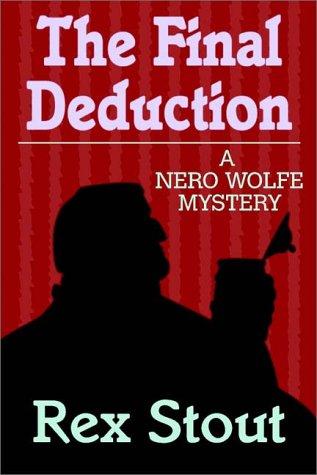 This is the third novel in the Three Aces omnibus edition I’ve been reading for quite some time now. Set in 1961, it deals with a rich woman who comes to Nero Wolfe to help ransom her kidnapped actor husband. Wolfe helps, gets his fee, but the freed husband dies in the family manse and the woman’s children come to Wolfe for help in recovering the ransom money. This leads to complications, including an arrest warrant for Archie Goodwin.
 This book is a similar to