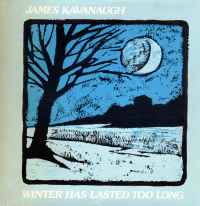
 Given the tone and type of look of this book, one can’t help but think of Rod McKuen. In tone, both are about aging poets in love with their own poetry and their role as poets, both talk about relationships coming and going and the heady starts of them and the different ways the relationships end, many of them with disappointment.
But, interestingly, Kavanaugh has a different background than McKuen: He was a priest who wrote a 1967 book about how the Church should change in all the ways that they say now that the Republican Party should change. In a speech at Notre Dame, he tore off his clerical collar and stomped on it and became, ten years later, the poet that he is in this book. His interest in marriage didn’t end with one wife, apparently, and one assumes he had other women between them. (According to his bio at the James Kavanaugh Institute.)
At any rate, the tone of the poems, as I said, are of an aging man in the middle of his life, dealing with the knowledge that he’s no longer young but not yet old. The poems have moments where they connect with men of a certain age (and had an audience in the middle 1970s, where the sweaters and the poetry books were an outward sign of coolness even in early middle age), but (as my beautiful wife pointed out), they aren’t very poetic. The verses do not contain a lot of evocative imagery drawing out the theme and conclusions. It’s philosophical musings with line breaks.
So there you go: It’s like McKuenesque poetry with a more dramatic poet backstory. There might be something in it for you, but the moments are just moments amid a whole book of sometimes repetitive sentiments. Which is what you get with any book of work by any single poet, even Edna St. Vincent Millay or Robert Frost.
Books mentioned in this review:
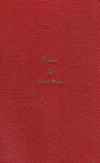 This book is a collection of poems by a religious housewife written in 1959 and 1960 in the Ozarks. It’s a regional book with probably no national distribution, but the woman (or her family) thought enough of them to publish them in hardback. The book includes some penciled or penned corrections and some poems cut and pasted onto blank pages at the end. It’s signed by the author, of course, but not inscribed, which means she might have given the book to someone she didn’t know. How odd.
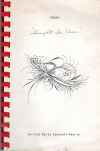 This is a chapbook from a little old lady who wrote poems about her home, her friends, and her family in the 1970s and 1980s. Its pages are typewritten (and, in some places, corrected with correction fluid and hand printing), and it’s bound by a comb binder, probably something provided by Kinko’s or the like (my chapbooks from five and six years later were saddle-stapled, which is a more professional look, I think, but this book might have been to thick for that treatment).