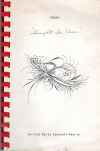
Book Report: Thoughts in Verse by Bernice Marie Cockrell-Petrie (1989)

Book coverThis is a chapbook from a little old lady who wrote poems about her home, her friends, and her family in the 1970s and 1980s. Its pages are typewritten (and, in some places, corrected with correction fluid and hand printing), and it’s bound by a comb binder, probably something provided by Kinko’s or the like (my chapbooks from five and six years later were saddle-stapled, which is a more professional look, I think, but this book might have been to thick for that treatment).

So I could have gone into the book with a sense of literary superiority (I’m concurrently reading Kipling’s poetry and some more by Ogden Nash), but somehow I developed a little affection for the book as I read it.

Her prolific period comes in the early 1970s, and as each poem is dated, one can read the poems she was writing up to the date of one’s own birth (if one is about forty years old) and through historical periods of one’s life. So it has that effect on one like me.

The topics of the poems are her friends and family, as I mentioned, so at times it’s like flipping through someone else’s photo album.

Other poems deal with her home, animals around them, herself, and her relationship to God. It’s pretty lightweight stuff, except it was meaningful enough to her to put to verse.

And the poems aren’t very good, but they’re not especially bad either. She has a fair sense of rhythm, relying on iambs a bunch, and she end rhymes. So she put some thought into them, unlike a lot of free versers who just blat out anything and think it’s profound.

So I enjoyed the book for what it was: an amateur writing what she thought. The copy I have is a second edition, which could very well mean there were more copies of it in the wild in 1990 than there are copies of John Donnelly’s Gold out there. Fancy that.
Buy My Books!
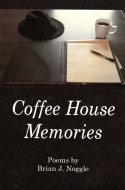
Buy John Donnelly's Gold Buy The Courtship of Barbara Holt Buy Coffee House Memories

That’s One Complex Algorithm

So I go to Barnes and Noble to spend my birthday gift card, and I pick up three volumes of Robert E. Howard’s Conan stories: The Coming of Conan the Cimmerian, The Bloody Crown of Conan, and The Conquering Sword of Conan.

It all started when I saw The Complete Chronicles of Conan around Christmas time, but it was gone before I could buy it with a gift card. So I’ve thought about buying the paperback versions I listed above, but have been hemming and hawing until I got a $50 gift card (the books, in the store, are $17 each plus tax, unlike the lower rates you get if you click the handy Amazon links). So I bought them with the card today and a couple grubzits of my own.

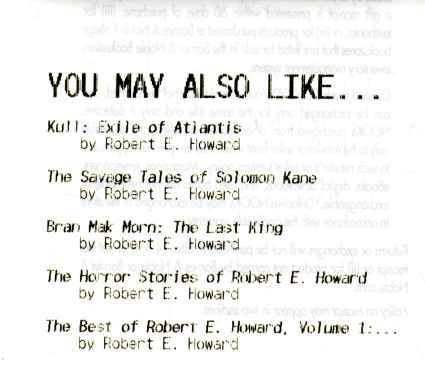
So Barnes and Noble, in an attempt to remain relevant, replicated a bit of Amazon’s functionality by producing a list of recommendations that printed out with my receipt:

You might also like other books by this same author!

It recommended the other books on the shelf by Robert E. Howard that I did not pick up today.

That’s a stunning bit of artificial intelligence there, wot?

Buy My Books!
Buy John Donnelly's Gold Buy The Courtship of Barbara Holt Buy Coffee House Memories

Book Report: Charters of Freedom by National Archive (1952)

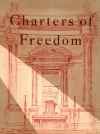
Book coverThis book is really an oversized pamphlet prepared by the National Archives in 1952. It has photographs of the Declaration of Independence, the United States Constitution, and the Bill of Rights, but the size and quality of the reproduction is such that you can’t actually read the text, and the book does not include it. What the booklet does include is a couple paragraphs about each document, why it was created and by whom, along with a photo of the related mural at the National Archive. At the end of the book, an epilogue of sorts explains what happened to each document after its creation and how it came to the National Archive.

An interesting little read, but I was hoping for the text of each when I bought the book. I am slightly educated but disappointed.

Books mentioned in this review:

Buy My Books!
Buy John Donnelly's Gold Buy The Courtship of Barbara Holt Buy Coffee House Memories

More Waste of Books

James R. links to more art made out of books. He has a sample picture and a link, but I could not bear to click through to see the other “works.”

I guess it’s far easier for a younger, less literate generation to see books not as creations in their own right or ends in themselves. Instead, they’re just bricks in the artists’ little mash-ups of life.

That tears it: I must hoard more.

Buy My Books!
Buy John Donnelly's Gold Buy The Courtship of Barbara Holt Buy Coffee House Memories

Book Report: Please Don’t Eat The Daisies by Jean Kerr (1957)

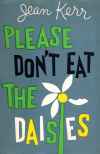
Book coverI’ve actually read this book before, some twenty years ago when I was in college or high school. You see, I remember it from the television series which was still running in syndication on KPLR in the 1980s.

I don’t remember much from the first reading of the book, but I must have felt enough affection for it that I bought it when I saw it at a book fair again. So I picked it up as a nice episodic read.

Jean Kerr wrote these essays, a collection whose topic matter is not quite as domestic as the television’s sitcom sensibility might indicate, in the early 1950s, which places her smack dab between Clarence Day and Erma Bombeck. Kerr does fit in between them. She was a Tony-award-winning playwright by the time this book came out, she was married to a drama critic, and they had a pile of kids and moved to Connecticut with their help, so it’s in Clarence Day’s upper crust world, but because it’s the 1950s, we see elements of Bombeck’s–and our–world. Dishwashers, for instance. The Kerrs had them during the Eisenhower administration.

As I mentioned, the book tackles some domestic topics, such as the give-and-take with her children who become very literal in obeying instructions and directives when they can think of something not expressly prohibited. Ms. Kerr’s lifestyle is not purely domestic: she mentions that she stays up late and sleeps late so she can write and that the help takes care of the children part or most of the time. So some of her essays are more literary in nature–she satirizes Mike Hammer (in the early 1950s–remember, Mickey Spillane created the character in 1947, not in the 1980s for Stacy Keach), she makes light of a French novel (Bonjour Tristesse), and she talks about the theatre world of New York and Broadway quite a lot.

So the book is varied in content, intelligent and domestic. Smarter than Bombeck, certainly, maybe just more sophisticated. Kerr makes offhand allusions to Kipling, and she expected her readers to know what that meant. Maybe they did then. But I doubt they would now, which is why Kerr isn’t widely read anymore. Come to think of it, neither are Day, Bombeck, or Kipling. I’m all alone out here.

Books mentioned in this review:

Buy My Books!
Buy John Donnelly's Gold Buy The Courtship of Barbara Holt Buy Coffee House Memories

I Feel Impugned

Tam K. on certain reading tastes:

One thing I liked about Black Site and One Rough Man was the lack of gear queer stuff that is so endemic on the seedier end of Action Porn. (Which are just Harlequin romances for men. Seriously, the “Gold Eagle” imprint that does Mack Bolan and all those is owned by Harlequin and the stories are done in the same formulaic way.)

::coughs uncomfortably::

I am reading some Kipling, too. Honest.

Buy My Books!
Buy John Donnelly's Gold Buy The Courtship of Barbara Holt Buy Coffee House Memories

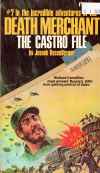
Book Report: The Castro File by Joseph Rosenberger (1974)

Book coverThis book is the 7th entry in the Death Merchant series. Every once in a while, I like to wander away from the Executioner series and the SOBs series to see if I might be missing out on any other good pulp paperback series from the seventies and eighties.

And, brothers and sisters, this book is not one of them.

The series deals with a mercenary hired by the CIA for particularly dangerous operations. Richard Camellion (get it?) will do anything for $100,000, as long as it involves killing commies, but not innocents or something. This time around, the CIA sends him to Cuba to derail a Russian plot to kill Castro and replace him with a double to prevent the Cuban dictator from detenteing with the United States.

The plot is okay, but the execution is awful. We have a chapter of action to start off when the Death Merchant’s cover is blown in Havana, then we have some chapters of flashbacks of the Death Merchant meeting with the head of the CIA, the Cubans getting together and talking about their goals, the Russians talking about their operation, and then another chapter of action or so after the board meeting ends. And the action chapters aren’t so great, either. All the exclamation points! Body parts doing balletic things! Derogatory terms for the bad guys in the narrative!

I was going to rank this book as amongst the worst of the genre I’ve read when a visit to the author’s page on Fantastic Fiction uncovered why this book tied with COBRA 2: Paris Kill-Ground: They were written by the same author 13 years apart. And apparently, he had not gotten any better.

On the other hand, the fellow has more individual titles in print than I’ve sold actual copies of my novel, so take that for what it’s worth.

Books mentioned in this review:

Buy My Books!
Buy John Donnelly's Gold Buy The Courtship of Barbara Holt Buy Coffee House Memories

Book Report: Cologne published by Greven Verlag Koln (1959)

Book coverI browsed through this book during the Super Bowl. Not that that matters, but you know that’s what I do.

The book was published in 1959 to draw tourists to the German city (West German city in those days, only a decade after the Berlin AirLift). The photography, aside from the dust jacket, is in black and white, and the text appears side-by-side in English and French. Apparently, 20 years later, the Germans wanted the French tourists to invade. But that’s neither here nor there.

Cologne is a beautiful city circa 1959: the old parts of it that survived the war, including its cathedral and some of the gates that remain from the walls that surrounded the old city are spectacular. However, the book spends a bunch of pages on the more modern buildings in the city, built after the war, and they all look like 20th century architecture, which is to say rather unimaginative compared to the old stuff.

I don’t imagine I’ll ever see Cologne firsthand–I’m not eager to travel abroad, as I get the sense Americans are pretty unpopular over in Europe in the 21st century. In my imagination, the 1950s and the 1960s were the time to visit Europe, when the gratitude for America’s intervention in WWII was still high. Maybe it wasn’t. Maybe I’m inflating my concerns to cover my own parochialism. Maybe I’ll travel on one of Jay Weber’s annual tours, or go a group with Victor Davis Hanson some time. Until then, I have these books between football plays.

Bonus: This book was a gift in 1960 from either schoolmates, coworkers, or something. Check out the inscription below, ignoring the $1.00 that Book Castle priced it: Continue reading “Book Report: Cologne published by Greven Verlag Koln (1959)” →

Buy My Books!
Buy John Donnelly's Gold Buy The Courtship of Barbara Holt Buy Coffee House Memories

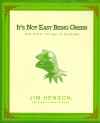
Book Report: It’s Not Easy Being Green edited by Cheryl Henson (2005)

Book coverThis book is a collection of philosophical quotes about Jim Henson and his work. Well, somewhat. The quotes by Jim Henson are philosophical about the nature of work, collaboration with coworkers and underlings, and the balance of life vis-a-vis work. He’s almost like a cuddly Ayn Rand character when he talks about doing what one loves, working hard, and things falling into place if you do that. I suppose you can get that out of a lot of entertainers, but Henson was more than that: he was also a businessman marketing his product, puppets, and managing crews of people making his product. He sounds like a good boss.

The other quotes in the book range from songs from Sesame Street, The Muppet Show, and other Muppet productions, which are all about following your bliss and being true to your nonconformist self to quotes from Jim Henson’s family and underlings who mostly talk about what an awesome guy Jim Henson was.

So it’s a little less than I hoped for. I wanted more quotability, something to tweet from within the book, but all I got was a quote from Cantus Fraggle. I can’t even remember which one he was. And the book does quote the theme song from Fraggle Rock, which is:

Dance your cares away, worry’s for another day.
Let the music play down at Fraggle Rock.
Work your cares away, dancing’s for another day.
Let the Fraggles play….

The thing is, the first couplet is sung by the Fraggles, and the second is by the Doozers, so the discordant philosophy in the lines makes sense.

Strangely enough, the book presents Henson as both a Fraggle and a Doozer. Wrap your minds around that if this sort of thing is your bag. At 185 pages including contributor bios with one quote per page, we end up with a short read. Once could blow through it in a couple of nights, even when sick like I was when I read it.

Books mentioned in this review:

Buy My Books!
Buy John Donnelly's Gold Buy The Courtship of Barbara Holt Buy Coffee House Memories

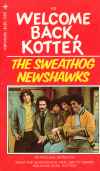
Book Report: The Sweathog Newshawks by William Johnston (1976)

Book coverHow long have I owned this book? Here’s a photoshopped cover of it I did in July 2005. Oftentimes, I’ve picked it up when looking for something quick to read between weightier things, but Robert Hegyes, who played Esposito in Welcome Back, Kotter died, and I heard “Welcome Back” by John Sebastian on the radio (in tribute to the aforementioned Hegyes). So now seemed the time.

You know what? This is a pretty good book for such as it is.

I’ve read books based on hourlong dramas before (Adam-12 here and here, Murder, She Wrote here), but this might be the first book I’ve read based on a half hour sitcom. And it was pretty witty and true to the characters. While I didn’t laugh out loud at any of it, I was amused enough to want to watch some of the old programs and maybe come up with other books in the series.

As with any 70s paperback, the order forms in the back are always a treat. The books available in paperback immediately preceding this book include several in the Get Smart book series and other pulp. I’ve never, to my recollection, seen a book where the order forms are clipped, indicating someone has actually used them to order books. I wonder if the sort of people who did that were the sort of people to throw books out when they were done, or whether there never really was that sort of people.

UPDATE: How soon they forget. While cataloging this book, I learned I’d already read something by this author. That would be a Happy Days book, Ready to Go Steady, which I read in 2009. This book is far better than that Happy Days book.

Books mentioned in this review:

Buy My Books!
Buy John Donnelly's Gold Buy The Courtship of Barbara Holt Buy Coffee House Memories

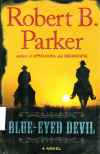
Book Report: Blue-Eyed Devil by Robert B. Parker (2010)

Book coverThis book is the fourth of the Cole and Hitch westerns, and they find the duo back in Appaloosa, site of the first film. They’re not the law now–there’s a marshal in town with designs on higher office–but they catch on with the local saloons as private security when the local shopkeepers grow tired of the real town marshal’s protection racket–the merchants pay up extra to make sure that the law arrives in a timely fashion.

While they’re defending a saloon, Cole kills the son of a local rancher (who has taken up residence in the homestead of the last Appaloosa bad guy Cole dispatched), who then hires a killer to dispatch Cole. When a raiding native threatens the town, Cole brings it to the attention of the marshal, who walks right into the native’s trap as Cole and Hitch join forces with the rancher and the killer to save the town from the natives.

It’s a quick read–quicker than The Virginian or Wild Horse Mesa— but it’s a modern book, and it probably sacrifices some depth for pageturning. Which is opposite of what I usually complain about, I know.

Books mentioned in this review:

Buy My Books!
Buy John Donnelly's Gold Buy The Courtship of Barbara Holt Buy Coffee House Memories

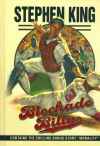
Book Report: Blockade Billy by Stephen King (2010)

Book coverAs I mentioned, I bought this book last Wednesday, and I knew it wouldn’t take me long to get to reading it and to read it once I started. Blockade Billy is a novella in a hardcover along with a short story called “Morality”.

The title novella covers the discovery of a star catcher for the Titans. Blockade Billy, as he comes to be known, is a simple-minded youngster brought up from a AA team when the Titans’ catcher is hurt. He comes to town, focuses on the game, but he has dark secrets in his past that will come to light and make him the only player ever erased from Major League Baseball history.

King’s at his best here, pulling along with just the right voice and foreshadowing. The frame story is that Mr. King is interviewing the third base coach from the Titans to discover the real story, so it’s told in a very conversational style that’s easy to read.

The short story, though, “Morality”, is hardly worth reading. It’s a dash of the film Indecent Proposal thrown in with a twisted preacher and how his indecent proposal causes a marriage to break up. There are no characters in it worth sympathizing with and it’s rather stock.

Books mentioned in this review:

Buy My Books!
Buy John Donnelly's Gold Buy The Courtship of Barbara Holt Buy Coffee House Memories

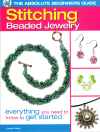
Book Report: The Absolute Beginners Guide to Stitching Beaded Jewelry by Lesley Weiss (2010)

Book coverI paid almost full price (40% of with coupon, so “almost full price” means “more than a dollar”) for this book at the Hobby Lobby because I wanted to make sure I had something to read one warm January day when I was to take my children to the park. However, I didn’t end up reading it at the park–I can’t remember if we didn’t make it to the park or if I didn’t want the Springfield-area mommies to beat me up for being a beading sissy.

So I browsed it while watching football instead.

It’s a collection of stitched bead jewelry projects that shows one how to make the stitches and whatnot. I haven’t done any beading in a year or so, preferring to mix up my cheapskate self-made crafting Christmas giving this year. But when beading, I do like to do stitches which is more complicated and creative than simply stringing some beads and a pendant together. Although I have other reference books that show me the stitches, I’m glad to have picked up this one to freshen and inspire me and to give me some other ideas on how to use different bead sizes in my patterns.

Whether I put those patterns to use any time in the near term, though, is another question entirely.

Books mentioned in this review:

Buy My Books!
Buy John Donnelly's Gold Buy The Courtship of Barbara Holt Buy Coffee House Memories

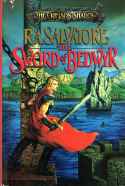
Book Report: The Sword of Bedwyr by R.A. Salvatore (1994)

Book coverYou know, I haven’t read a bit of pulp fantasy in a while (the previous Salvatore I read was five years ago, and that review was fun to re-read because it touched on my old gaming memories). I read The Lord of the Rings last year, I know, but this book is pulp fantasy regardless of its hard cover and dust jacket.

Within it, the son of a duke chafes under his father’s accommodation of a wizard who rules the land through his Cyclops army and subwizard governors. After he slays one of the one-eyed centurions, he flees his home and his birthright and takes up with a halfling thief. They meet a good, or at least not as bad as the baddest, wizard who tricks them into invading a dragon’s lair but gives them magic items for their trouble, including a cloak of invisibility. The duo move onto a town and live the lives of successful thieves until the cloak of invisibility reanimates the legend of its previous owner, the Crimson Shadow, and reanimates the town residents’ hopes for freedom.

As always, this is but one book in a trilogy, so it sets some things in motion that I won’t see conclude. It’s a decent enough read, but the climax and the denouement, such as they are, come rather suddenly. So, like I said in 2006, I won’t shy away from Salvatore’s other works, but I’m not running out to get them right now.

I had another thought while reading it: In modern suspense and thriller pulp, it’s pretty common to knock authors who make mistakes with guns. Is it only our lack of true familiarity as a culture with ancient weapons–aside from some real hardcore SCA geeks and the like–that keeps us from nitpicking the use of a sword? As I read this book, I noticed that the army of the Cyclopses used a variety of weapons straight out of the Dungeons and Dragons equipment charts. Thrown spears and bows for missile weapons, and then swords, battle axes, and polearms for bladed weapons. Wouldn’t you expect an army, especially an invading/occupying sort of army to have more standard equipment? Nah, I’m just trying to nitpick where none is warranted.

Books mentioned in this review:

Buy My Books!
Buy John Donnelly's Gold Buy The Courtship of Barbara Holt Buy Coffee House Memories

Good Book Hunting: January 18, 2012

Wednesdays can be a dangerous day for me. The younger lad has only a half day of school, so instead of driving into town and then home and then into town and then home in a three hour stretch, I hit the gym for an hour and a half or two hours, but then I have an hour to roam town. A town with many book stores. And on Wednesday, I hit two: Barnes and Noble (to spend a gift card) and The Book Castle.

And I bought a couple books.

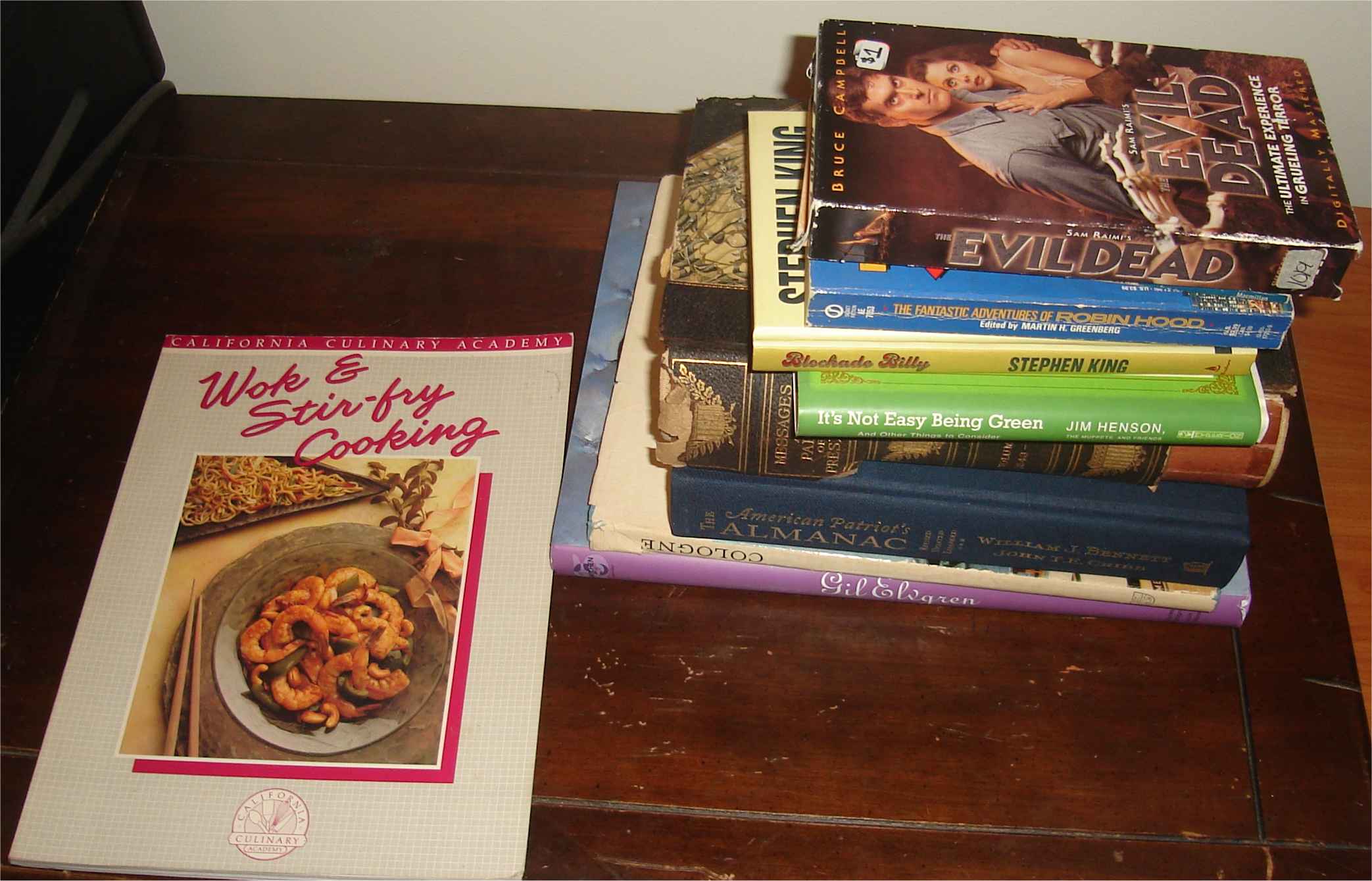
Books from Barnes and Noble and the Book Castle

I got:

  • A copy of Strunk and White for my ha’brother, who is in an MBA program and could use it.
     
  • The American Patriots Almanac, a daily reader of founding documents and founding fathers.
     
  • Evil Dead on VHS. I’ve not seen any of them. What sort of bad Gen X geek does that make me?
     
  • A picture book of Cologne, France. Not cologne.
     
  • A collection of alternate Robin Hood stories where Robin Hood is not in medieval England.
     
  • Blockade Billy, a short hardback (130 pages) by Stephen King that was $5 at Barnes and Noble (on sale). A short, cheap read? What a concept!
     
  • It’s Not Easy Being Green by Jim Henson.
     
  • A stir fry cookbook for my wife.
     
  • A collection of works by Gil Elvgren.
     
  • A collection of presidential papers from 1841-1860 or 1821-1840. Right before the Civil War.

The books from Book Castle were all from its sale shelves and room; I spent $5 and change there. After the $20 gift card from Christmas, I spent $12 at Barnes and Noble. So about $17 total. Not bad for the stack, especially as three of the books are new.

Buy My Books!
Buy John Donnelly's Gold Buy The Courtship of Barbara Holt Buy Coffee House Memories

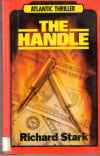
Book Report: The Handle by Richard Stark (1966, 1988)

Book coverI bought this book back in November, and I’ve already read it. I do sort of have a last-in-first-out method. The fresher the purchase, the closer I am to the eagerness to read the book that drove me to buy the book.

I’m not sure if this is the first Stark book I’ve read; I don’t have any other book reports on them on the blog here, so I haven’t read one in the last ten years. If I did, it probably came during my high school years, but I don’t remember it. So it’s like going into a series fresh except for knowing what the series character is and seeing a portrayal of it on the big screen (Payback, donchaknow?).

So Parker is an amoral, immoral bad guy who does heists for the Outfit. One or two a year, not enough to get greedy. This time, the Outfit wants him to hit an offshore casino run by a former German officer on an island claimed by Cuba. When the Feds get wind of the operation, they want Parker to grab the man himself and bring him in. So Parker cases the island, builds a team, and executes the plan–which goes awry when a rejected team member tips the casino that the heist is coming.

It’s a quick, pulp read. It’s just a little off in that some of the detail and description in the beginning is, I don’t know, a little overdone, a little out of the pace of a proper pulp novel. From the front matter of this book, I see that Stark is a pen name of Donald Westlake. You know, Westlake is an author of whom I’ve read a couple of books, but not someone I’ve rushed out to read all. I wonder if the poor pacing in the beginnings is what does it. I don’t know.

This volume is a LARGE PRINT EDITION from 1988, which is 22 years after the initial publication date. Man, those pulp books could stay in print, couldn’t they? Aside from some of the huge bestsellers today, what do you think will still be in print in 2034? Not a whole lot, probably, with the industry changing as it is. I mean, if you look at the sales stats today, the more modern edition I’ve linked to is still in the top 100,000 books sold on Amazon. So it’s got longevity that even my torpid review won’t dent.

Books mentioned in this review:

Buy My Books!
Buy John Donnelly's Gold Buy The Courtship of Barbara Holt Buy Coffee House Memories

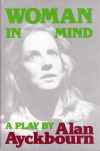
Book Report: Woman in Mind by Alan Ayckbourn (1986)

Book coverAs you probably don’t know, I like Alan Ayckbourn ever since I saw his plays The Norman Conquests when the Rep in Milwaukee was putting all three of the plays on, rotating which play was showing nightly, so that viewers could see all three. Even though I was a hardscrabble working college senior, I managed to see all three–and with three different women (and Table Manners twice due to a scheduling error). Norman would have approved.

This book is a single full evening play. Within it, a woman who is hit on the head gets some attention from a doctor as she comes around. As he goes to get some tea for her, her loving family, clad in tennis apparel, checks on her. She’s a successful historical novelist with a doting husband, an attentive daughter, and a protective brother. But as the doctor returns, they fade away, and her family is really an uncommunicative and distant son and a parson who’s estranged from his wife. As the play goes on, the family visits intersperse, and her doctor tells her she’s suffering from hallucinations related to the head injury.

So as I’m reading, I’m interested to see how this will resolve and somehow hope that she’s really suffering from hallucinations of the bad family and root for a twist where she’s really the successful woman hallucinating a poor existence, but we end with a penultimate scene where the faux daughter is at her wedding, but it’s really a horse race where she’s a horse, and it gets surreal (obviously) and the play resolves where the woman with the head trauma has imagined all of it and is in an ambulance right after the head trauma.

So it disappointed me, ultimately, because I like my plays to veer a little less into the surreal. I mean, I can read a surreal play and know what I’m getting into (The Balcony) and even enjoy it (Rosencrantz and Guildenstern Are Dead). But when a play leads me to believe some surreality is going to resolve but ends up more surreal and unresolved, well, meh.

Books mentioned in this review:

Buy My Books!
Buy John Donnelly's Gold Buy The Courtship of Barbara Holt Buy Coffee House Memories

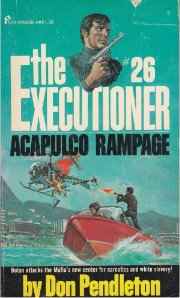
Book Report: Acapulco Rampage by Don Pendleton (1976)

Book coverThis book is not one of the strongest in the Executioner series. In it, Mack Bolan travels to the Mexican resort to keep the Mafia from getting a stronger grip on the criminal warlord currently running the rackets there. After he kills a frontman and contact point for the bad guys, Bolan takes in the man’s secretary and traveling companion who claims to be innocent. He gets on-the-scene help from a washed-up actor that had been a front man for prostitution and white slavery as Bolan tries to find a solution that will keep the Mafia out of Acapulco.

Sadly, although its plot like the others differs from boilerplate, this book ends rather abruptly with a twist for a twists’ sake.

Not one of the better ones in the series, but still a quick and interesting enough read.

Books mentioned in this review:

Buy My Books!
Buy John Donnelly's Gold Buy The Courtship of Barbara Holt Buy Coffee House Memories